


March 1951
Discovery of the 21-cm hydrogen line (1951)
Harvard researchers Harold Ewen and Edward Purcell detected the radio emission from neutral hydrogen in the Milky Way, using a small horn antenna on a roof. The 21-centimeter line became the backbone of radio astronomy.
Then
Astronomers used the line to map the Milky Way's spiral arms and gas distribution.
Now
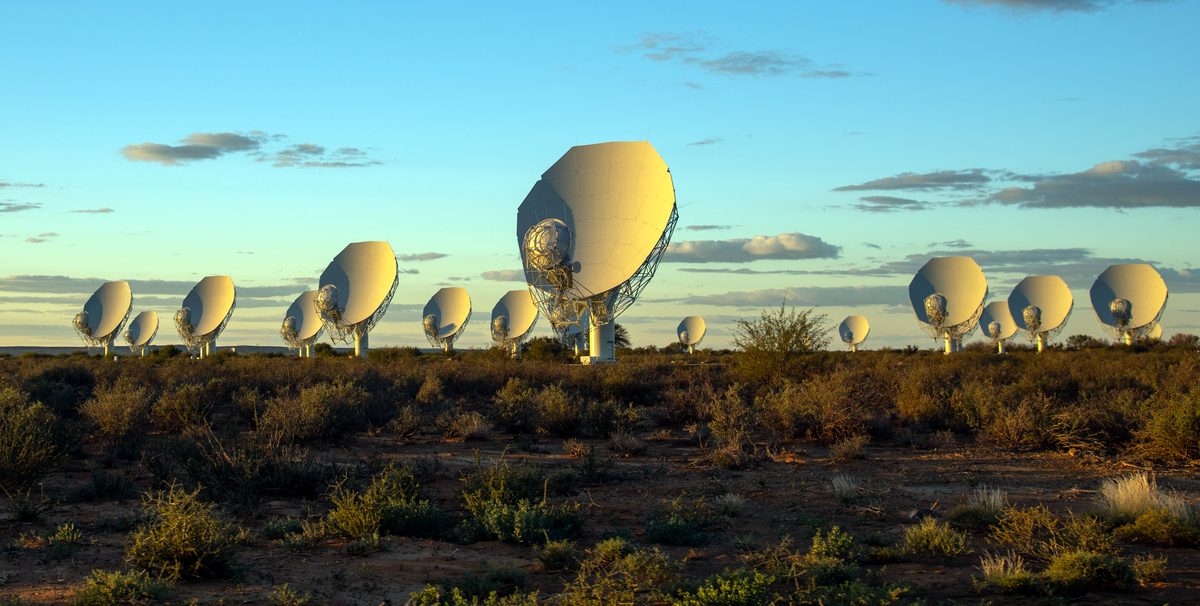
Today, the 21-cm line is a standard probe of the interstellar medium and, at cosmological distances, the cosmic hydrogen distribution.
Why this matters now
The new detection extends that fundamental tool to the distant universe, measuring hydrogen at cosmic scales rather than within our galaxy.