


Cosmic Background Explorer Detection (1989-1993)
NASA's COBE satellite measured tiny temperature variations in the cosmic microwave background radiation—the afterglow of the Big Bang. Project leaders John Mather and George Smoot detected fluctuations of just 30 millionths of a degree, requiring years of careful analysis to distinguish the signal from instrument noise and galactic foregrounds.
Stephen Hawking called COBE's results 'the most important discovery of the century, if not of all time.' Mather and Smoot later received the 2006 Nobel Prize in Physics.
COBE opened the field of precision cosmology, leading to successor missions WMAP and Planck that mapped the early universe in increasing detail.
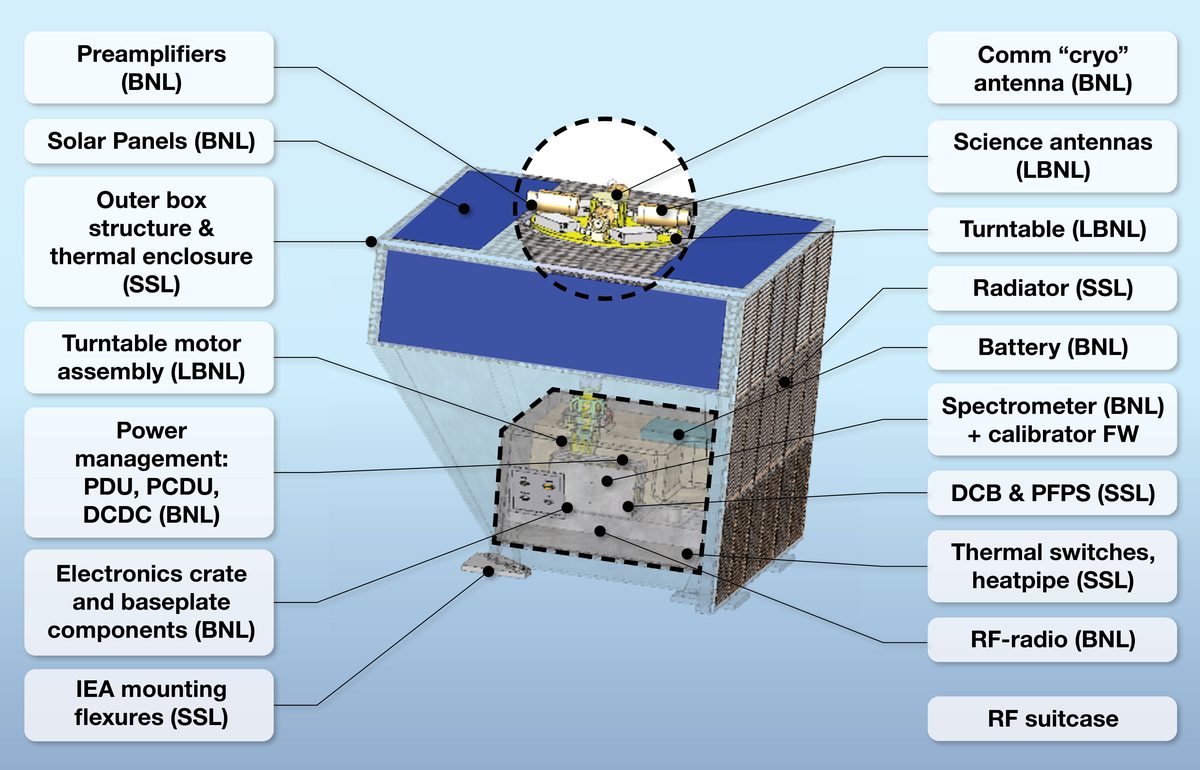
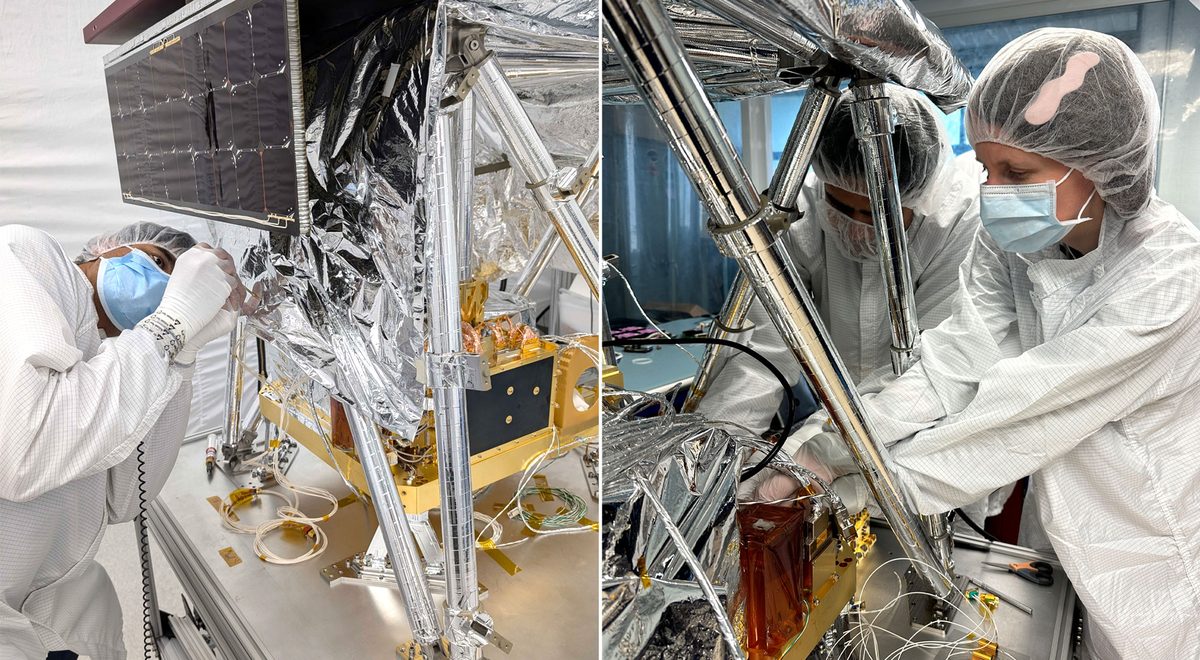
LuSEE-Night faces the same fundamental challenge COBE confronted: detecting an extremely faint cosmological signal buried beneath much brighter foreground emission. The Dark Ages signal is roughly 100,000 times fainter than galactic radio noise, requiring similar methodical separation techniques.