



Pull to refresh
Logo
80,000-year-old stone points may be the world's oldest arrowheads

80,000-year-old stone points may be the world's oldest arrowheads

New Capabilities

Tiny projectile points from Uzbekistan closely match weapons used by Homo sapiens in France 25,000 years later

September 3rd, 2026: ScienceDaily reports the discovery

Overview

Updated 5 days ago

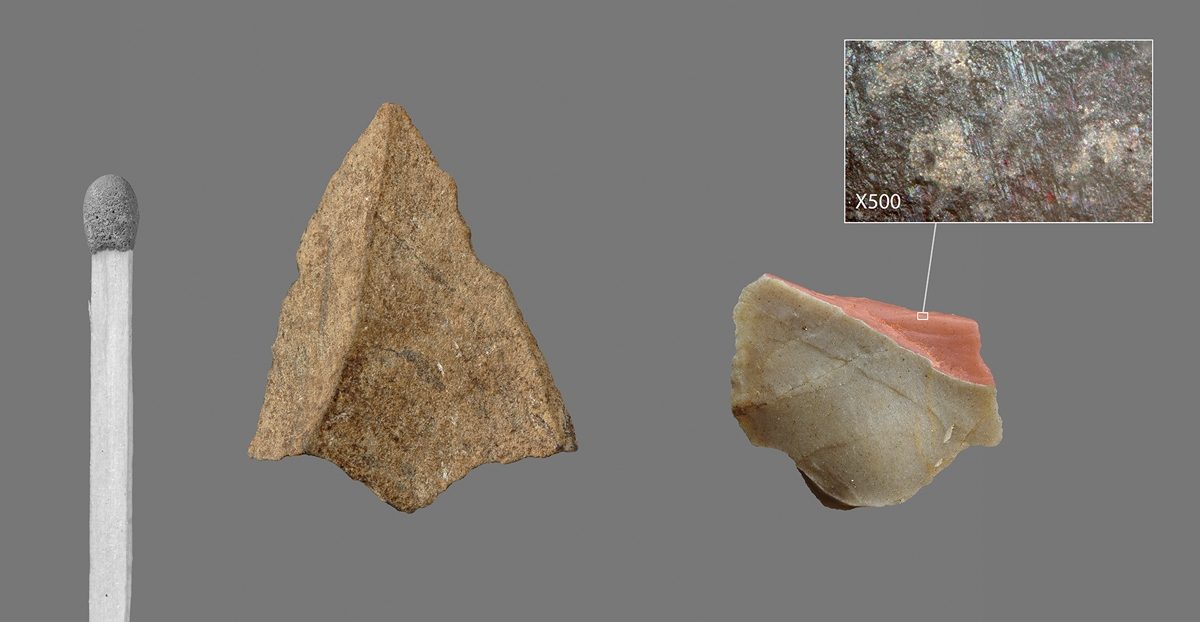
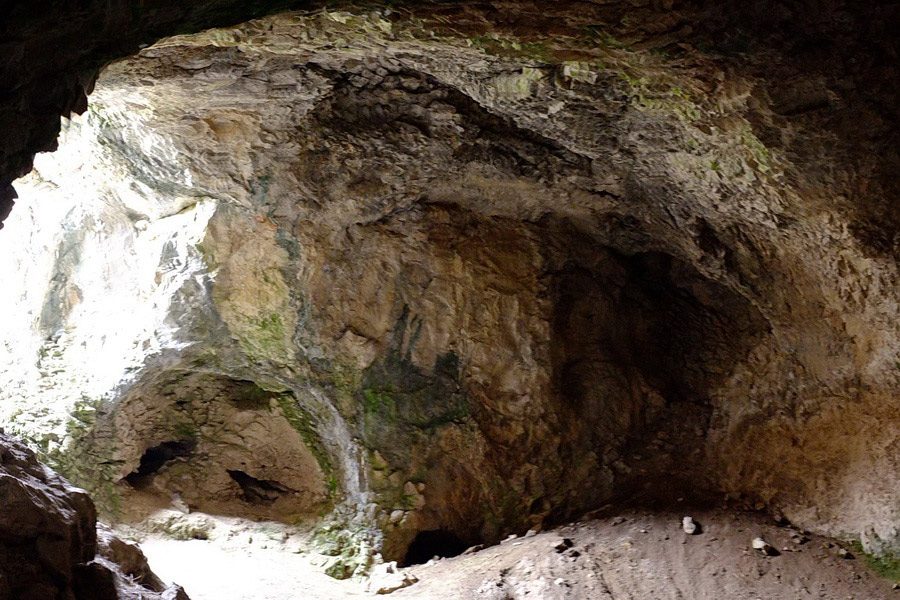
Tiny triangular stone points found in a Central Asian cave appear to be 80,000-year-old arrowheads, the oldest known in the world. The artifacts from Uzbekistan's Obi-Rakhmat site predate comparable points from Ethiopia by roughly 6,000 years.

The points closely match weapons used at the Mandrin site in France 25,000 years later, where a Homo sapiens milk tooth was found. That similarity suggests modern humans were established in Eurasia well before moving into Europe. It complicates the standard account of a direct 45,000-year-old migration from Africa.

Why it matters

The finding pushes back the oldest known archery by thousands of years and suggests Homo sapiens reached Eurasia far earlier than previously assumed.

Questions about this story

Free account needed to ask — your question is kept and asked for you right after sign-up. Answers are public.

No questions yet — be the first to ask.

Key Indicators

80,000 years
Age of Obi-Rakhmat points
Dating of the occupation layers where the micro-points were found.
6,000 km
Separation between Obi-Rakhmat and Mandrin
The two sites are more than 6,000 km apart.
<2 cm
Width of projectile points
Each point measures under 2 cm across and weighs only a few grams.
74,000 years
Age of previous oldest known points
Artifacts from Ethiopia were previously among the oldest known arrowheads.

Voices

Curated perspectives — historical figures and your fellow readers.

Ever wondered what historical figures would say about today's headlines?

Sign up to generate historical perspectives on this story.

People Involved

Organizations Involved

Timeline

2003 circa 8

7 events Latest: September 3rd, 2026 · 1 week ago
Tap a bar to jump to that date
  1. Micro-points made at Obi-Rakhmat

    Upcoming Archaeological context

    Tiny triangular stone points used at Obi-Rakhmat cave, possibly as arrowheads.

  2. Identical points used at Mandrin

    Upcoming Archaeological context

    Similar micro-points in use at Mandrin site, France, alongside Homo sapiens remains.

  3. ScienceDaily reports the discovery

    Latest Press coverage

    ScienceDaily reports the discovery, drawing wide public attention.

  4. Obi-Rakhmat study published in PLOS One

    Publication

    PLOS One publishes study of 80,000-year-old projectile points at Obi-Rakhmat.

  5. Mandrin micro-points documented; dispersal model proposed

    Publication

    Study documents identical micro-points at Mandrin; Slimak proposes Eurasian dispersal model.

  6. Homo sapiens tooth identified at Mandrin

    Publication

    Researchers identify a Homo sapiens milk tooth from the Mandrin layer.

  7. Child remains found at Obi-Rakhmat

    Excavation

    Excavators recovered six teeth and 121 skull fragments from a child aged 9 to 12. The teeth resembled Neanderthals', but the skull was ambiguous, leaving the child's species unresolved.

Scenarios

1

Micro-point sites multiply across Central Asia

Possible Resolves by End of 2028

Discussed by: The PLOS One study authors; Ludovic Slimak's 2023 dispersal model

Excavations between Uzbekistan and France recover similar unretouched triangular micro-points with impact damage. A trail of such sites would support the argument that the technology travelled with Homo sapiens as they spread across Eurasia, rather than arising independently in each region.

2

Homo sapiens remains tie Uzbekistan points to modern humans

Likely Resolves by End of 2030

Discussed by: Study co-authors Andrey Krivoshapkin and Hugues Plisson, who argue the points were most likely made by Homo sapiens

Recovery of modern human skeletal remains at Obi-Rakhmat, or at a site yielding identical points, would tie the technology to Homo sapiens. The authors point to the Levant as a possible origin for the toolmakers, aligning with the presumed timing of modern human dispersal into Eurasia.

3

Neanderthal remains found with Uzbekistan points

Unlikely Resolves by End of 2030

Discussed by: Researchers noting the site was in Neanderthal territory; co-author Hugues Plisson told Live Science the area was Neanderthal territory when the points were made

Neanderthal remains in direct association with the micro-points would overturn the assumption that lightweight projectile weapons are a modern human hallmark. The study authors say no known Neanderthal arrowheads exist, making this the less expected outcome.

4

Obi-Rakhmat child's species identified

Possible Resolves by End of 2027

Discussed by: Researchers who excavated the child in 2003; Live Science reporting

The child's teeth looked Neanderthal, but its skull did not clearly match any species. Identifying the child as Homo sapiens, Neanderthal, or a hybrid would clarify who made the 80,000-year-old points.

Historical Context

3 moments from history that rhyme with this story — and how they unfolded.

September-October 2003

Homo floresiensis, the 'hobbit' hominin (2003)

Excavations at Liang Bua cave on Flores island, Indonesia, uncovered the partial skeleton of a small-statured hominin, nicknamed 'the hobbit,' dating to as recently as ~50,000 years ago.

Then

Years of intense debate over whether the bones were a new species, a dwarfed H. erectus, or a pathological modern human.

Now

Became widely accepted as evidence of diverse hominin lineages coexisting deep into the Late Pleistocene.

Why this matters now

Shows how a single site with surprising artifacts can upend the presumed narrative of human evolution and dispersal.

July 2019

Apidima skull pushes H. sapiens in Europe back by 150,000 years (2019)

Fossils found in a Greek cave in the 1970s were re-dated in 2019. One partial skull was identified as Homo sapiens at roughly 210,000 years old, over 150,000 years older than any previously known modern human in Europe.

Then

Paleoanthropologists debated the identification, arguing the skull's features were fragmentary.

Now

The dating was widely accepted, pushing the known age of H. sapiens in Europe far earlier than the classic Out of Africa model allowed.

Why this matters now

Like Obi-Rakhmat, a single-site discovery that pushed the known antiquity of Homo sapiens in Eurasia far beyond textbook timelines.

Discovered late 1990s; published in the 2000s

Projectile points from Ethiopia (~74,000 years ago)

Archaeologists working in Ethiopia's Middle Awash region found pointed stone artifacts with impact fractures dating to about 74,000 years ago, among the oldest evidence of projectile weaponry.

Then

These points stood as some of the oldest known arrowheads in the archaeological record.

Now

The Obi-Rakhmat finds, about 6,000 years older, now claim that position and place early projectile technology deep in Central Asia.

Why this matters now

Directly frames why Obi-Rakhmat matters: it beats the previous record by 6,000 years and sits far outside Africa.

Sources

(7)