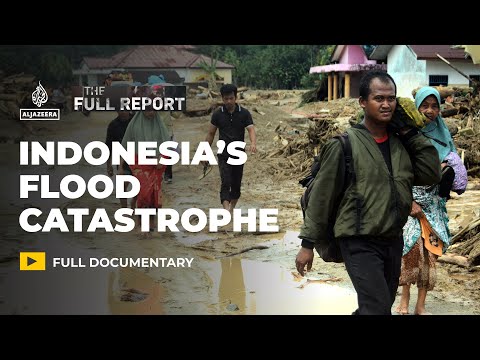
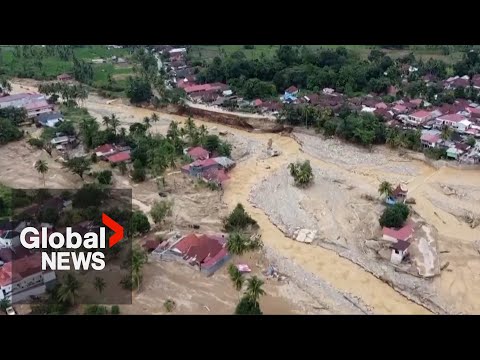
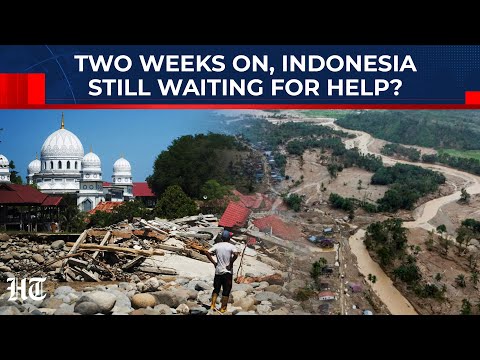
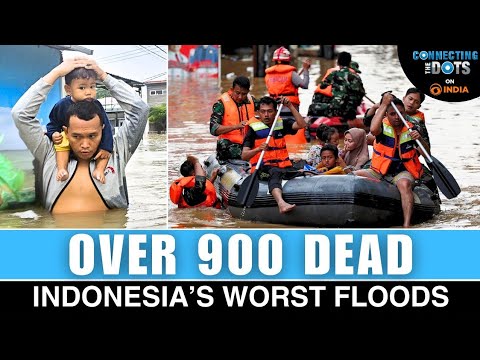
In late November 2025, Cyclone Senyar struck Sumatra, unleashing days of extreme rainfall that triggered catastrophic floods and landslides in Aceh, North Sumatra, and West Sumatra. The disaster killed at least 950 people, left 274 missing, injured thousands, and displaced about a million people—one of Southeast Asia's deadliest recent climate disasters.
As emergency rescue transitions into early recovery, Indonesia's National Disaster Mitigation Agency (BNPB) estimates reconstruction needs at 51.82 trillion rupiah (about US$3.1 billion) for housing, infrastructure, and public facilities. The response is testing President Prabowo Subianto's new administration, forcing decisions on whether to declare a national disaster and how aggressively to confront deforestation and mining interests blamed for worsening the floods. It also forces a decision on whether rebuilding will finally hard-wire climate resilience into Sumatra's economy.
Questions about this story
Free account needed to ask — your question is kept and asked for you right after sign-up. Answers are public.
No questions yet — be the first to ask.
Key Indicators
950
Confirmed deaths in Sumatra
Official death toll from cyclone‑induced floods and landslides across Aceh, North Sumatra, and West Sumatra as of 8 December 2025.
274
People missing in Sumatra
Residents still officially unaccounted for as search‑and‑rescue operations continue.
1,000,000+
Evacuated residents
People evacuated from high‑risk zones at the peak of the crisis, out of more than 3.2 million affected.
Rp51.82 trillion (US$3.1B)
Estimated reconstruction cost
BNPB’s early estimate to rebuild damaged housing, infrastructure, and public facilities in the three worst‑hit provinces.
4.4 million ha
Forest lost in Sumatra since 2001
Forest area lost to legal and illegal clearing, logging, mining and plantations, a key factor experts say amplified the floods’ destructiveness.
11 events
Latest: December 8th, 2025 · 9 months ago
Showing 8 of 11
JK to step
Tap a bar to jump to that date
December 2025
BNPB pegs reconstruction at Rp51.82 trillion as deaths reach 950
LatestRecovery Planning
At a coordination meeting in Aceh, BNPB chief Suharyanto tells President Prabowo that recovery in northern Sumatra will cost an estimated Rp51.82 trillion (US$3.1B), with Aceh needing the largest share. The official death toll rises to 950 with 274 missing; around 200 additional deaths are reported in southern Thailand and Malaysia. Plans are announced to move evacuees from shelters to temporary plywood housing before permanent homes are built.
Aceh faces disease outbreak; Prabowo visits and orders repairs
Humanitarian
In Aceh Tamiang, residents grapple with diarrhea, fever and other illnesses as the region’s only hospital is nearly paralysed by mud and equipment damage; 31 hospitals and 156 clinics across the three provinces are affected. President Prabowo visits Aceh, orders bridge and dam repairs and cancellation of some state‑backed farm loans, while instructing full restoration of electricity.
Death toll hits 914; government suspends firms in Batang Toru
Impact & Accountability
BNPB reports 914 deaths from flash floods and landslides across three provinces. In parallel, Environment Minister Hanif Faisol Nurofiq orders companies in the Batang Toru River Basin, including mining, plantation and hydropower firms, to halt operations for environmental audits after inspections show extensive land clearing.
Military builds Bailey bridges and airdrops aid as deaths reach 867
Emergency Response
Indonesia’s military steps up relief efforts, erecting at least 10 portable Bailey bridges and deploying mobile water‑treatment units while conducting food and medicine airdrops to isolated communities. The death toll reaches 867 with 521 missing; around 200 deaths are reported in southern Thailand and Malaysia.
Government vows action on mining permits amid ~800 deaths
Policy
As the death toll approaches 800 and hundreds remain missing, Indonesia’s energy minister pledges to revoke mining permits if companies are found violating rules, while acknowledging that deforestation and resource extraction have worsened the disaster.
Prabowo boosts emergency funds for Sumatra response
Policy
President Prabowo Subianto authorizes an increase in Ready‑to‑Use disaster funds, instructing that more money will be provided as needed to ministries, the military, and police for the Sumatra crisis.
Death toll in Sumatra exceeds 700; deforestation debate ignites
Impact
Indonesia’s disaster agency reports at least 708 deaths, 504 missing, over 3.2 million affected and one million evacuated. Environmental groups and locals blame deforestation and upstream projects for intensifying floods as images show huge log piles in affected areas.
Asia‑wide floods kill over 1,100; Indonesia deploys military
Regional Impact
Floods and landslides tied to cyclones and monsoon rains kill more than 1,100 people across Indonesia, Sri Lanka, Thailand, and Malaysia. Indonesia sends warships, hospital ships, and aircraft to Sumatra as schools close and aid shortages emerge.
November 2025
Cyclone Senyar makes landfall on Sumatra
Climate
Cyclone Senyar makes landfall on Sumatra, bringing intense rainfall that begins saturating soils and swelling rivers in Aceh, North Sumatra, and West Sumatra.
Basarnas launches largest SAR operation of the year
Emergency Response
Indonesia’s National Search and Rescue Agency (Basarnas) begins large‑scale deployments in response to hydrometeorological disasters hitting Aceh, North Sumatra, and West Sumatra; more than 6,000 personnel are eventually mobilized.
Low‑pressure system forms that will become Cyclone Senyar
Climate
A low‑pressure area develops over the Strait of Malacca, later organizing into Cyclonic Storm Senyar, a rare system that will bring torrential rains to Sumatra and the Malay Peninsula.
Scenarios
1
High‑Spending Rebuild with Incremental Climate and Land‑Use Reforms
Likely
Discussed by: Mainstream Indonesian media, Reuters, Antara, regional analysts
The central government fully funds or closely matches BNPB’s Rp51.82 trillion estimate, focusing on rapid housing reconstruction, road and bridge repair, and restoration of public facilities. Environmental audits in Batang Toru and other basins lead to some permit revocations, stricter guidelines on steep‑slope development, and better early‑warning systems, but do not fundamentally challenge Indonesia’s broader extractive‑driven development model. Climate adaptation is integrated into new infrastructure standards, yet enforcement remains uneven, leaving residual risk in future extreme‑rainfall events.
2
Underfunded, Politicized Recovery and Persistent Vulnerability
Possible
Discussed by: Domestic critics, NGOs such as Greenpeace Indonesia, some international climate advocates
Despite large headline figures, actual disbursement of reconstruction funds lags due to bureaucratic delays, competing budget priorities, and local capacity constraints. Calls to declare a national disaster or overhaul forest governance are only partially heeded. Some communities remain in temporary shelters for years, and rebuilding reproduces pre‑existing vulnerabilities, including settlements in floodplains and weak enforcement against illegal logging and risky mining. A future extreme‑weather event then produces similar levels of disruption, reinforcing perceptions that the state is reactive rather than preventive.
3
Major Environmental Crackdown and Shift in Forest Policy
Uncertain
Discussed by: Environment ministry statements, investigative reporting, environmental groups
Investigations into firms operating in Batang Toru and other watersheds uncover serious regulatory breaches. Under intense public pressure, the government revokes key mining and plantation permits, restructures or delays controversial projects like the Batang Toru hydropower plant, tightens spatial planning rules, and expands protected areas. Indonesia uses the Sumatra disaster to showcase a tougher climate stance internationally, potentially trading forest‑protection commitments for climate finance. This scenario would mark a significant pivot away from business‑as‑usual in Sumatra’s forest frontiers, but would face intense resistance from powerful industry actors.
4
Regional Climate‑Security Agenda after Cyclone Senyar
Possible
Discussed by: Regional commentary linking deaths in Indonesia, Thailand, Malaysia, and Sri Lanka to shared climate risks
Because Cyclone Senyar and related systems also killed around 200 people in southern Thailand and Malaysia and hundreds more in Sri Lanka, Southeast Asian and Indian Ocean states may use the catastrophe to strengthen regional cooperation on climate resilience, disaster response, and transboundary watershed management. This could include joint early‑warning systems, shared military logistics protocols, and regional financing mechanisms for resilient infrastructure. However, divergent national interests and domestic politics may limit how far this agenda progresses.
Historical Context
3 moments from history that rhyme with this story — and how they unfolded.
1 of 3
2004–2010
2004 Indian Ocean Tsunami and Aceh Reconstruction
On 26 December 2004, a magnitude‑9.1 earthquake off Sumatra generated a tsunami that killed about 230,000 people across 14 countries, with Aceh province suffering over 160,000 deaths. A massive international relief and reconstruction effort followed, turning Aceh into a laboratory for large‑scale post‑disaster rebuilding and governance reforms, including a peace deal between the Indonesian government and the Free Aceh Movement.
Then
Billions in international aid rebuilt housing and infrastructure, but coordination challenges and local inequalities shaped who benefited most.
Now
Aceh’s infrastructure and governance structures were significantly upgraded, yet vulnerability to coastal hazards persisted and some reconstruction projects were later criticized for poor siting and environmental impacts.
Why this matters now
The Sumatra megaflood again centers Aceh and raises similar questions about equity, land use, and the balance between speed and safety in reconstruction. Lessons from the tsunami era — in housing design, community participation, and integration of peacebuilding with rebuilding — may influence how Prabowo’s government and international partners approach today’s recovery.
2 of 3
2018–2023
2018 Sulawesi (Palu) Earthquake, Tsunami, and Liquefaction
In September 2018, a magnitude‑7.5 earthquake struck Central Sulawesi, triggering a tsunami and massive soil liquefaction that destroyed large parts of Palu and surrounding districts, killing more than 4,000 people. Indonesia relocated many survivors and implemented a multi‑year reconstruction program, but faced delays, land‑tenure disputes, and criticism over slow delivery of permanent housing.
Then
Tens of thousands lived in temporary shelters for extended periods while the government debated safe relocation sites and zoning rules.
Now
The disaster spurred some improvements in spatial planning and building codes, yet implementation remained uneven, and many at‑risk communities elsewhere retained similar vulnerabilities.
Why this matters now
The Palu experience illustrates the difficulties of large‑scale relocation and safe‑site selection that Sumatra now faces. It underscores the risk that flood survivors could spend years in temporary housing if land disputes, financing gaps, and bureaucratic hurdles are not swiftly resolved.
3 of 3
2022–2024
2022 Pakistan Super Floods
Unusually intense monsoon rains in mid‑2022 flooded about a third of Pakistan’s territory, killing more than 1,700 people and displacing millions. Analysts linked the disaster to climate change, deforestation, poor river management, and settlement in floodplains. Reconstruction costs were estimated at over US$16 billion, straining public finances and requiring substantial international support.
Then
Pakistan struggled to finance recovery while managing macroeconomic and debt crises, leading to delayed rebuilding and prolonged suffering for displaced communities.
Now
The floods became a touchstone in global debates over ‘loss and damage’ funding and climate justice, but on‑the‑ground adaptation and governance reforms have proceeded slowly.
Why this matters now
Pakistan’s experience shows how climate‑amplified floods can overwhelm even large national budgets and spark debates on who should pay. Indonesia’s Rp51.82 trillion reconstruction bill, combined with evidence of climate change and deforestation, could similarly feed into regional and global arguments over climate finance, loss‑and‑damage mechanisms, and the responsibilities of both governments and corporations.