
Pull to refresh
Logo
Trump administration awards nearly $300 million for policing in four cities

Trump administration awards nearly $300 million for policing in four cities

Force in Play

St. Louis and Jackson, Mississippi, get more than $60 million each for drones, gunshot detection and forensic labs under the Model Cities Initiative

Overview

Updated 45 minutes ago

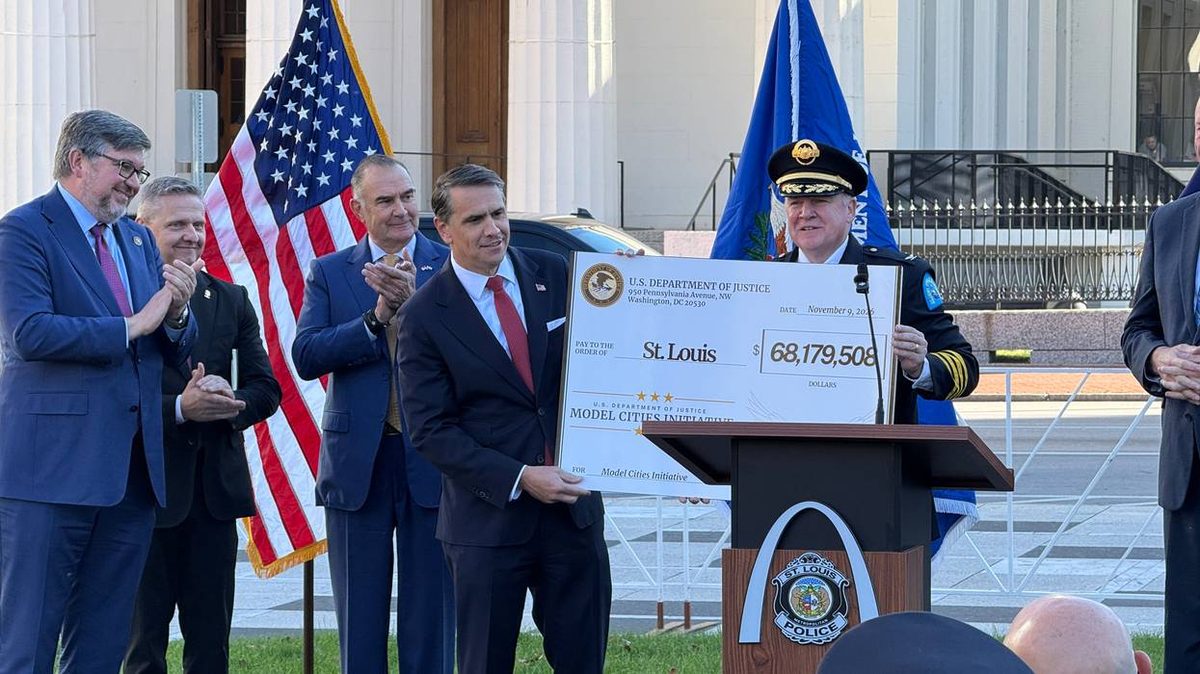
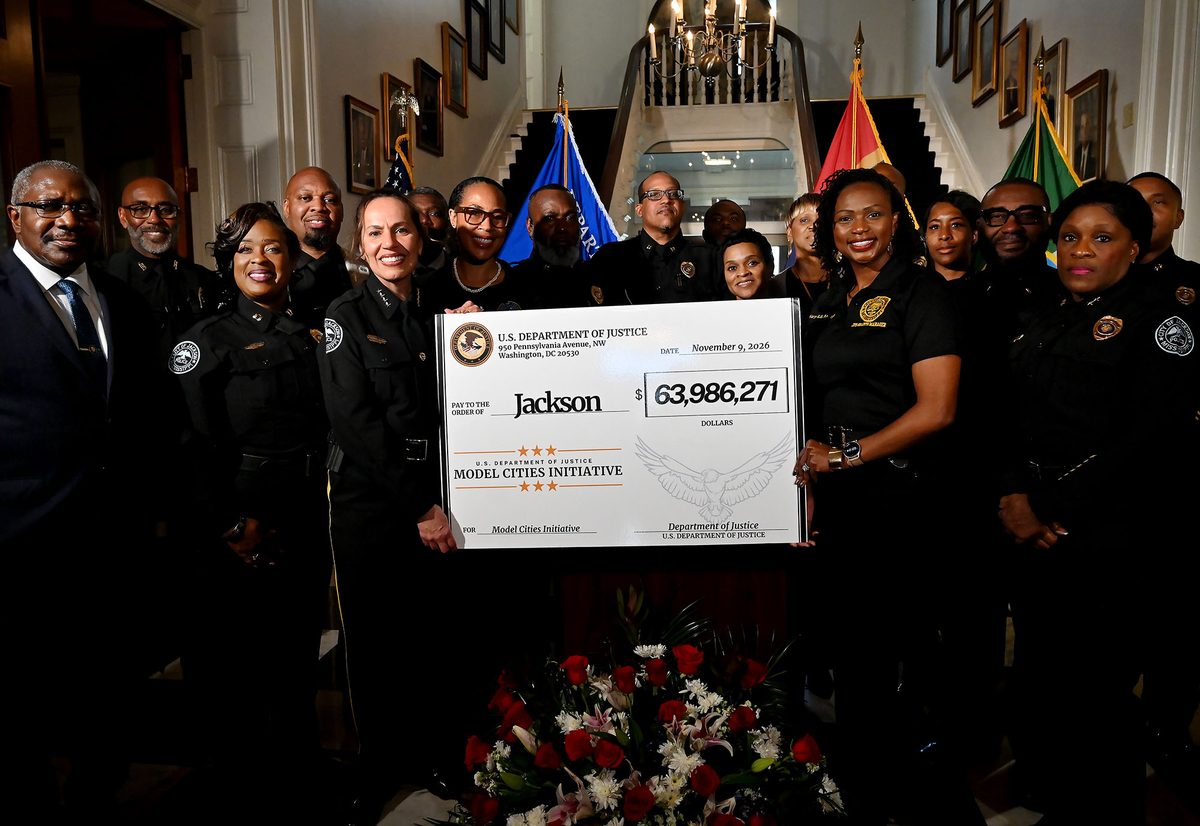
The Justice Department picked four jurisdictions from 47 applicants to split nearly $300 million for local policing. On November 9 it named the dollar figures: more than $68 million for St. Louis and more than $63 million for Jackson, Mississippi. The White House promoted the awards the next day.

The money pays for hardware and people: drones, gunshot detectors, forensic labs, real-time crime centers, officer recruiting. It also binds four cities to a federal anti-crime push that has already sent National Guard troops into several Democrat-led cities over local objections. Crime in St. Louis and Jackson has been falling for years without this program, which makes the grants a test of whether federal money buys more decline or just more equipment.

Why it matters

Four cities are about to build permanent surveillance infrastructure with federal money, and the contracts will outlast the crime debate that justified them.

Questions about this story

Free account needed to ask — your question is kept and asked for you right after sign-up. Answers are public.

No questions yet — be the first to ask.

Key Indicators

$300M
Total Model Cities funding
Nearly $300 million split across four jurisdictions.
$68M
St. Louis award
Announced November 9; more than $68 million over the award period.
$63M
Jackson, Mississippi award
Announced November 9; Jackson officials put the figure near $64 million.
47
Applicant jurisdictions
Cities and parishes that applied; four were selected.
8,000+
Shots detected in half a square mile of Jackson
Gunshot detectors logged the total between August 2025 and August 2026, per Attorney General Todd Blanche.
75
Jackson homicides in 2025
Down from 156 in 2021, the department's stated reason for selecting the city.

Voices

Curated perspectives — historical figures and your fellow readers.

Sign up to generate historical perspectives on this story.

People Involved

Organizations Involved

Timeline

October 2026 November 2026

3 events Latest: Yesterday
  1. White House promotes the awards publicly

    Latest Statement

    A White House social media post says the Model Cities Initiative will expand prosecution and policing capacity in the recipient cities.

  2. Jackson and St. Louis receive individual awards

    Funding

    The department obligates more than $63 million to Jackson and more than $68 million to St. Louis, with details on drones, forensic labs and crime centers.

  3. Justice Department names four Model Cities jurisdictions

    Policy

    Jacksonville, East Baton Rouge Parish, Jackson and St. Louis are selected from nearly 50 applicants to share nearly $300 million.

Scenarios

1

First Model Cities dollars reach St. Louis and Jackson on schedule

Likely Resolves by Q2 2027

Discussed by: Justice Department award announcements; Jackson officials interviewed by WAPT

The awards are already named and the department says it will finalize each city's public safety plan. Jackson officials say money starts arriving in early 2027. The test is whether the first tranche lands without a contracting dispute or a budget fight in Congress.

2

Civil liberties groups sue over drone and gunshot-detection expansion

Possible Resolves by End of 2027

Discussed by: Civil liberties groups that have criticized the Memphis task force, as reported by Al Jazeera

Both cities plan to widen sensor coverage and fly more drones. Opponents of the administration's urban policing push have focused on surveillance and use-of-force complaints, and a funded expansion gives them a concrete target with a federal agency attached.

3

Model Cities adds a fifth jurisdiction

Possible Resolves by Q3 2027

Discussed by: Justice Department program documents describing a replicable model

The department calls the four cities a model meant to be replicated. With 43 applicants left over and a program brand already built, adding cities is the cheapest way to expand without new legislation.

4

Federal agents or National Guard sent to St. Louis or Jackson

Uncertain Resolves by Q2 2027

Discussed by: Al Jazeera reporting on the Memphis task force and National Guard deployments

The program was modeled on the Memphis task force, which mixed federal agents with National Guard troops. A city that has already accepted federal money and federal technology is a shorter step away from a federal enforcement surge than one that has not.

Historical Context

3 moments from history that rhyme with this story — and how they unfolded.

1968-1982

Law Enforcement Assistance Administration (1968)

The Omnibus Crime Control and Safe Streets Act created the Law Enforcement Assistance Administration and routed federal block grants to state and local police. Departments used much of the money for equipment, vehicles and communications systems.

Then

Local police got a steady federal funding stream through the 1970s.

Now

Congress abolished the agency in 1982 after critics said the grants bought hardware without clear reductions in crime.

Why this matters now

Model Cities follows the same design: federal money, local discretion, heavy spending on equipment.

1994

COPS hiring program (1994)

The Violent Crime Control and Law Enforcement Act created the Office of Community Oriented Policing Services and set a goal of adding 100,000 local officers, with Washington covering part of the salary.

Then

Departments hired thousands of officers through the late 1990s.

Now

Research on whether the hiring drove the 1990s crime decline is mixed, but the program became the template for federal police hiring grants.

Why this matters now

Model Cities money can pay for sworn officers and recruiting bonuses, the same lever COPS used.

July-September 2020

Operation Legend (2020)

The Justice Department sent federal agents to Kansas City in July 2020 and expanded the operation to Chicago, Albuquerque, Cleveland, Detroit, Milwaukee, St. Louis, Memphis and Indianapolis.

Then

Federal prosecutors brought weapons and drug cases; local officials in several cities said the surge duplicated work their own departments were doing.

Now

The operation became a template for later federal deployments, and its city-level results remained disputed.

Why this matters now

St. Louis and Memphis, named as a model for this program, were both Operation Legend targets in 2020.

Sources

(5)