
Pull to refresh
Logo
Russia commissions Vostok Oil, loads first Arctic crude at Bukhta Sever

Russia commissions Vostok Oil, loads first Arctic crude at Bukhta Sever

Built World

Pipeline links Siberian oil fields to the Arctic; exports expected to reach 30 million tonnes a year in the second half of 2027

7 days ago: Russia commissions Vostok Oil, loads first crude

Overview

Updated 6 days ago

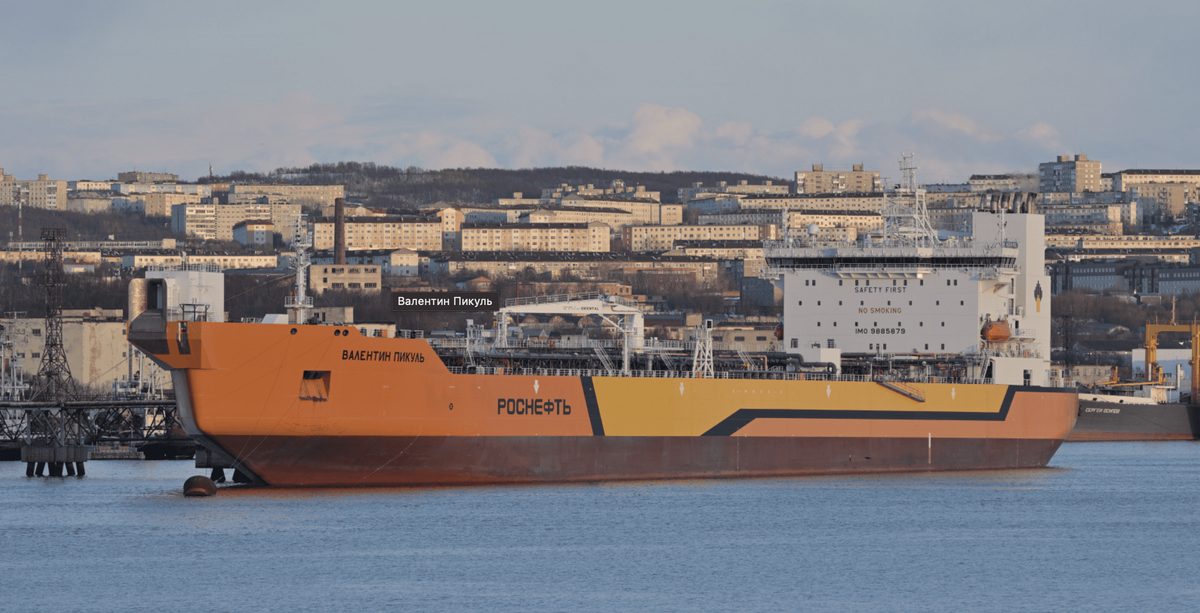
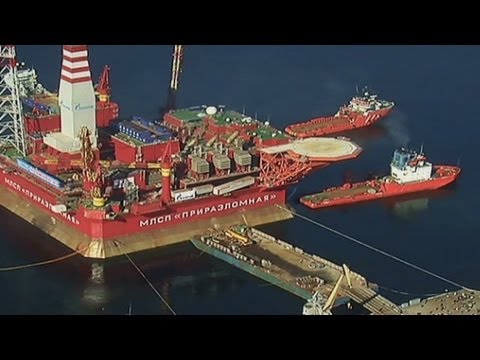
Russia commissioned the Vostok Oil project on September 5, when President Vladimir Putin authorized the first loading of Arctic crude onto the ice-class tanker Valentin Pikul at Bukhta Sever (Sever Bay) on the Taimyr Peninsula. Rosneft CEO Igor Sechin called the port the world's northernmost; a second tanker, Akademik Gubkin, was at anchorage to load the next cargo.

A new 790-kilometer pipeline links the Vankor and Payakha fields to the coast, including a 6-kilometer crossing buried beneath the Yenisei River. Its design capacity is 100 million tonnes a year; the port's first stage handles 30 million. Russia wants to nearly double Northern Sea Route traffic by 2030, and Vostok Oil is central to that plan, though sanctions, Arctic conditions, and ice-class vessel shortages could slow the ramp-up.

Why it matters

Vostok Oil could add up to 100 million tonnes of crude a year to global markets, reshaping Arctic shipping lanes and oil supply.

Questions about this story

Free account needed to ask — your question is kept and asked for you right after sign-up. Answers are public.

No questions yet — be the first to ask.

Key Indicators

30 million
First-stage terminal capacity
Annual capacity of the Bukhta Sever port's initial phase
7 billion
Resource base
Rosneft cites a resource base of 7 billion tonnes of low-sulfur crude
790 km
Pipeline length
Vankor-Payakha-Bukhta Sever pipeline, designed for 100 million tonnes per year
4 trillion rubles
Total investment
Cumulative investment in the Vostok Oil project by commissioning
70 million
Northern Sea Route target
Russia's 2030 cargo-flow target, up from 37 million tonnes in 2025

Voices

Curated perspectives — historical figures and your fellow readers.

Ever wondered what historical figures would say about today's headlines?

Sign up to generate historical perspectives on this story.

People Involved

Organizations Involved

Timeline

March 2022 September 2026

5 events Latest: 7 days ago
Tap a bar to jump to that date
  1. Russia commissions Vostok Oil, loads first crude

    Latest Commissioning

    Putin authorized the first loading of Arctic crude onto the ice-class tanker Valentin Pikul at the Bukhta Sever terminal.

  2. Bukhta Sever oil terminal's first phase commissioned

    Infrastructure

    The first phase of the Bukhta Sever oil terminal was commissioned as part of Vostok Oil, with 30 million tonnes of annual capacity. Rosneft plans 102 storage tanks by 2030, scaling the terminal toward 100 million tonnes.

  3. Akademik Gubkin waits to load second Vostok Oil cargo

    Logistics

    Rosneft said the tanker Akademik Gubkin was at anchorage at Bukhta Sever to load the second cargo after the Valentin Pikul.

  4. Pipeline construction passes 80 percent

    Construction

    Over 80 percent of the Vankor-Payakha-Bukhta Sever pipeline was complete by mid-2025, ahead of the commissioning target.

  5. Foreign backers exit Vostok Oil

    Corporate

    Trafigura, Vitol, and Mercantile & Maritime sold their stakes in 2022 after Russia's February invasion of Ukraine, leaving Rosneft to carry the project alone.

Scenarios

1

Vostok Oil delivers 30 million tonnes by late 2027

Likely Resolves by Q2 2028

Discussed by: Rosneft CEO Igor Sechin; TASS report

Rosneft targets 30 million tonnes of annual supply in the second half of 2027, scaling to 50 million by 2030. Sechin said shipments to international buyers begin in that window, with cargoes headed to Asia-Pacific and possibly western markets.

2

Sanctions and vessel shortages stall Vostok Oil ramp-up

Possible Resolves by Q2 2028

Discussed by: Bloomberg; Cryptobriefing analysis

Western sanctions, tight Arctic shipping insurance, and a shortage of high-ice-class tankers could delay the ramp-up. The project lost its original foreign partners in 2022, and moving large volumes of crude through Arctic waters requires specialized vessels Russia is still building.

3

Vostok Oil scales toward 100 million tonnes by the 2030s

Uncertain Resolves by Jan 1, 2035

Discussed by: Sechin comments; project design documents

If market demand and economics cooperate, Sechin expects annual volumes to reach 100 million tonnes, the pipeline's design capacity. This would require sustained investment and enough ice-class vessels to move roughly 2 million barrels per day through Arctic waters.

Historical Context

2 moments from history that rhyme with this story — and how they unfolded.

1973–1977

Trans-Alaska Pipeline (1977)

The United States built a 1,287-kilometer pipeline across Alaska to move crude from Prudhoe Bay, then the largest oil field in North America. At peak, it carried about 2.1 million barrels per day, roughly 105 million tonnes a year, from the Arctic to the ice-free port of Valdez.

Then

The pipeline transformed Alaska's economy and anchored U.S. domestic production for decades.

Now

It remains the model for moving Arctic crude through hostile terrain, though the field has since declined.

Why this matters now

Vostok Oil is comparable in scale and logistics difficulty, but Russia's route runs through the open Arctic Ocean rather than to a warm-water port.

2014–2017

Yamal LNG (2017)

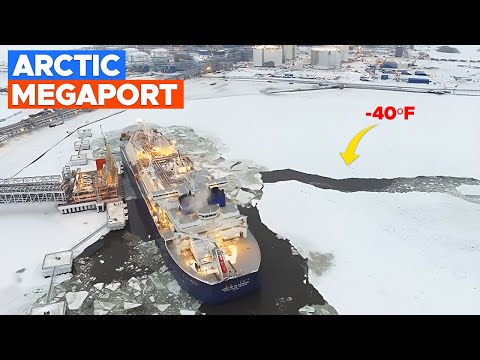
Russia's Novatek launched the Yamal LNG plant on the Yamal Peninsula, a $27 billion project that used the Northern Sea Route to ship liquefied natural gas to Asia in winter, escorted by nuclear icebreakers.

Then

The project proved year-round Arctic shipping was feasible and opened the Northern Sea Route to regular commercial traffic.

Now

It established the Arctic infrastructure and icebreaker fleet that Vostok Oil now relies on.

Why this matters now

Yamal LNG showed Russia can build and operate Arctic megaprojects despite extreme conditions; Vostok Oil extends the same playbook to crude oil.

Sources

(13)