Pull to refresh
Logo
Daily Brief
Following
Why Ranks Sign Up
India deploys portable hospital cubes to quake-hit Venezuela

India deploys portable hospital cubes to quake-hit Venezuela

New Capabilities

Death toll at 3,535 and climbing; India's BHISHM cubes donated as acting president Rodríguez's constitutional mandate expires

July 7th, 2026: Death toll reaches 3,535; more than 17,000 left without housing

Overview

Two weeks after the June 24 twin earthquakes, Venezuela's confirmed death toll reached 3,535 — more than double the figure recorded in the first days after the disaster. Most international rescue teams have withdrawn, leaving 29,567 Venezuelan military and security personnel and more than 27,000 volunteers to continue recovery.

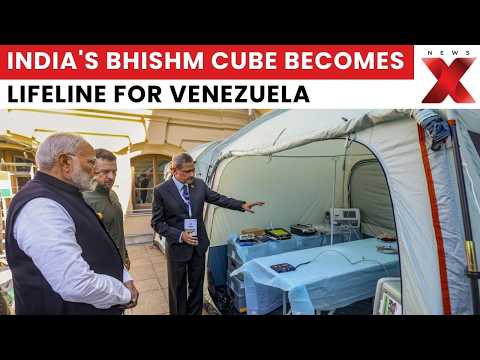
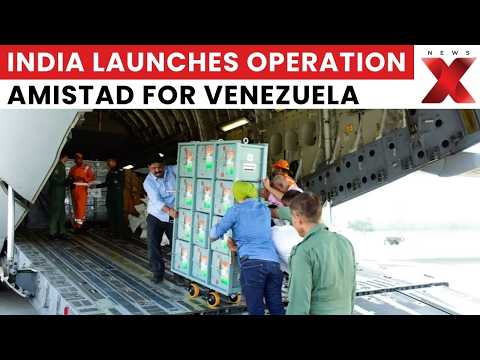
India formally donated both BHISHM portable hospital cubes to Venezuela on July 6 and demonstrated their operation to local medical officers a day earlier. Acting President Rodríguez launched Venezuela Renace, a reconstruction program, and appointed Jacqueline Faría to lead it. Her 180-day constitutional mandate expired July 3 with no election announced; opposition leaders are citing Article 233 and demanding a vote.

Why it matters

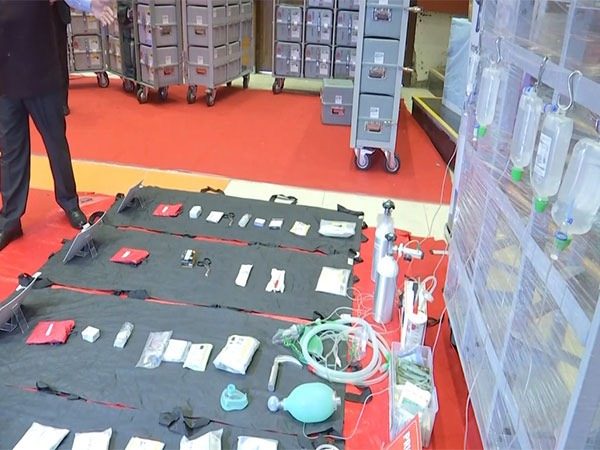
When a quake flattens local hospitals, a trauma center that assembles in 12 minutes keeps people alive until permanent care can be rebuilt.

Questions about this story

No questions yet — be the first to ask.

Key Indicators

3,535
Confirmed deaths
Toll confirmed July 7 by Venezuela's National Assembly leader Jorge Rodríguez — officials say it is the deadliest natural disaster in Venezuela in more than a century.
16,740
People injured
Injuries confirmed as of July 7; the June 28 figure was 3,238, before crews had accessed most of the collapsed area.
2
BHISHM cubes donated
India donated both portable hospital units to Venezuela on July 6, making them permanent national assets after demonstrating their operation to Venezuelan medical officers.
24
Nations sent aid
Countries that dispatched rescuers or relief, including 2,741 international personnel. Most foreign rescue teams have now concluded operations and returned home.
$200M
Venezuela reconstruction fund
Fund announced June 28 by Acting President Rodríguez; Venezuela Renace launched July 6 as the implementing arm, with Jacqueline Faría appointed to lead housing and infrastructure recovery.
430+
Aftershocks recorded
Successive seismic events since the June 24 main shocks, complicating rescue operations; the running count may be higher as monitoring continues.

Voices

Curated perspectives — historical figures and your fellow readers.

Ever wondered what historical figures would say about today's headlines?

Sign up to generate historical perspectives on this story.

Play

Exploring all sides of a story is often best achieved with Play.

Log in to play. Track your picks, climb the leaderboards. Log in Sign Up
Predict 6 ways this could play out. Contrarian picks score more — points lock when the scenario resolves. Log in to play
Higher or Lower Two numbers from this story. Guess which is bigger. 5 rounds to set a streak. Log in to play
Timeline Five events from this story — drag them oldest to newest. Log in to play
Connections Sixteen names from the news. Find the four hidden groups of four. Log in to play

People Involved

Organizations Involved

Timeline

January 2023 July 2026

14 events Latest: July 7th, 2026 · 1 week ago Showing 8 of 14
Tap a bar to jump to that date
  1. Death toll reaches 3,535; more than 17,000 left without housing

    Latest Response

    Jorge Rodríguez, head of Venezuela's National Assembly, confirmed 3,535 dead, 16,740 injured, and more than 17,000 people without housing. Officials described it as the deadliest natural disaster in Venezuela in more than a century.

  2. India donates BHISHM cubes; most foreign rescue teams depart

    Deployment

    India formally donated both BHISHM hospital cubes to Venezuela, making them permanent assets in the national medical system. Most international rescue teams also concluded operations and returned home.

  3. Venezuela launches Venezuela Renace reconstruction program

    Response

    Acting President Rodríguez launched Venezuela Renace (Venezuela Reborn) to coordinate housing and infrastructure recovery. She appointed former cabinet minister Jacqueline Faría to lead the program.

  4. Indian Army demonstrates BHISHM cubes to Venezuelan medical officers

    Deployment

    Indian Army medics showed Venezuelan medical officers how to deploy and operate the BHISHM portable hospital cubes in Caracas, transferring the skills needed to run the units without Indian personnel on site.

  5. Rodríguez's 180-day constitutional mandate expires; death toll nears 3,000

    Politics

    The constitutional window for Rodríguez's interim presidency closed with the earthquake death toll nearing 3,000. Opposition leaders cited Article 233 and called for presidential elections; the government made no announcement.

  6. Aftershock hits Caracas; death toll rises to 1,719

    Disaster

    An aftershock struck Caracas during critical rescue hours, disrupting crews working in collapsed buildings. The confirmed death toll rose to 1,719 as searches continued across La Guaira and the capital.

  7. Rodríguez announces $200M reconstruction fund; toll confirmed at 1,430

    Response

    Acting President Delcy Rodríguez announced a $200 million fund to rebuild hospitals and housing. Venezuela's National Assembly confirmed 1,430 dead, 3,238 injured, and 430-plus aftershocks recorded since June 24.

  8. US rescue teams pull mother and infant from rubble on day four

    Rescue

    American federal search-and-rescue teams pulled a mother and her nine-month-old child from a collapsed building. More than 2,741 rescuers from 24 countries are on the ground or en route.

  9. BHISHM cubes reach Venezuela

    Deployment

    India's portable hospitals and field hospital arrive as the confirmed death toll passes 1,400.

  10. India launches Operation Amistad

    Deployment

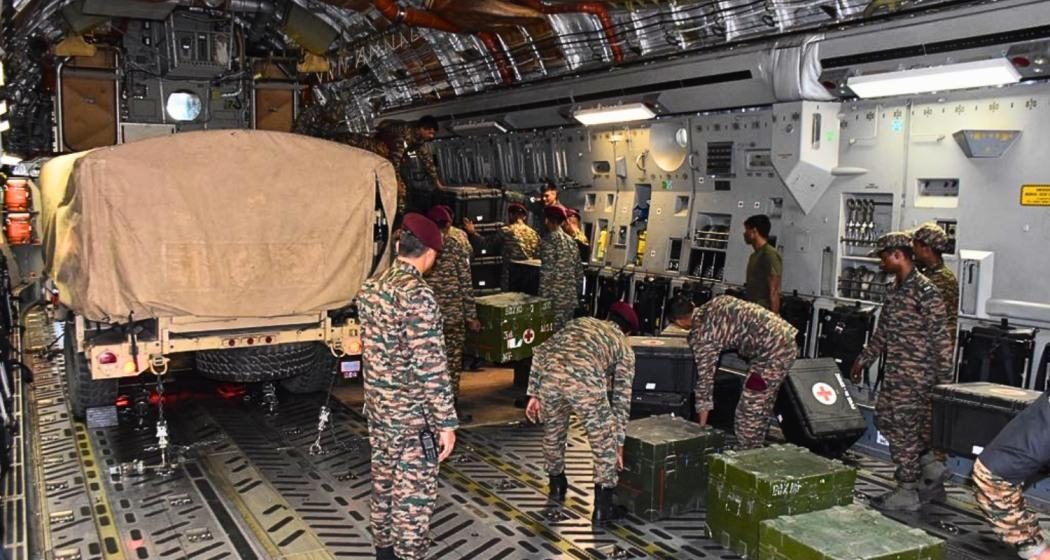
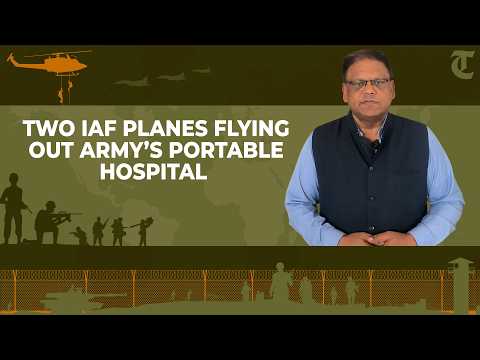
    Two Indian Air Force C-17s depart with a field hospital, medical team, and BHISHM cubes. The US commits over $150 million.

  11. Death toll climbs, rescuers arrive

    Response

    Confirmed deaths pass 180 as the UN deploys aid and the first foreign rescue teams reach Venezuela.

  12. Twin earthquakes strike Venezuela

    Disaster

    A magnitude 7.2 quake hits near Yumare, followed 39 seconds later by a 7.5 mainshock near San Felipe.

  13. First BHISHM cubes go overseas

    Development

    India gifts four BHISHM cubes to Ukraine, the system's first transfer abroad.

  14. India launches Aarogya Maitri

    Origin

    Prime Minister Modi announces the global health aid program that produces the BHISHM portable hospital system.

Historical Context

3 moments from history that rhyme with this story — and how they unfolded.

March 2025

Operation Brahma, Myanmar (2025)

After a magnitude 7.7 earthquake hit Myanmar, India sent a 118-member army medical team that set up a field hospital near the disaster zone. The unit treated more than 2,500 patients and performed 65 major surgeries.

Then

India was among the first responders on the ground and ran one of the larger foreign medical operations.

Now

The mission became the template for India's rapid relief airlifts, refined further in Venezuela.

Why this matters now

Operation Amistad uses the same playbook, now upgraded with the portable BHISHM cubes that Myanmar did not receive.

April–May 2015

Operation Maitri, Nepal (2015)

A magnitude 7.8 earthquake killed nearly 9,000 people in Nepal. India launched its largest foreign disaster response to date, flying in rescuers, medical teams, and relief within hours of the quake.

Then

Indian teams pulled survivors from rubble and ran field clinics across affected districts.

Now

The operation set the model for India acting as a first responder in its neighborhood and beyond.

Why this matters now

Maitri established the airlift-and-field-hospital approach that India now extends across the Atlantic to Venezuela.

January 2010

Haiti earthquake response (2010)

A magnitude 7.0 quake near Port-au-Prince killed an estimated 220,000 people and destroyed much of the capital's medical infrastructure. Dozens of countries rushed in field hospitals and rescue teams.

Then

Aid saved lives but overwhelmed coordination, with overlapping teams and patchy supply chains.

Now

Reconstruction stalled for years, and the response became a case study in the limits of disaster aid.

Why this matters now

Haiti shows both the value of fast medical capability and the hard part that follows: coordinating many actors and sustaining recovery.

Sources

(29)