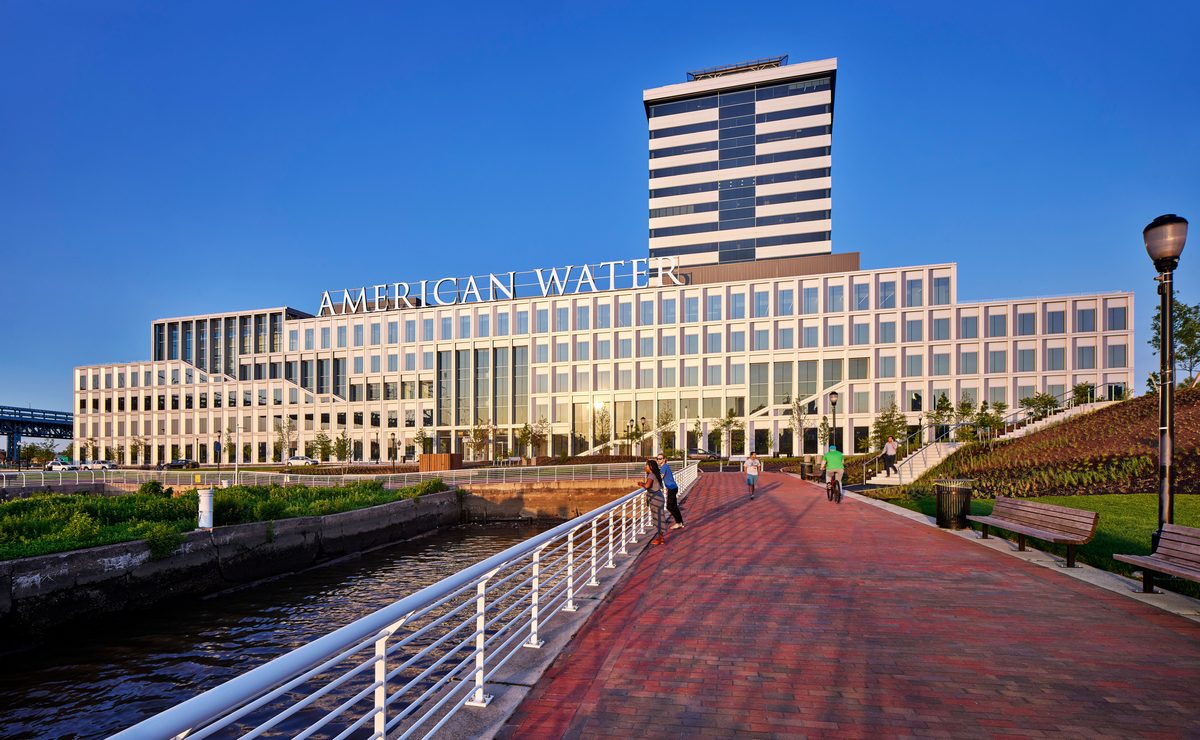
American Water paid $315 million on June 1 for 47,000 customer connections that Nexus Water Group held across eight states. The deal closes one mid-size piece of a broader sell-off: small water systems shedding compliance-heavy assets to investor-owned utilities.
Federal rules require lead service line replacement starting in 2027. In May, EPA proposed extending the PFOA and PFOS compliance deadline to 2031 and scrapping limits for four other forever chemicals: GenX, PFHxS, PFNA, and a hazard-index mixture. Lead pipe costs alone still push undercapitalized operators toward a sale.
Why it matters
Water bills for tens of millions of Americans are tied to who owns the local pipes, and ownership is concentrating in fewer hands each year.
14 events
Latest: June 3rd, 2026 · 1 month ago
Showing 8 of 14
JK to step
Tap a bar to jump to that date
Jump to
June 2026
American Water achieves AWWA resilience goal five years early
LatestCorporate
American Water announced it hit its AWWA Utility Resilience Index target as of year-end 2025, five years ahead of schedule. The company outlined $48 billion in capital investment planned over the next decade.
American Water closes Nexus acquisition
M&A
Deal closes ahead of schedule. About 70 Nexus employees offered roles at American Water; 47,000 connections folded into existing state subsidiaries.
American Water announces post-merger leadership structure
Corporate
John Griffith notified employees of senior leadership decisions for the combined company following Essential Utilities merger close. A companywide town hall is set for June 3.
May 2026
EPA proposes extending PFAS compliance to 2031
Regulation
Proposed rule would give systems two extra years to meet PFOA and PFOS limits, easing near-term capex pressure.
EPA proposes rescinding drinking-water limits for four PFAS compounds
Regulation
A separate May 18 proposal would scrap enforceable limits for GenX chemicals, PFHxS, PFNA, and a hazard-index mixture, citing procedural defects in the original Biden-era rulemaking. Comment deadline is July 20; EPA aims to finalize by end of 2026.
Ohio PUC approves Essential merger
Regulatory
Second state approval. Hart-Scott-Rodino antitrust clearance still pending.
April 2026
Kentucky PSC approves Essential merger
Regulatory
First state public utility commission greenlights the combination. Multiple state approvals still required.
October 2025
American Water and Essential Utilities announce merger
M&A
All-stock deal would create the largest US regulated water utility, serving 4.7 million connections across 17 states. Closing targeted for Q1 2027.
May 2025
American Water agrees to buy Nexus systems
M&A
$315 million all-cash deal covers about 47,000 customer connections across eight states. Closing originally targeted for August 2026.
October 2024
EPA issues Lead and Copper Rule Improvements
Regulation
Utilities must replace nearly all lead service lines within ten years, starting in 2027. Small systems face the steepest per-customer costs.
May 2024
John Griffith takes over as American Water CEO
Corporate
Former CFO becomes chief executive and signals continued M&A-led growth.
April 2024
EPA finalizes drinking-water limits for PFAS
Regulation
Enforceable limits of 4 parts per trillion for PFOA and PFOS apply to every community water system. Original compliance deadline set for 2029.
January 2023
Corix rebrands as Nexus Water Group
Corporate
BCI-backed Corix Infrastructure becomes Nexus Water Group, signaling a sharper focus on regulated water and wastewater.
January 2016
Fair-market-value laws spread among state legislatures
Policy
Pennsylvania, Illinois, New Jersey, and others let private utilities pay above book value for municipal systems. The change makes acquisitions easier to finance through rate base.
Historical Context
3 moments from history that rhyme with this story — and how they unfolded.
1 of 3
August 2005
Energy Policy Act repeals PUHCA (2005)
Congress repealed the Public Utility Holding Company Act of 1935, which had blocked multi-state electric utility mergers for seventy years. The repeal took effect in February 2006 and removed the main legal barrier to cross-state combinations.
Then
Within seven years, the sector saw a wave of mergers: Exelon-Constellation closed in 2012, Duke-Progress closed in 2012, AEP and others followed with smaller deals.
Now
The number of US investor-owned electric utilities fell sharply, and a handful of holding companies came to serve roughly a third of US electric customers.
Why this matters now
The post-PUHCA electric wave shows how a single regulatory change can release decades of pent-up consolidation pressure. Today's water sector lacks one big bang, but the cumulative weight of EPA rules and state fair-value laws is producing a similar effect over a longer arc.
2 of 3
March 2010 onward
Hospital consolidation after the Affordable Care Act (2010 onward)
The ACA reset hospital reimbursement around quality reporting, bundled payments, and risk-bearing contracts. Independent community hospitals lacked the scale to absorb the compliance investment and the negotiating power to defend reimbursement rates against insurers.
Then
Hospital mergers averaged roughly 90 deals per year from 2010 through 2017, up from about 50 in the prior decade.
Now
The share of US hospitals operating as part of larger systems crossed 65%. Independent academic studies linked the concentration to higher commercial prices in consolidated markets.
Why this matters now
The hospital wave is a cleaner parallel than the electric one: federal rules raised the cost of staying independent, and consolidation followed without a single triggering statute. Water is now running the same playbook, with EPA standing in for CMS.
3 of 3
May 2021
Indiana American Water buys Charlestown system (2021)
Indiana American Water paid about $14.5 million to buy the Charlestown, Indiana, municipal water system, ending a multi-year legal fight over the city's eminent-domain transfer to the utility. Customers had complained about brown water from aging lead and cast-iron pipes.
Then
Indiana American invested in pipe replacement under a state-approved infrastructure surcharge. Customer bills rose.
Now
The Charlestown deal became a template Indiana American and peers cited when courting other small municipalities facing aging-infrastructure costs.
Why this matters now
Charlestown shows the consolidation cycle in miniature: a small system without the rate base to fix its own pipes sells to a larger investor-owned operator that can fund the work and recover the cost through statewide rates. The Nexus deal scales that pattern across eight states in one transaction.