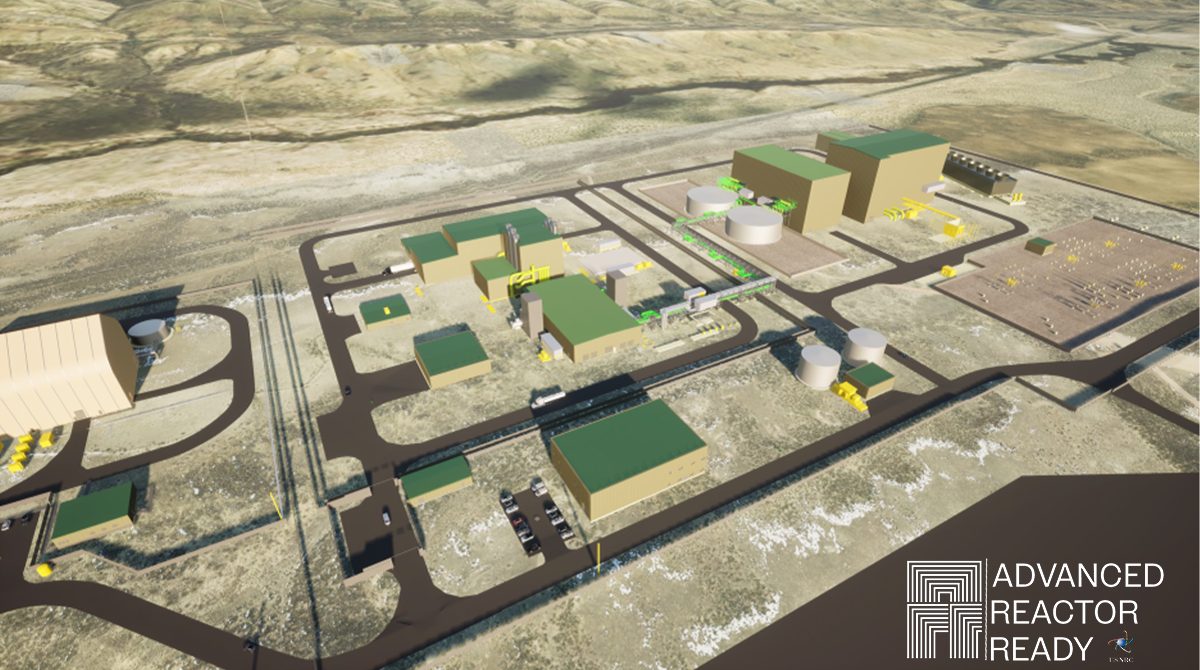
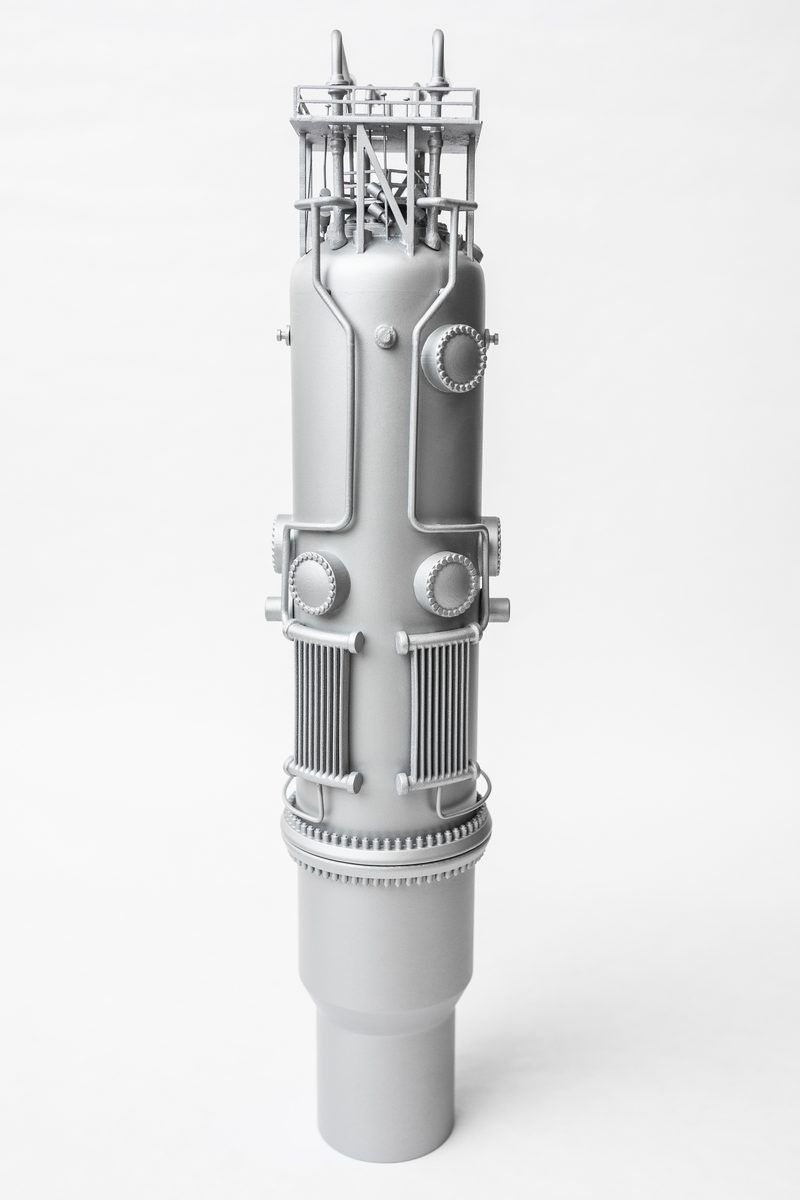
On March 4, 2026, the Nuclear Regulatory Commission approved a construction permit for TerraPower's Natrium reactor at Kemmerer, Wyoming—the first permit for a commercial non-light-water reactor in more than 40 years. TerraPower broke ground on April 23 with Bechtel as general contractor, making Kemmerer the first utility-scale advanced nuclear plant under active construction in the US.
The US has cancelled more reactors than any other country has built, wiping out 120+ projects since 1953. The first months of 2026 suggest the pattern may be shifting: NuScale's Romania project received its final investment decision in February, the NRC published a new Part 53 licensing framework in March, and TerraPower is now building the first sodium-cooled commercial reactor in US history. Whether costs stay on track will determine whether the shift is real.
Why it matters
If TerraPower finishes Kemmerer on budget by 2031, it breaks a 47-year streak of US advanced reactor failures and resets the cost calculus for every utility watching.
Questions about this story
Free account needed to ask — your question is kept and asked for you right after sign-up. Answers are public.
0
When will it go live?
TerraPower's Natrium reactor at Kemmerer targets construction completion in 2030, with commercial power to the grid in 2031.
Why it matters: It's the first utility-scale advanced reactor built in the US in decades — if it hits schedule, it resets expectations for the entire industry.
—Construction broke ground April 23, 2026, with Bechtel managing roughly 1,600 workers on site.
—The 36-month construction timeline points to a 2030 target for fuel loading and readiness.
—First power delivery to the grid is expected in 2031, per reporting from Neutron Bytes in November 2025.
—The 345 MW sodium-cooled plant is the first commercial non-light-water reactor to break ground in US history.
TerraPower officially cites 2030 as the completion target, but independent reporting (Neutron Bytes) places first grid power in 2031 — the gap reflects the difference between physical completion and commercial operation, though skeptics note US nuclear projects have almost never hit their original timelines.
AI-generated with web search — may be wrong. Check the linked sources.
Key Indicators
120+
Reactors Cancelled
Commercial reactor orders abandoned since 1953, representing 150-200 GW of lost capacity
$35B
Vogtle Final Cost
Original estimate was $14 billion; completed 7 years late in 2024
6.6 GW
Meta Nuclear Commitment
Tech giant's January 2026 deals with TerraPower, Oklo, and Vistra—largest corporate nuclear purchase
18 mo
New Licensing Deadline
Executive order mandates NRC approve new reactor applications within 18 months
29 events
Latest: April 30th, 2026 · 4 months ago
Showing 8 of 29
JK to step
Tap a bar to jump to that date
Jump to
April 2026
NRC Opens ALARA Revision for Public Comment
LatestRegulatory
The NRC published a proposed rule reconsidering radiation safety requirements, including whether to revise or eliminate the ALARA standard for new reactor designs. Final rules are due November 2026.
TerraPower Breaks Ground at Kemmerer
Construction
TerraPower officially began construction on Kemmerer Unit 1, the first utility-scale advanced nuclear plant in the US. Bechtel is the EPC contractor, mobilizing roughly 1,600 workers. The 345 MW sodium-cooled plant targets 2030 completion.
House Subcommittee Presses NRC on ALARA and Independence
Regulatory
House members pressed NRC Chair Nieh on the proposed ALARA revision. Nieh said any new rule would introduce 'clarity and flexibility,' not copy the Idaho National Lab proposal wholesale. Democrats warned workforce cuts and political pressure threaten NRC independence.
March 2026
NRC Publishes Part 53 Advanced Reactor Licensing Rule
Regulatory
The NRC published Part 53, a new licensing framework for advanced reactors intended to be faster and simpler than the existing Part 50/52 process. The rule took effect April 29, offering an alternative pathway for developers like TerraPower and Oklo.
NRC Approves TerraPower Construction Permit
Regulatory
The NRC voted to issue a construction permit for TerraPower's Natrium reactor at Kemmerer—the first commercial non-light-water reactor permit in more than 40 years and the first commercial reactor construction approval in nearly a decade.
NRC Proposes Streamlined Contested Hearing Rules
Regulatory
The NRC proposed cutting the time and cost of contested licensing proceedings. Projected savings: $51.7 million through 2030. Comments accepted through April 2, 2026.
February 2026
Romania Approves NuScale Final Investment Decision
Financial
Romania's Nuclearelectrica shareholders approved the final investment decision for the Doicești SMR project—six NuScale modules totaling 462 MW at a former coal plant site. The project moves to geotechnical work and pre-EPC contract negotiations.
January 2026
DOE Secretly Removes ALARA Safety Standard
Regulatory
Department of Energy overhauls nuclear safety directives without public notice, eliminating the decades-old 'As Low As Reasonably Achievable' (ALARA) radiation exposure standard. Changes also remove requirements for dedicated safety system engineers and best-available-technology water protection.
TerraPower NRC Hearing Deadline
Regulatory
Deadline for party testimony responding to NRC Commission questions in uncontested hearing for TerraPower construction permit. Commission vote expected in coming weeks.
Regulatory Burden Pattern Continues
Analysis
US nuclear development remains constrained by construction costs 5-7 times higher than international competitors, perpetuating a 46-year pattern of cancellations.
Meta Signs Nuclear Deals for 6.6 GW
Financial
Meta commits to buying power from up to 8 TerraPower Natrium reactors (2.79 GW), plus agreements with Oklo and Vistra. Largest corporate nuclear purchase in decades, targeted for AI data centers.
TVA Begins SMR Construction
Construction
Tennessee Valley Authority starts construction on BWRX-300 reactor at Clinch River site, targeting 2032 operation. First utility-led SMR construction in US.
December 2025
TerraPower Safety Review Complete
Regulatory
NRC finishes Natrium reactor safety evaluation one month early. Construction license expected early 2026.
Oklo Principal Design Criteria Accepted
Regulatory
NRC accepts Oklo's Aurora reactor design criteria for review under accelerated timeline, with draft evaluation expected early 2026.
September 2025
Oklo Breaks Ground at Idaho National Lab
Construction
Oklo begins construction on Aurora fast reactor at INL under DOE Reactor Pilot Program, targeting July 2026 startup.
May 2025
Trump Signs Nuclear Executive Orders
Policy
Four executive orders mandate NRC reform, 18-month licensing deadlines, and goal of 400 GW capacity by 2050.
April 2024
Vogtle Unit 4 Operational
Construction
Final Vogtle expansion unit enters service. Total project cost: $35 billion, 150% over budget.
November 2023
NuScale CFPP Cancelled
Cancellation
NuScale and UAMPS terminate the Carbon Free Power Project after costs triple. Only 26% of required subscriptions secured. Stock drops 42%.
July 2023
Vogtle Unit 3 Operational
Construction
First new US reactor since 2016 enters commercial operation, seven years behind original schedule.
January 2023
NuScale Price Jumps 53%
Financial
Target electricity price rises from $55/MWh to $89/MWh as construction cost estimate climbs to $9.3 billion.
September 2020
NuScale SMR Design Certified
Regulatory
NRC issues first-ever design certification for a small modular reactor after multi-year review.
August 2017
Duke Energy Cancels Lee Project
Cancellation
Duke abandons planned reactors in South Carolina after spending $471 million on licensing and pre-construction.
July 2017
V.C. Summer Abandoned
Cancellation
SCANA and Santee Cooper halt $9 billion project after only 8% completion. Ratepayers left paying for unfinished plant for 15+ years.
March 2017
Westinghouse Bankruptcy
Financial
Reactor manufacturer files Chapter 11 citing $9 billion in losses from Vogtle and V.C. Summer projects.
2009
Vogtle Construction Begins
Construction
Georgia Power starts building Units 3 and 4. Original budget: $14 billion. Target completion: 2016-2017.
March 2008
V.C. Summer Expansion Licensed
Regulatory
NRC approves combined construction and operating license for two AP1000 reactors in South Carolina. Estimated cost: $9.8 billion.
August 2005
Energy Policy Act Passes
Legislation
Congress creates new tax incentives, loan guarantees, and streamlined licensing intended to spark 'nuclear renaissance.'
October 1979
Kemeny Commission Report Released
Investigation
Presidential commission finds failures in personnel training, design, and emergency response. Triggers sweeping regulatory reforms.
March 1979
Three Mile Island Partial Meltdown
Accident
Unit 2 reactor near Middletown, Pennsylvania experiences partial core meltdown. No detectable health effects, but public support for nuclear drops from 69% to 46%.
Scenarios
1
Advanced Reactors Break the Pattern
Possible
Discussed by: Department of Energy, nuclear industry analysts, BloombergNEF
TerraPower, Oklo, and other advanced reactor developers successfully deploy demonstration plants by 2030, proving new designs can be built on schedule. Executive order reforms reduce NRC licensing timelines. Tech company demand for clean data center power creates reliable customers willing to sign long-term contracts. Construction learning accumulates as multiple units use standardized designs.
2
History Repeats: Advanced Projects Collapse
Possible
Discussed by: Union of Concerned Scientists, anti-nuclear analysts, some academic researchers
TerraPower and other advanced reactor projects face the same cost escalations that killed NuScale CFPP. Rising interest rates, supply chain constraints, and regulatory discoveries during construction push costs beyond projections. Tech companies pivot to renewables plus storage. The US abandons another generation of nuclear technology.
3
Foreign Vendors Capture US Market
Unlikely
Discussed by: Energy economists, South Korean nuclear industry, infrastructure cost researchers
Unable to build domestically at competitive costs, US utilities import reactor designs and construction management from South Korea or other experienced builders. Korean EPC contractors lead projects as they've done in the UAE. US regulatory framework adapts to accommodate foreign designs, but domestic supply chain atrophies further.
4
Regulatory Reform Stalls, Status Quo Persists
Likely
Discussed by: NRC staff, environmental groups, regulatory law scholars
Executive orders face legal challenges or implementation resistance. NRC career staff interpret mandates narrowly. Safety advocates successfully argue that accelerated timelines compromise oversight. The 18-month licensing deadline becomes 36 months in practice. Construction costs remain at $15,000/kW while competitors build at $3,000/kW.
5
Tech Giants Lock In Nuclear Capacity
Possible
Discussed by: Meta, Google, Amazon, Microsoft, nuclear industry analysts
Meta's January 2026 commitment triggers wave of similar deals from other tech companies racing to secure AI data center power. Long-term contracts provide revenue certainty that utilities and Wall Street demand. TerraPower, Oklo, and X-energy sign multiple projects. Construction learning curves finally accumulate as standardized designs reach 4th and 5th units. US builds nuclear capacity at scale for first time since 1970s.
6
Safety Standards Rollback Triggers Accident
Unlikely
Discussed by: Nuclear safety experts, Union of Concerned Scientists, former NRC officials
Elimination of ALARA and other safety requirements leads to higher radiation exposures at demonstration reactors. A preventable incident at one of the Reactor Pilot Program facilities—perhaps caused by inadequate safety system oversight—creates public backlash. Congress reinstates stricter standards and the nuclear expansion stalls amid renewed safety concerns.
Historical Context
3 moments from history that rhyme with this story — and how they unfolded.
1 of 3
March 1974 - 1987
France's Nuclear Sprint (1974-1987)
Prime Minister Pierre Messmer announced the 'Messmer Plan' after the 1973 oil crisis, committing France to an all-nuclear electricity strategy. Électricité de France built 37 reactors in ten years using a single standardized design from Framatome. EDF controlled engineering, imposed rigorous cost discipline, and built in fleets of 8-12 identical units.
Then
France went from 75% oil dependence to energy independence within 15 years. Construction costs stayed at one-third to one-half of contemporary US projects.
Now
Nuclear provides 70% of French electricity today. France became Europe's largest electricity exporter. The standardization model remains the benchmark for successful nuclear buildouts.
Why this matters now
The US pursued the opposite approach—multiple reactor designs, fragmented supply chains, project-by-project customization—and got opposite results. France built 37 reactors while the US cancelled 120.
2 of 3
1978 - Present
South Korean Nuclear Standardization (1978-Present)
South Korea adopted France's fleet-based approach, developing two domestically designed reactor generations and building 8-12 units of each. KEPCO maintains centralized project management. The country now builds reactors for roughly $2,200/kW—one-seventh of US costs.
Then
South Korea achieved 31.7% nuclear electricity share. Construction times fell consistently as experience accumulated.
Now
Korean companies won the $20 billion UAE Barakah contract over established Western competitors. Korea is positioned as a nuclear exporter while the US imports reactor components.
Why this matters now
Korea proves the cost gap isn't inevitable. The difference is institutional: standardized designs, experienced supply chains, regulatory stability, and fleet-based learning curves.
3 of 3
1983
Washington Public Power Supply System Default (1983)
WPPSS (pronounced 'Whoops') defaulted on $2.25 billion in municipal bonds after abandoning construction of two nuclear plants in Washington state. The consortium had originally planned five reactors; only one was completed. Cost estimates quintupled from initial projections.
Then
The largest municipal bond default in US history until Detroit in 2013. Investors lost billions; ratepayers faced decades of debt payments for unfinished plants.
Now
The default made utilities and investors deeply risk-averse toward nuclear construction, contributing to the 34-year gap in new orders.
Why this matters now
The WPPSS pattern—optimistic cost estimates, subscription-dependent financing, cost escalations driving subscriber withdrawals—repeated almost exactly with NuScale's CFPP forty years later.