
Pull to refresh
Logo
Uganda begins withdrawing troops from Somalia

Uganda begins withdrawing troops from Somalia

Force in Play

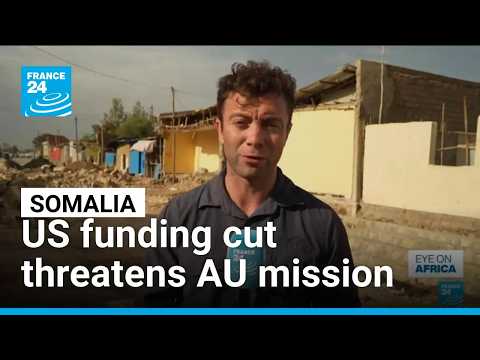
Uganda, the largest troop contributor to the African Union mission, is handing Lower Shabelle bases to Somali forces as funding runs short

Overview

Updated Nov 3

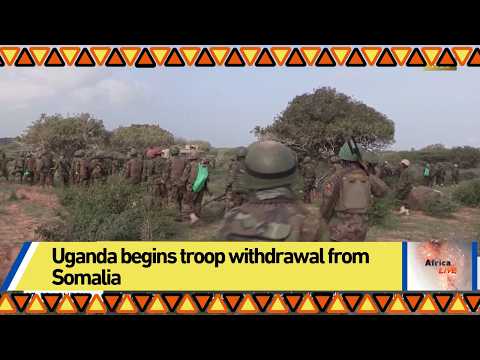
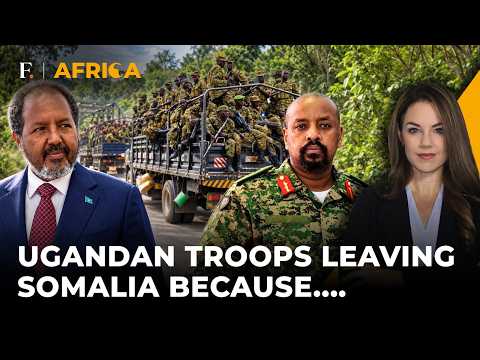
A Kenyan-registered plane carried 109 Ugandan soldiers out of Mogadishu on 30 October, the first group of a planned full exit. Uganda's army chief, General Muhoozi Kainerugaba, announced the pullout a day earlier and set August 2027 as the target for the last troops to leave.

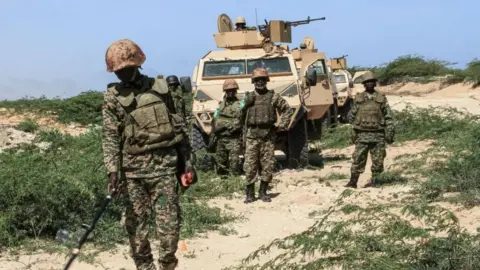
Uganda has told Somalia it will vacate Barawe, Bulo Marer, Qoryoley and Janaale in Lower Shabelle, and African Union forces are due to leave three positions there in early November. Mogadishu is negotiating directly with Kampala over funding that could keep some Ugandan troops at the Halane compound near the airport for another year.

Why it matters

The troops guarding Mogadishu's approaches are leaving, and the money that supplies them is being cut.

Questions about this story

Free account needed to ask — your question is kept and asked for you right after sign-up. Answers are public.

No questions yet — be the first to ask.

Key Indicators

109
Soldiers in first departing group
The first contingent flew out of Mogadishu on 30 October 2026.
4,500
Ugandan troops authorised under AUSSOM
The African Union authorised 4,500 Ugandan troops for the mission; estimates of Uganda's total presence in Somalia range from 5,000 to 6,000.
2027
Target for full Ugandan exit
Uganda's army chief set August 2027; officials say all forces leave by year-end.
2007
Year Uganda first deployed
It was the first country to contribute troops to the African Union mission.

Voices

Curated perspectives — historical figures and your fellow readers.

Sign up to generate historical perspectives on this story.

People Involved

Organizations Involved

Timeline

March 2007 August 2027

13 events Latest: 7 days ago Showing 8 of 13
Tap a bar to jump to that date
  1. Target for full Ugandan exit

    Upcoming Withdrawal

    Uganda's army chief aims to complete the pullout by August 2027.

  2. US logistics drawdown begins

    Upcoming Funding

    A 12-month phased reduction of UN logistical support starts under the Security Council deal.

  3. Forward bases due for handover

    Latest Handover

    Uganda is scheduled to hand its forward operating bases to the Somali army.

  4. First 109 soldiers fly out

    Withdrawal

    A chartered aircraft carries the first contingent from Mogadishu to Uganda.

  5. Army chief announces withdrawal

    Statement

    General Muhoozi Kainerugaba says on X that Ugandan troops have started leaving.

  6. AU mission gives notice of Lower Shabelle pullout

    Handover

    The African Union mission told Somali government agencies it would leave three positions in Lower Shabelle in early November and asked the Somali National Army to prepare to take them over.

  7. Somali president visits Kampala

    Diplomacy

    Hassan Sheikh Mohamud asks Museveni to delay the pullout; Museveni declines. Reports differ on whether the talks were on 26 or 27 October.

  8. US forces reportedly leave Baledogle airfield

    Withdrawal

    Two sources told Horn Observer that US forces had left the Baledogle airfield in Lower Shabelle several days before a 29 October report.

  9. Ethiopian troops hand Burhakaba base to Somali army

    Handover

    AUSSOM handed the forward operating base to the Somali National Army's 60th Division. Ethiopian troops, there since 2014, left the town shortly after the ceremony.

  10. US warns it will cut mission logistics

    Funding

    Washington tells the African Union it will oppose UN logistical backing for AUSSOM.

  11. AUSSOM replaces ATMIS

    Mission change

    The African Union mission shifts focus to building Somali security institutions.

  12. Al-Shabab pushed out of Mogadishu

    Military

    Ugandan and Somali forces drive the militants from the capital and later from major southern towns.

  13. Uganda becomes first troop contributor

    Deployment

    Ugandan forces join the new African Union Mission in Somalia to protect the transitional government.

Scenarios

1

Uganda completes its exit by 2027 and Somali forces hold the line

Possible Resolves by End of 2027

Discussed by: Ugandan military officials and African Union planners

The phased handover of forward bases proceeds, Somali units take over Lower Shabelle positions, and the remaining Ugandan contingents leave on schedule. This depends on Somali forces filling the gap and on AUSSOM retaining enough logistics support through the US drawdown.

2

Al-Shabab retakes ground in Lower Shabelle after the handover

Possible Resolves by Q2 2027

Discussed by: Security analysts cited in regional and international reporting

Ugandan troops have held river-crossing towns that block routes into Mogadishu. If Somali units cannot hold those positions, al-Shabab could move back toward the capital and threaten the relative calm of recent years.

3

AUSSOM unravels early as US funding ends

Uncertain Resolves by End of 2027

Discussed by: African Union officials and UN funding documents

The US has said it will oppose UN logistical backing for AUSSOM. If other donors do not replace the roughly $500 million support framework, troop contributors may leave faster than planned, leaving Somalia's government without a multinational force.

4

Uganda pauses the withdrawal and keeps a residual force

Unlikely Resolves by End of 2027

Discussed by: Regional diplomats and Ugandan opposition figures

Museveni declined Mohamud's request to delay, but Kampala has reversed course on deployments before. A sharp security deterioration in Mogadishu, or a new bilateral arrangement, could leave a smaller Ugandan contingent in place past 2027.

5

Ethiopia pulls thousands of troops and the security gap widens

Possible Resolves by Aug 31, 2027

Discussed by: Horn Observer, citing sources familiar with the reported plan

Reports say Ethiopia may withdraw thousands of soldiers deployed across Bay, Bakool and Hiiraan. Neither Addis Ababa nor Mogadishu has confirmed the plan. If it goes ahead alongside Uganda's exit, Somali forces would take over several front-line areas at once.

Historical Context

2 moments from history that rhyme with this story — and how they unfolded.

January 2009

Ethiopian withdrawal from Somalia (2009)

Ethiopia invaded Somalia in 2006 to oust the Islamic Courts Union and installed the transitional government. Its troops withdrew in January 2009 under a UN-brokered deal, leaving behind a weak African Union force of about 3,000 Ugandan and Burundian soldiers.

Then

Al-Shabab quickly took Baidoa and much of southern Somalia, and the AU mission came under sustained attack in Mogadishu.

Now

The withdrawal set the stage for a larger AMISOM surge that eventually pushed the militants out of the capital in 2011.

Why this matters now

It shows how fast a departing foreign force can hand territory back to al-Shabab, and how a thin AU mission can become the only thing holding the capital.

October 1993 - March 1995

US withdrawal from Somalia (1993-1995)

After 18 US soldiers died in the Battle of Mogadishu in October 1993, Washington announced a timetable to leave. The UN peacekeeping mission ended in March 1995, and Somalia was left without a functioning central government.

Then

Warlords divided the country, and international agencies largely pulled out.

Now

Somalia had no effective national government until 2012, and the intervention's failure shaped how Washington approached the country for two decades.

Why this matters now

It is the reference case for what happens when outside forces leave Somalia before local ones can hold ground, and it explains US caution about paying for another mission.

Sources

(18)