Museveni wins seventh term with 71.65% as military hunts Wine after banning him from future elections; two senior NUP leaders forcibly disappeared, wife hospitalized after assault; Wine's lawyers petition Commonwealth for Uganda suspension, Kivumbi faces amended terrorism charge
Museveni wins seventh term with 71.65% as military hunts Wine after banning him from future elections; two senior NUP leaders forcibly disappeared, wife hospitalized after assault; Wine's lawyers petition Commonwealth for Uganda suspension, Kivumbi faces amended terrorism charge
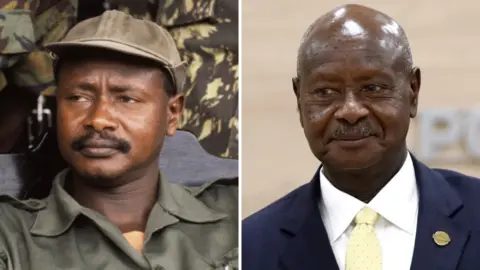
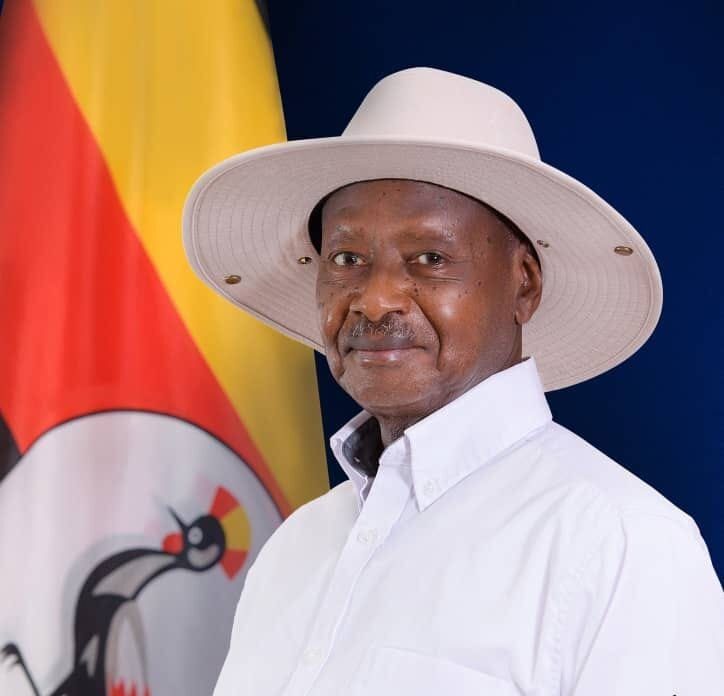
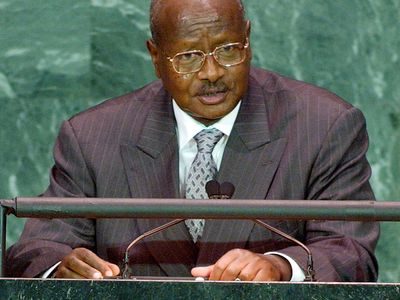
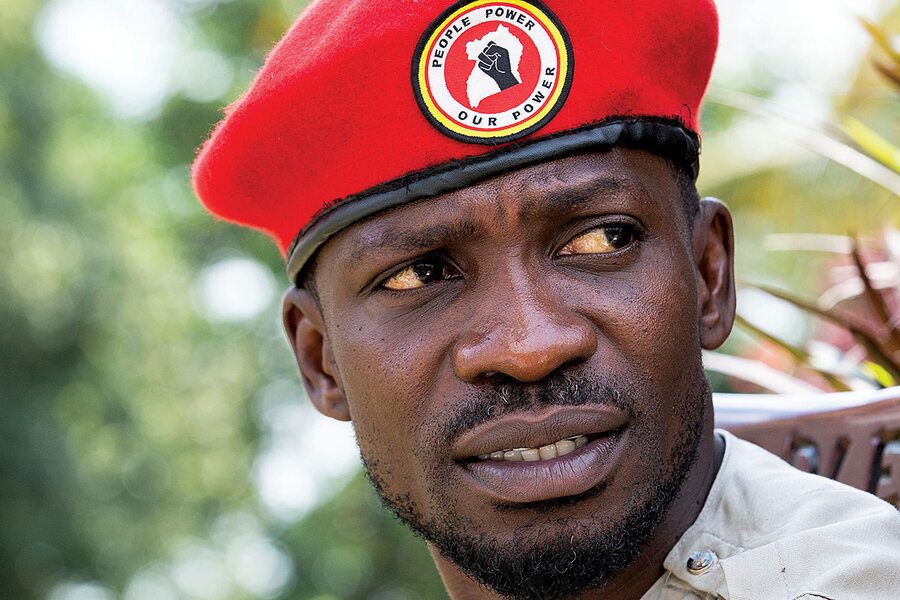
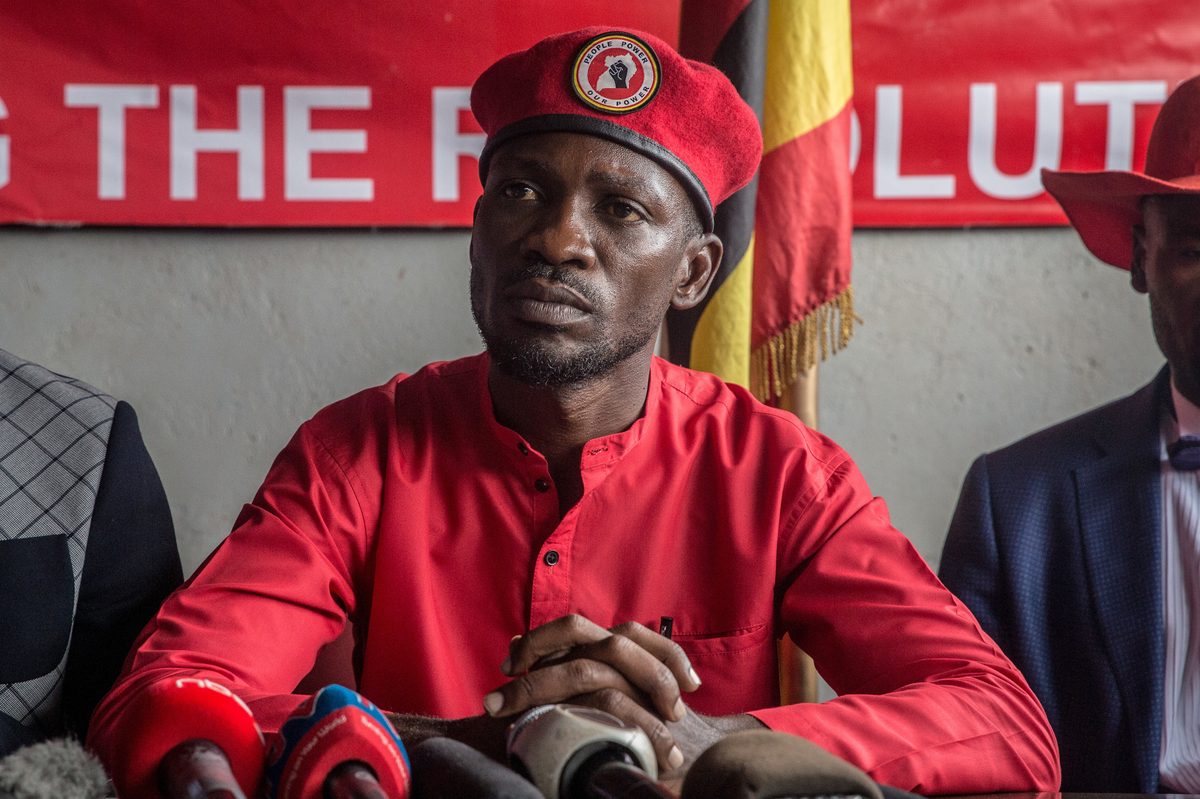
On January 17, Uganda's Electoral Commission declared Yoweri Museveni the winner of his seventh term with 71.65% of votes to Bobi Wine's 24.72%. The joint African Union-COMESA-IGAD observer mission said the election was conducted within a polarized political context. After security forces raided Wine's home on January 16 in what his party called an abduction attempt, he escaped to an undisclosed location where he remained in hiding, rejecting the results as fraudulent and presenting video evidence of election officials ticking ballots for Museveni.
On the night of January 23-24, dozens of armed men in military uniform raided Wine's home again, assaulting and strangling his wife Barbara Kyagulanyi, who was hospitalized at Nsambya Hospital in Kampala for bruises and anxiety. She has spoken publicly from her hospital bed about the attack. Military chief General Muhoozi Kainerugaba—Museveni's son and presumed successor—denied on January 26 that soldiers beat Kyagulanyi, confirmed the military manhunt, and banned Wine from future elections, citing national security.
Uganda's military confirmed on January 23 that security forces killed 30 National Unity Platform supporters and detained over 2,000 in the post-election crackdown. Human Rights Watch documented on January 28 the enforced disappearances of two senior NUP leaders—Jolly Jackline Tukamushaba and Lina Zedriga Waru, who remain missing. The military denied holding Tukamushaba at a January 23 court hearing; Muwanga Kivumbi, NUP deputy and MP, was arrested on January 22 on terrorism charges related to Butambala violence and remanded to Kitalya Prison until February 3. On February 3, 2026, Kivumbi appeared in court facing an amended single terrorism count with 24 co-accused; Wine stated the army fully occupies his home, and his lawyers petitioned the Commonwealth Secretariat to indefinitely suspend Uganda over post-election human rights violations and threats against him, as reported February 5.
Questions about this story
Free account needed to ask — your question is kept and asked for you right after sign-up. Answers are public.
No questions yet — be the first to ask.
Key Indicators
71.65%
Museveni's victory
Final results declared January 17, 2026
24.72%
Wine's result
Opposition candidate rejected results as fraudulent
30
Opposition supporters killed
Confirmed by military chief January 23, 2026
2,000+
Opposition supporters detained
Mass arrests following disputed election
5 days
Internet blackout
Restored January 17-18; social media still blocked
44 events
Latest: February 5th, 2026 · 7 months ago
Showing 8 of 44
JK to step
Tap a bar to jump to that date
Jump to
February 2026
Bobi Wine's lawyers urge Commonwealth to suspend Uganda
LatestInternational
Wine's legal team submits case to Commonwealth over post-election human rights violations, public threats by Gen Muhoozi Kainerugaba, and military actions against opposition.
Bobi Wine: Army fully occupies my home; lawyers petition Commonwealth
Repression
Wine states army has fully occupied his Magere home; his lawyer asks Commonwealth Secretariat to indefinitely suspend Uganda over post-election violations, threats, and military occupation.
Muwanga Kivumbi, 24 others face amended terrorism charge
Legal
Outgoing Butambala MP Muwanga Kivumbi and 24 co-accused appear in court as prosecution amends charge to single terrorism count related to January election violence.
January 2026
Kainerugaba accuses US Embassy of aiding Wine, apologizes within hour
International
Military chief Muhoozi Kainerugaba posts on X accusing US Embassy officials of coordinating with Wine to stage his disappearance and announces suspension of UPDF cooperation with US. Within one hour, he deletes tweets and apologizes to 'our great friends the United States,' saying he was 'fed with wrong information.' Announces plans to reduce social media presence after nearly 11 years on platform.
Human Rights Watch documents enforced disappearances of two senior NUP leaders
Investigation
Human Rights Watch releases report documenting that two senior NUP leaders—Jolly Jackline Tukamushaba (deputy president for Western Uganda) and Lina Zedriga Waru (deputy president for Northern Uganda)—were forcibly disappeared by armed men and remain missing. Report characterizes intensified post-election assault on political opposition as rising to 'alarming levels.'
Wine releases video from hiding, taunts military chief
Statement
Wine shares video from undisclosed location showing him walking in a family graveyard in central Uganda, mocking military chief Kainerugaba for failing to locate him despite manhunt. States he is 'housed and protected by the common people.'
Kainerugaba denies assault on Barbara Kyagulanyi, confirms manhunt
Statement
Military chief Muhoozi Kainerugaba dismisses allegations that soldiers beat Barbara Kyagulanyi, saying on X that military 'do not beat up women' and 'We are looking for her cowardly husband not her.' Confirms ongoing military manhunt for Wine.
Barbara Kyagulanyi speaks from hospital bed
Statement
Barbara Kyagulanyi recounts to reporters at Nsambya Hospital how dozens of armed men broke into her home, with one pulling her hair and banging her head against a pillar before four men forced her down and sat on her until she passed out. Describes being treated for bruises and anxiety.
Barbara Kyagulanyi taken to hospital after midnight assault
Violence
Barbara Kyagulanyi admitted to Nsambya Hospital at 1am following assault by armed men at her home. Medical staff treat her for bruises and anxiety sustained during interrogation about Wine's whereabouts.
Military confirms 30 killed, 2,000+ detained in post-election crackdown
Repression
Uganda's military chief Muhoozi Kainerugaba announces security forces killed 30 National Unity Platform supporters and detained over 2,000 following disputed election. UN Secretary-General Guterres expresses alarm at violence and arrests.
Court hearing for Tukamushaba: Military denies holding her
Legal
At court hearing regarding Jolly Jackline Tukamushaba's disappearance, military denies holding the NUP deputy president for Western Uganda who was detained January 14.
Opposition MP Muwanga Kivumbi arrested on terrorism charges
Repression
Muwanga Kivumbi, NUP deputy president and member of parliament for Butambala, arrested by Uganda Police Force. Charged with terrorism related to violence in his constituency; denies wrongdoing.
Wine's lawyer appeals to UN for protection guarantees
International
Bobi Wine's legal team urges UN and international community to seek safety guarantees for Wine following death threats from military chief. Wine remains in hiding after escaping alleged raid.
Kivumbi remanded to maximum security prison
Repression
Muwanga Kivumbi remanded to Kitalya Maximum Prison after appearing in court in Butambala on terrorism charges. Next court appearance scheduled for February 3, 2026.
Wine responds from hiding: 'I am not a criminal'
Statement
From undisclosed location, Wine rejects Museveni government's characterization of him as terrorist, demands military vacate his compound where wife and family remain detained.
Military chief Muhoozi Kainerugaba threatens to kill Bobi Wine
Repression
General Muhoozi Kainerugaba, Museveni's son and Uganda's military chief, posts on X giving Wine '48 hours to surrender' or be treated as 'outlaw/rebel.' States security forces 'killed 22 NUP terrorists since last week.' Later deletes posts after international backlash.
Wine presents 'evidence' of electoral fraud
Statement
Wine releases videos purporting to show 'not the police, not the military, but electoral commission officials' ticking ballot papers in favor of Museveni. Rejects official results as 'blatant theft.'
At least 118 NUP members charged with unlawful assembly
Repression
Over 100 National Unity Platform members brought to Kampala courts, charged with unlawful assembly, conspiracy, and unlawful possession of election materials.
EU issues statement on Uganda election
International
European Union spokesperson regrets 'pre- and post-electoral violence and threats, particularly against opposition leader Robert Kyagulanyi,' shares concerns highlighted in AU-COMESA-IGAD observer mission about uneven playing field and internet shutdown.
Kainerugaba bans Wine from future elections
Repression
Military chief Kainerugaba announces on X: 'Whether Robert Kyagulanyi Ssentamu is in the country or not, I, as CDF, in the interests of national security and for the good of the commonwealth, ban him from any further participation in the electoral exercises of Uganda.' Legal basis for military chief to ban citizens from elections unclear.
Internet restored after five-day blackout
Censorship
Uganda Communications Commission restores public internet access after 100-hour shutdown. General web access resumed but social media platforms remained blocked.
Electoral Commission declares Museveni winner with 71.65%
Election
Justice Simon Byabakama announces final results at National Tally Centre: Museveni 71.65% (7,946,772 votes), Wine 24.72%. Turnout: 52.5%.
Joint observer mission led by Goodluck Jonathan criticizes military involvement in electoral process (violating Uganda's 1995 Constitution) and notes internet shutdown 'limited access to information, freedom of association, curtailed economic activities.'
Wine escapes alleged raid, goes into hiding
Repression
Wine announces via social media he escaped security forces who raided his home overnight, cutting power and CCTV. Says his wife and family remain under house arrest. Police deny abduction claims; army calls reports 'baseless.'
Electoral Commission releases preliminary results
Election
With 45% of polling stations reporting (22,758 of 50,739), Museveni leads with 76.25% to Wine's 19.85%. Final results expected January 17.
At least seven killed in Butambala violence
Violence
Overnight clashes in Butambala, 55km southwest of Kampala, leave 7-10 dead. Opposition says security forces fired on supporters at MP Muwanga Kivumbi's home; police claim self-defense after attack on station.
Wine rejects preliminary results as fraud
Statement
Wine tells supporters: 'IGNORE the fake results being announced by Byabakama. He can't tell anybody where those results are coming from. The PEOPLE OF UGANDA will have the final say.'
Death toll rises to at least 12 in post-election violence
Violence
Updated casualty figures show at least 12 confirmed dead across Butambala and central Kampala, with dozens injured. Opposition MP Kivumbi reports 10 deaths at his residence; police claim lower figures.
Polls open amid biometric system failures
Election
Voting begins but biometric verification machines fail across multiple polling stations. Electoral Commission authorizes manual verification. Voting extended past 4pm to accommodate delays.
Wine placed under de facto house arrest
Repression
Military deployed around Wine's home after he voted. Wine posts: 'After casting my ballot, the military deployed all around my home in order to place me under house arrest.'
NUP deputy president for Northern Uganda forcibly disappeared
Repression
Lina Zedriga Waru, NUP's deputy president for Northern Uganda, taken by armed men from her home on outskirts of Kampala. Remains missing.
NUP deputy president for Western Uganda detained and disappeared
Repression
Jolly Jackline Tukamushaba, NUP's deputy president for Western Uganda, detained at hotel in Muhanga by seven armed men in military uniforms who held her and her daughter Patricia Ashaba at gunpoint before taking Tukamushaba away in van. She has not been heard from since.
Government imposes internet blackout
Censorship
Uganda Communications Commission orders service providers to suspend public internet access and halt SIM card sales. Government cites 'misinformation' concerns.
UN condemns pre-election repression
International
UN Human Rights Office releases report documenting 'widespread repression and intimidation' affecting the right to political participation.
Amnesty documents 'brutal repression' campaign
Investigation
Amnesty International releases findings on systematic use of tear gas, beatings, torture, and arbitrary detention against opposition supporters.
December 2025
Museveni defends tear gas use against opposition
Statement
In a New Year's Eve address, Museveni recommends security forces use more tear gas against 'the criminal opposition,' saying 'it doesn't kill.'
Security forces attack Bobi Wine's Gulu rally
Violence
Armed gangs and security forces attack Wine's campaign in northern Uganda. One supporter dies from injuries. Wine begins wearing bulletproof vest at all events.
September 2025
Museveni confirms seventh-term bid
Political
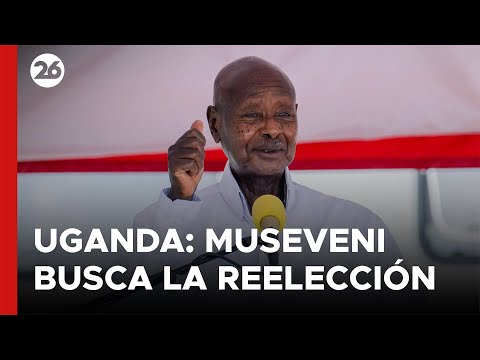
At 81, Museveni officially announces he will seek another five-year term in the January 2026 election.
January 2021
Museveni declared winner of 2021 election
Election
Electoral Commission announces Museveni won with 58% to Wine's 34%. U.S. cancels observation mission, calls process 'fundamentally flawed.' Internet blackout prevents independent verification.
July 2020
Bobi Wine launches National Unity Platform
Political
Wine transforms his People Power movement into a formal party by merging with the obscure NUP, becoming its presidential candidate.
December 2017
Parliament removes presidential age limit
Constitutional
Uganda's parliament votes to eliminate the 75-year age cap for presidents, clearing Museveni's path to run beyond 2021.
June 2017
Bobi Wine wins parliamentary seat
Political
Pop star Robert Kyagulanyi wins a by-election, defeating both NRM and opposition candidates. He enters formal politics.
July 2005
Referendum removes presidential term limits
Constitutional
Ugandans vote to eliminate the two-term limit, allowing Museveni to run indefinitely. The same referendum restored multiparty politics after 19 years.
January 1986
Museveni captures Kampala, seizes power
Political
After a five-year guerrilla war, Museveni's National Resistance Army captures the capital. He declares himself president, promising 'fundamental change.'
Scenarios
1
Museveni Declared Winner, Wine Rejects Results
Likely
Discussed by: Africa Center for Strategic Studies, Al Jazeera, CNN analysts
The Electoral Commission declares Museveni the winner within the 48-hour window. Wine, citing the internet blackout's prevention of independent verification and documented biometric failures, refuses to concede and calls for protests. International observers issue mixed statements. The internet remains blocked. Security forces deploy to prevent gatherings. This mirrors the 2021 pattern almost exactly.
2
Results Delayed, Tensions Escalate
Possible
Discussed by: Human Rights Watch, opposition legal teams
Technical failures and the internet blackout complicate vote counting beyond the 48-hour deadline. Wine's legal team files challenges before results are announced. Street demonstrations begin despite security presence. Regional neighbors watch nervously given Uganda's role as a transit hub.
Discussed by: NUP supporters, some independent polling organizations
Some pre-election polls showed Wine with substantial youth support. If Wine declares victory based on his party's parallel count while Museveni is officially declared winner, Uganda could face competing legitimacy claims. International response would likely be muted given reduced U.S. engagement and EU's decision not to send observers.
4
Post-Election Violence Draws Regional Intervention
Uncertain
Discussed by: East African Community officials, AU observers
Disputed results trigger violence exceeding 2021 levels. Given Uganda's position as a transport hub for landlocked neighbors and host of U.S. deportees under a new agreement, international pressure mounts for mediation. Kenya's 2007-2008 crisis, which required Kofi Annan's intervention, serves as the regional precedent.
5
Wine Challenges Results in Court, Case Dismissed
Likely
Discussed by: Opposition legal teams, Uganda legal analysts
Opposition candidate Munyagwa Mubarak Sserunga has indicated intent to challenge results over biometric failures. Wine could join or file separately. However, Uganda's courts have historically refused opposition efforts to nullify Museveni's victories—Wine withdrew his 2021 challenge citing judicial bias after photos emerged of the chief justice with Museveni. Without international observer pressure (U.S. and EU sent no missions), courts face even less scrutiny.
6
Security Forces Capture Wine, Triggering International Crisis
Uncertain
Discussed by: Human rights organizations, regional diplomats
Wine remains in hiding after escaping what his party calls an abduction attempt. If security forces locate and detain him—especially given reduced U.S./EU engagement—Uganda could face its most serious legitimacy crisis since 1986. Kenya's 2007 crisis required Kofi Annan's mediation; no comparable international mechanism is currently positioned to intervene.
7
Military Locates and Kills Wine, Triggering International Crisis
Uncertain
Discussed by: Human rights organizations, international legal experts, UN officials
With Muhoozi Kainerugaba's 48-hour ultimatum and explicit threats to treat Wine as 'rebel' subject to lethal force, the military's hunt for Wine could end in his killing. Given Wine's international profile and the documented death threats from the president's son, such an outcome would trigger unprecedented condemnation. However, with no U.S. or EU observation missions and explicit Trump administration policy against assessing foreign elections, enforcement mechanisms remain unclear. The scenario would test whether international pressure can function without American leadership.
8
Mass Trials of NUP Officials on Terrorism Charges
Likely
Discussed by: Opposition legal teams, Amnesty International, Human Rights Watch
With Kivumbi already charged with terrorism and over 2,000 supporters detained, the regime may pursue mass terrorism prosecutions to decapitate the NUP leadership. Uganda's courts have historically sided with Museveni; convictions could carry lengthy prison terms or death sentences. This would follow patterns from Zimbabwe (2019) and Belarus (2020) where terrorism charges neutralized opposition movements after disputed elections.
9
Military Captures or Kills Wine, Triggering International Crisis
Possible
Discussed by: Human rights organizations, regional diplomats, international legal experts
With Kainerugaba's explicit threats, 48-hour ultimatum that has passed, ban from future elections, and confirmed military manhunt ongoing for 14 days, Wine's capture or killing appears increasingly likely. The January 28 Human Rights Watch report documenting two forcibly disappeared senior NUP leaders establishes a pattern of enforced disappearances. Wine's January 27 taunting video may provoke escalation. Given Wine's international profile, such an outcome would trigger unprecedented condemnation, but enforcement mechanisms remain unclear with no U.S. or EU observation missions and explicit Trump administration policy against assessing foreign elections.
10
Disappeared NUP Leaders Surface in Custody, Face Show Trials
Likely
Discussed by: Human Rights Watch, Amnesty International, opposition legal teams
Tukamushaba and Waru, forcibly disappeared since January 14-15, may eventually surface in military custody facing terrorism charges similar to Kivumbi. Uganda has a pattern of enforced disappearances followed by delayed acknowledgment of detention. Military denied holding Tukamushaba at January 23 hearing despite witness accounts. If surfaced, they would likely face show trials at Kitalya Maximum Prison alongside Kivumbi, decapitating NUP leadership while Wine remains in hiding.
11
US Diplomatic Pressure Forces Negotiated Settlement
Unlikely
Discussed by: Foreign policy analysts, East Africa regional observers
Kainerugaba's January 30 accusation that US Embassy officials aided Wine's escape—followed by his rapid apology citing 'wrong information'—reveals internal regime tensions and suggests US leverage may be greater than publicly acknowledged. If the US leverages security cooperation (joint operations in Somalia, intelligence sharing) and coordinates with EU partners, they could pressure Museveni toward negotiated settlement allowing Wine to surface safely. However, Trump administration's explicit policy against assessing foreign elections and reduced engagement (USAID closure) suggests limited willingness to apply such pressure.
Historical Context
3 moments from history that rhyme with this story — and how they unfolded.
1 of 3
December 2007 - February 2008
Kenya Post-Election Crisis (2007-2008)
President Mwai Kibaki was declared winner over Raila Odinga in results the electoral commission chairman later said he couldn't verify. Violence erupted primarily along ethnic lines. Over 1,300 people died and 650,000 were displaced. The economy and transport routes collapsed, affecting landlocked neighbors including Uganda.
Then
Two months of violence ended only through Kofi Annan's mediation, producing a power-sharing deal that made Odinga prime minister. The ICC indicted six officials including future President Uhuru Kenyatta, though cases later collapsed due to witness interference.
Now
Kenya adopted a new constitution with checks on executive power. The crisis demonstrated that East African election disputes can rapidly spiral into regional humanitarian emergencies. Uganda's role as a transit hub means its instability would similarly affect neighbors.
Why this matters now
Kenya 2007 shows how quickly disputed African elections can escalate from political crisis to humanitarian catastrophe, and the difficulty of achieving accountability afterward. Uganda's ethnic composition is different, but youth unemployment (50%) and urbanization create similar combustible conditions.
2 of 3
August 2020
Belarus Election and Protests (2020)
Alexander Lukashenko, in power since 1994, claimed 80% of the vote against challenger Sviatlana Tsikhanouskaya. The government imposed a 61-hour internet blackout during vote counting. Independent monitors estimated Tsikhanouskaya actually won 60-80% of votes. Hundreds of thousands protested in the largest demonstrations in Belarusian history.
Then
Security forces arrested thousands, tortured hundreds. The UN documented over 450 cases of torture. IT companies began relocating employees out of the country. Tsikhanouskaya fled to Lithuania.
Now
Lukashenko remained in power with Russian backing. The EU and U.S. imposed sanctions but could not force change. Belarus became more dependent on Russia, eventually hosting Russian forces for the 2022 Ukraine invasion. The protests demonstrated that internet shutdowns can work to preserve authoritarian power if external pressure is insufficient.
Why this matters now
Uganda's playbook mirrors Belarus closely: longtime ruler, internet blackout, security force deployment, international condemnation without enforcement mechanisms. The difference is reduced Western engagement—USAID has closed operations in Uganda, and the Trump administration has explicitly declined to assess election integrity.
3 of 3
January 2021
Uganda 2021 Election (Museveni v. Wine I)
Museveni won 58% to Wine's 34% amid an internet blackout and widespread allegations of fraud. The U.S. cancelled its observation mission, calling the process 'fundamentally flawed.' Wine was placed under house arrest after voting. Up to 3,000 opposition supporters were abducted during the campaign, with 54 fatalities reported.
Then
Wine challenged results in court but withdrew, citing judicial bias after photos emerged of the chief justice with Museveni. International condemnation produced no policy change. Internet access was restored after several days.
Now
NUP became Uganda's largest opposition party despite the loss. Wine spent years rebuilding, earned a law degree, and returned as the 2026 candidate. The pattern of internet blackout plus security deployment proved effective for regime preservation.
Why this matters now
The 2026 election is a direct rematch under nearly identical conditions—same candidates, same tactics, same information blackout. The key difference is reduced international engagement: USAID has closed, and the U.S. has announced it will not assess election integrity.