

Pull to refresh
Logo
Somalia's Supreme Court voids term extension and orders elections

Somalia's Supreme Court voids term extension and orders elections

Rule Changes

Five judges rule the president's and parliament's mandates expired in 2026; the government rejects the decision, installs a new chief justice, and the opposition calls the troop deployment at the court an 'assault and coup'

Overview

Updated Yesterday

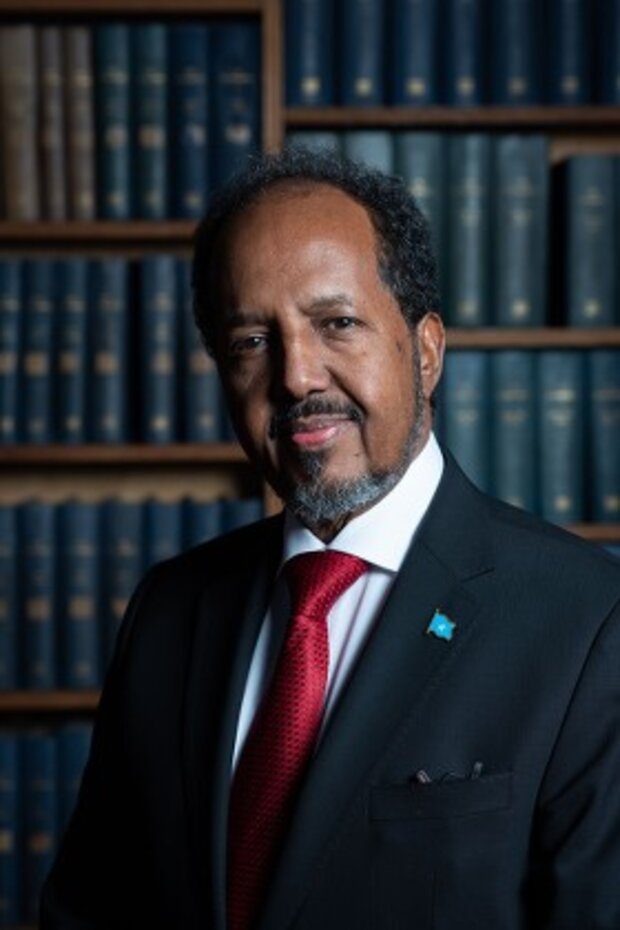
Somalia's Supreme Court ruled on November 5 that President Hassan Sheikh Mohamud's term ended on May 15, 2026, and parliament's mandate on April 14. The five-judge panel voided the constitutional amendments that added a year to both terms and ordered elections within 90 days.

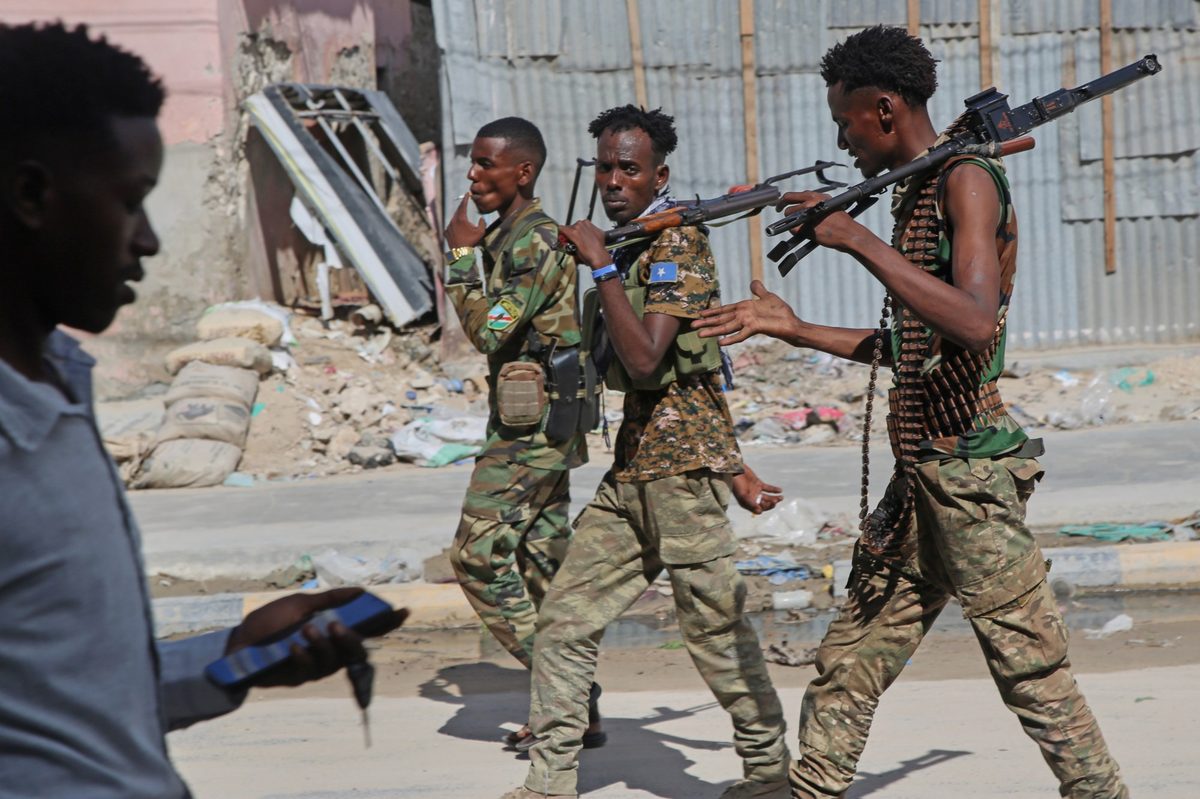
The government rejects the ruling. The attorney general says it has no legal effect, and on November 7 Mohamud swore in Ibrahim Idle Suleiman as chief justice, replacing Bashe Yusuf Ahmed, whose dismissal the court had declared void. On November 9 the opposition Somali Future Council called the troop deployment at the court an 'assault and coup' and accused the president of interfering with the judiciary.

Why it matters

Somalia's government is legally a caretaker with a February election deadline, no agreed plan, and a cabinet that rejects the court's authority.

Questions about this story

Free account needed to ask — your question is kept and asked for you right after sign-up. Answers are public.

No questions yet — be the first to ask.

Key Indicators

90
Days to hold elections
The court ordered a national vote within 90 days of the November 5 ruling, putting the deadline in early February 2027. The electoral commission had planned parliamentary elections for April 15, 2027, and a presidential vote for May 15.
30
Days to agree on a framework
Political stakeholders must agree on how to run the vote within 30 days, by early December.
1 year
Extension voided
The court struck down the added year that would have kept Mohamud in office until May 2027.
4 years
Original constitutional term
The 2012 Provisional Constitution set four-year terms; the court said the 2026 amendments did not explicitly apply to sitting officials.

Voices

Curated perspectives — historical figures and your fellow readers.

Sign up to generate historical perspectives on this story.

People Involved

Organizations Involved

Timeline

March 2026 November 2026

11 events Latest: 2 days ago Showing 8 of 11
Tap a bar to jump to that date
  1. Opposition coalition condemns court deployment

    Latest Political

    The Somali Future Council, led by former president Sharif Sheikh Ahmed, calls the troop presence at the Supreme Court an 'assault and coup' and accuses President Mohamud of interfering with the judiciary.

  2. Suleiman sworn in as chief justice

    Judicial

    President Hassan Sheikh Mohamud swears in Ibrahim Idle Suleiman as chief justice, two days after the court declared the dismissal of Bashe Yusuf Ahmed void. Mohamud urged the new chief justice to protect judicial independence.

  3. Ousted chief justice says he fears for his safety

    Political

    Bashe Yusuf Ahmed says he does not feel safe in Mogadishu and accuses the president of deploying troops at the Supreme Court. He cited 300 soldiers, a figure not independently verified. He and the five judges who ruled reportedly sought refuge at former President Sharif Sheikh Ahmed's residence after their security details were withdrawn.

  4. Defence minister alleges foreign plot

    Political

    Defence Minister Ahmed Moallim Fiqi accuses unnamed judges of carrying out a foreign-orchestrated plot and calls the ruling an 'Abu Dhabi agenda'.

  5. President signs amendments into law

    Legislation

    Mohamud signs the revised charter four days after parliament approval.

  6. Parliament approves revised constitution

    Legislation

    Parliament passes amendments setting five-year terms for the president and parliament, up from four.

Scenarios

1

Elections held by February 2027

Unlikely Resolves by Feb 3, 2027

Discussed by: The court's ruling sets the deadline; the electoral commission had planned votes in April and May 2027

Political stakeholders agree on a framework within 30 days and the electoral commission compresses its timetable to hold a vote within 90 days. This requires regional states, including Puntland and Jubaland, to participate and security to permit voting. The commission's existing plan for April and May 2027 would have to be moved up by more than a year.

2

Talks stall and the caretaker government outlasts the deadline

Possible Resolves by Feb 3, 2027

Discussed by: Analysts cited in regional coverage note no mechanism has been named for the 30-day talks

The 30-day negotiation window passes without a agreed framework, and the 90-day election deadline lapses. Mohamud remains in office as a caretaker with limited authority, and the standoff continues without a new mandate. This mirrors the pattern of missed deadlines in Somalia's recent electoral history.

3

Government rejects the ruling and a constitutional standoff follows

Possible Resolves by Jan 5, 2027

Discussed by: Opposition figures have raised concerns about the judges' security; the government has not said whether it will accept the ruling

The attorney general has already called the ruling legally void, and the defence minister says the court followed a foreign agenda. If the executive refuses to hand over to a caretaker framework, the confrontation between the branches hardens. The court's separate ruling voiding the chief justice's dismissal already puts the two at odds, and regional states could align with either side.

4

Regional states boycott, leaving a partial election

Possible Resolves by Feb 3, 2027

Discussed by: Puntland and Jubaland rejected the amendment process; their participation is unresolved

Puntland and Jubaland decline to take part in a court-ordered vote, and elections proceed only in federal-controlled areas. A president elected without broad regional participation would face a legitimacy question, similar to earlier indirect votes that excluded some states.

Historical Context

2 moments from history that rhyme with this story — and how they unfolded.

February 2021 - May 2022

Somalia's 2021-2022 electoral standoff

President Mohamed Abdullahi Farmaajo's four-year term ended in February 2021 without a successor chosen. Parliament passed a two-year extension of its own mandate in April 2021, and armed factions opposed to the extension clashed in Mogadishu. Under pressure, parliament reversed the extension and indirect elections went ahead.

Then

The standoff delayed elections by more than a year and produced street fighting in the capital.

Now

Hassan Sheikh Mohamud won the indirect presidential vote in May 2022, returning to office he had held from 2012 to 2017.

Why this matters now

The current ruling repeats the core dispute: whether an expired mandate can be extended when no election has been held. The 2021 crisis shows how that question can turn into armed confrontation.

August 2012

Adoption of the 2012 Provisional Constitution

A constituent assembly adopted a provisional constitution establishing a federal system and four-year terms for the president and parliament. It also created a clan-based indirect electoral system in which elders select members of parliament, who then choose the president.

Then

The constitution provided a framework for government after two decades of civil conflict.

Now

The four-year term and indirect voting system it set remain the baseline the Supreme Court used to void the 2026 extensions.

Why this matters now

The court's ruling rests on the 2012 text: because the 2026 amendments did not explicitly apply five-year terms to sitting officials, the original four-year terms stayed in force.

Sources

(18)