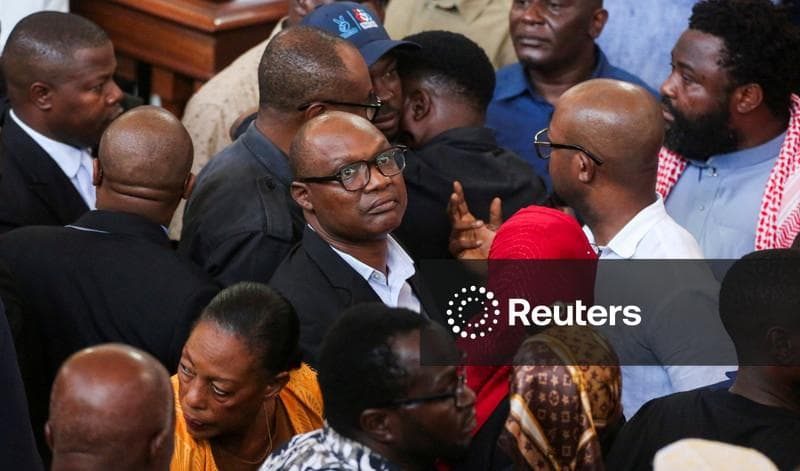
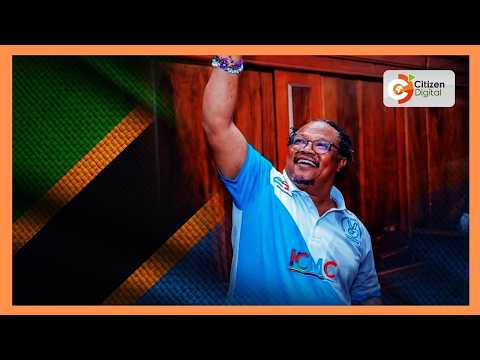
Tanzania jails opposition leader Tundu Lissu for incitement
Rule Changes
A three-judge panel acquitted him of treason, then convicted him of incitement and gave him four years. Chadema has filed notice of appeal and says the court had no power to swap the charge.
Tundu Lissu is serving four years for incitement after a three-judge panel in Dar es Salaam acquitted him of treason on November 6, 2026. He had spent 577 days in custody before the verdict, most of it at Ukonga Prison.
Chadema filed a notice of intention to appeal the same day, the step required before a formal appeal to the Court of Appeal of Tanzania. Defence lawyer Paul Kisabo said on November 8 that the team is waiting for the judgment and the trial record before drafting its grounds, and will challenge both the conviction and the prison term.
Why it matters
Tanzania's best-known opposition leader sits in prison on a charge the court substituted at verdict, not the one he was tried for.
Questions about this story
Free account needed to ask — your question is kept and asked for you right after sign-up. Answers are public.
No questions yet — be the first to ask.
Key Indicators
4 years
Prison sentence
Handed down by the High Court's Dar es Salaam Sub-Registry on November 6, 2026.
577
Days in detention before verdict
Held from his April 2025 arrest until the ruling, mostly at Ukonga Prison.
98%
Official result for President Hassan
The October 2025 election result that Chadema and rights groups rejected.
518
Government death toll from election protests
Opposition and rights groups say the real figure was in the thousands.
17 of 30
Prosecution witnesses who testified
The state closed its case on August 17, 2026, without calling the rest.
15 events
Latest: 3 days ago
Showing 8 of 15
JK to step
Tap a bar to jump to that date
Jump to
November 2026
Lawyers say they are waiting for judgment copies
LatestLegal
Paul Kisabo says the defence cannot draft its grounds of appeal until it receives the November 6 judgment and the full trial record, and that it will argue Lissu was never charged with incitement.
Lawyers question the legal basis of the conviction
Legal
Tanzanian lawyers including Peter Madeleka and Peter Mshikilwa question whether Section 319 can turn a treason charge into an incitement conviction, and why the court chose prison over a fine.
Rights groups and regional figures condemn the sentence
Politics
Human Rights Watch, the International Democracy Union and Kenyan politician Martha Karua call the conviction and four-year term politically motivated and unjust.
Acquitted of treason, jailed for incitement
Legal
A three-judge panel clears Lissu of treason, convicts him of incitement under Section 319 of the Criminal Procedure Act and sentences him to four years.
Chadema files notice of intention to appeal
Legal
Dr Rugemeleza Nshala, the party's chief legal officer, lodges the notice within the 10-day window, the step required before a formal appeal to the Court of Appeal of Tanzania.
European Parliament condemns the sentence
Politics
David McAllister, chair of the European Parliament's foreign affairs committee, calls the case a disproportionate restriction on free expression and a direct assault on the right to dissent.
September 2026
Court refuses summons for president and ex-officials
Legal
The High Court rejects Lissu's request to summon the president, a former vice president and a former prime minister.
August 2026
Prosecution closes its case
Legal
The state calls 17 of its 30 listed witnesses, then rests.
July 2026
Court of Appeal rejects state's evidence bid
Legal
The appellate panel dismisses the application, upholding the High Court's position on admissibility.
February 2026
Prosecution appeals to Court of Appeal
Legal
The state challenges a High Court ruling barring it from introducing additional evidence.
October 2025
Election held amid arrests and protests
Politics
President Hassan is declared winner with 98 percent. Security forces kill demonstrators; the government puts the toll at 518.
August 2025
Court allows anonymous prosecution witnesses
Legal
The High Court grants an application letting civilian witnesses testify with their identities concealed from the public and the accused.
April 2025
Arraigned on treason; held without bail
Legal
Treason is non-bailable in Tanzania, so Lissu is remanded at Keko Prison and later moved to Ukonga.
Police arrest Lissu at a rally
Legal
He is detained while addressing a public rally in Mbinga town, Ruvuma Region, and taken to Dar es Salaam overnight.
Lissu launches "No Reforms, No Election"
Politics
At Chadema headquarters in Dar es Salaam, Lissu tells supporters to disrupt the coming election unless the electoral framework changes.
Scenarios
1
Court of Appeal quashes the incitement conviction
Possible
Resolves by End of 2027
Discussed by: Chadema's legal team, which announced an immediate appeal
Lissu's lawyers argue the High Court used Section 319 of the Criminal Procedure Act to substitute a lesser offence, and that the incitement finding rests on statements the constitution protects as political speech. The same Court of Appeal ruled against the state on evidence in July 2026, which Chadema cites as reason for optimism. If the appeal succeeds, the conviction falls and Lissu is released.
2
High Court grants bail while the appeal runs
Likely
Resolves by Q1 2027
Discussed by: Chadema's legal representatives, who said they would seek bail pending appeal
Incitement, unlike treason, is bailable. Lissu's lawyers can ask the High Court to release him while the appeal proceeds, which would put him outside prison within weeks even though the conviction would stand. The trial court already told him the doors were open for appeal.
3
Conviction upheld and Lissu serves the term
Possible
Resolves by End of 2027
Discussed by: Government prosecutors and the trial court's own reasoning
The three-judge panel found the state proved incitement beyond reasonable doubt, and prosecutors can defend that finding on appeal. If the Court of Appeal affirms, Lissu stays in prison into 2028, with the 577 days already served counted against the four-year term.
4
Court of Appeal rules Section 319 cannot be used against a treason charge
Possible
Resolves by End of 2027
Discussed by: Lawyer Peter Madeleka, speaking to Mwananchi and The Citizen
Madeleka argues Section 319 of the Criminal Procedure Act covers offences such as theft, murder and armed robbery, where a lesser offence can be built from some elements of the main charge. Treason, he says, has no such lesser offence, so the substitution of incitement should fall. If the Court of Appeal agrees, the conviction is quashed and Lissu is released.
Historical Context
3 moments from history that rhyme with this story — and how they unfolded.
1 of 3
April-September 2017
Zambia's Hichilema treason case (2017)
Zambian police arrested opposition leader Hakainde Hichilema and five others in April 2017 after a motorcade incident in Mongu. He was charged with treason, which carries a death sentence, and held for about four months.
Then
The state entered a nolle prosequi in August 2017 and released him.
Now
Hichilema ran again in 2021 and defeated incumbent Edgar Lungu.
Why this matters now
Shows a treason charge against an African opposition leader can collapse, and that the accused can later win office. It also shows how long the political fallout takes to play out.
2 of 3
2005-2006
Uganda's Besigye treason trials (2005)
Kizza Besigye returned from exile in 2005 and was charged with treason and rape. He was tried before a military court while campaigning for the February 2006 presidential election.
Then
The charges kept him tied up in court through the campaign; he lost to Yoweri Museveni.
Now
Besigye remained the main opposition figure for two decades and faced repeated prosecutions.
Why this matters now
Illustrates how a serious charge can sideline a candidate through an election without ever producing a conviction.
3 of 3
October 2020
Tanzania's 2020 election (October 2020)
Lissu returned from exile to run for president against John Magufuli. Official results gave Magufuli about 84 percent and Lissu about 13 percent; Lissu rejected the result and called for protests.
Then
The result was widely disputed, and the opposition's demands for electoral reform went unmet.
Now
Those demands became the "No Reforms, No Election" campaign that led to Lissu's arrest in 2025.
Why this matters now
Explains why Chadema campaigned against the electoral framework in 2025, the speech that produced the treason charge.