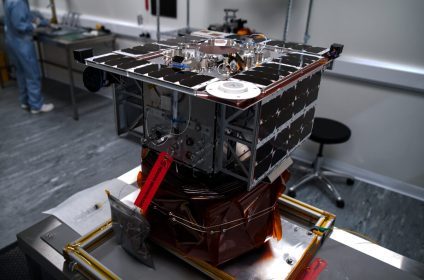
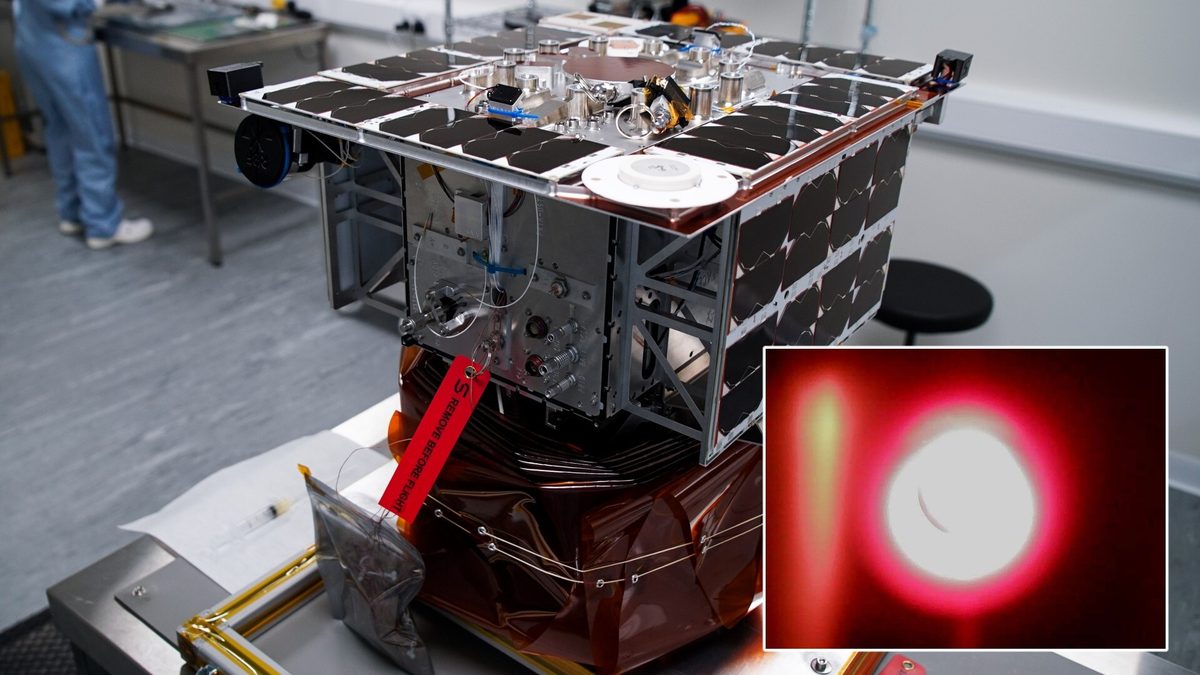
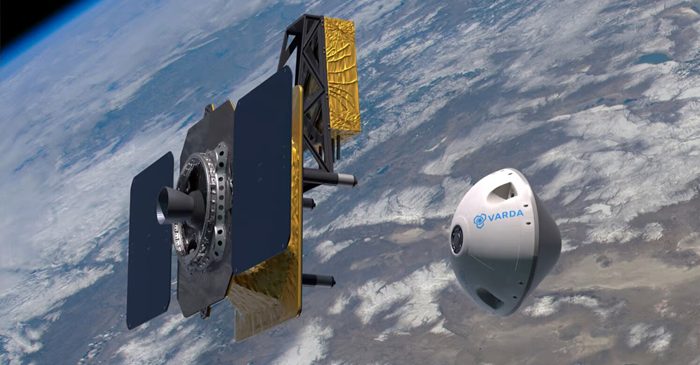
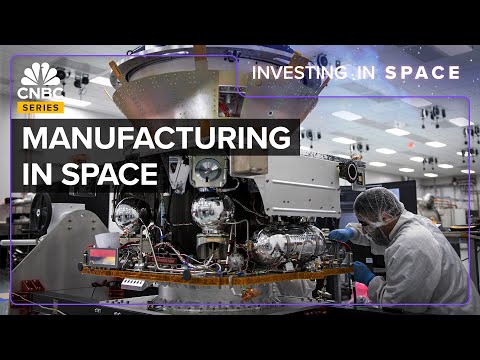
On New Year's Eve 2025, a microwave-sized British satellite generated plasma at 1,000°C while orbiting Earth at 17,000 mph. Space Forge's ForgeStar-1 became the first commercial free-flying spacecraft to create the extreme conditions needed to grow semiconductor crystals—materials currently impossible to manufacture at scale on Earth. The milestone caps a breakout year for orbital manufacturing: Varda launched four capsules in 2025 alone, Redwire spun out a pharmaceutical venture with its first licensing deal, and China announced plans to challenge U.S. dominance. The shift from decades of research to actual production is accelerating.
Varda moved from eight-month regulatory delays in 2024 to near-monthly launch cadence by year-end 2025, signing a contract for 20 additional capsule returns. Redwire's new SpaceMD earns royalties from drugs reformulated using space-grown crystals, a business model that finally monetizes microgravity without selling hardware. With the global wide-bandgap market racing toward $20 billion by 2033, Earth-based manufacturing creates defects limiting performance—the question is whether Western companies can scale before China's 50+ space startups do.
Questions about this story
Free account needed to ask — your question is kept and asked for you right after sign-up. Answers are public.
No questions yet — be the first to ask.
Key Indicators
1,000°C
Plasma temperature achieved in orbit
Space Forge's ForgeStar-1 hit the threshold needed for semiconductor crystal growth on December 31, 2025
$20.1B
Gallium nitride market by 2033
Growing at 22.7% annually, driven by EVs, 5G, and renewable energy demand
$30M
Space Forge Series A round
NATO Innovation Fund led May 2025 investment, citing defense and critical infrastructure applications
4x
Varda missions in 2025
W-2 through W-5 demonstrate shift from demonstration flights to operational cadence
2027
Axiom first module launch
Commercial ISS replacement slipped from 2026, raising concerns about manufacturing gap after 2031 ISS deorbit
75%
CO₂ reduction potential
Space-manufactured materials could slash infrastructure emissions compared to Earth production
18 events
Latest: December 31st, 2025 · 8 months ago
Showing 8 of 18
JK to step
Tap a bar to jump to that date
Jump to
December 2025
First Commercial Plasma Generation in Free-Flying Satellite
LatestMilestone
Space Forge's ForgeStar-1 hit 1,000°C, proving semiconductor crystal growth conditions achievable on autonomous commercial spacecraft.
November 2025
Varda Launches Fifth Mission in Breakout Year
Mission
W-5 capsule reaches orbit carrying Air Force Research Laboratory hypersonic test payload, marking Varda's fourth launch of 2025.
October 2025
Varda Signs Contract for 20 Additional Capsule Returns
Commercial
Southern Launch agreement for 20 spacecraft returns to Australia's Koonibba Test Range signals long-term operational commitment.
August 2025
Redwire Forms SpaceMD Pharmaceutical Venture
Company
New entity will license space-grown drug crystals for royalties; signs first deal with ExesaLibero Pharma for bone erosion treatment.
Redwire Wins $25M NASA ISS Contract
Investment
Five-year contract to provide biotechnology facilities and on-orbit operations aboard ISS through 2030.
June 2025
ForgeStar-1 Reaches Orbit
Mission
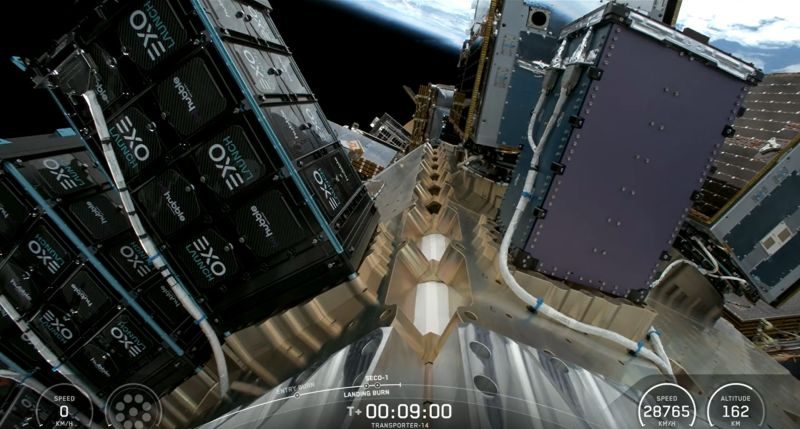
UK's first orbital manufacturing satellite launched from Vandenberg on SpaceX Transporter-14 rideshare mission.
Varda's W-4 Launches on New In-House Satellite Bus
Mission
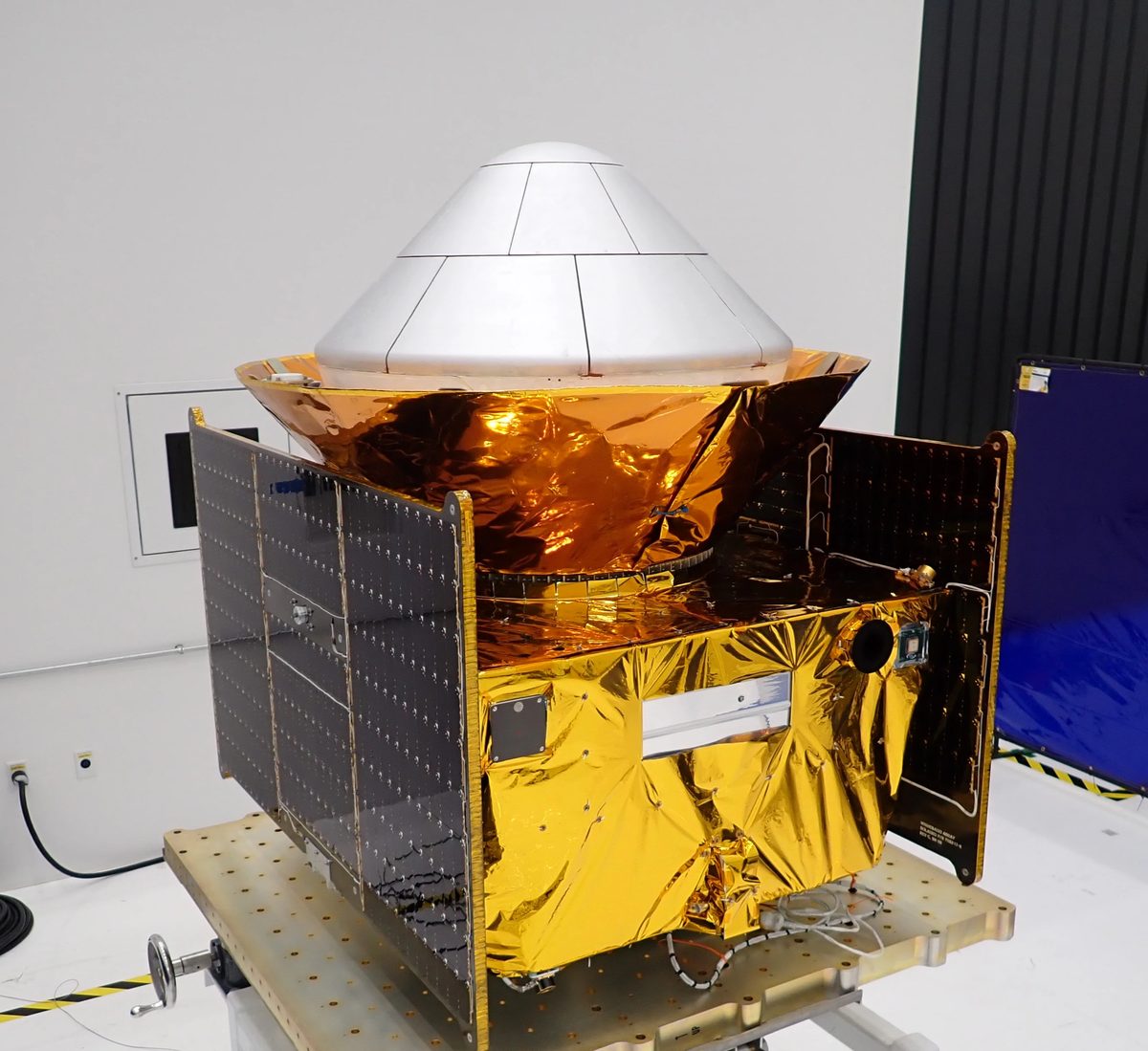
Maiden flight of Varda-designed spacecraft built at El Segundo facility, reducing dependence on Rocket Lab's Photon platform.
May 2025
Space Forge Closes Record UK Space Tech Series A
Investment
Raised £22.6M led by NATO Innovation Fund, largest ever for UK space company, to develop ForgeStar-2.
Varda's W-3 Completes Third Successful Return
Mission
Capsule lands at Koonibba Test Range just 10 weeks after W-2, demonstrating rapid turnaround capability.
March 2025
Varda Launches W-3 with Air Force Payload
Mission
Third mission carries advanced navigation systems technology demonstration for U.S. Air Force Research Laboratory.
February 2025
Varda's W-2 Lands in Australia
Mission
Second capsule return demonstrates regulatory momentum after FAA granted multi-mission Part 450 license for W-4.
January 2025
Varda Launches W-2 to Start Production Year
Mission
First of four 2025 missions carries NASA and Air Force Research Laboratory payloads on Transporter-12.
June 2024
NATO Innovation Fund Backs Space Forge
Investment
Defense-focused fund made space manufacturing one of first four investments, citing critical infrastructure applications.
February 2024
First Commercial Spacecraft Lands Product from Orbit
Milestone
Varda's capsule touched down in Utah with HIV medication crystals, making history as third corporate entity to return from space.
June 2023
Varda Launches First Drug Manufacturing Mission
Mission
Winnebago-1 capsule entered orbit to produce ritonavir crystals, beginning eight-month regulatory odyssey.
June 2020
Redwire Acquires Made In Space
Company
Space infrastructure company consolidated early 3D printing technology and ISS manufacturing capabilities.
2018
Space Forge Founded in Bristol Garage
Company
Joshua Western and Andrew Bacon left Thales Alenia Space to start UK's first orbital manufacturing company.
November 2014
First Object Manufactured in Space
Milestone
Made In Space's 3D printer aboard the ISS produced a faceplate, proving on-demand manufacturing beyond Earth works.
Scenarios
1
Orbital Foundries Become Standard for Critical Materials
Possible
Discussed by: World Fund (climate tech investor), McKinsey space economy analysis, semiconductor industry researchers
Launch costs continue falling as SpaceX scales Starship and competitors emerge. Space Forge's ForgeStar-2 proves economics work when material value exceeds launch cost. By 2030, dozens of returnable satellites operate continuously, feeding crystal seeds to terrestrial fabs like CISM. The ISS deorbits in 2031 but private stations from Axiom and others provide backup capacity. Wide-bandgap semiconductors manufactured in orbit power the renewable energy transition and EV revolution. The model expands to optical fibers, specialty alloys, and advanced pharmaceuticals. NATO countries secure supply chain independence for defense electronics. China launches competing orbital foundries, triggering a manufacturing space race.
2
Economics Don't Scale, Industry Remains Niche Research
Possible
Discussed by: Brookings Institution analysis, space economy skeptics citing asteroid mining bubble burst in 2019
Launch costs remain stubbornly high despite promises. Regulatory friction from FAA and international bodies slows mission cadence—Varda's eight-month delay becomes the norm, not the exception. Terrestrial semiconductor manufacturing improves enough that microgravity advantages matter only for exotic applications. Investment dries up after initial hype as startups burn through capital without achieving profitability. The ISS deorbits in 2031 and private stations arrive late or over budget. Space Forge, Varda, and others survive as boutique manufacturers serving high-value niches like defense and research, but never reach industrial scale. The sector becomes another cautionary tale like asteroid mining: technically possible, economically impractical.
3
Space Manufacturing Splits: Drugs Thrive, Semiconductors Struggle
Likely
Discussed by: Space manufacturing analysts, pharmaceutical industry observers
Varda's pharmaceutical model proves most viable because drug development economics tolerate high launch costs—a single successful formulation can justify dozens of failed missions. Bioprinting organs in zero gravity becomes standard for transplants by 2035. But semiconductor manufacturing hits a wall: growing crystal seeds in space works technically, but terrestrial fab improvements and new materials like graphene reduce the performance gap. Space Forge pivots toward ultra-specialized defense applications where NATO funding sustains operations. The industry bifurcates into high-value pharma and biotech thriving commercially, while materials manufacturing depends on government contracts. By 2040, orbital drug factories are routine; orbital chip fabs remain experimental.
Discussed by: NATO Innovation Fund statements, defense technology analysts
The NATO Innovation Fund's investment in Space Forge signals a shift: space manufacturing becomes a national security priority. Radiation-hard semiconductors grown in orbit prove critical for military satellites, hypersonic systems, and quantum communications. The U.S., UK, and European allies fund dedicated classified manufacturing satellites. Space Forge's dual-use technology serves both commercial and defense markets, but military contracts provide steady revenue that commercial sales can't match. China and Russia launch competing programs, treating orbital manufacturing capacity as strategic infrastructure like GPS or communications satellites. Public companies like Varda serve civilian pharma markets while classified programs dominate advanced materials. By 2035, most orbital foundries serve government customers under national security restrictions.
5
China Closes Manufacturing Gap by 2030, Triggers Supply Chain Decoupling
Possible
Discussed by: SpaceNews analysis, U.S.-China Economic and Security Review Commission
China's 50+ commercial space companies and government-backed lean manufacturing strategy close the launch gap with the U.S. by 2028. Chinese orbital factories begin producing wide-bandgap semiconductors and pharmaceuticals at scale, offering lower costs than Western competitors. The U.S. and NATO allies respond with export controls on space-manufactured materials citing national security, creating parallel supply chains. Western manufacturers struggle with higher costs while Chinese products dominate commercial markets. Defense and critical infrastructure applications become the only viable Western niches. The space manufacturing industry fragments along geopolitical lines, mirroring the terrestrial semiconductor split post-2022.
Historical Context
3 moments from history that rhyme with this story — and how they unfolded.
1 of 3
1994-1995
Wake Shield Facility Semiconductor Experiments (1994-1995)
NASA flew the Wake Shield Facility aboard the Space Shuttle twice to manufacture thin films of gallium arsenide and aluminum gallium arsenide using the vacuum created in the orbital wake. The experiments successfully demonstrated that semiconductor materials could be grown in space with fewer defects than Earth-based production. Despite technical success, the program ended after two missions.
Then
Proved microgravity semiconductor manufacturing worked technically but couldn't overcome Space Shuttle's high launch costs.
Now
Research went dormant for 25 years until SpaceX rideshare missions dropped launch costs below $1M per satellite, finally making commercial viability possible.
Why this matters now
Space Forge is attempting what NASA proved feasible three decades ago, but couldn't commercialize. The difference: launch costs fell 90%.
2 of 3
2012-2019
Asteroid Mining Bubble Burst (2010s-2019)
Companies like Planetary Resources and Deep Space Industries attracted over $50 million promising to mine asteroids for precious metals and water. Backed by tech billionaires and venture capital, they projected trillion-dollar markets for space resources. By 2019, both companies had shut down or pivoted. Investors lost confidence in the technological feasibility and economics of the business model.
Then
High-profile failures and investor losses created widespread skepticism about commercial space resource utilization ventures.
Now
The collapse made investors wary of space manufacturing claims, raising the bar for companies to prove near-term economic viability rather than relying on distant projections.
Why this matters now
Space manufacturing faces identical skepticism: technically impressive but economically unproven. Companies must demonstrate profitability quickly or face the same fate.
3 of 3
2014-Present
ISS 3D Printing Pioneer (2014-Present)
Made In Space's 3D printer launched to the ISS in 2014 and proved on-demand manufacturing in space worked. The first 3D-printed object in space—a simple faceplate—demonstrated that crews could make tools and parts without waiting for resupply missions. The technology matured into the Additive Manufacturing Facility, which has produced over 200 items since 2016, and bioprinters that created human tissue in 2023.
Then
Validated that manufacturing in microgravity was practical and useful for ISS operations, reducing dependence on Earth resupply.
Now
Proved commercial companies could operate manufacturing equipment in space profitably, creating the foundation for today's free-flying orbital factories. But reliance on ISS infrastructure limited scale and leaves manufacturers scrambling as 2031 deorbit approaches.
Why this matters now
Space Forge and Varda are taking the next step: moving manufacturing off the ISS onto autonomous satellites to achieve industrial scale before the station crashes into the Pacific.