
Inter-American Treaty of Reciprocal Assistance / Rio Treaty (1947)
Nineteen Western Hemisphere nations, including the United States, signed the first codified multilateral security agreement in the Americas. The treaty established that an attack on one member would be considered an attack on all—a principle later invoked during the 1962 Cuban Missile Crisis to provide unanimous backing for the U.S. naval blockade of Cuba.
The treaty was invoked repeatedly during the 1950s and 1960s to justify collective action against perceived communist threats in the hemisphere.
The treaty gradually lost relevance as Latin American nations questioned its use as a vehicle for U.S. intervention. Mexico withdrew in 2002, and Bolivia, Ecuador, Nicaragua, and Venezuela followed. By 2025, analysts described it as effectively defunct.
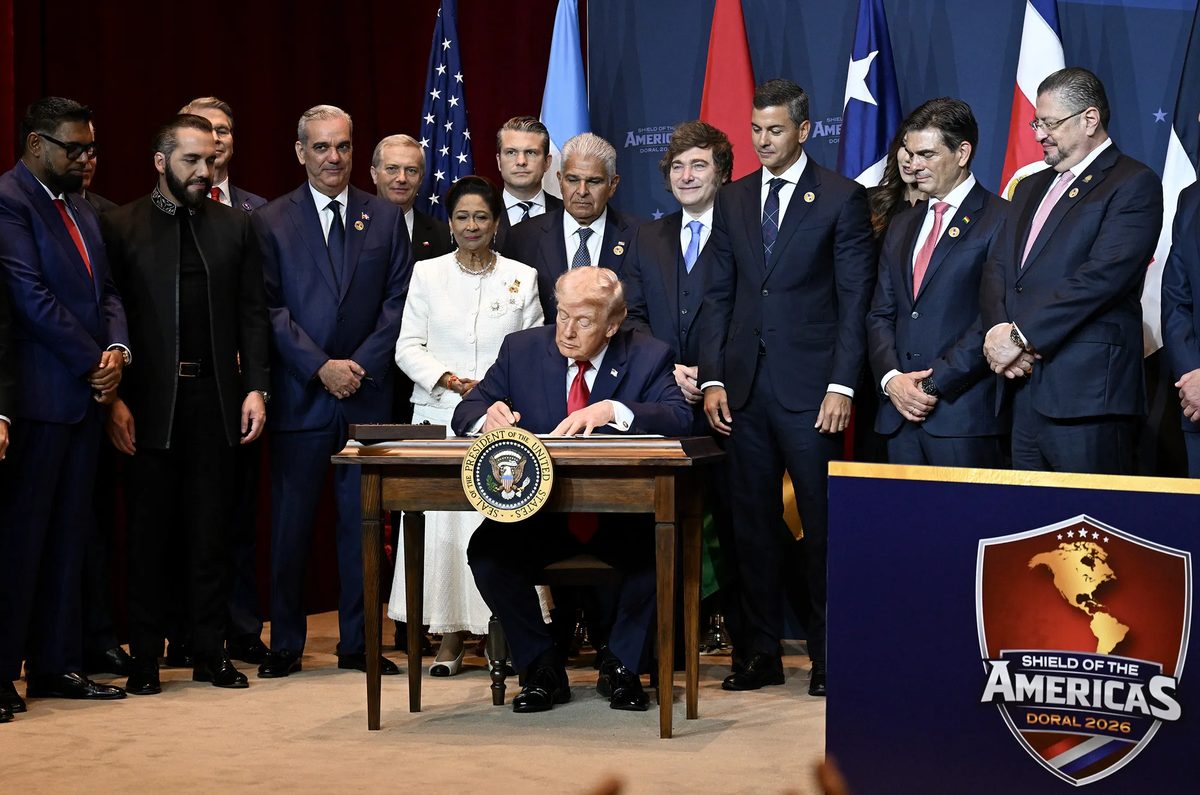
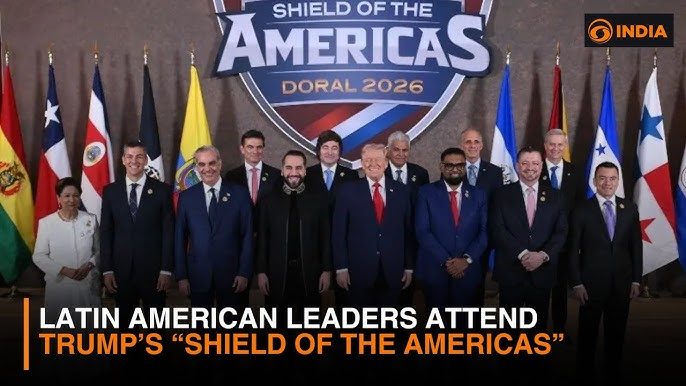
The Shield of the Americas represents the first attempt to build a new multilateral military framework in the hemisphere since the Rio Treaty. But where the Rio Treaty included all regional powers and required unanimous action, the Shield coalition is deliberately selective—enrolling aligned governments and excluding opponents—a fundamentally different model of hemispheric security.