
Pull to refresh
Logo
Glucose and neural touch guide the stem cells that build the human brain

Glucose and neural touch guide the stem cells that build the human brain

New Capabilities

Two UCLA studies in Cell and Science show radial glia respond to metabolism and physical signals from the thalamus

September 4th, 2026: UCLA publishes two studies on brain stem cell guidance

Overview

Updated 5 days ago

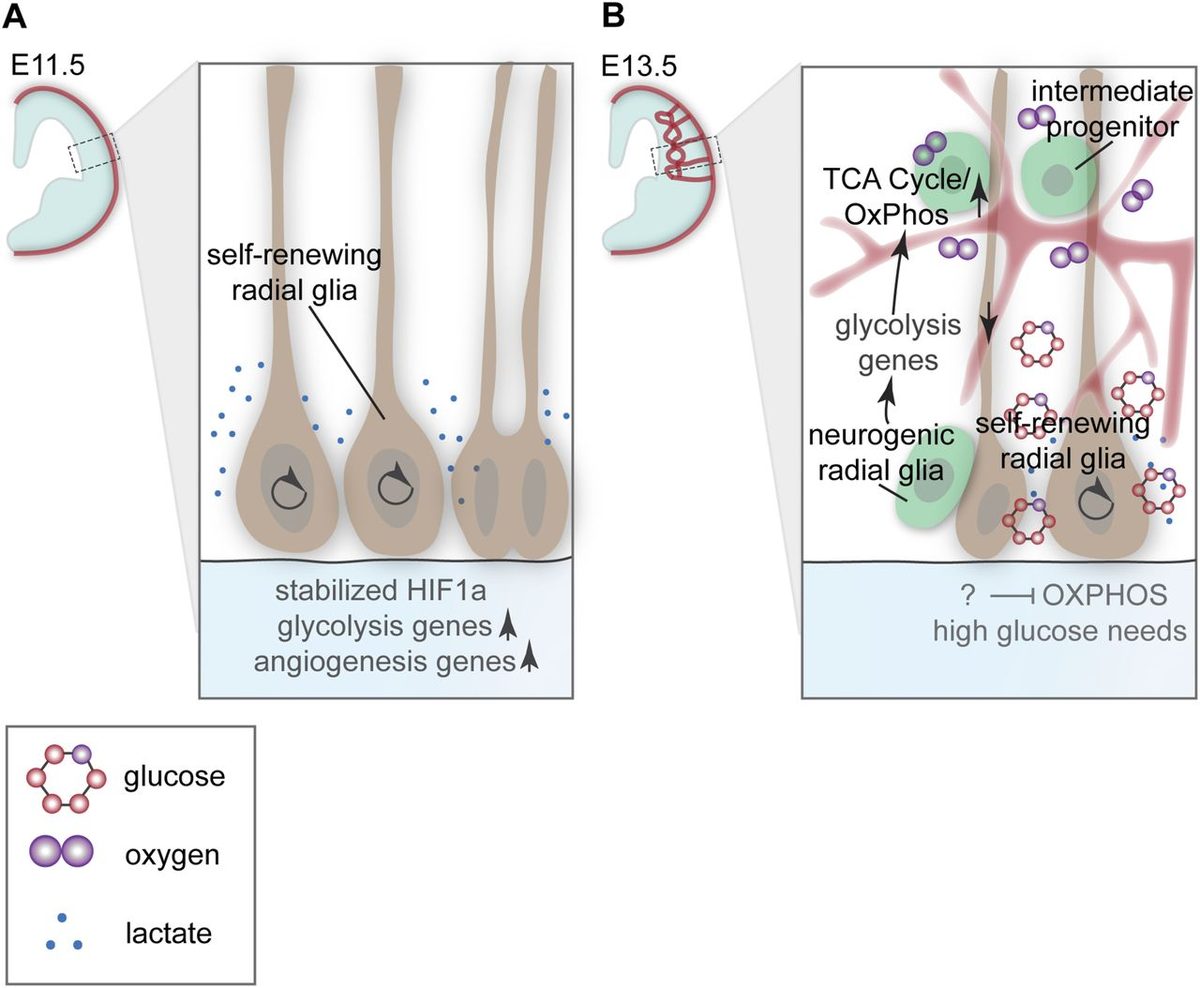
Two UCLA studies published September 4 identify how the stem cells that build the human brain take their cues. Radial glia, which produce most of the cerebral cortex, change what they make based on glucose metabolism and physical contact with signals from the thalamus.

The findings, published in Cell and Science, show brain development is shaped by an active exchange between stem cells and their surroundings, not just a fixed genetic program. The work also links mutations in the NRXN1 gene, tied to autism spectrum disorder, to disruptions in the physical signaling pathway.

Why it matters

Understanding how brain stem cells make decisions could reveal why development goes wrong in autism and how similar programs drive brain cancer.

Questions about this story

Free account needed to ask — your question is kept and asked for you right after sign-up. Answers are public.

No questions yet — be the first to ask.

Key Indicators

2
Studies published in Cell and Science
Two studies released simultaneously identify distinct mechanisms that guide radial glia behavior.
NRXN1
Gene tied to autism in the physical signaling pathway
Patient-derived cells carrying NRXN1 mutations produced altered thalamic signals that shifted stem cell behavior.
Pentose phosphate pathway
Metabolic route that steers radial glia decisions
Radial glia depend on this glucose-processing pathway to make building blocks for rapidly dividing cells.

Voices

Curated perspectives — historical figures and your fellow readers.

Ever wondered what historical figures would say about today's headlines?

Sign up to generate historical perspectives on this story.

People Involved

Organizations Involved

Timeline

2 events Latest: September 4th, 2026 · 1 week ago
  1. UCLA publishes two studies on brain stem cell guidance

    Latest Research Publication

    Papers in Cell and Science show radial glia respond to glucose metabolism and physical touch from the thalamus.

  2. NRXN1 mutations tied to disrupted stem cell signaling

    Research Finding

    Patient-derived cells with NRXN1 mutations produced altered thalamic signals, shifting the balance of stem cells and neurons.

Scenarios

1

Independent labs confirm the thalamus-radial glia contact mechanism

Possible Resolves by Sep 4, 2028

Discussed by: Developmental neuroscience community

The physical contact between thalamic projections and radial glia was identified using human stem cell-derived assembloids. Researchers described the mechanism as likely absent in rodents, making validation in additional human models important. Independent replication would cement the finding as central to understanding human cortex development.

2

NRXN1 mutations become a therapeutic target for neurodevelopmental conditions

Unlikely Resolves by Sep 4, 2029

Discussed by: Autism research community

Patient-derived cells with NRXN1 mutations produced altered thalamic signals that disrupted stem cell behavior. If this mechanism holds across more models, NRXN1-related pathways could emerge as targets for drug development in autism and related conditions.

3

Radial glia research extends to brain cancer biology

Possible Resolves by Sep 4, 2028

Discussed by: Cancer research community

Bhaduri noted that understanding stem cell decision-making could illuminate how similar programs operate in brain cancer. She holds an appointment at UCLA's Jonsson Comprehensive Cancer Center. Follow-up research could apply the metabolic and signaling findings to tumor biology, connecting normal development to malignancy.

Historical Context

3 moments from history that rhyme with this story — and how they unfolded.

2001

Radial glia identified as neural stem cells (2001)

Noctor et al. showed that radial glia divide to produce neurons in the developing rat cortex. This overturned the long-held view that radial glia were just structural scaffolding, establishing them as the primary stem cells of the cerebral cortex.

Then

The finding redirected developmental neuroscience toward radial glia as the key source of cortical neurons.

Now

Two decades of research built on this foundation, culminating in tools like organoids and the current understanding of cortex development.

Why this matters now

The UCLA studies directly investigate decision-making in radial glia, the cells Noctor's work identified as neural stem cells.

April 2003

Human Genome Project completed (2003)

The Human Genome Project sequenced the entire human genome, revealing roughly 20,000 to 25,000 genes, far fewer than the 100,000 many had expected.

Then

Scientists realized gene count alone could not explain human complexity, particularly in the brain.

Now

The field shifted toward studying gene regulation, epigenetics, and how environmental factors interact with genetic programs.

Why this matters now

The UCLA finding that brain development is shaped by metabolism and physical touch, not just genetic blueprints, fits this broader recognition that genes are only part of the story.

August 2013

First human brain organoids (2013)

Lancaster et al. at the Institute of Molecular Biotechnology in Vienna grew three-dimensional brain-like structures from human stem cells. These organoids could mimic aspects of early cortex development in a dish.

Then

Researchers gained a new tool for studying human brain development without needing access to fetal tissue.

Now

Organoid technology evolved to include assembloids, which combine multiple brain regions and were central to the UCLA studies.

Why this matters now

The UCLA research used organoids and assembloids to show how radial glia respond to metabolic and physical signals.

Sources

(9)