

Pull to refresh
Logo
Scientists rediscover how to make ancient Roman colour-changing glass

Scientists rediscover how to make ancient Roman colour-changing glass

New Capabilities

University of Sheffield team replicates the Lycurgus Cup's colour shift using a recipe from a fragment of the original

Overview

Updated Oct 27

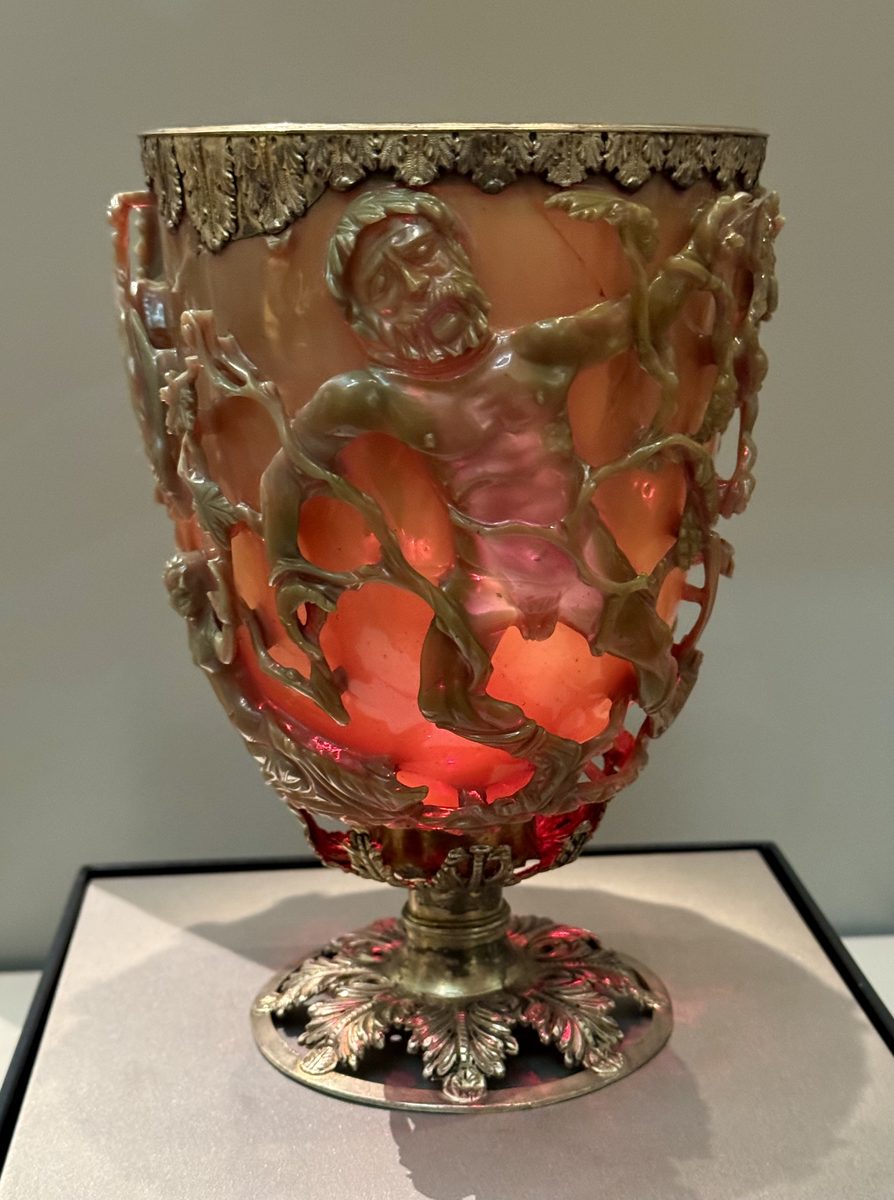
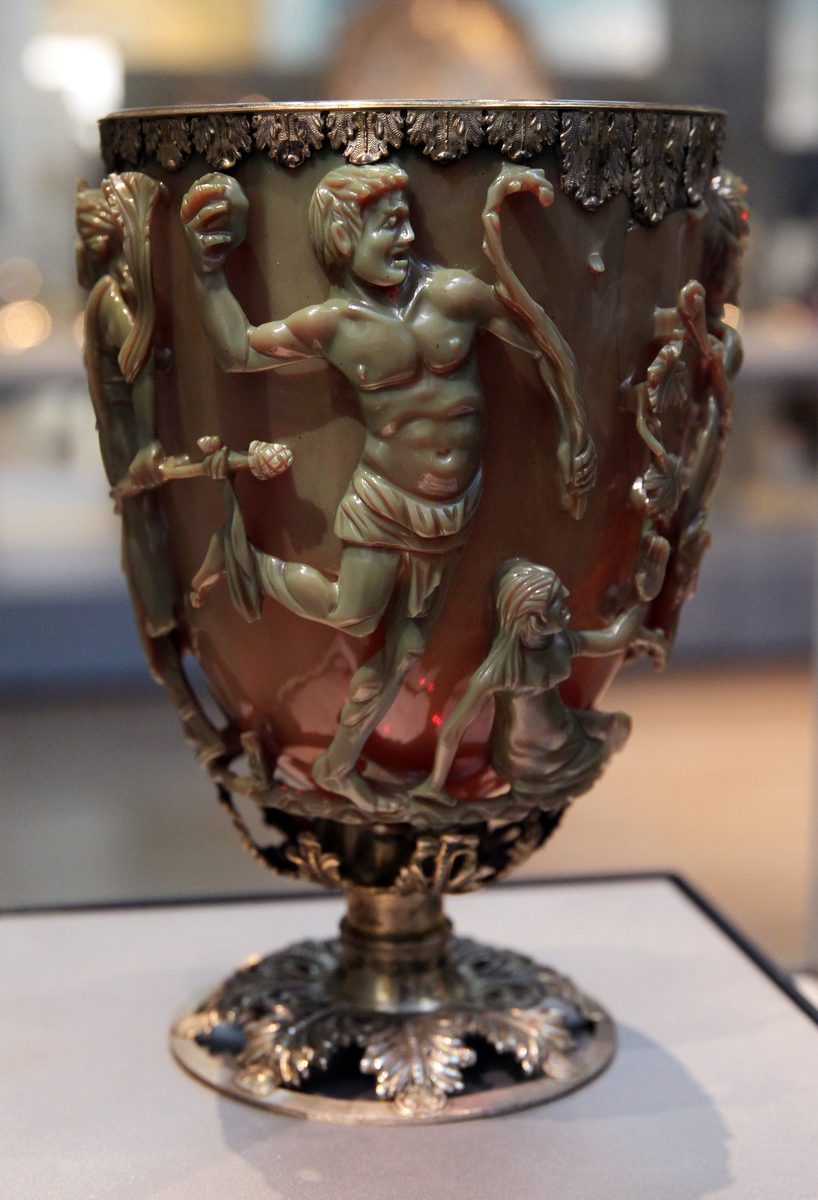
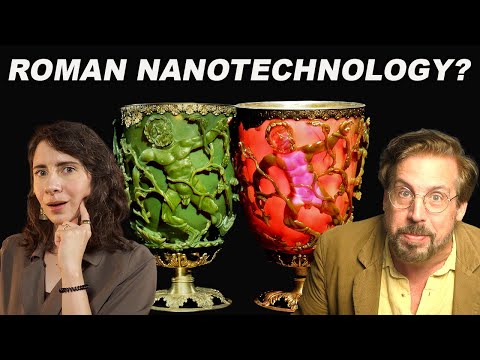
The Lycurgus Cup, a 1,600-year-old Roman glass cup in the British Museum, looks jade green in reflected light and ruby red when lit from behind. Scientists at the University of Sheffield have reproduced that effect using a recipe reverse-engineered from a fragment of the original.

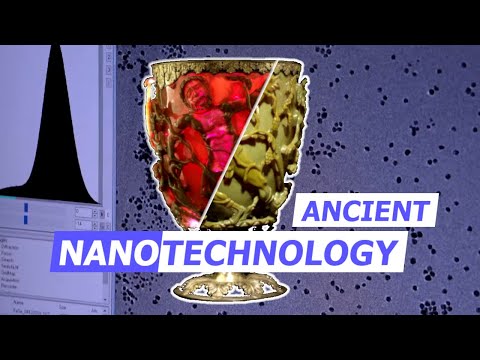
Their method melts glass with gold and silver, then lets metal nanoparticles form during cooling and annealing, a simple heat step. Gizmodo reports the team used a gas-fired furnace and produced the working glass in about four months with minimal funding. A sculpture by glass artist Elliot Walker, made from the same glass, goes on display at Sheffield's Millennium Gallery from 6 to 15 November.

Why it matters

A technique lost for 1,600 years is now reproducible — enabling faithful museum replicas and new dichroic glass with true nanoparticle optics.

Questions about this story

Free account needed to ask — your question is kept and asked for you right after sign-up. Answers are public.

No questions yet — be the first to ask.

Key Indicators

1,600 years
Age of the technique before replication
The Lycurgus Cup was made in the 4th century; the Sheffield team reproduced its effect in 2026.
50–80 nm
Typical nanoparticle diameter in the cup
Earlier analysis of fragments found particles of this size with a silver core and gold shell.
~2:1
Silver-to-gold ratio in modelled particles
A 2026 model of the cup's light scattering gave roughly two parts silver to one part gold. Earlier chip analysis found about 3 parts gold to 7 parts silver, so the two estimates differ.
0.56 wt%
Iron oxide in the optimized replica composition
A 2026 computational model that reproduced the cup's optics used 0.56 wt% iron oxide in the glass matrix.

Voices

Curated perspectives — historical figures and your fellow readers.

Sign up to generate historical perspectives on this story.

People Involved

Organizations Involved

Timeline

2021 4th cen

5 events Latest: October 25th, 2026 · 2 weeks ago
Tap a bar to jump to that date
  1. Lycurgus Cup created

    Upcoming Artifact

    Roman glassmakers craft the Lycurgus Cup, a cage cup that shifts from green to red with lighting — a technique that would not be reproduced for 1,600 years.

  2. Sheffield team replicates the effect

    Latest Milestone

    The Guardian reports University of Sheffield scientists reproduced the cup's colour-changing behaviour using an ancient recipe from a fragment of the original.

  3. Hollands presents replication work at SGT annual meeting

    Research

    Hollands reported the work in the Heritage and History session of the Society of Glass Technology annual meeting. The abstract appears in Physics and Chemistry of Glasses.

  4. Machine learning models the cup's optics

    Research

    Researchers publish a computational framework linking the cup's microstructure to its dichroic appearance, exploring over 215,000 candidate compositions and quantifying the narrow feasible window.

  5. Replica analysis published

    Research

    Scientists publish analysis of replica dichroic glasses matching the cup's composition, showing nanoparticle mechanics and phase-separated silica scattering produce the effect.

Scenarios

1

British Museum displays a Sheffield-made replica

Likely Resolves by End of 2028

Discussed by: The Guardian and Der Spiegel, which reported the breakthrough; the British Museum has not commented publicly

The museum that holds the original cup commissions or exhibits a faithful replica made with the Sheffield technique. A public display would let visitors watch the cup shift from green to red — something only the original has offered until now.

2

Nanoparticle dichroic glass reaches commercial production

Possible Resolves by End of 2028

Discussed by: The 2026 Springer Applied Physics A paper, which says its inverse-design framework applies to engineered nanocomposite optical materials beyond archaeology

A glass manufacturer or materials company adopts the melt-and-strike nanoparticle method for architectural, decorative, or technical glass. The 2026 machine-learning model offers a path to tuning the recipe for specific colours and effects.

3

Technique stays in the research lab

Possible Resolves by End of 2028

Discussed by: No publication predicts this; it is the default if museum and commercial applications do not emerge

If no museum display or commercial product emerges, the achievement stands as an academic result published in glass and materials journals. The cup keeps its status as a one-of-a-kind artifact, with the replica known mainly to specialists.

4

Sheffield's sculpture joins the Turner Museum of Glass collection

Likely Resolves by End of 2026

Discussed by: Gizmodo, which reports the university plans to add the piece to its permanent collection

After its Festival of the Mind display, the glass sculpture is set to join the permanent collection at the University of Sheffield's Turner Museum of Glass. It would be the first public collection to hold a replica of the cup's colour-shifting glass.

Historical Context

2 moments from history that rhyme with this story — and how they unfolded.

Renaissance

Venetian chalcedony glass (Renaissance)

Venetian glassmakers on Murano developed chalcedony glass, a milky, banded material whose colour comes from metal nanoparticles suspended in the glass. The 2021 ScienceDirect analysis of the Lycurgus Cup notes the same scattering phenomena appear in Renaissance chalcedony and girasol glasses.

Then

Chalcedony glass became a prized Venetian export, revived repeatedly over the centuries.

Now

It demonstrated nanoparticle scattering could create complex optical effects in glass — but without the full green-to-red dichroic contrast of the Roman cup.

Why this matters now

Shows a partial revival of nanoparticle-based optical glass in the Renaissance, yet the Lycurgus Cup's specific colour shift remained unreproduced.

20th century

Modern dichroic glass from NASA research (20th century)

Materials research supported by NASA led to modern dichroic glass, which shifts colour with viewing angle. It works through thin-film interference coatings, not embedded nanoparticles — a fundamentally different mechanism from the Roman technique.

Then

Modern dichroic glass found uses in art, jewelry, and laser optics.

Now

It offered a modern approximation of the Roman effect but through a distinct physical process.

Why this matters now

Clarifies that the Lycurgus Cup does not use thin-film coatings — its dichroism is a bulk property of nanoparticles in the glass, which is what made replication so difficult.

Sources

(8)