



Pull to refresh
Logo
Scientists create brilliant white material without a drop of white pigment

Scientists create brilliant white material without a drop of white pigment

New Capabilities

Deep Foam Photolithography replaces titanium dioxide and PFAS with engineered pores that scatter light

2 days ago: Kyoto iCeMS issues public statement on DFP

Overview

Updated Yesterday

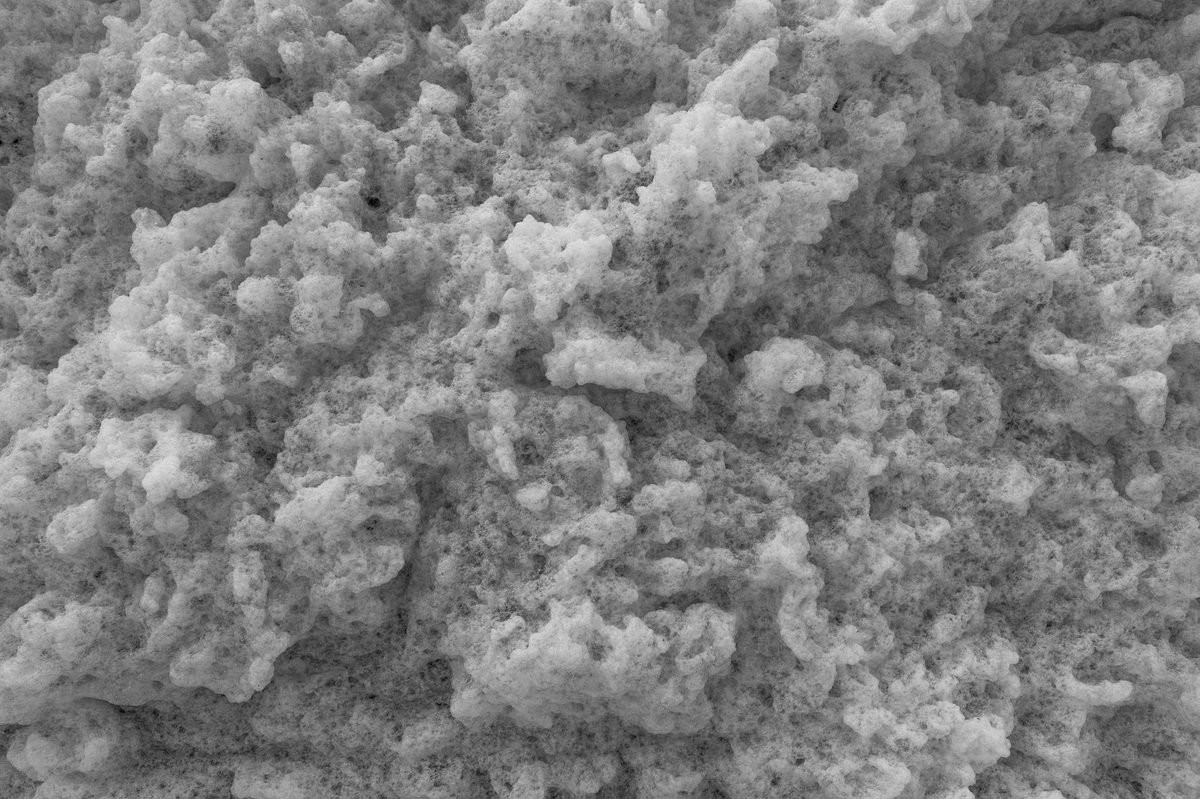
White packaging, films, and coatings have relied on titanium dioxide for over a century. The European Union banned it as a food additive over safety concerns, and the search for alternatives has been urgent. Now researchers at Kyoto University have made brilliant white materials with no pigment at all—just engineered pores that scatter light the way snow and clouds do.

The technique, called Deep Foam Photolithography, also makes surfaces water-repellent without PFAS chemicals. It works on commercially available polymers and fabrics, prints at 20,000 dots per inch, and was published in Nature. If it scales, it could replace two problem materials—titanium dioxide and fluorinated coatings—with nothing but light, solvent, and structure.

Why it matters

If this scales, white packaging and water-repellent textiles no longer need titanium dioxide or PFAS — eliminating two classes of health and environmental concerns from everyday products.

Questions about this story

Free account needed to ask — your question is kept and asked for you right after sign-up. Answers are public.

No questions yet — be the first to ask.

Key Indicators

20,000 DPI
Print resolution
Enough resolution for diffractive color and greyscale printing without pigments.
0
Pigment or PFAS required
The process uses no titanium dioxide, no fluorinated coatings, and no new specialty chemicals.
3
Institutions involved
Kyoto University iCeMS, Tokyo Metropolitan University, and Donghua University.
2
Industrial problems addressed
EU titanium dioxide food-additive ban and PFAS persistence concerns.

Voices

Curated perspectives — historical figures and your fellow readers.

Ever wondered what historical figures would say about today's headlines?

Sign up to generate historical perspectives on this story.

People Involved

Organizations Involved

Timeline

March 2020 September 2026

5 events Latest: 2 days ago
Tap a bar to jump to that date
  1. Kyoto iCeMS issues public statement on DFP

    Latest Statement

    Institute describes how Hokusai's The Great Wave and natural foams inspired the sustainable white material platform.

  2. ScienceDaily reports pigment-free white material

    Announcement

    Wider public release of the DFP technology from Kyoto University iCeMS and partners.

  3. Deep Foam Photolithography published in Nature

    Publication

    Kyoto-led team unveils light-and-solvent foaming technique achieving 20,000 DPI structural whiteness without pigments or PFAS.

  4. EU titanium dioxide food-additive ban takes effect

    Regulation

    European Union prohibits titanium dioxide as a food additive citing safety concerns, accelerating search for alternatives.

  5. KIT demonstrates pigment-free white inspired by Cyphochilus beetle

    Research

    Karlsruhe Institute of Technology produces porous polymer structures that scatter light like the white beetle's chitin scales.

Scenarios

1

DFP scales commercially to replace titanium dioxide in packaging

Likely Resolves by End of 2028

Discussed by: Kyoto University iCeMS; Donghua University textile researchers

The team has already demonstrated the process on commercially available polymers and fabrics. If industrial partners adopt it for packaging, films, and coatings, the first consumer products could appear within two to four years. The EU's titanium dioxide ban and growing PFAS restrictions create regulatory tailwinds.

2

DFP remains a laboratory technique, limited by scaling costs

Possible Resolves by End of 2028

Discussed by: None publicly — scenario reflects typical scale-up challenges for photolithographic processes

Photolithography is a semiconductor-industry process with expensive equipment. Whether it can be cost-effective for mass-market packaging and textiles is unproven. If scale-up costs exceed the savings from eliminating titanium dioxide, adoption could stall.

3

DFP expands into high-value applications like microfluidics and 3D printing

Possible Resolves by End of 2027

Discussed by: Nature paper authors; ScienMag coverage

Beyond white materials, DFP can pattern microfluidic channels, capture picoliter liquid volumes, and print with high aspect ratios. These niche applications have higher margins than commodity packaging and could commercialize faster, even if mass-market adoption lags.

Historical Context

3 moments from history that rhyme with this story — and how they unfolded.

2019–2026

PFAS phase-out movement and regulatory pressure

Growing evidence of PFAS persistence in the environment and human body drove worldwide regulatory action, including restrictions in the EU and US states. The 'forever chemicals' are used widely for water and oil repellency.

Then

Manufacturers face mounting pressure to find non-fluorinated alternatives for water-resistant coatings.

Now

Materials that achieve repellency through structure rather than chemistry gain strategic value.

Why this matters now

DFP's surface roughness induces lotus-like super-hydrophobicity without any PFAS, aligning with the broader regulatory shift.

March 2020

KIT biomimetic white films (2020)

Karlsruhe Institute of Technology's Hendrik Hölscher and team, inspired by the white beetle Cyphochilus insulanus, produced porous polymer nanostructures that scatter light efficiently. Their films achieved 90% reflectance with a 60-micrometer scattering layer.

Then

Demonstrated feasibility of pigment-free whiteness in a lab setting.

Now

Established the scientific basis for structural whiteness in synthetic materials that DFP builds upon.

Why this matters now

DFP extends this principle from static films to a printable, high-resolution platform with added water repellency and fabric compatibility.

1910s–2026

Titanium dioxide in food and consumer products (century-long use)

Titanium dioxide became the dominant white pigment for plastics, paints, paper, cosmetics, and food due to its high refractive index and scattering efficiency. Its use spans over a century across nearly every white consumer product.

Then

The EU's 2026 ban on TiO₂ as a food additive created regulatory pressure on manufacturers.

Now

The search for alternatives intensified, accelerating interest in structural whiteness.

Why this matters now

DFP's elimination of titanium dioxide directly addresses a regulatory and health-motivated gap in materials science.

Sources

(7)