
Pull to refresh
Logo
Scientists directly observe DNA strands zipping together for the first time

Scientists directly observe DNA strands zipping together for the first time

New Capabilities

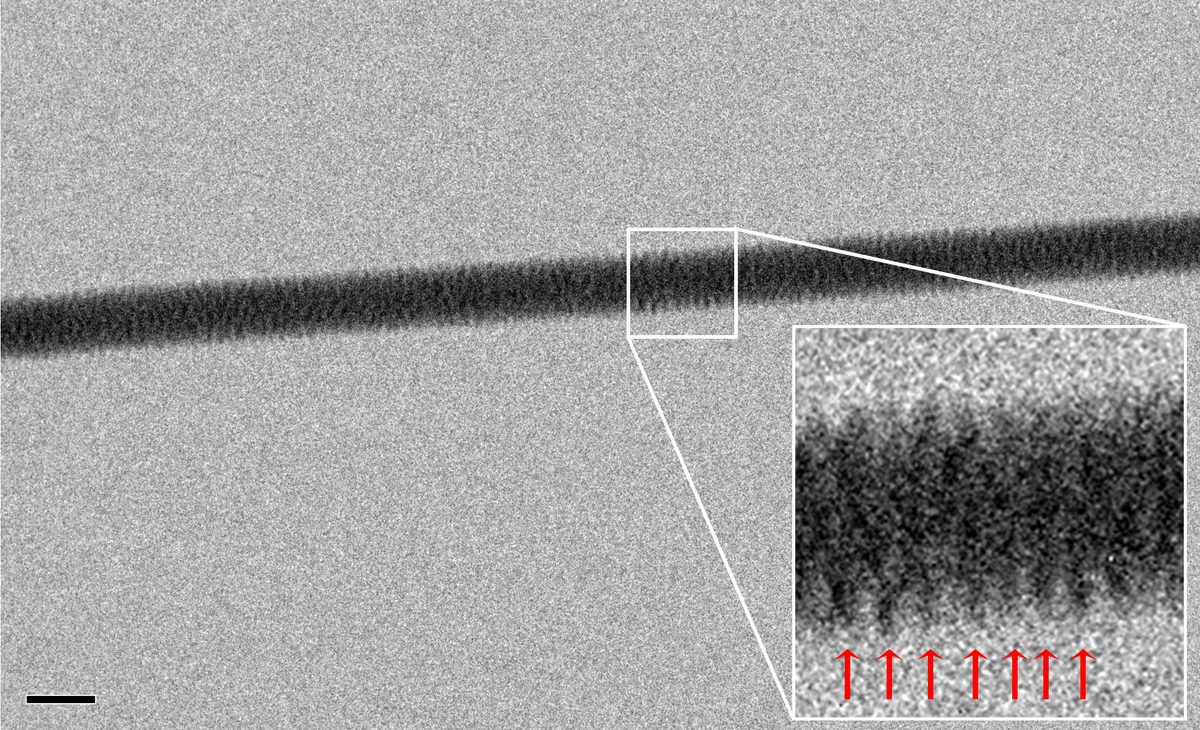
Imaging confirms the two-decade-old 'DNA zipper' model and reveals how metal ions bridge matching helices

2 days ago: First direct observation of DNA zippering announced

Overview

Updated Yesterday

For 20 years, biologists knew matching DNA duplexes could pair up despite carrying identical negative charges, but no one had seen how. Researchers at the universities of York and Sheffield now have: metal ions, including nickel, magnesium, and calcium, nestle into the helices' grooves and zip them together, groove for groove.

The images confirm the 'DNA zipper' model proposed in 2004, and show pairing is not uniform: certain sequences form far stronger contacts. Those hotspots could reveal genome regions central to recombination and cancer, and let engineers build DNA structures that assemble themselves.

Why it matters

Knowing how DNA pairs up could reveal the genome regions involved in recombination and cancer, and enable custom-built DNA structures.

Questions about this story

Free account needed to ask — your question is kept and asked for you right after sign-up. Answers are public.

No questions yet — be the first to ask.

Key Indicators

2
Universities that made the observation
University of York and University of Sheffield worked together on the imaging.
3
Divalent ions shown to bridge DNA helices
Nickel, magnesium, and calcium all act as molecular bridges between grooves.
2 decades
Time between the DNA zipper theory and its confirmation
Alexey Kornyshev proposed the model in the early 2000s; this study first images it.

Voices

Curated perspectives — historical figures and your fellow readers.

Ever wondered what historical figures would say about today's headlines?

Sign up to generate historical perspectives on this story.

People Involved

Organizations Involved

Timeline

January 2004 September 2026

3 events Latest: 2 days ago
  1. First direct observation of DNA zippering announced

    Latest Publication

    Study appears in Nucleic Acids Research; teams image two helices pairing groove to groove, confirming the zipper model.

  2. Imaging study posted as preprint

    Research

    The York-Sheffield team posts 'Imaging and mechanism of DNA–DNA recognition mediated by divalent ions' to bioRxiv.

  3. DNA zipper model proposed

    Theory

    Imperial College London's Alexey Kornyshev proposes that salt ions let matching DNA helices align like interlocking spiral staircases.

Scenarios

1

Researchers map ion-mediated pairing hotspots in the human genome

Possible Resolves by Jun 1, 2028

Discussed by: Agnes Noy's team at the University of York, who said the discovery could help identify genome regions involved in DNA pairing

Researchers apply the discovered mechanism to map the human genome's pairing hotspots, the sequences that form the strongest ion-mediated contacts. If those regions overlap recombination sites or cancer-linked mutations, the mechanism gains direct clinical relevance.

2

Engineers build self-assembling DNA structures using pairable sequences

Possible Resolves by Jan 1, 2029

Discussed by: The research team, who noted programmable interactions could eventually help design custom DNA structures for biotechnology

Biotechnologists exploit the sequence-dependent pairing strength to build DNA nanostructures that zip together by choosing groove-matched sequences. A published demonstration of a custom structure assembled via ion-mediated pairing would confirm the mechanism as a design tool.

3

Independent labs replicate the zipper mechanism

Likely Resolves by Jan 1, 2028

Discussed by: Independent structural biology groups and the peer reviewers at Nucleic Acids Research

Follow-up studies using cryo-electron microscopy or single-molecule techniques confirm that divalent ions bridge DNA grooves. At least two independent confirmations would cement the zipper model as settled science rather than a single-team result.

Historical Context

2 moments from history that rhyme with this story — and how they unfolded.

April 1953

Watson and Crick's double helix (1953)

James Watson and Francis Crick proposed the DNA double helix based largely on Rosalind Franklin's X-ray diffraction images. The structure explained how genetic material could copy itself, but no one had directly seen the molecule at that resolution.

Then

The model reshaped biology within a decade, leading to the genetic code and molecular biology.

Now

Direct visual confirmation came progressively through sequencing, crystallography, and cryo-electron microscopy.

Why this matters now

Like Kornyshev's zipper theory, a powerful structural model began as inference from indirect evidence before direct imaging arrived much later.

1958

Meselson–Stahl experiment (1958)

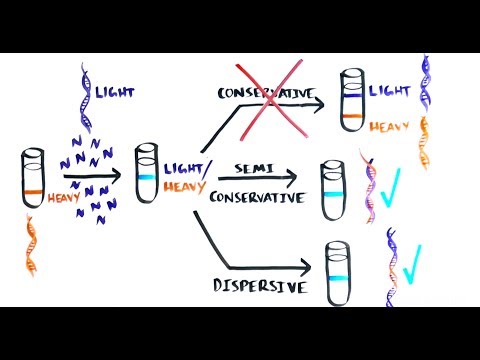
Matthew Meselson and Franklin Stahl grew bacteria in a heavy nitrogen isotope, then switched to normal nitrogen. After two generations, DNA's density pattern matched semiconservative replication, settling a three-way debate about how DNA copies itself.

Then

Confirmed the Watson-Crick prediction of how DNA replicates.

Now

Became a model experiment for directly testing a hypothesis against competing explanations.

Why this matters now

The York-Sheffield work similarly uses direct measurement, atomic force microscopy, to distinguish an actual mechanism from decades of competing models.

Sources

(7)