
Pull to refresh
Logo
Chemists isolate stable oxoboranes, ending a 60-year hunt

Chemists isolate stable oxoboranes, ending a 60-year hunt

New Capabilities

A diboracumulene-carbonyl reaction produced three isolable boron-oxygen triple-bond compounds, and a second team has isolated free oxoboranes by another route

Overview

Updated 2 days ago

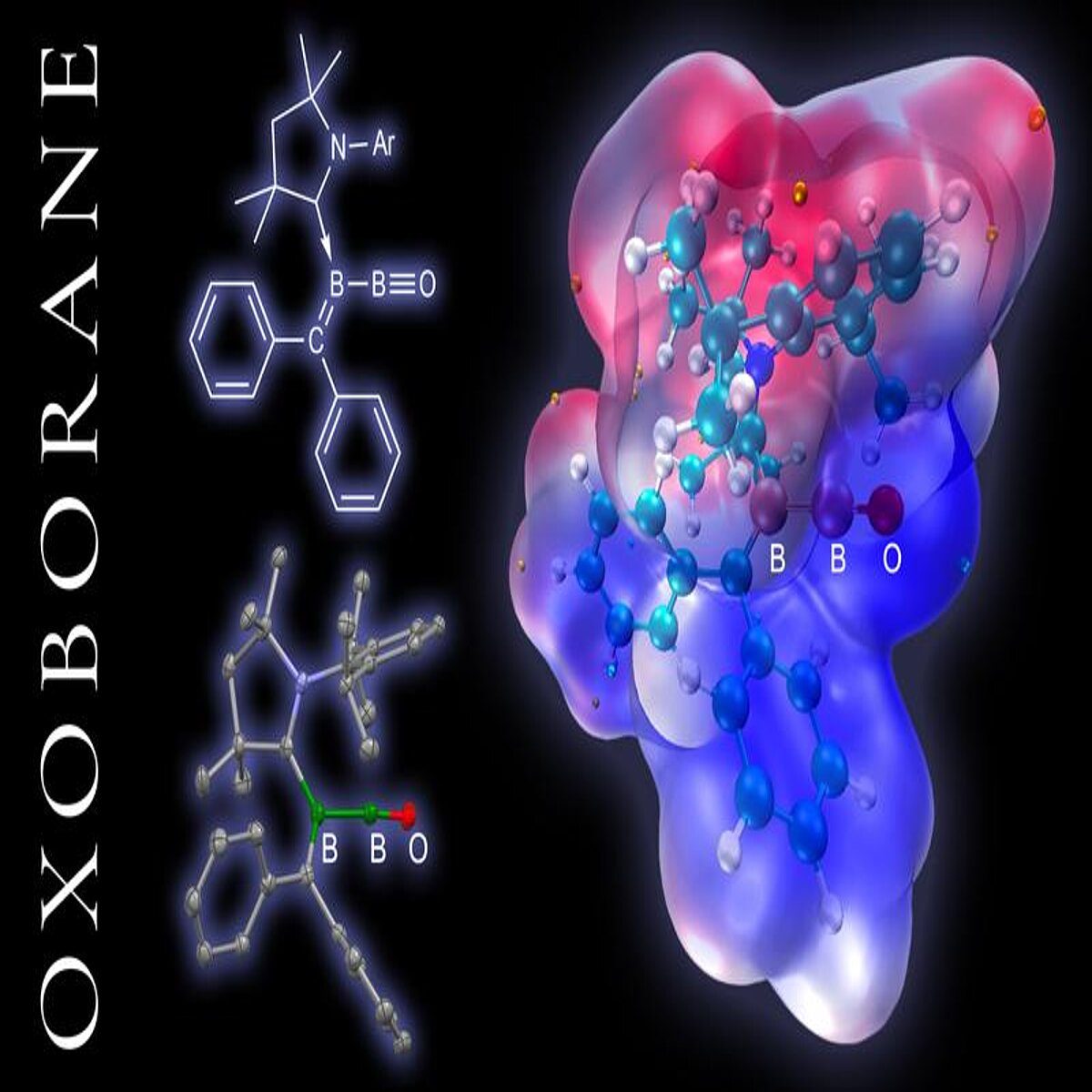
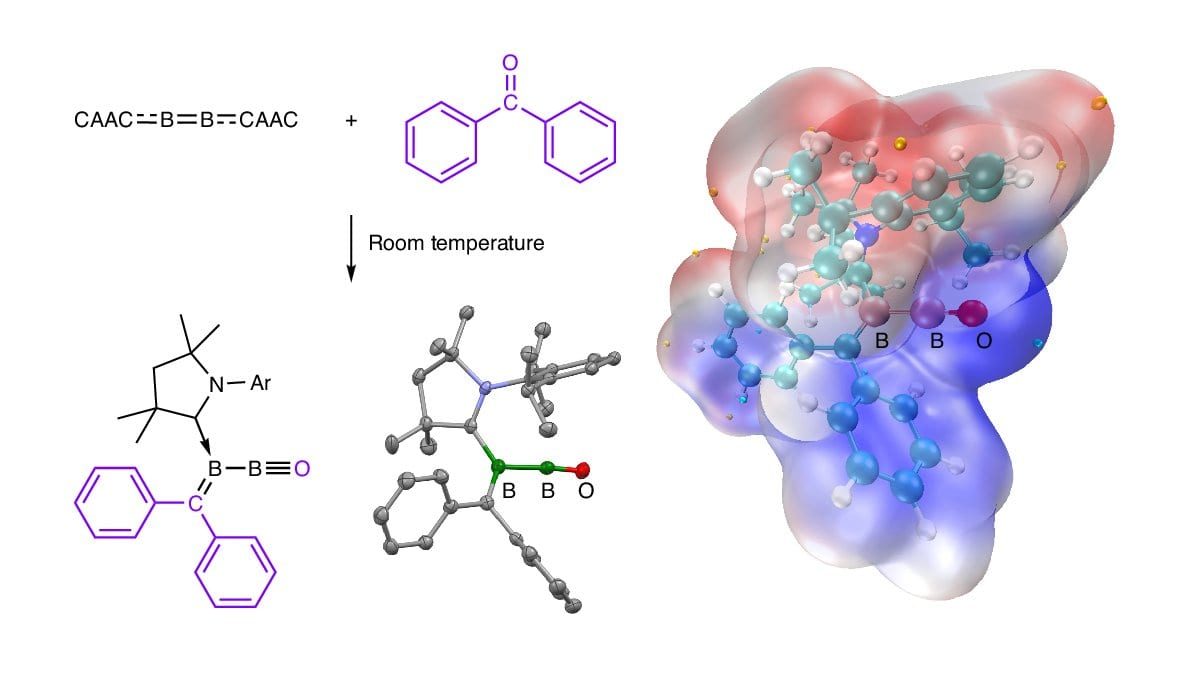
Chemists have chased oxoboranes, molecules with a triple bond between boron and oxygen, since at least the early 1960s. They could only be glimpsed under extreme conditions or inferred from side products. Now a team at the University of Würzburg has made three of them as orange and yellow solids that can be isolated and studied; the work was published in Nature Chemistry on 27 October 2026.

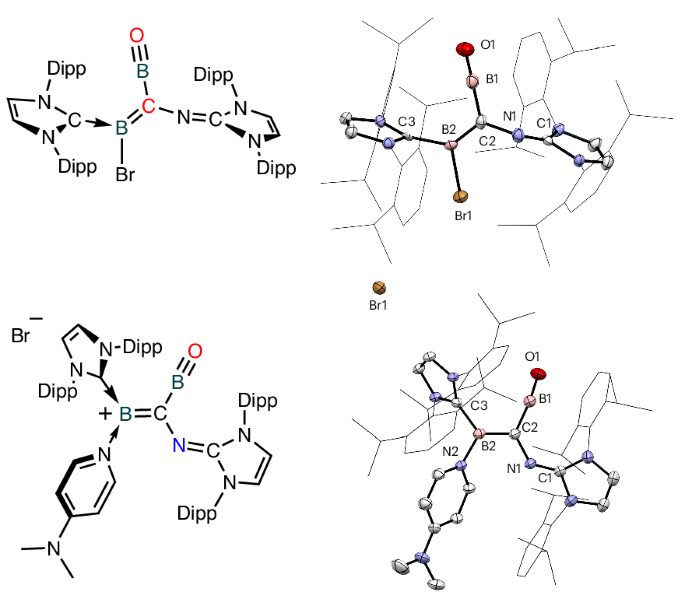
Two doctoral students found the route by accident while testing a diboracumulene against carbonyl compounds, including ketones and a formamide. A second group, led by Wei Lu at Sichuan University, has also isolated free oxoboranes using a different, carbon-monoxide-triggered route. The two results show the bond can be stabilized in more than one molecular setting.

Why it matters

Chemists can now make and handle a boron-oxygen triple bond, a class of molecules that previously existed only in matrices and mass spectrometers.

Questions about this story

Free account needed to ask — your question is kept and asked for you right after sign-up. Answers are public.

No questions yet — be the first to ask.

Key Indicators

3
Oxoboranes isolated
Würzburg prepared three distinct stable oxoboranes with the diboracumulene route.
60+
Years of failed attempts
Chemists had pursued isolable organic oxoboranes since at least the early 1960s.
15+
Years Braunschweig pursued boron multiple bonds
The Würzburg lab has worked on unusual boron bonds since before its 2012 diboryne result.
2
Independent routes
Würzburg and Sichuan University teams each reported isolable free oxoboranes.

Voices

Curated perspectives — historical figures and your fellow readers.

Sign up to generate historical perspectives on this story.

People Involved

Organizations Involved

Timeline

1960s November 2026

5 events Latest: November 2026
Tap a bar to jump to that date
  1. Second team isolates free oxoboranes by a different route

    Latest Research

    A group led by Wei Lu at Sichuan University reports free oxoboranes made through a carbon-monoxide-triggered transformation, including neutral and positively charged forms.

  2. Three oxoboranes isolated as solids

    Publication

    Nature Chemistry publishes the diboracumulene-carbonyl route. Two doctoral students had independently noticed orange and yellow solids forming where other products were expected.

  3. First neutral boron-carbon triple bond reported

    Research

    The same lab produces the first neutral molecule with a triple bond between boron and carbon, leaving boron-oxygen as the last gap in the row.

  4. First boron-boron triple bond reported

    Research

    Braunschweig's Würzburg lab makes a molecule containing a triple bond between two boron atoms, a connection boron rarely forms.

  5. The oxoborane hunt begins

    Research

    Chemists start pursuing organic oxoboranes. Over the following decades they detect the molecules only under extreme conditions or infer them from indirect evidence.

Scenarios

1

The route yields a wider family of oxoboranes

Likely Resolves by Nov 6, 2027

Discussed by: Braunschweig and colleagues, in the University of Würzburg release

The method worked with three different carbonyl compounds, which the team reads as a sign it is not a one-off. If other carbonyl compounds and diboracumulenes behave the same way, chemists get a general bench route to a class of molecules that previously existed only in matrices and mass spectrometers. A second team at Sichuan University has reported a different route to free oxoboranes, which makes a broader family more likely. The trigger is a follow-up paper reporting more isolable oxoboranes made the same way.

2

Oxoboranes become reagents other chemists actually use

Possible Resolves by Nov 6, 2029

Discussed by: Not yet predicted by name; the Würzburg release says the team is testing how broadly the technique applies

Isolating a compound is step one. The harder test is whether other labs pick it up as a reagent, ligand or intermediate in synthesis. That requires the compounds to survive handling outside the lab that made them and to react in useful, predictable ways. A single published reaction using an isolated oxoborane as a reagent would mark the shift.

3

The method stays narrow and the three compounds stand alone

Unlikely Resolves by Nov 6, 2028

Discussed by: No named proponent; this is the null case against the team's own expectation of broader scope

The reaction may depend on the specific steric bulk of the diboracumulene and the ketones tested. If other substrates divert to the products chemists originally expected, the result remains a notable isolation without becoming a general method. The signal would be two years passing with no fourth oxoborane reported by any group.

Historical Context

3 moments from history that rhyme with this story — and how they unfolded.

2012

First boron-boron triple bond (2012)

Braunschweig's group at Würzburg reported a molecule containing a triple bond between two boron atoms. Boron normally forms single bonds in such compounds, and the result showed that a triple bond could be made to persist at ordinary temperatures.

Then

Chemists gained a new bond type to study and a template for stabilizing reactive boron connections.

Now

It set the lab on a multi-year program that produced a boron-carbon triple bond in 2025 and now a boron-oxygen one.

Why this matters now

The oxoborane result is the third entry in the same run, from the same group, using the same goal of making boron share three electron pairs.

July 2013

2-norbornyl cation crystallized (2013)

A team from Freiburg and Erlangen, with Paul von Ragué Schleyer, grew crystals of the 2-norbornyl cation and ran X-ray structure analysis on them. The molecule had been at the center of a 50-year argument over whether a carbon atom could bond to five neighbors.

Then

The crystal structure settled the nonclassical carbocation debate.

Now

It became a standard example of a short-lived species that turns routine once someone finds the right conditions to hold it.

Why this matters now

Oxoboranes spent six decades in the same category: detected, argued about, never isolated. The pattern of resolution is the same.

July 2023

Boron monoxide structure solved (2023)

Scientists at Ames National Laboratory determined the structure of boron monoxide, a compound first described in the 1940s. Earlier researchers could make it but not say how its building blocks were arranged. Nuclear magnetic resonance methods and powder X-ray diffraction showed parallel-arranged precursor molecules forming turbostratic nanosheets.

Then

A nearly century-old structural question closed.

Now

It showed how much of boron-oxygen chemistry had been waiting on better tools rather than better ideas.

Why this matters now

Boron-oxygen compounds have a record of resisting characterization for decades. The oxoborane isolation is the latest case, resolved this time by a synthetic route rather than an instrument.

Sources

(7)