

Pull to refresh
Logo
San Francisco Opera orchestra strikes, cancelling opening night over pay cuts

San Francisco Opera orchestra strikes, cancelling opening night over pay cuts

Money Moves San Francisco, CA local

Tentative four-year deal ends the strike; musicians' ratification vote pending

Overview

Updated Oct 23

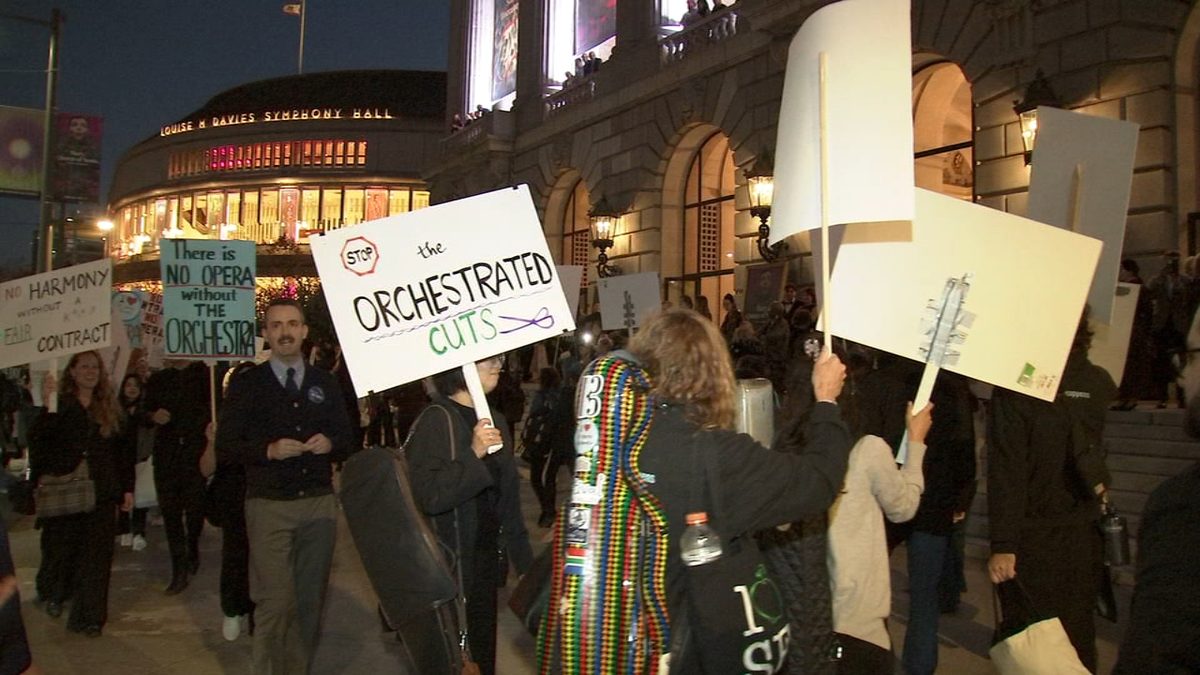
San Francisco Opera and its orchestra reached a tentative four-year contract on Sept. 17, ending a five-day strike that had cancelled opening night. The deal runs retroactively from Aug. 1, 2026, through July 31, 2030, and musicians still must ratify it.

The company rescheduled its season opening for Sept. 22 with Verdi's Simon Boccanegra. Five events were lost in all: the Sept. 12 premiere, the free Opera in the Park concert, Simon Boccanegra on Sept. 16 and 19, and the opening of Thea Musgrave's Mary, Queen of Scots. Management says the deal addresses the structural budget gap behind the fight; the union says it brings stability.

Why it matters

If SF Opera's $300 million endowment can't cover the annual gap, smaller American companies face the same choice between wages and survival.

Last Monday's email for San Francisco, CA

Sent Nov 9. It carried:

Get next Monday's: one short email a week. Free. Unsubscribe in one click.

Questions about this story

Free account needed to ask — your question is kept and asked for you right after sign-up. Answers are public.

No questions yet — be the first to ask.

Key Indicators

4 years
Length of tentative contract
Runs retroactively from Aug. 1, 2026, to July 31, 2030. Orchestra members still must ratify it.
5
Events cancelled by the strike
The Sept. 12 opener, the free Opera in the Park concert, Simon Boccanegra on Sept. 16 and 19, and the Mary, Queen of Scots opening.
24 weeks
Work guarantee in the expired contract
Tenured musicians were guaranteed 24 weeks of work, a level management says exceeds what it can fund.
$118,326.75
Section musician base minimum salary
Base annual salary in the expired contract, plus benefits.
$15M
Annual structural deficit
The yearly gap between expenses and revenue that management says it must close.
~$300M
SF Opera endowment
The largest of any American opera company, according to General Director Matthew Shilvock.
20%
Effective cut union said a freeze meant
The union called a five-year wage freeze roughly a 20 percent cut after inflation.
14%
Revenue from ticket sales
Management says ticket sales cover 14 percent of revenue and the company must raise $2-3 million more each year just to keep pace with expenses.

Voices

Curated perspectives — historical figures and your fellow readers.

Sign up to generate historical perspectives on this story.

People Involved

Organizations Involved

Timeline

July 2026 September 2026

9 events Latest: September 18th, 2026 · 2 months ago
Tap a bar to jump to that date
  1. SF Opera sets Sept. 22 reopening

    Latest Announcement

    The company says its season will begin Sept. 22 with Simon Boccanegra at the War Memorial Opera House. The Sept. 19 and 20 performances stay cancelled, and ticket holders are offered refunds or seats at another show.

  2. Tentative four-year deal ends the strike

    Settlement

    San Francisco Opera and the orchestra, represented by American Federation of Musicians Local 6, announce a tentative contract running retroactively from Aug. 1, 2026, to July 31, 2030. Members must still vote to ratify.

  3. Report: Music director may resign if strike continues

    Report

    Slippedisc, citing an unnamed report, says Eun Sun Kim could leave her job if the strike continues. Neither Kim nor the company has confirmed it.

  4. Opera in the Park cancelled; strike continues

    Cancellation

    The free annual concert in Golden Gate Park is scrubbed. Ticket holders for Simon Boccanegra are offered refunds or credit toward a later 2026-27 performance.

  5. SFO issues statement defending its offer

    Statement

    Management says it proposed a two-year contract through July 2026 with wage increases and retirement enhancements. It calls the only substantive dispute whether the contract runs through July 2026 or July 2027.

  6. Union says latest offer was a five-year wage freeze

    Negotiation

    The union says management's latest proposal was a five-year pay freeze, which it equates to a roughly 20 percent cut after inflation.

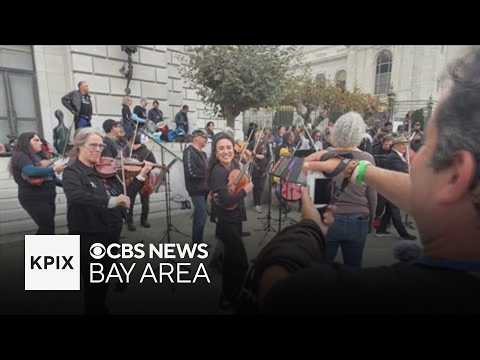
  7. Striking musicians play informal set in Golden Gate Park

    Event

    After the official Opera in the Park concert was cancelled, musicians who showed up played informally for people on the grass.

  8. Orchestra strikes minutes before opening night

    Strike

    Musicians walk off the job, forcing cancellation of the season premiere of Verdi's Simon Boccanegra. The union announces the strike on social media.

  9. Contract expires without a new deal

    Contract

    The collective bargaining agreement covering SF Opera orchestra musicians lapses; the previous contract set a $118,326.75 base minimum salary.

Scenarios

1

SF Opera and musicians reach deal, fall season resumes

Deadline passed (Oct 31, 2026)

Discussed by: KQED, KTVU; both sides say they want to return to the table quickly

Both sides return to bargaining, possibly with a mediator. Management's five-year framework, which holds musician earnings flat at current levels, becomes the basis for a settlement. The season resumes with rescheduled performances by late October, and the strike ends after roughly six weeks.

2

Strike drags into winter, SF Opera cancels fall season

Possible Resolves by Jan 31, 2027

Discussed by: San Francisco Classical Voice, which cites the Minnesota Orchestra lockout as a precedent

Positions harden through the fall. Management cancels more performances as the season's schedule unravels. Musicians draw on strike funds while negotiations stall over the $15 million structural deficit and the size of the pay cut.

3

Musicians win new contract without major pay cuts

Unlikely Resolves by End of 2026

Discussed by: The union's own statements point to surplus donations; SFCV notes the endowment is the largest of any American opera company

A donor push and pressure from the arts community prompt management to tap the $300 million endowment to bridge the deficit. Musicians win a contract near the previous salary level. The deal ends the immediate strike but leaves the structural deficit unresolved.

4

Eun Sun Kim resigns as music director

Unlikely Resolves by End of 2026

Discussed by: Slippedisc, citing an unnamed report

Slippedisc reported Sept. 14 that Kim may leave her job if the strike continues. No confirmation from Kim or the company. A resignation would force SF Opera to search for a new music director while the season is stalled.

5

Orchestra members ratify the four-year contract

Likely Resolves by End of 2026

Discussed by: Both sides described the Sept. 17 deal as tentative and subject to a member vote

The agreement covering Aug. 1, 2026, through July 31, 2030 goes to the musicians for ratification. Approval locks in four years of labor peace while leaving the company's $15 million annual deficit to be closed through expense cuts elsewhere.

6

SF Opera trims the season further to close its deficit

Possible Resolves by Q2 2027

Discussed by: Management statements on the structural deficit and the shrinking number of performance weeks

Even with a settled contract, the company still faces a $15 million annual gap. Further reductions in the number of staged performances, or in the weeks the orchestra is engaged, would be the lever management has said it can pull.

Historical Context

2 moments from history that rhyme with this story — and how they unfolded.

September 2012 - February 2014

Minnesota Orchestra lockout (2012-2014)

Minnesota Orchestra management locked out musicians in September 2012 after proposing deep pay cuts. The dispute canceled two full seasons and drained the ensemble's reserves before both sides settled in early 2014.

Then

Musicians ultimately accepted reduced pay and a shorter season.

Now

The lockout became a cautionary tale about how long a strained arts organization can hold out when management insists on structural change.

Why this matters now

Shows that arts disputes over structural deficits can stretch for years, not weeks, when neither side blinks.

Summer 2014

Metropolitan Opera labor negotiations (2014)

Facing a projected deficit, Metropolitan Opera management demanded double-digit pay cuts from its unions and threatened a lockout before the season. A deal was reached just ahead of the opening-night curtain.

Then

Musicians accepted pay reductions in exchange for workload adjustments, and the season opened on time.

Now

The settlement showed that even America's largest opera company could extract wage concessions by tying them to the season's survival.

Why this matters now

Offers a recent example of major American opera management securing pay cuts when a deficit is framed as existential.

Sources

(21)