Pull to refresh
Logo
San Francisco's storefront cash grants keep most recipients open after three years

San Francisco's storefront cash grants keep most recipients open after three years

Money Moves San Francisco, CA local

City has given $5.3 million since 2023; nonprofits are now funding their own storefront grants

Overview

Updated Oct 25

Three years after San Francisco began handing cash to merchants to fill empty storefronts, most of the first businesses are still there. Of the 70 in the program's first round, 55 remain at their original addresses, Mission Local reported in October.

The city has spent $5.3 million across three rounds of Storefront Opportunity Grants since 2023. The 39 businesses funded in 2026 are still opening, and the city expects all of them to be open by 2027. The approach is spreading beyond City Hall: the nonprofit SF New Deal raised $300,000 from Inner Sunset neighbors for its own storefront grants.

Why it matters

San Francisco's experiment tests whether direct cash can revive empty storefronts — a problem nearly every city struggles with.

Last Monday's email for San Francisco, CA

Sent Nov 9. It carried:

Get next Monday's: one short email a week. Free. Unsubscribe in one click.

Questions about this story

Free account needed to ask — your question is kept and asked for you right after sign-up. Answers are public.

No questions yet — be the first to ask.

Key Indicators

$5.3M
Total grant funding since 2023
Distributed across three rounds of the Storefront Opportunity Grant.
74
Businesses helped in first two grant rounds
70 in the first cohort, 4 in the Tenderloin-focused second round.
79%
First-cohort survival rate at original location
55 of 70 first-round businesses remain open where they started.
39
Businesses in the latest grant cohort
Awarded $50,000 to $100,000 each in 2026; the city says all are expected to be open by 2027.
23
Vacant to Vibrant storefronts open downtown
Of more than 30 businesses the nonprofit SF New Deal has placed since 2023; more than 10 signed long-term leases.
5.8%
Citywide retail vacancy, Q2 2026
Down from 6.9% a year earlier, per Cushman & Wakefield. The city logged 2,210 new business locations from July to October.

Voices

Curated perspectives — historical figures and your fellow readers.

Sign up to generate historical perspectives on this story.

People Involved

Organizations Involved

Timeline

2023 October 2026

8 events Latest: October 22nd, 2026 · 3 weeks ago
Tap a bar to jump to that date
  1. Inner Sunset storefront grants funded by neighbors

    Latest Program Expansion

    SF New Deal awarded Inner Sunset grants from a $300,000 pool put up by neighborhood investors, with awards starting at $5,000, after nearly 100 businesses applied. A Yemeni cafe, a pizza place and improvements at 20 storefronts are planned.

  2. Vacant to Vibrant reports 23 downtown storefronts open

    Data

    The nonprofit SF New Deal says it has placed more than 30 small businesses in empty downtown spaces since 2023, with 23 open and more than 10 signed to long-term leases. It plans to open pop-ups a few at a time as it matches owners with landlords.

  3. Report: most first-cohort businesses still open

    Report

    Mission Local reports 55 of 70 first-cohort businesses remain open at original locations; program appears to be working.

  4. City logs 2,210 new business locations; retail vacancy dips

    Data

    Registered Business Locations data shows 2,210 new business locations citywide from July 8 to October 8. Cushman & Wakefield put retail vacancy at 5.8% in Q2 2026, down from 6.9% a year earlier.

  5. New grant-backed stores open in Tenderloin

    Milestone

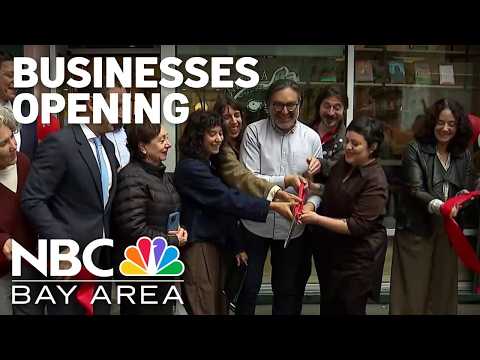
    NBC Bay Area reported that Niebla, a coffee shop and bookstore, was among the Tenderloin businesses opening with grant support. The city expected eight Tenderloin storefronts in all.

  6. Third cohort awards grants up to $100,000

    Funding

    City disburses $50,000-$100,000 to 39 businesses in high-needs neighborhoods like the Excelsior and Tenderloin.

  7. Storefront Opportunity Grant debuts

    Program Launch

    San Francisco launches a grant program giving merchants up to $50,000 to open in vacant storefronts; about 70 businesses join the first cohort.

  8. Tenderloin-focused second round opens

    Program Expansion

    Four Tenderloin businesses, including Falafelland, receive grants with leasing help and business support.

Scenarios

1

S.F. expands storefront cash grants to a fourth round

Likely Resolves by Q2 2027

Discussed by: Mission Local, which reports the program has run three cycles with 55 of 70 first-cohort businesses still open

With the survival rate holding, city officials have evidence to pitch a fourth round or permanent funding. The 2027-28 budget cycle will show whether the program becomes a fixture of San Francisco's economic development toolkit or stays a one-time experiment.

2

Third-cohort closures erode the program's record

Possible Resolves by Oct 8, 2027

Discussed by: Mission Local and NBC Bay Area, both reporting on Tenderloin instability and an early closure

The 39 businesses funded this summer are concentrated in the Tenderloin and Excelsior, the city's hardest retail environments. One grant recipient, Chicken Fried Palace, already opened and closed citing sidewalk problems and a health scare. If closures among this cohort run well above the first cohort's 16%, the program's success story loses its edge.

3

Storefront grant playbook spreads to other cities

Possible Resolves by End of 2027

Discussed by: Mission Local's reporting, which frames the program as a response to vacancy problems shared nationwide

Vacant storefronts are a national issue, and San Francisco's direct-cash approach is an unusual public solution. If the survival rate holds through 2027, officials in other cities may adopt similar grant programs to revive their own commercial corridors.

4

Critics push for public tracking of grant outcomes

Possible Resolves by Q2 2027

Discussed by: The Dissent, which notes the city publishes no post-award survival data

The Office of Economic and Workforce Development publishes no post-award survival or closure data, and no clawback clause is documented. The Dissent argues that without published outcomes, the absence of reported failures is not evidence the program works. A fourth round or the 2027-28 budget could force the city to show its work.

5

Neighbor-funded storefront grants spread to more San Francisco neighborhoods

Possible Resolves by End of 2027

Discussed by: SF Standard, which reported SF New Deal raised $300,000 from Inner Sunset neighbors and is fundraising to expand

SF New Deal took its Vacant to Vibrant model to the Inner Sunset after running pop-ups downtown, where it says 23 of the more than 30 businesses it placed are open. Money raised from residents would let the model grow without city grants, and a copycat effort is already running in downtown Los Angeles. The test is whether Inner Sunset grants produce openings that last.

Historical Context

2 moments from history that rhyme with this story — and how they unfolded.

2020-2022

COVID-19 empties San Francisco storefronts (2020-2022)

The pandemic closed businesses and remote work emptied commercial corridors, driving storefront vacancies sharply higher. Small owners like Billy Alabsi lost restaurants when they could no longer make rent.

Then

Vacancies mounted across the city, concentrated in the Tenderloin and other high-needs areas.

Now

The city launched the Storefront Opportunity Grant in 2023 to fill the empty spaces.

Why this matters now

The grant program is a direct response to the vacancies this wave left behind.

2020

Alabsi's first Falafelland closes (2020)

Billy Alabsi ran a successful Yemeni restaurant in San Francisco until the pandemic hit. He lost the business when he could no longer make rent, but saved his cooking equipment.

Then

Alabsi spent years working and saving, determined to reopen.

Now

A $50,000 grant from the city's Tenderloin round helped him reopen Falafelland on Golden Gate Avenue.

Why this matters now

His story shows the fragility the program targets and the difference a grant can make.

Sources

(7)