
Pull to refresh
Logo
Samsung union ratifies decade-long chip profit-sharing deal

Samsung union ratifies decade-long chip profit-sharing deal

Money Moves

World's largest memory maker locks 10.5% of semiconductor operating profit into worker stock bonuses through 2035

May 27th, 2026: Union ratifies deal with 73.7% approval

Overview

Updated May 27

Samsung Electronics has run for 57 years without ever tying a fixed share of profits to worker pay. That changed Wednesday.

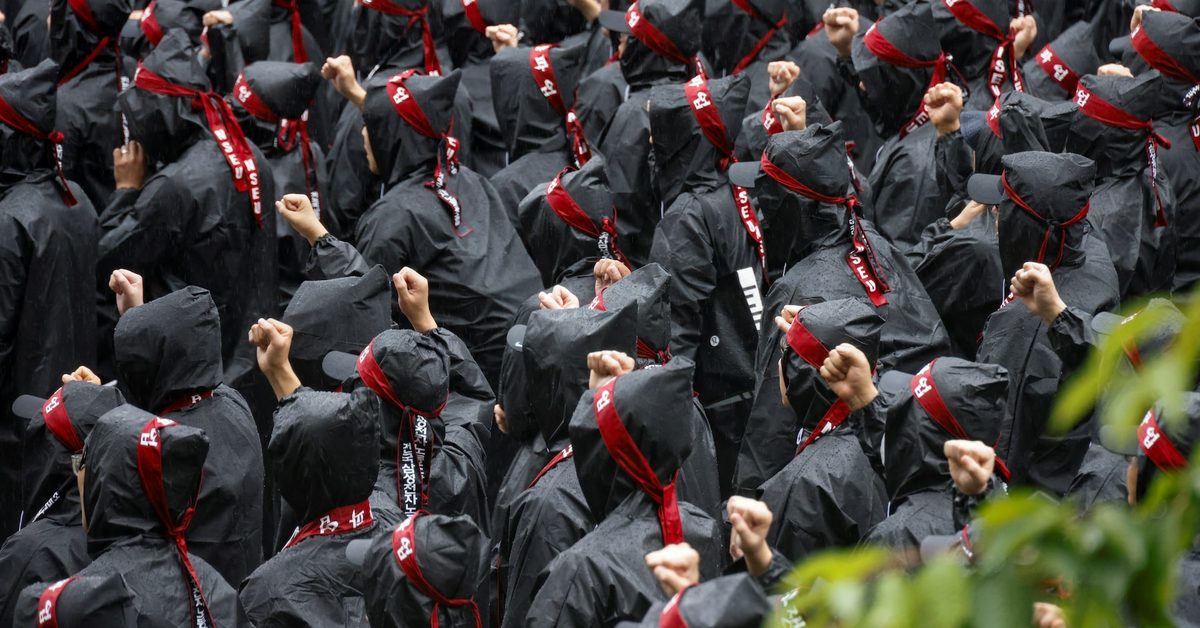
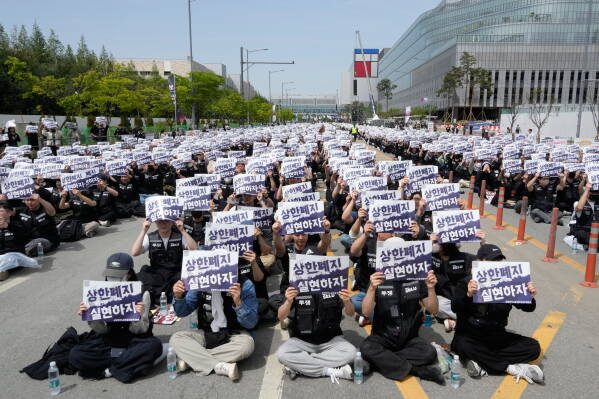
About 74% of 62,616 union members ratified a deal that pledges 10.5% of semiconductor operating profit to employees as company stock, paid out over at least ten years. It is the second time a Korean conglomerate has put a fixed profit share in writing. Other chaebol unions now have a precedent to demand similar terms.

Why it matters

South Korea's biggest employer just tied bonuses to chip profits. Every chaebol union now has a template to demand the same.

Questions about this story

Free account needed to ask — your question is kept and asked for you right after sign-up. Answers are public.

No questions yet — be the first to ask.

Key Indicators

10.5%
Semiconductor operating profit pledged
Annual share paid as company stock if chip division hits profit targets through 2035.
73.7%
Combined approval vote
Workers voting yes across two unions, with turnout at 95.5% of eligible members.
62,616
Workers who cast ballots
Largest labor vote in Samsung's history.
$26.6B
Projected total payouts
Estimated stock issuance over the life of the deal, with chip workers averaging close to $400,000 each.
Through 2035
Deal duration
Minimum ten-year commitment, contingent on profit thresholds.

Voices

Curated perspectives — historical figures and your fellow readers.

Ever wondered what historical figures would say about today's headlines?

Sign up to generate historical perspectives on this story.

People Involved

Organizations Involved

Timeline

July 2024 May 2026

9 events Latest: May 27th, 2026 · 4 months ago
Tap a bar to jump to that date
  1. Union ratifies deal with 73.7% approval

    Latest Ratification

    62,616 workers vote across both unions. SELU backs the deal 80.6%; NSEU rejects it 78.9%. Combined majority passes.

  2. Strike averted; shares rally 6%

    Market Reaction

    Samsung Electronics stock jumps as the strike threat lifts, with investors betting on stable HBM4 production.

  3. Tentative agreement signed

    Negotiation

    Samsung and unions sign a deal hours before a planned general strike. Terms include 6.2% pay raise, 10.5% chip profit-share in stock, and 1.5% cash bonus.

  4. Samsung Q1 profit jumps eightfold

    Earnings

    AI memory demand fuels record results, hardening union arguments that chip workers deserve a guaranteed share.

  5. SK Hynix overtakes Samsung in annual profit

    Earnings

    SK Hynix beats Samsung Electronics in operating profit for full-year 2025, driven by HBM dominance. The result sharpens worker leverage at Samsung.

  6. SK Hynix sets the precedent

    Industry Benchmark

    SK Hynix agrees to allocate 10% of annual operating profit to employee bonuses for ten years. It is the first major chaebol to commit a fixed profit share in writing.

  7. 2024 strike ends without firm deal

    Labor Action

    NSEU calls off the strike under institutional pressure but vows to keep pushing for profit-sharing.

  8. Samsung's first-ever strike begins

    Labor Action

    About 6,500 NSEU members walk off the job, demanding clear bonus rules tied to operating profit. It is the first work stoppage in Samsung's 55-year history.

Scenarios

1

Hyundai Motor signs fixed profit-sharing deal within a year

Likely Resolves by May 27, 2027

Discussed by: Korea Herald labor reporters; Korea's Ministry of Employment and Labor

Hyundai Motor's union has already demanded 30% of net profit in its current wage talks. The labor ministry says it expects similar mediated settlements at other major firms within months. Pattern bargaining now has two anchors: SK Hynix at 10% and Samsung at 10.5%. Hyundai management has more room to resist than Samsung did because auto profits are less concentrated, but worker leverage is high.

2

Shareholder lawsuit blocks or rewrites the bonus framework

Unlikely Resolves by End of 2027

Discussed by: Korea Shareholder Movement Headquarters; legal commentary in Bloombingbit and Tech Times

The shareholder group argues fixing pretax profit allocations to workers bypasses the Commercial Act's dividend rules. Korean courts have generally given chaebol boards wide latitude on compensation. But the size of this commitment, up to $26.6 billion, may attract closer review. A court could invalidate the fixed-percentage structure while leaving cash bonuses intact.

3

Samsung's chip division misses the profit trigger in year one

Possible Resolves by Feb 28, 2027

Discussed by: CLSA analyst Sanjeev Rana; Bloomberg memory market coverage

The 10.5% bonus pays out only if the Device Solutions division clears 200 trillion won in operating profit through 2028. AI memory pricing is forecast to stay strong through 2026, but a glut could form in 2027 as Micron and SK Hynix expand HBM4 capacity. A missed target would mean no stock payout for that year and would test how durable the new pay norm really is.

4

NSEU minority union splits from Samsung labor framework

Possible Resolves by May 27, 2027

Discussed by: Korea Times; NSEU statements

Only 21.1% of NSEU voters backed the deal. Leadership has called the bonus structure discriminatory because non-chip workers get a flat cash bonus while chip employees get six-figure stock packages. The union may push for separate certification, file labor board complaints, or pursue a derivative lawsuit. A formal split would fragment Samsung's bargaining table for the next contract cycle.

Historical Context

3 moments from history that rhyme with this story — and how they unfolded.

July-September 1987

Korean Great Workers' Struggle (1987)

More than 3,300 labor disputes broke out across South Korea after the country's democratic transition. Hyundai Heavy Industries and Hyundai Motor workers led the wave. Wages rose roughly 20% in real terms within two years, and independent unions emerged at most major chaebols for the first time.

Then

Chaebol founders, who had run paternalistic and union-free operations, lost their veto over wage talks.

Now

It established the bargaining structure that still governs Korean industrial labor, but profit-sharing remained discretionary until the 2025 SK Hynix deal.

Why this matters now

1987 forced chaebols to negotiate wages. 2026 forces them to share a fixed cut of profits. Both moments shift the locus of power, and both will take years to play out across the system.

September-November 2023

UAW's Big Three contract wins (2023)

The United Auto Workers struck Ford, General Motors, and Stellantis in a coordinated walkout. After six weeks, the union won 25% wage hikes over four years plus restored cost-of-living adjustments, the richest auto contract in decades. UAW President Shawn Fain framed it as a pattern strike, hitting all three companies at once to prevent any from gaining a labor-cost edge.

Then

Big Three labor costs rose roughly $1.5 billion per company over the contract. Non-union automakers, including Toyota and Honda, raised US worker pay in response.

Now

The strike reset what was considered politically possible in industrial labor talks across multiple sectors.

Why this matters now

Pattern bargaining works when one win sets the floor for the next. Samsung is following SK Hynix the way Stellantis followed Ford. Hyundai and other chaebols will face the same pressure to match.

September 2025

SK Hynix's 10% profit-sharing pact (2025)

SK Hynix and its union agreed to allocate 10% of annual operating profit to employee bonuses with no upper cap, for a ten-year term. Average bonuses landed near 700 million won (~$510,000) per worker for 2025. It was the first written fixed-share commitment by a major Korean conglomerate.

Then

SK Hynix workers received the largest single-year bonuses in Korean chaebol history. The deal cleared with little public dissent.

Now

The agreement became the benchmark every other chaebol union now cites, including Samsung and Hyundai Motor.

Why this matters now

Samsung's 10.5% deal exists because SK Hynix proved the structure could be written down and paid out. Without that precedent, Samsung management could have continued resisting fixed-percentage commitments.

Sources

(10)