
Pull to refresh
Logo
Google signs record enhanced geothermal deal to power Utah data center

Google signs record enhanced geothermal deal to power Utah data center

New Capabilities Salt Lake City, UT local

396 MW contract signed in late August for Fervo's Cape Station, expandable to nearly 1 GW by 2030

7 days ago: Cape Station Phase I nears first power

Overview

Updated 5 days ago

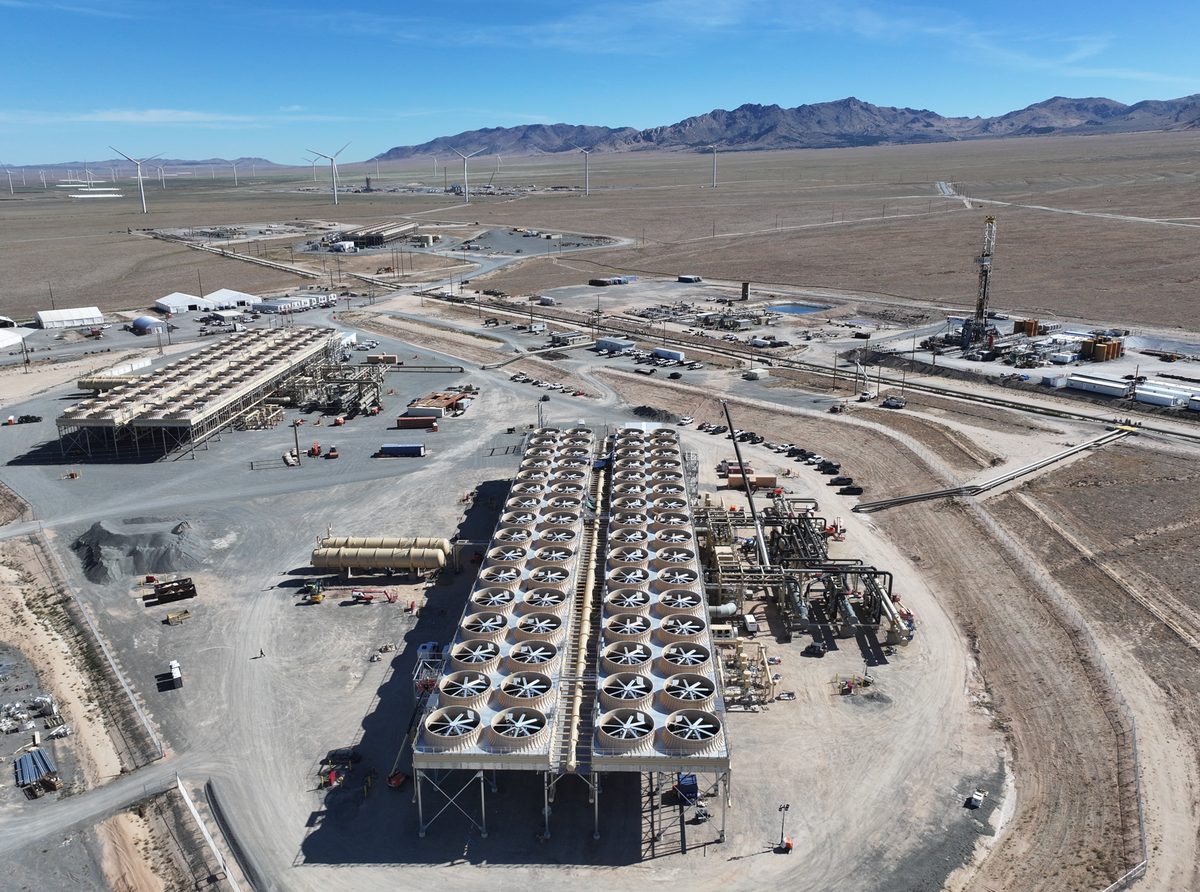
Google has agreed to buy up to 1 gigawatt of power from Fervo Energy's Cape Station geothermal project in southwest Utah. The 396 MW commitment, signed August 26 and announced September 1, is the largest enhanced geothermal power purchase ever recorded.

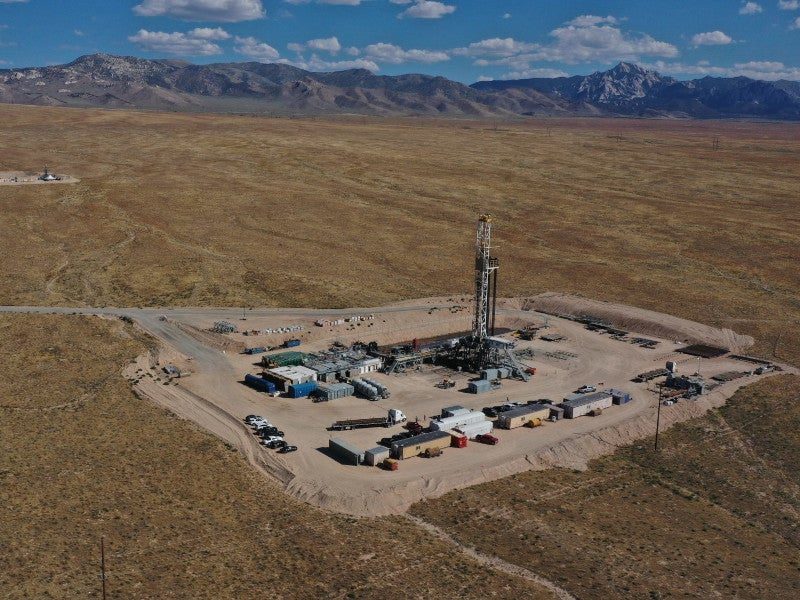
Enhanced geothermal drills into hot, dry rock, injects water, and captures steam to spin turbines. Unlike solar or wind, it runs around the clock; the first 33 MW unit is on track to power the grid in October 2026.

Why it matters

AI data centers need round-the-clock carbon-free power. This deal is the largest test yet of whether enhanced geothermal can provide it at commercial scale.

Questions about this story

Free account needed to ask — your question is kept and asked for you right after sign-up. Answers are public.

No questions yet — be the first to ask.

Key Indicators

396 MW
Initial power purchase commitment
Google's guaranteed purchase from Cape Station Phase II
~1 GW
Potential total commitment with expansion option
Google can expand by roughly 600 MW by June 2030
0.4%
Geothermal's share of U.S. electricity
Conventional geothermal depends on rare natural hot-water reservoirs
$2B
Fervo's investment in Cape Station
Expected cost to build what could become the world's largest enhanced geothermal system
21 days
Average well drilling time at Cape Station
Down from 70 days at Fervo's Nevada pilot; Phase II costs targeted at $5,500 per kilowatt
57%
Fervo stock decline from May record high
Shares peaked May 15 after the IPO, then fell despite the Google deal

Voices

Curated perspectives — historical figures and your fellow readers.

Ever wondered what historical figures would say about today's headlines?

Sign up to generate historical perspectives on this story.

People Involved

Organizations Involved

Timeline

January 2021 September 2026

7 events Latest: 7 days ago
Tap a bar to jump to that date
  1. Cape Station Phase I nears first power

    Latest Milestone

    Fervo's 33 MW test unit is on track to send power to the grid in October 2026, which would be the first enhanced geothermal system in the U.S. to reach commercial operation. Average drilling time dropped to 21 days per well, from 70 days at the Nevada pilot.

  2. Fervo files 8-K disclosing PPA terms

    Regulatory

    Filing shows a 15-year delivery term in four 99 MW tranches starting Q3 2028. Alphabet and Fervo each guaranteed their side of the deal. Direct-to-load delivery would use Utah's SB 132 framework, pending approvals.

  3. Google signs 396 MW Fervo geothermal PPA, expandable to 1 GW

    Contract

    Google committed to purchase 396 MW from Cape Station, with an option to expand by about 600 MW by June 2030, powering a potential Utah data center. Contract executed August 26; announced September 1-2.

  4. Fervo goes public via stock listing

    Finance

    The Houston-based developer completed its public market debut in May 2026.

  5. Fervo, Google, and NV Energy sign 115 MW geothermal PPA

    Contract

    The deal pioneered a Clean Transition Tariff to bring more geothermal onto Nevada's grid while insulating ratepayers.

  6. Fervo's 3.5 MW Project Red pilot comes online in Nevada

    Milestone

    The first-of-its-kind enhanced geothermal pilot began delivering power to the Nevada grid, including Google data centers.

  7. Fervo and Google agree to develop next-gen geothermal

    Partnership

    The two companies signed an agreement to develop a next-generation geothermal project.

Scenarios

1

Cape Station hits 400 MW, enhanced geothermal goes mainstream

Likely Resolves by End of 2028

Discussed by: Canary Media, Renewable Energy World, Fervo executives

Cape Station's Phase II reaches commercial operation by 2028 at or near Fervo's projected $5,500 per kilowatt cost. Google exercises its expansion option toward nearly 1 GW, and other hyperscalers sign comparable enhanced geothermal deals. Success would make Cape Station the proof point that EGS can scale into a major firm-power source.

2

Delays and cost overruns cool the enhanced geothermal market

Possible Resolves by End of 2028

Discussed by: Project finance analysts tracking first-of-a-kind technology risk

Phase II slips past 2028 or construction costs balloon beyond the $5,500 per kilowatt target, forcing Fervo to renegotiate terms or raise prices. Google's expansion option lapses or is only partially exercised. Slower cost declines would blunt EGS's competitiveness against solar-plus-storage and natural gas, cooling the broader wave of enhanced geothermal deals being explored.

3

Google picks nuclear or solar over geothermal for Utah data center

Unlikely Resolves by Q2 2030

Discussed by: Wall Street Journal coverage of Google's diversified clean power strategy

Google builds the Utah data center but powers it primarily with something other than Cape Station geothermal, such as small modular reactors from the Kairos Power partnership it announced in 2024, or a solar-plus-storage portfolio. This would happen if EGS reliability or cost disappoints, or if Google's fast-track nuclear investments mature sooner than expected. Google's right of first refusal on up to 3 GW of future Fervo plants also gives it room to shift strategy.

4

Utah SB 132 approvals shape how Cape Station power reaches Google

Possible Resolves by Q2 2030

Discussed by: Fervo 8-K filing, Utah state regulators

Fervo plans to use Utah's SB 132 framework to deliver power directly to Google's data center through a closed private generation system, either in front of or behind the meter. The pathway needs engineering feasibility review and regulatory sign-off, with target delivery in the first half of 2030. If approvals stall, Fervo would sell to the grid instead, changing the data center's power economics.

Historical Context

3 moments from history that rhyme with this story — and how they unfolded.

1960-1989

The Geysers, California (1960s-1980s)

The Geysers, in California's Mayacamas Mountains, became the world's largest geothermal electricity development after drilling accelerated through the 1970s energy crisis. At its peak in the late 1980s, it generated over 2,000 MW from natural steam reservoirs.

Then

Supplied cheap, low-carbon power to northern California utilities for decades.

Now

Demonstrated geothermal's potential but also its hard geological limit: the world's largest field still taps a rare natural steam pocket.

Why this matters now

Enhanced geothermal exists to break that limit, using engineered wells to create steam reservoirs anywhere hot rock sits deep underground.

1974-1995

Fenton Hill hot dry rock project, New Mexico (1974-1995)

Los Alamos National Laboratory drilled two wells into hot, dry granite at Fenton Hill, New Mexico, and created an artificial geothermal reservoir by pumping water between them. The experiment proved the core concept of engineered geothermal systems.

Then

Produced usable heat, but at low power output and high cost.

Now

The project was scaled back and eventually abandoned; hot dry rock geothermal became known as a technology always 10 years away.

Why this matters now

Fervo and other startups argue that cheaper, faster drilling from the fracking era has finally solved Fenton Hill's cost problem. This deal is the first test of that claim at commercial scale.

2005-2015

Shale gas revolution (2000s-2010s)

Horizontal drilling and hydraulic fracturing, perfected in Texas's Barnett Shale and spread nationwide, unlocked natural gas trapped in dense rock. U.S. gas production rose roughly 40% between 2005 and 2015, crashing prices and redrawing the energy map.

Then

Natural gas replaced coal as the leading U.S. power source, and consumers gained cheap energy.

Now

The boom lowered emissions while triggering environmental battles over water use and earthquakes.

Why this matters now

Fervo uses the same directional drilling and fracking techniques from the shale era to access Earth's heat. The open question is whether geothermal can ride a similar cost curve without the same environmental blowback.

Sources

(8)