

Pull to refresh
Logo
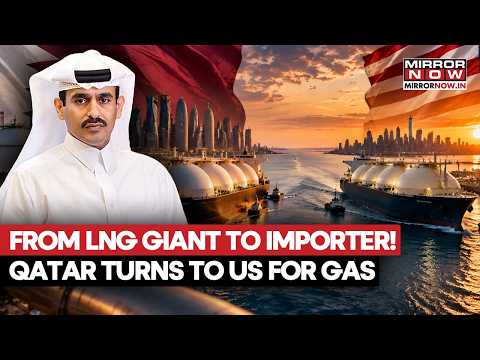
Qatar signs 28-year U.S. LNG deal after Iran cripples its exports

Qatar signs 28-year U.S. LNG deal after Iran cripples its exports

Built World

QatarEnergy will buy 4 million metric tons of LNG a year from Cheniere through 2054 as Hormuz stays blocked

Overview

Updated Oct 27

Iran's March strike on Qatar's Ras Laffan complex knocked out about 17% of the Gulf state's LNG export capacity. On October 22, QatarEnergy agreed to buy 4 million metric tons of U.S. LNG a year from Cheniere Energy through 2054. Deliveries begin in 2031.

Qatar's short-term supply problem is still open. QatarEnergy extended force majeure on Italy's Edison cargoes to the end of December 2026. Force majeure also covers buyers in India, Bangladesh and Pakistan through November. QatarEnergy is also in talks with Woodside Energy and Venture Global for more U.S. gas.

Why it matters

Qatar's 28-year commitment to U.S. gas signals the Strait of Hormuz may never again be a reliable route for global LNG.

Questions about this story

Free account needed to ask — your question is kept and asked for you right after sign-up. Answers are public.

No questions yet — be the first to ask.

Key Indicators

4M
Annual LNG purchase from Cheniere
Metric tons per year QatarEnergy will buy, split evenly between Sabine Pass and Corpus Christi.
17%
Qatar export capacity knocked out
Share of capacity lost when Iranian missiles hit two LNG trains at Ras Laffan in March.
77M
Qatar annual LNG production
Tonnage produced mostly from the North Field and processed at Ras Laffan Industrial City.
$3B
Loan from Chinese banks
QatarEnergy loan secured in October 2026 that could fund more U.S. LNG purchases, per UBS.

Voices

Curated perspectives — historical figures and your fellow readers.

Sign up to generate historical perspectives on this story.

People Involved

Organizations Involved

Timeline

March 2026 October 2026

9 events Latest: October 23rd, 2026 · 3 weeks ago
Tap a bar to jump to that date
  1. Woodside talks reported

    Latest Negotiation

    Reuters reported that QatarEnergy is negotiating to buy up to 3 million tonnes a year from Woodside's Louisiana LNG plant, which is under construction. Sources said the deal could run 15 to 20 years.

  2. QatarEnergy-Cheniere deal signed

    Contract

    QatarEnergy agrees to buy 4 million metric tons of LNG annually from Cheniere's Sabine Pass and Corpus Christi terminals through 2054, with deliveries starting in 2031.

  3. Venture Global talks reported

    Negotiation

    Reuters reported that QatarEnergy is in advanced talks with Venture Global for a long-term deal to buy at least 3 million tonnes of LNG a year.

  4. $3 billion loan from Chinese banks

    Finance

    QatarEnergy secures a $3 billion loan that UBS analysts say could fund additional U.S. LNG purchases to cover its delivery commitments.

  5. Edison force majeure extended to December

    Contract

    QatarEnergy extended force majeure on LNG deliveries to Italy's Edison through the end of December 2026, adding three cargoes. Edison has replaced earlier cargoes through other supply.

  6. Reuters confirms multi-producer talks

    Negotiation

    QatarEnergy is negotiating with Venture Global, Cheniere and Woodside for multi-year U.S. contracts through 2031, trading sources tell Reuters.

  7. Qatar opens U.S. LNG talks

    Negotiation

    Bloomberg reports Qatar is in discussions to buy LNG from U.S. suppliers under long-term agreements as the war cripples its own exports.

  8. Iran strikes Ras Laffan

    Military action

    Iranian missiles hit Qatar's Ras Laffan complex, damaging two LNG trains with 12.8 million tonnes per year combined capacity.

  9. Qatar declares force majeure

    Contract

    Qatar declares force majeure on LNG contracts, citing the attack and the blocked Strait of Hormuz. It has renewed the declaration monthly.

Scenarios

1

Qatar deepens U.S. LNG buying

Likely Resolves by End of 2027

Discussed by: Reuters, UBS analysts

QatarEnergy is already negotiating with Venture Global and Woodside for more U.S. supply. The $3 billion Chinese bank loan could fund those purchases. If the war drags on, Qatar shifts from producer to trader, importing U.S. gas to honor contracts with Asian and European buyers.

2

Ras Laffan repairs restore Qatari capacity

Possible Resolves by End of 2030

Discussed by: Qatar energy minister Saad Sherida Al-Kaabi

Al-Kaabi has said repairs could take three to five years. If the war ends and Iran stops targeting the facility, Qatar could restore the damaged 12.8 million tonnes per year of capacity by the early 2030s. Even then, the Cheniere contract locks in U.S. buying through 2054, leaving Qatar with both import and export capacity.

3

Hormuz reopens, Qatar returns to export role

Unlikely Resolves by End of 2027

Discussed by: Rapidan Energy analysts

A ceasefire that restores free navigation through the Strait of Hormuz would reopen Qatar's export route. Analysts note the 28-year contract term signals Qatar's own government sees little prospect of that. If it happened, Qatar would produce and buy gas simultaneously, giving it flexibility but locked-in U.S. purchases for decades.

Historical Context

3 moments from history that rhyme with this story — and how they unfolded.

October 1973 - March 1974

OPEC oil embargo (1973-1974)

Arab members of OPEC cut oil exports to the U.S. and other allies of Israel during the Yom Kippur War. Oil prices roughly quadrupled and Western economies slid into recession.

Then

Gasoline rationing and long lines at pumps across the U.S. and Europe.

Now

Energy security became a policy priority, driving fuel economy standards and diversification away from Middle East oil.

Why this matters now

Like 1973, the Iran war is redrawing energy trade routes. This time the disruption comes from military attacks on physical infrastructure and shipping lanes, not embargo policy.

September 2019

Abqaiq-Khurais attacks (2019)

Drone and cruise missile strikes hit Saudi Aramco's Abqaiq oil processing plant, temporarily removing about half of Saudi Arabia's crude output, roughly 5.7 million barrels per day.

Then

Saudi Arabia restored most production within weeks and markets stabilized.

Now

The episode became a warning of how vulnerable energy infrastructure is to precision attacks.

Why this matters now

Contrast with Qatar's predicament: Saudi repairs took weeks with no blocked shipping lane. Qatar faces three to five years of repairs plus a closed Strait of Hormuz.

February 2022 - present

Russia-Ukraine war gas crisis (2022-)

Russia's invasion of Ukraine cut pipeline gas flows to Europe. European buyers scrambled to replace it with LNG, largely from the United States and Qatar.

Then

Europe's gas trade shifted from Russian pipeline supply to seaborne LNG.

Now

The U.S. became the dominant LNG supplier to Europe, a position it now holds globally.

Why this matters now

That war already redrew LNG trade once. The Iran war is redrawing it again, with Qatar moving from competitor to customer of U.S. LNG.

Sources

(11)