


Pull to refresh
Logo
Purdue Pharma's opioid settlement and dissolution

Purdue Pharma's opioid settlement and dissolution

Rule Changes

OxyContin maker becomes nonprofit Knoa Pharma after multi-billion dollar settlement and criminal sentence

May 1st, 2026: Purdue dissolves into Knoa Pharma

Overview

Updated May 31

OxyContin launched in 1996 with marketing that downplayed addiction risk. Thirty years and hundreds of thousands of overdose deaths later, the company that made it no longer exists.

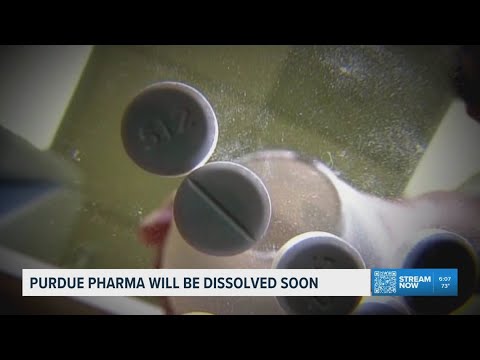
On May 1, 2026, Purdue Pharma was dissolved. Substantially all of its assets were transferred to Knoa Pharma, a new nonprofit owned by an independent foundation. Knoa is mandated to supply opioid use disorder treatments and overdose-reversal drugs without maximizing profit.

The dissolution implements a court-confirmed bankruptcy plan tied to a $7.4 billion settlement with state, local, and tribal governments. It follows an April 28 federal sentencing in New Jersey that imposed a $5.5 billion criminal penalty on the company.

The Sackler family, which owned and controlled Purdue for generations, is contributing the bulk of the settlement money in exchange for releases from civil claims by participating creditors. That structure was rebuilt after the Supreme Court rejected an earlier version that would have shielded the family without their consent.

Why it matters

One of the largest mass-tort cases in U.S. history is closing with a private pharmaceutical empire converted into a public-benefit drugmaker funding addiction treatment.

Questions about this story

Free account needed to ask — your question is kept and asked for you right after sign-up. Answers are public.

No questions yet — be the first to ask.

Key Indicators

$7.4B
Civil settlement
Sackler family and Purdue funds payable to states, localities, tribes, and individual victims over time.
$5.5B
Criminal penalty
Federal sentence imposed April 28, 2026 in the District of New Jersey for the company's role in the opioid epidemic.
~280,000
Prescription opioid overdose deaths
U.S. deaths involving prescription opioids since OxyContin's 1996 launch, per Centers for Disease Control and Prevention data.
6+ years
Bankruptcy duration
Time from Purdue's September 2019 Chapter 11 filing to the May 2026 dissolution.
Nonprofit
Successor structure
Knoa Pharma is owned by an independent foundation and barred from prioritizing profit over public health.

Voices

Curated perspectives — historical figures and your fellow readers.

Ever wondered what historical figures would say about today's headlines?

Sign up to generate historical perspectives on this story.

People Involved

Organizations Involved

Timeline

December 1996 May 2026

13 events Latest: May 1st, 2026 · 4 months ago Showing 8 of 13
Tap a bar to jump to that date
  1. Purdue dissolves into Knoa Pharma

    Latest Corporate

    Purdue ceases operations; assets transfer to nonprofit Knoa Pharma owned by an independent foundation.

  2. New framework reached

    Negotiation

    Mediated talks produce a restructured deal with higher Sackler contributions and consent-based releases.

  3. Sackler contribution increased

    Negotiation

    Holdout states agree to revised plan after Sacklers boost contribution to roughly $6 billion.

  4. OxyContin launches

    Product

    Purdue introduces OxyContin with marketing claiming a less than 1 percent addiction rate when used for pain.

Scenarios

1

Knoa Pharma stabilizes as a model nonprofit drugmaker

Possible

Discussed by: State attorneys general supporting the plan; public-health analysts at academic medical centers

Knoa hits its production targets for buprenorphine, naloxone, and related products while generating cash to fund settlement payments on schedule. The structure becomes a reference point for future mass-tort resolutions involving products with ongoing public-health utility, and the Sackler payments arrive in the amounts and timing described in the plan.

2

Sackler payments fall short or stretch out

Possible

Discussed by: Bankruptcy law commentators; state officials who opposed earlier plans

Family contributions are paid over many years from assets that include illiquid holdings. If valuations underperform or family members litigate disputed amounts, settlement disbursements to states and victims slow. Communities expecting rapid funding for treatment programs may need to bridge gaps with their own budgets.

3

Non-participating claimants pursue Sacklers individually

Possible

Discussed by: Plaintiffs' attorneys; legal academics analyzing post-Harrington precedent

Because the new releases are consent-based, claimants who opted out retain the right to sue Sackler family members directly. A high-profile individual judgment could reopen public debate over the family's wealth and prompt additional settlements outside the bankruptcy framework.

4

Federal or state criminal case targets individual Sacklers

Unlikely

Discussed by: Former federal prosecutors; advocacy groups for opioid victims

Civil releases do not bar criminal prosecution. A new administration or state prosecutor could revisit individual conduct based on internal documents already in the public record. Statute-of-limitations issues and the absence of prior charges make this less likely than civil follow-on litigation.

Historical Context

3 moments from history that rhyme with this story — and how they unfolded.

August 1982

Johns-Manville asbestos bankruptcy (1982)

Asbestos manufacturer Johns-Manville filed Chapter 11 facing tens of thousands of injury claims. The 1988 reorganization created a trust funded by the company's stock and insurance to pay current and future claimants, and shielded the reorganized company from new asbestos suits.

Then

Trust began paying claimants at reduced cents-on-the-dollar rates as filings exceeded projections.

Now

Established the template—now codified in Section 524(g) of the Bankruptcy Code—for resolving mass torts through dedicated trusts, the structural ancestor of Purdue's settlement vehicle.

Why this matters now

Manville pioneered using bankruptcy to channel mass claims into a structured payout while keeping useful operations alive—the same logic that produced Knoa Pharma.

August 1985

A.H. Robins Dalkon Shield bankruptcy (1985)

Pharmaceutical company A.H. Robins filed Chapter 11 under thousands of injury claims from its Dalkon Shield intrauterine device. A 1988 plan funded a $2.475 billion claimants' trust and was paired with American Home Products' acquisition of the company.

Then

Trust paid roughly 200,000 claimants over more than a decade.

Now

Demonstrated that pharmaceutical mass torts could be resolved through bankruptcy with operational continuity—but also showed disputes over how much insiders should personally contribute, a question that defined the Purdue case.

Why this matters now

The Dalkon Shield case is the closest pharmaceutical analogue and shaped expectations about owner contributions in product-liability bankruptcies.

November 1998

Tobacco Master Settlement Agreement (1998)

Forty-six state attorneys general settled with the four largest U.S. tobacco companies for an estimated $206 billion over 25 years, plus restrictions on marketing to minors. The deal followed years of state lawsuits seeking to recover Medicaid costs from smoking-related illness.

Then

States received annual payments; tobacco advertising on billboards and to youth was sharply curtailed.

Now

Funds were often diverted to general budgets rather than smoking cessation, and tobacco companies remained profitable—lessons cited by negotiators pushing for the Knoa nonprofit structure.

Why this matters now

Like the tobacco deal, the Purdue settlement converts mass-tort exposure into a multi-decade revenue stream for states, with familiar concerns about whether money reaches its intended public-health purpose.

Sources

(4)