Polish court chief suspended as police secure constitutional tribunal
Rule Changes
Eight judges declared themselves a quorum and moved against the tribunal's suspended leadership, while Tusk says the legal fight is won and a coalition partner's plan to replace all 15 judges stalls
Eight judges led by Anna Korwin-Piotrowska met on Nov. 3 and declared themselves a quorum, approving the tribunal's 2027 budget and drawing panels to weigh disciplinary cases against the suspended president, Bogdan Święczkowski, and his deputy. Święczkowski calls the takeover a coup and refuses to accept it.
Prime Minister Donald Tusk said on Nov. 5 that the legal problem is solved and only the "emotional part" remains. Justice Minister Waldemar Żurek said Warsaw is open to EU mediation. A junior coalition partner, the Polish People's Party, proposed replacing all 15 judges through a constitutional amendment, but the plan stalled as prosecutors pressed immunity motions against Święczkowski, one seeking his detention.
Why it matters
Poland now has two competing claims to its top court, the body that can void laws and decides whether EU rulings bind Warsaw.
Questions about this story
Free account needed to ask — your question is kept and asked for you right after sign-up. Answers are public.
No questions yet — be the first to ask.
Key Indicators
1
Month-long suspension
The suspension Korwin-Piotrowska ordered for Święczkowski and his deputy.
5
Judges not sworn in
Judges elected by parliament since March whom Nawrocki has refused to swear in.
6
Immunity motions
Filed by Justice Minister Żurek against tribunal president Święczkowski; one seeks his detention.
3
People detained
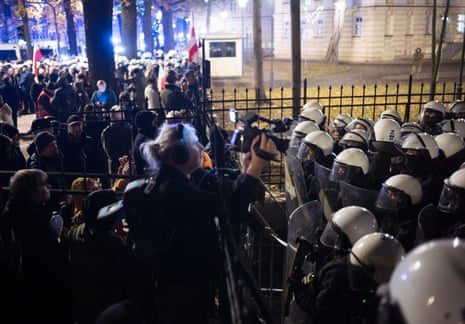
Detained after protesters breached the court's fence and others threw objects at police.
2
Ambassadors resigned
The envoys to Romania and China quit over the suspension of the tribunal's president.
Nov 17
Next assembly
Date Korwin-Piotrowska set for the tribunal to rule on the immunity requests.
16 events
Latest: 2 days ago
Showing 8 of 16
JK to step
Tap a bar to jump to that date
Jump to
November 2026
Reset plan stalls; immunity motions and Nov. 17 assembly
LatestLegal
The PSL reset proposal lost momentum as Żurek sent six motions to lift Święczkowski's immunity, one seeking his detention, and Korwin-Piotrowska called a general assembly for Nov. 17 to rule on the requests.
Tusk says legal problem solved; Żurek open to EU mediation
Politics
Tusk told reporters the legal problem was solved and only the "emotional part" remained. Justice Minister Żurek said Warsaw was open to EU mediation but Brussels had not offered talks.
PSL proposes replacing all 15 judges
Politics
The junior coalition partner Polish People's Party proposed a constitutional amendment ending all sitting judges' mandates and letting the National Assembly elect 15 new ones by a three-fifths supermajority.
Nawrocki accuses Tusk of illegal power grab
Politics
At a televised National Security Council meeting, the president attacked the prime minister over the court dispute; Tusk defended the actions as protecting the rule of law.
Prosecutors open assault investigation
Legal
Prosecutors said they were investigating the events at the tribunal on the night of Oct. 30-31, including an alleged attempt to use force to influence the court's work. No suspects were publicly charged.
October 2026
Nawrocki forces entry into the court
Politics
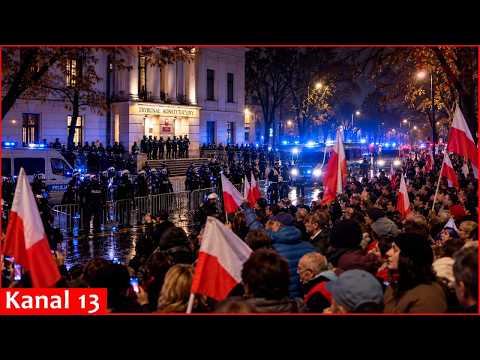
The president pushes through a police cordon and remains inside the building before dawn.
Tusk refuses compromise in televised address
Politics
The prime minister said that "in certain matters, there can be no compromise" and accused opposition leaders of wanting to destroy democracy and the rule of law.
Two ambassadors resign in protest
Politics
Paweł Soloch, ambassador to Romania, and Jakub Kumoch, ambassador to China, quit their posts over the suspension of tribunal president Bogdan Święczkowski.
The president met nationalist, far-right and some governing-coalition politicians at the presidential palace, citing a threat to internal security. No breakthrough emerged.
The acting chief said Święczkowski and Sochański were not entitled to enter the tribunal building, and summoned the court's General Assembly for Nov. 3.
Brussels and Washington urge calm
Statement
The European Commission urged Nawrocki to accept the nomination of new judges. US ambassador Tom Rose wrote on X that "the last thing Poland needs is a confrontation that spirals into something far worse."
Tribunal chief suspended; police deployed
Legal
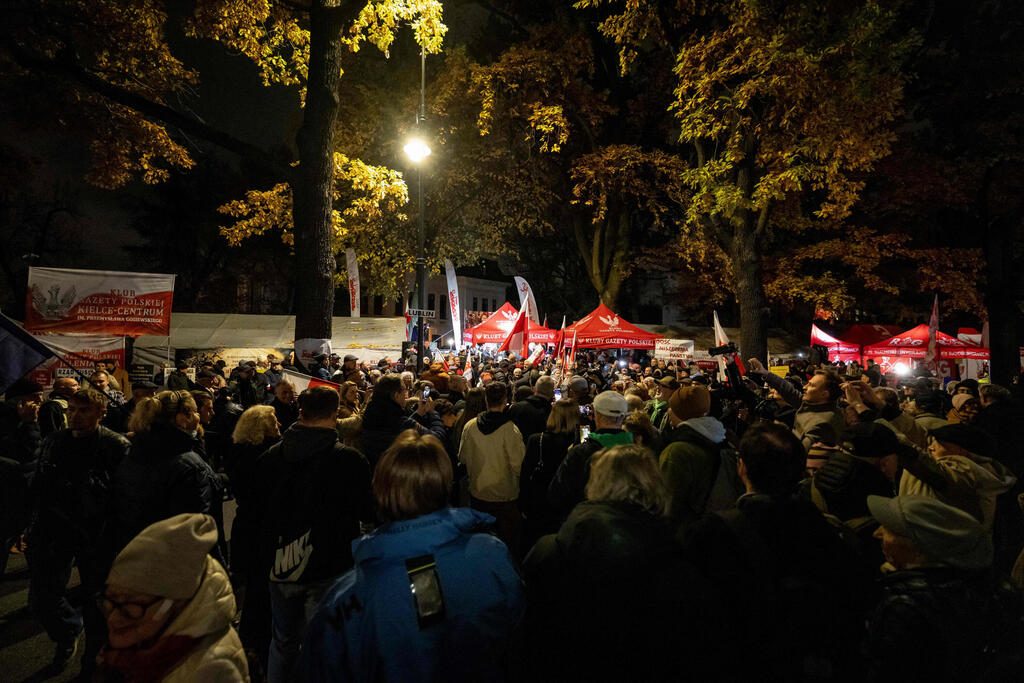
Korwin-Piotrowska suspends Święczkowski and Sochański. Police secure the building after protests; three are detained.
Venice Commission urges swearing-in
Statement
The Council of Europe's advisory body says Nawrocki should swear in the judges.
March 2026
Parliament elects five tribunal judges
Legal
Nawrocki refuses to swear them in, citing alleged flaws in the selection procedure.
December 2023
Tusk government takes office
Politics
The pro-European coalition promises to restore judicial independence.
November 2015
Law and Justice takes office
Politics
The incoming PiS government moves quickly to appoint judges to the Constitutional Tribunal.
Scenarios
1
Suspension holds, tribunal reconstituted
Possible
Resolves by Q2 2027
Discussed by: Justice Minister Waldemar Żurek and the Tusk government
If Korwin-Piotrowska's orders survive legal challenge and the five unsworn judges take seats, the tribunal would have a working majority of judges elected since March. The government could resume publishing rulings and align with EU court decisions. The trigger is a ruling upholding the suspension or Nawrocki reversing his refusal to swear the judges in.
2
Dual authority persists into 2027
Likely
Resolves by Q1 2027
Discussed by: POLITICO and legal analysts covering the dispute
Neither side yields. Święczkowski and Sochański reject the suspension, Nawrocki backs them, and the court splits into competing claims. Immunity requests stall, cases pile up, and the tribunal issues no rulings. This outcome requires only that both sides keep their positions and no court resolves the leadership question.
3
Criminal charges filed against tribunal leadership
Uncertain
Resolves by Q3 2027
Discussed by: Prosecutor General Żurek's office
Żurek has submitted five requests, backed by 50 volumes of case files, to lift the immunity of Święczkowski and Sochański. If parliament or a court grants the requests, prosecutors could charge them with failing to fulfil their duties. This depends on the immunity process moving forward despite the leadership dispute.
4
Standoff pushes Poland toward early elections
Unlikely
Resolves by End of 2027
Discussed by: Polish political commentators
If the confrontation blocks legislation and the president keeps vetoing the government's judicial bills, Tusk could seek a confidence vote or call early elections to break the deadlock. That requires the dispute to spread beyond the court into the government's broader agenda.
5
General Assembly backs Korwin-Piotrowska
Deadline passed (Nov 3, 2026)
Discussed by: The tribunal's acting leadership and Polish legal commentators
Korwin-Piotrowska has convened the tribunal's General Assembly for Nov. 3. If the judges who attend endorse her as acting president and keep Święczkowski suspended, the court's elected majority would have an internal vote behind its claim, though Nawrocki's refusal to swear in judges and the immunity fight would still be unresolved.
6
Constitutional amendment replaces all 15 judges
Unlikely
Resolves by Q2 2027
Discussed by: The Polish People's Party and Poland 2050
The PSL proposal would end every sitting judge's mandate and have the National Assembly elect 15 new judges by a three-fifths supermajority, with staggered terms. It needs a two-thirds majority in the Sejm and an absolute majority in the Senate, and both PiS and Tusk's Civic Coalition have been sceptical.
Historical Context
3 moments from history that rhyme with this story — and how they unfolded.
1 of 3
Late 2015 to 2016
Poland's first tribunal crisis (2015-2016)
The incoming Law and Justice government refused to seat judges elected by the previous parliament and passed laws changing how the tribunal operated. The court's ability to review legislation was effectively frozen.
Then
The dispute paralysed the tribunal and set off a multi-year confrontation with the European Commission.
Now
European courts later ruled the tribunal was no longer independent, a finding the current government now uses against it.
Why this matters now
The same blocking manoeuvre is now being used in reverse, by judges elected under the current majority against PiS appointees.
After winning a two-thirds majority, Fidesz rewrote the constitution and changed the constitutional court's composition and jurisdiction, expanding the number of justices.
Then
The government filled the new seats with sympathetic jurists and removed the court as an obstacle to its legislation.
Now
The court stopped blocking major government bills, and Hungary's dispute with EU institutions over judicial independence persisted for years.
Why this matters now
Shows how a parliamentary supermajority can reshape a constitutional court, and how difficult that is to reverse once done.
3 of 3
February to July 1937
Franklin Roosevelt's court-packing plan (1937)
After the Supreme Court struck down several New Deal laws, Roosevelt proposed adding a new justice for each sitting justice over age 70, up to 15 seats.
Then
The Senate Judiciary Committee rejected the plan, though the court soon began upholding New Deal legislation.
Now
The episode became the standard example of the political cost of openly reshaping a high court.
Why this matters now
Poland's government is attempting a court reconstitution through judicial appointments and suspensions rather than new seats, a less visible route with its own political risks.