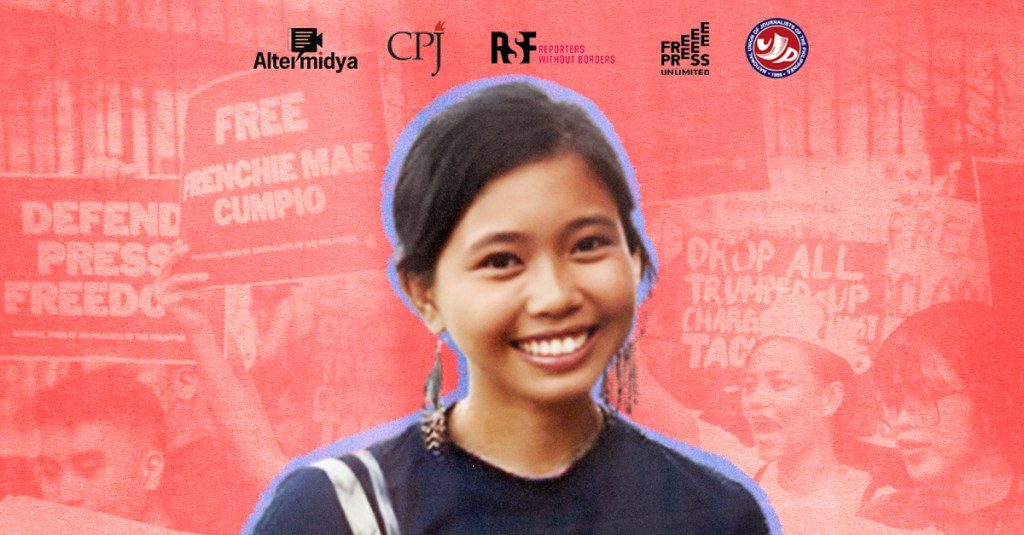
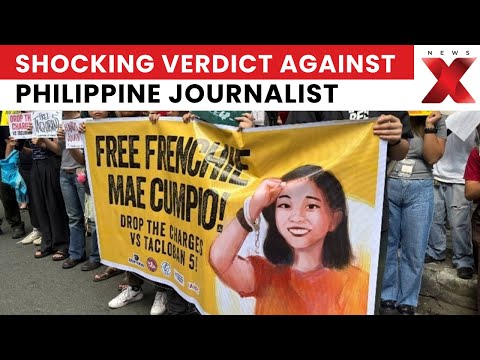
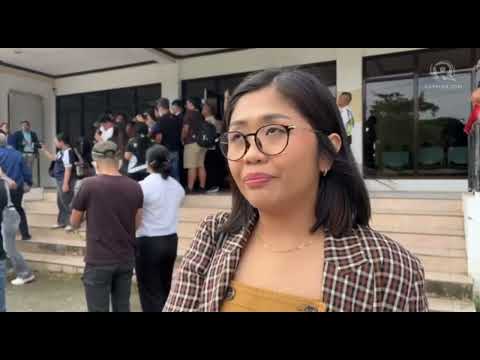
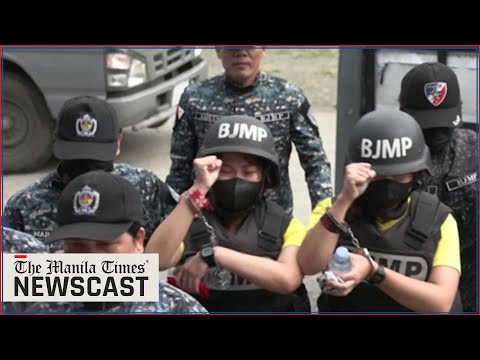
Frenchie Mae Cumpio was 20 years old when police kicked down her door at 2 a.m. and claimed to find a grenade on her bed. Six years later, she remains in prison—now convicted of terrorism financing and facing up to 18 more years. The regional court acquitted her of the weapons charges that justified her original arrest but found her guilty of funneling money to communist insurgents, based largely on testimony from witnesses who gave contradictory statements about meeting a nine-year-old terrorist financier.
Cumpio is the first Philippine journalist sentenced for terrorism financing. International observers—including Reporters Without Borders and the Clooney Foundation for Justice—documented what they call fabricated evidence and implausible accusations. The verdict arrives as a second journalist faces similar charges, suggesting Cumpio's case may be a template rather than an anomaly.
Questions about this story
Free account needed to ask — your question is kept and asked for you right after sign-up. Answers are public.
No questions yet — be the first to ask.
Key Indicators
6
Years detained before verdict
Cumpio spent nearly six years in pretrial detention before her conviction.
12-18
Years sentence imposed
The terrorism financing conviction carries an indeterminate sentence of 12 to 18 years.
116th
Philippines press freedom rank
Out of 180 countries in Reporters Without Borders' 2025 World Press Freedom Index.
227
Activists charged under anti-terror laws
Since January 2025, at least 227 activists have faced charges under Philippine anti-terrorism legislation.
18 events
Latest: January 22nd, 2026 · 8 months ago
Showing 8 of 18
JK to step
Tap a bar to jump to that date
Jump to
January 2026
Cumpio Convicted of Terror Financing
LatestVerdict
Regional Trial Court convicts Cumpio and Domequil of terrorism financing (12-18 years), acquits them on weapons charges. Defense announces appeal.
International Coalition Condemns Conviction
Reaction
Over 250 journalists and press freedom groups—including RSF, CPJ, Free Press Unlimited, and NUJP—condemn the verdict as a 'miscarriage of justice' and call for immediate release.
Defense Announces Appeal and Bail Motion
Legal
Defense lawyer Julianna Agpalo announces intention to file motion for bail pending appeal, noting the offense is legally bailable at court's discretion.
Second Journalist Charged with Terror Financing
Legal
Deo Montesclaros, correspondent for Pinoy Weekly, becomes the second Philippine journalist charged under terrorism financing laws.
October 2025
Appeals Court Overturns Asset Forfeiture
Legal
Court of Appeals reverses civil forfeiture, finding 'no factual or legal link' between seized funds and terrorism. Reprimands AMLC for 'hasty labeling.'
August 2025
Murder Charges Dismissed
Legal
Northern Samar court dismisses murder charges, citing identity mismatch in the complaint.
April 2025
Murder Charges Filed Against Cumpio
Legal
Separate murder charges filed in Northern Samar, accusing Cumpio of participating in an ambush. RSF investigation finds claims implausible.
November 2024
Cumpio Testifies in Her Defense
Legal
Cumpio takes the witness stand to testify about the raid and refute allegations against her.
March 2024
Prosecution Rests Case
Legal
After four years, prosecution finishes presenting evidence against Cumpio and Domequil.
Terrorism financing case assigned to Judge Georgina Uy Perez's court.
September 2021
DOJ Finds Probable Cause
Legal
Department of Justice rules probable cause exists for terrorism financing charges, making the case non-bailable.
March 2021
Terrorism Financing Charges Added
Legal
Cumpio and Domequil face additional non-bailable charges of financing terrorism, accused of providing funds to the New People's Army.
May 2020
Assets Frozen Under Terror Financing Laws
Legal
Anti-Money Laundering Council freezes approximately 557,360 pesos seized during the raid.
February 2020
Initial Weapons Charges Filed
Legal
Authorities file charges of illegal possession of firearms and explosives against Cumpio and Domequil.
'Tacloban 5' Arrested in Pre-Dawn Raids
Arrest
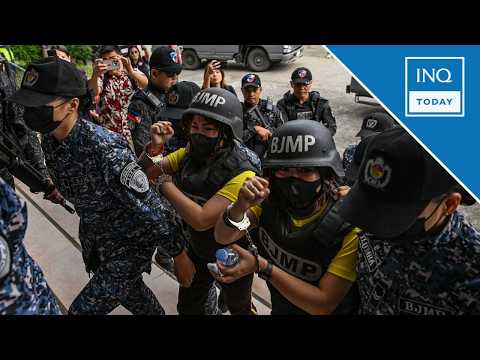
Police and military conduct raids at 2:30 a.m. Cumpio, Domequil, and three activists arrested. Officers claim to find weapons and a communist flag on Cumpio's bed.
October 2019
Military Surveillance of Cumpio Begins
Investigation
Philippine military starts surveillance of Cumpio based on an unnamed informant. RSF later found the surveillance records contained implausible claims.
December 2018
Duterte Creates NTF-ELCAC
Policy
Executive Order 70 establishes National Task Force to End Local Communist Armed Conflict, providing institutional framework for red-tagging campaigns.
Scenarios
1
Appeals Court Overturns Conviction, Cumpio Released
Possible
Discussed by: Defense lawyers, Reporters Without Borders, Committee to Protect Journalists
The defense files an appeal and requests bail pending review. Given that the Court of Appeals already reversed the asset forfeiture in October 2025—finding 'no factual or legal link' to terrorism—the same evidentiary weaknesses could unravel the conviction. RSF's documented evidence of fabrication and contradictory witness testimony provides grounds for reversal. If successful, Cumpio could be released after six years.
2
Conviction Upheld, Cumpio Serves Full Sentence
Possible
Discussed by: NTF-ELCAC, government prosecutors
The appeal fails and Cumpio serves her 12-18 year sentence. The NTF-ELCAC welcomed the conviction and maintains the charges are legitimate national security measures. If appeals courts defer to the trial court's findings, Cumpio could remain imprisoned until her late 30s or early 40s.
3
Marcos Administration Intervenes Following International Pressure
Unlikely
Discussed by: Human Rights Watch, international press freedom coalitions, UN Special Rapporteur
President Marcos Jr. promised to protect press freedom. With over 250 journalists and media groups calling for Cumpio's release, sustained international attention could create political incentive for executive action—whether through pardon, commutation, or pressure on prosecutors. The Financial Action Task Force's monitoring of Philippines anti-money laundering efforts adds another lever.
4
Cumpio Case Becomes Template for Broader Journalist Prosecutions
Likely
Discussed by: Committee to Protect Journalists, National Union of Journalists of the Philippines
With a second journalist (Deo Montesclaros) now facing terrorism financing charges and at least 227 activists charged under anti-terror laws since January 2025, the Cumpio conviction could validate further prosecutions. If courts accept similar evidence standards, terrorism financing charges become a systematic tool against critical journalism.
Historical Context
3 moments from history that rhyme with this story — and how they unfolded.
1 of 3
November 2009
Maguindanao Massacre (2009)
On November 23, 2009, 58 people—including 32 journalists—were ambushed and killed in Maguindanao province while traveling to file candidacy papers for an opposition politician. The Ampatuan political clan ordered the killings. It remains the deadliest single attack on journalists ever recorded.
Then
The Ampatuan brothers were arrested. The trial lasted a decade.
Now
In December 2019, the Ampatuan brothers received life sentences. But the massacre established the Philippines as one of the world's deadliest countries for journalists—a status it has never shed.
Why this matters now
The massacre exposed the intersection of political power and violence against journalists in the Philippines. Cumpio's case represents a different method—legal persecution rather than murder—but targets the same vulnerability: journalists covering powerful interests in remote provinces.
2 of 3
2017-2025
Maria Ressa Legal Persecution (2017-present)
Nobel laureate Maria Ressa and her news site Rappler faced 23 legal cases filed under the Duterte administration, including tax evasion, foreign ownership violations, and cyberlibel. She was convicted of cyberlibel in 2020, arrested multiple times, and faced potential decades in prison.
Then
Ressa paid multiple bail bonds and continued operating Rappler under constant legal threat.
Now
Ressa was acquitted of tax evasion (2023) and foreign ownership charges (2025). One cyberlibel conviction remains under Supreme Court appeal. The campaign demonstrated how multiple prosecutions can suppress journalism even without securing final convictions.
Why this matters now
Ressa's case established the playbook now applied to Cumpio: red-tagging, multiple charges, prolonged legal proceedings. But Cumpio lacked Ressa's international profile, Nobel Prize protection, and legal resources—showing how the same tactics prove more effective against local journalists.
3 of 3
1960s-1980s
Soviet-Era Psychiatric Abuse of Dissidents (1960s-1980s)
The Soviet Union used psychiatric diagnoses to detain political dissidents, labeling criticism of the state as mental illness. Dissidents were confined indefinitely to psychiatric hospitals without criminal trials, using medical authority to bypass legal protections.
Then
Thousands of dissidents were institutionalized.
Now
International exposure helped end the practice. It became a case study in how states weaponize ostensibly neutral institutions—medicine, finance, counterterrorism—to suppress dissent while claiming legitimacy.
Why this matters now
Terrorism financing laws serve a similar function: they reframe journalism and activism as terrorism using financial rather than medical or criminal frameworks. The Cumpio case shows how anti-money laundering systems—designed for legitimate purposes—can be redirected against critics.