
Pull to refresh
Logo
Daily Brief
Following
Why Ranks Sign Up
Nicaragua ends visa-free entry for Cuban citizens

Nicaragua ends visa-free entry for Cuban citizens

Rule Changes

Ortega government closes key migration corridor under US pressure

February 8th, 2026: Nicaragua terminates visa-free entry for Cubans

Overview

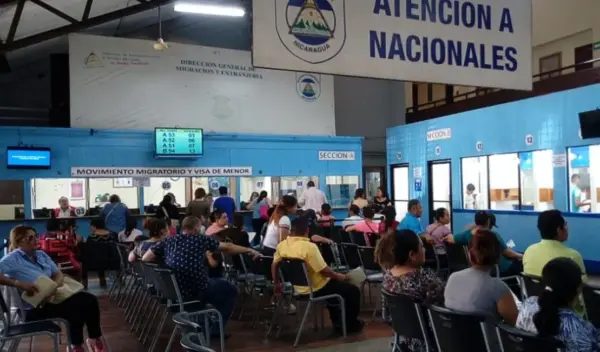
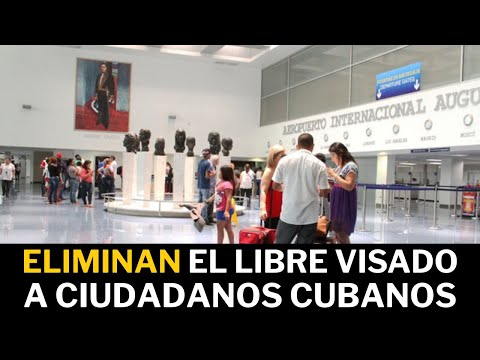
On February 8, 2026, Nicaragua canceled its visa-free entry policy for Cuban citizens, closing a corridor that had let more than 400,000 Cubans fly directly into Central America and begin overland journeys toward the United States. The Ortega government acted under sustained pressure from Washington, ending a four-year arrangement that had made Managua the last easy air route off the island for Cubans seeking to leave without a US visa. Havana called the reversal a betrayal; Washington treated it as a quiet win in its campaign to shut down alternative migration channels.

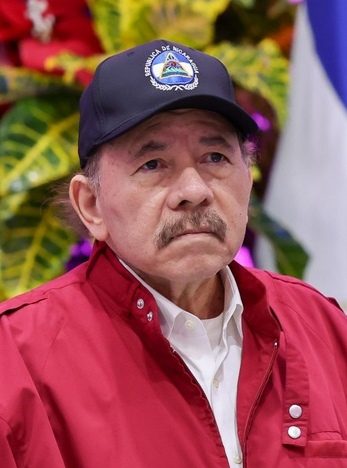
Nicaragua's immigration director reclassified Cuban travelers from visa-exempt to visa-required status, effective immediately. The timing suggests Washington's pressure campaign worked: the Trump administration had imposed escalating sanctions on Nicaraguan officials and companies for facilitating irregular migration, while simultaneously tightening an economic chokehold on Cuba itself.

Play on this story Voices Debate Predict

Key Indicators

400,000+
Cubans who used Nicaragua route
Migrants who transited through Nicaragua toward the US between 2021-2025
4 years
Duration of visa-free policy
November 2021 to February 2026
83%
Cuban share of Nicaragua transit migrants
Proportion of US-bound migrants entering Honduras from Nicaragua in early 2025
34,909
Cuban asylum claims in Brazil (2025)
Applications filed January-October 2025, nearly double the 2024 total

Interactive

Exploring all sides of a story is often best achieved with Play.

Ever wondered what historical figures would say about today's headlines?

Sign up to generate historical perspectives on this story.

People Involved

Organizations Involved

Timeline

  1. Nicaragua terminates visa-free entry for Cubans

    Policy

    Immigration director Juan Emilio Rivas signs order reclassifying Cuban travelers from visa-exempt (Category A) to consulted visa (Category C) status, effective immediately.

  2. Trump declares national emergency over Cuba

    Policy

    President Trump signs executive order authorizing tariffs on any country supplying oil to Cuba. Mexico, which provided 44% of Cuba's foreign oil in 2025, faces immediate pressure.

  3. Nicaragua releases political prisoners

    Diplomacy

    Under Trump administration pressure, Nicaragua's government releases dozens of political prisoners. Ortega adopts a lower profile, cooperating on drug enforcement and moderating rhetoric.

  4. US sanctions Nicaraguan migration-linked businesses

    Sanctions

    State Department sanctions owners and executives of Nicaraguan transportation companies, travel agencies, and tour operators facilitating irregular migration to the United States.

  5. Cuba suffers nationwide blackout

    Crisis

    Cuba's entire power grid collapses after the Antonio Guiteras plant fails. The country experiences five nationwide blackouts between October 2024 and September 2025, with some outages lasting 20 hours.

  6. US imposes expanded sanctions on Nicaragua

    Sanctions

    Treasury Department sanctions Nicaraguan gold companies and a Russian training center. State Department imposes visa restrictions on over 250 Nicaraguan officials for supporting the Ortega-Murillo regime.

  7. Cuban migration surges to record levels

    Migration

    December 2022 sees 44,064 Cubans arrive in the United States, the highest monthly total since the 1994 rafter crisis. Fiscal year 2022 records nearly 225,000 Cuban encounters at the US-Mexico border.

  8. Nicaragua opens visa-free entry for Cubans

    Policy

    The Ortega government announces Cuban citizens can enter Nicaragua without visas, ostensibly for tourism and family visits. The first month sees 6,178 Cuban arrivals.

  9. Obama ends 'wet foot, dry foot' policy

    Policy

    President Obama terminates the policy granting automatic residency to Cubans who reach US soil, ending decades of preferential treatment for Cuban migrants.

Scenarios

Predict which scenario wins. Contrarian picks score more — points lock in when the scenario resolves.

Log in to predict. Track your picks, climb the leaderboard. Log in Sign Up
1

Cuban Migration Shifts to Brazil and Spain

With the Nicaragua corridor closed and US enforcement tightened, Cubans redirect toward South America and Europe. Brazil already saw Cuban asylum applications nearly double in 2025, reaching 34,909 claims. Spain's updated immigration rules and historical ties make it another destination. This scenario sees the US achieve reduced Cuban arrivals at its border while the humanitarian crisis disperses globally.

Discussed by: Migration Policy Institute, Cuban diaspora researchers, CiberCuba
Consensus
2

New Central American Routes Emerge

Smuggling networks adapt by routing Cubans through other countries—potentially via Guyana, Suriname, or different Central American entry points. Prices increase, journeys become more dangerous, but migration continues. This mirrors historical patterns where closing one route displaces rather than eliminates migration flows.

Discussed by: WOLA, migration analysts, smuggling network monitors
Consensus
3

Cuba's Internal Pressure Builds

With emigration outlets narrowing while economic conditions worsen—blackouts, food shortages, oil supply cutoffs—internal pressure within Cuba intensifies. The combination of a closed Nicaragua route and Trump's oil tariff threats could accelerate either political change or deeper humanitarian crisis on the island.

Discussed by: Human Rights Watch, Cuba analysts, economists tracking the crisis
Consensus
4

Nicaragua Reverses Course Again

If US pressure on Ortega eases or the regime calculates that migration revenue outweighs sanctions costs, Nicaragua could quietly reopen visa-free travel. The 2021-2026 policy demonstrated the corridor's profitability through transit fees and visa sales. Political circumstances could make reopening attractive.

Discussed by: Latin America regional analysts, Nicaragua opposition figures
Consensus

Historical Context

Mariel Boatlift (1980)

April-October 1980

What Happened

After 10,000 Cubans crowded into Peru's Havana embassy seeking asylum, Fidel Castro opened the port of Mariel and announced anyone could leave. Over six months, 125,000 Cubans crossed to Florida on boats organized by Cuban Americans. Castro included prisoners and psychiatric patients among the emigrants, creating a political controversy that shaped US perceptions of Cuban migration for decades.

Outcome

Short Term

President Carter declared emergencies in Florida and established temporary status programs. Over 1,700 arrivals were jailed pending deportation hearings.

Long Term

The Mariel experience created lasting political sensitivity around Cuban migration, contributing to policies designed to manage rather than welcome mass arrivals.

Why It's Relevant Today

Nicaragua's visa-free policy enabled a modern equivalent—an authorized exit corridor that moved hundreds of thousands of Cubans northward, until the receiving country decided to close it.

1994 Cuban Rafter Crisis

August 1994

What Happened

As Cuba's economy collapsed following Soviet withdrawal, riots erupted in Havana. Castro temporarily suspended emigration enforcement, and over 35,000 Cubans built makeshift rafts to cross the Florida Straits. The Clinton administration, fearing uncontrolled arrivals, detained rafters at Guantanamo Bay rather than admitting them directly.

Outcome

Short Term

About 20,000 rafters were held at Guantanamo. Most were eventually admitted in 1995.

Long Term

Clinton established the 'wet foot, dry foot' policy: Cubans reaching US soil could stay, but those intercepted at sea would be returned. This policy lasted until Obama ended it in 2017.

Why It's Relevant Today

The 1994 crisis showed how Cuban economic collapse drives migration waves. Today's combination of blackouts, food shortages, and oil cutoffs echoes those conditions—but with fewer available routes.

End of 'Wet Foot, Dry Foot' (2017)

January 2017

What Happened

In his final days in office, President Obama ended the policy granting automatic residency to Cubans who reached US soil. For the first time in decades, Cubans faced the same immigration rules as other nationalities—detention and deportation became possible.

Outcome

Short Term

Cuban arrivals dropped immediately as the special pathway closed.

Long Term

The policy change pushed Cuban migration toward land routes through Central America, setting the stage for Nicaragua's visa-free corridor to become strategically significant.

Why It's Relevant Today

Nicaragua's 2021 visa opening filled a gap created by the 2017 US policy change. Now both pathways are closed, leaving Cuban migrants with fewer options than at any point since the revolution.

Sources

(12)