
Pull to refresh
Logo
North Korea builds new uranium enrichment facility at Yongbyon, IAEA says

North Korea builds new uranium enrichment facility at Yongbyon, IAEA says

New Capabilities

Watchdog reports expansion at two nuclear sites as inspectors remain barred from the country

3 days ago: IAEA publicly reports new Yongbyon enrichment facility

Overview

Updated 2 days ago

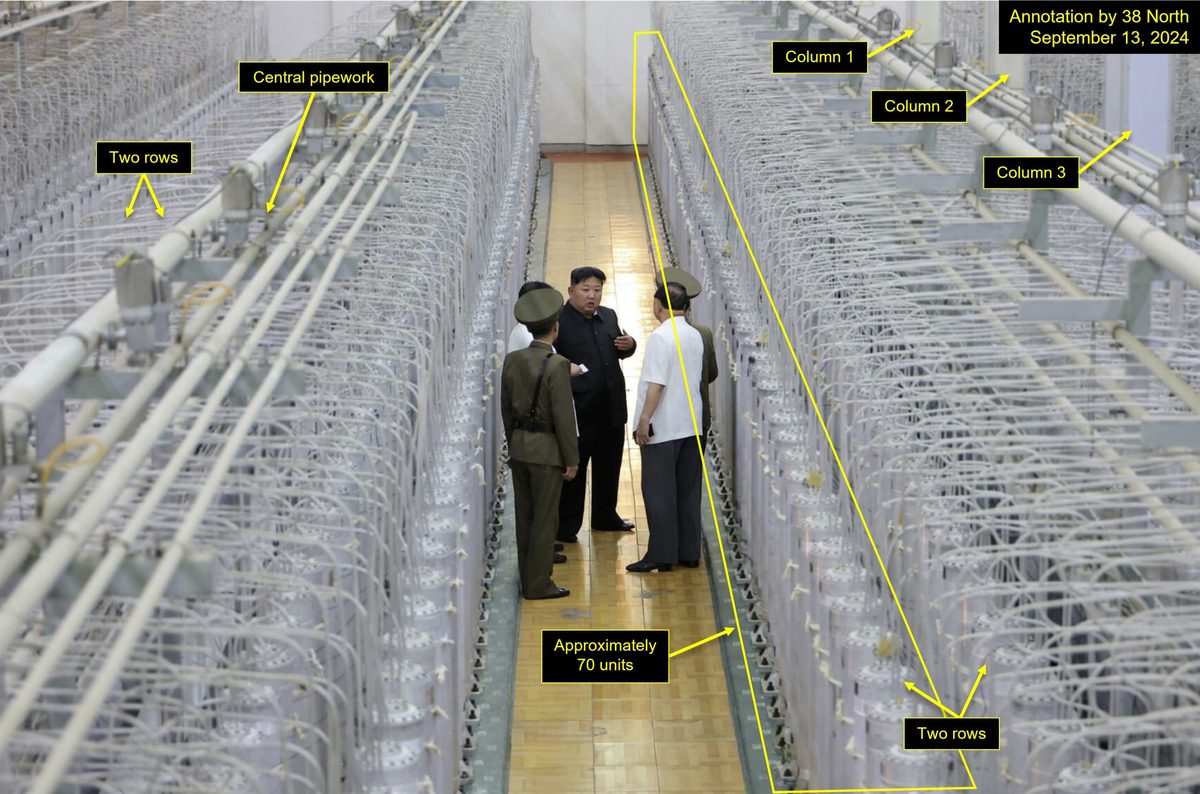
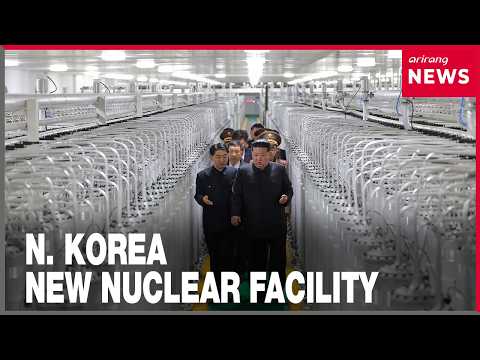
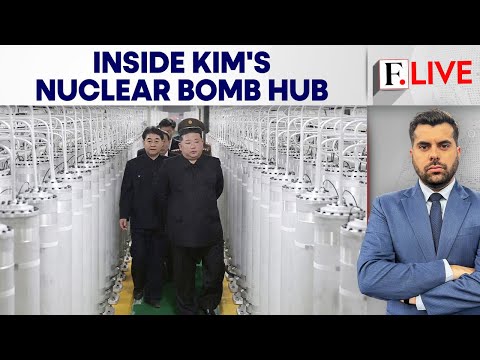
North Korea has completed a second uranium enrichment facility at Yongbyon, the International Atomic Energy Agency says. The two-storey building can house up to 28 centrifuge cascades, and an expanded annex at Kangson began operating in January 2026.

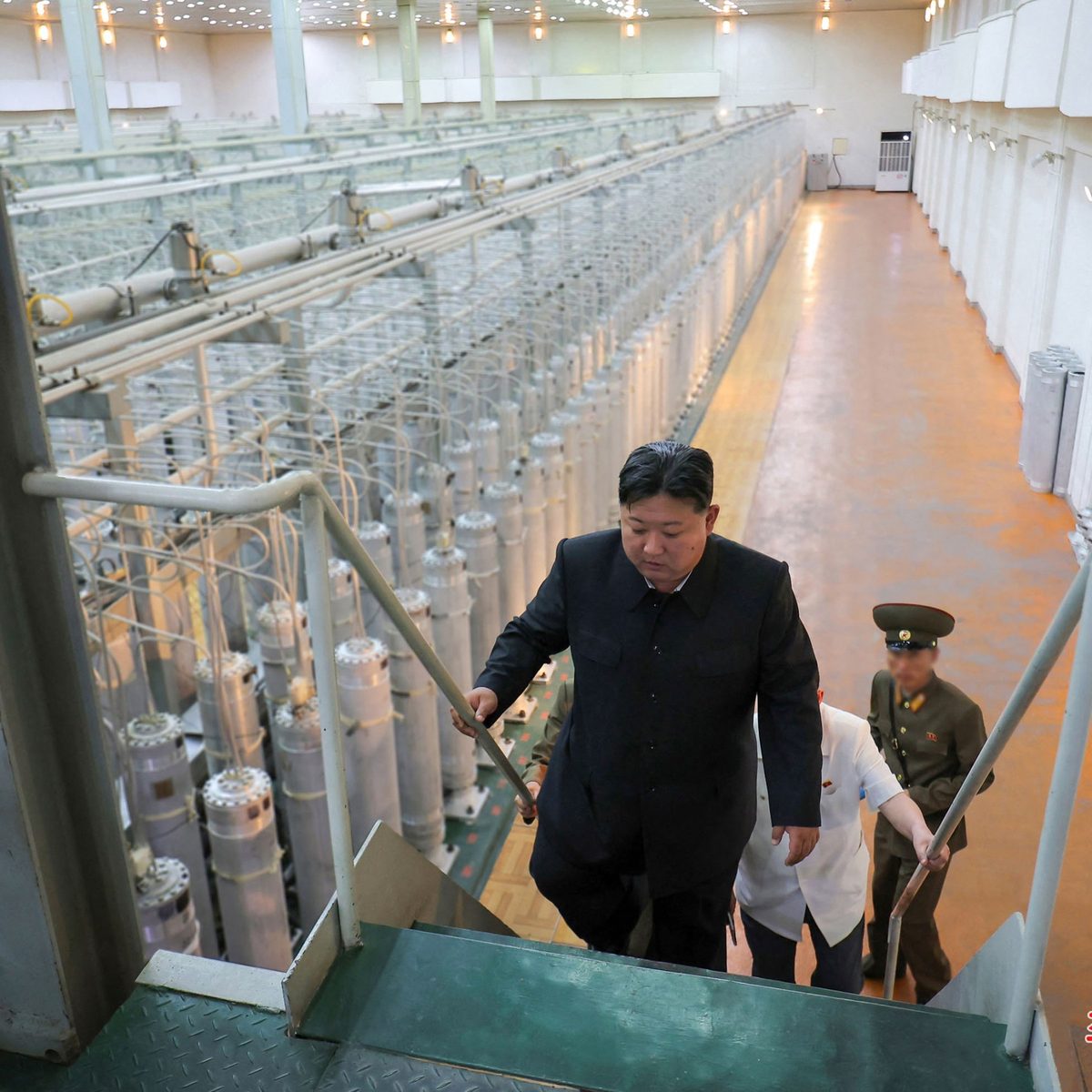
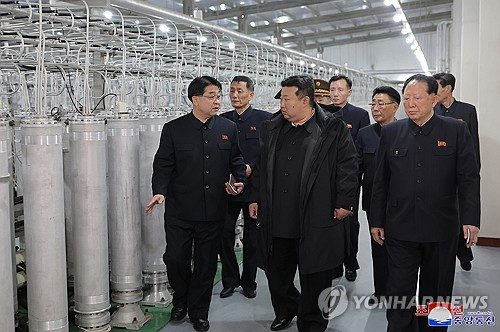
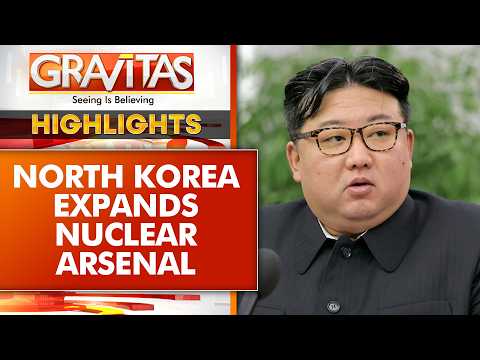
Estimates reported by the Dong-A Ilbo put the combined output at roughly six warheads' worth of fissile material a year. The IAEA, barred from North Korea since 2009, relies on satellite imagery and state media photos from Kim Jong Un's tour in June 2026. Director General Rafael Grossi called the expansion a 'serious concern' and a violation of UN Security Council resolutions.

Why it matters

North Korea can now produce roughly six warheads' worth of fissile material a year, with no international inspectors on the ground to verify the true total.

Questions about this story

Free account needed to ask — your question is kept and asked for you right after sign-up. Answers are public.

No questions yet — be the first to ask.

Key Indicators

28
Centrifuge cascades the new Yongbyon facility can house
Capacity estimate based on building dimensions, power supply, and cooling infrastructure.
2
Enrichment sites expanding in parallel — Yongbyon and Kangson
Both sites show new construction or expanded operations; the Kangson annex began operating in January 2026.
0
IAEA inspectors on the ground in North Korea since 2009
The agency relies on satellite imagery and state media photographs instead of on-site verification.
16
Months from construction start to facility completion
Excavation began December 2024; satellite imagery showed the facility essentially complete by April 2026.
~6
Estimated warheads' worth of fissile material per year from new facilities
Dong-A Ilbo reports about 5 from the new Yongbyon plant and 1 from the Kangson annex. VERTIC calculates the Yongbyon plant alone could produce 160 kg of HEU per year.

Voices

Curated perspectives — historical figures and your fellow readers.

Ever wondered what historical figures would say about today's headlines?

Sign up to generate historical perspectives on this story.

People Involved

Organizations Involved

Timeline

April 2009 September 2026

9 events Latest: 3 days ago
Tap a bar to jump to that date
  1. IAEA publicly reports new Yongbyon enrichment facility

    Latest Report Release

    The agency's findings go public: a two-storey facility housing up to 28 centrifuge cascades, plus Kangson expansion.

  2. Grossi raises 'serious concern' before IAEA board

    Statement

    IAEA Director General told the Board of Governors the expansion violates UN Security Council resolutions.

  3. Kim Jong Un tours the new enrichment facility

    Symbolic Visit

    State media photographs of the visit let IAEA analysts confirm the building's purpose and layout.

  4. Facility essentially complete in satellite imagery

    Construction

    Imagery shows standby generator, support buildings, security wall, and ongoing interior work at the site.

  5. Kangson enrichment annex begins operating

    Operational

    IAEA satellite analysis detected indications that the newly constructed annex at the Kangson enrichment site began operations in January 2026.

  6. New building externally complete at Yongbyon

    Construction

    Structure measures roughly 120 by 48 meters; internal fitting continues with new support buildings underway.

  7. Construction begins on new Yongbyon building

    Construction

    Satellite imagery shows excavation and concrete footings for a large structure north of the Radiochemistry Laboratory.

  8. Kim Jong Un publicly reveals Kangson enrichment site

    Symbolic Visit

    Kim made an unannounced visit to Kangson, the site the US identified at the 2019 Hanoi summit and North Korea then denied existed.

  9. North Korea expels IAEA inspectors

    Diplomatic Break

    Pyongyang ordered IAEA inspectors to leave, ending on-site verification of its nuclear program.

Scenarios

1

North Korea detected building a third enrichment facility

Possible Resolves by Sep 9, 2027

Discussed by: Beyond Parallel (CSIS) analysts and IAEA monitoring reports

The pattern of expansion at Yongbyon and Kangson continues. Satellite imagery shows new construction resembling a centrifuge facility elsewhere in North Korea, prompting another IAEA alert and fresh concerns about the pace of weapons-grade material production.

2

UN Security Council approves new sanctions over enrichment expansion

Unlikely Resolves by Sep 9, 2027

Discussed by: UN member states and proliferation analysts tracking Security Council deliberations

Escalation over enrichment capacity prompts action at the UN. Council members, including China and Russia which hold vetoes, agree to a new resolution targeting the enrichment program with expanded measures.

3

IAEA inspectors return to North Korea after diplomatic breakthrough

Unlikely Resolves by Sep 9, 2028

Discussed by: Analysts who note Kim's push for recognition as a nuclear state

Renewed talks with the United States or regional partners lead Pyongyang to allow limited IAEA access, ending the 17-year inspection gap and providing on-the-ground verification of enrichment activity.

4

New enrichment plants push North Korea's fissile output to six warheads a year

Likely Resolves by Q3 2027

Discussed by: Dong-A Ilbo and VERTIC analysis

Once the Yongbyon facility and Kangson annex run at full capacity, South Korean estimates put North Korea's new enrichment output at about six warheads a year. VERTIC's technical analysis says the new Yongbyon plant alone could produce 160 kg of highly enriched uranium annually, enough for several more weapons.

Historical Context

3 moments from history that rhyme with this story — and how they unfolded.

April 2009

North Korea expels IAEA inspectors (2009)

North Korea ordered IAEA inspectors to leave and restarted plutonium reprocessing after a UN Security Council statement condemned its satellite launch.

Then

Ended on-site verification of the Yongbyon nuclear complex.

Now

Created a verification gap that persists to this day; the IAEA has tracked North Korea via satellite imagery since.

Why this matters now

The current IAEA findings are limited by this persistent inspection gap — the agency identified the new facility only by analyzing state media photos and satellite data.

September 2009

Iran's Fordow fuel enrichment plant disclosure (2009)

Iran disclosed the existence of Fordow, a second enrichment site built inside a mountain, after Western intelligence revealed its location.

Then

Triggered international pressure and escalating sanctions against Tehran.

Now

Led to the 2015 JCPOA, which limited Iran's enrichment for more than a decade before the deal collapsed.

Why this matters now

Shows how the discovery of hidden enrichment facilities can lead either to diplomacy or further isolation — the same fork now facing North Korea's expansion.

November 2010

Revelation of Yongbyon's first enrichment facility (2010)

Stanford professor Siegfried Hecker visited Yongbyon and was shown a modern centrifuge facility with about 2,000 centrifuges, stunning the international community. US intelligence had believed North Korea's enrichment program was far smaller.

Then

Heightened concern about a second North Korean nuclear path through uranium, beyond its plutonium program.

Now

Established a baseline for monitoring North Korea's enrichment buildup over the following decade and a half.

Why this matters now

Today's new facility at Yongbyon is the latest step in that buildup — far larger than what Hecker was shown in 2010, and expanding across multiple sites.

Sources

(15)