

Pull to refresh
Logo
Mexico restricts cellphones in primary and secondary schools nationwide

Mexico restricts cellphones in primary and secondary schools nationwide

Rule Changes

Federal ban is in effect; schools rely on awareness, not sanctions

Overview

Updated Yesterday

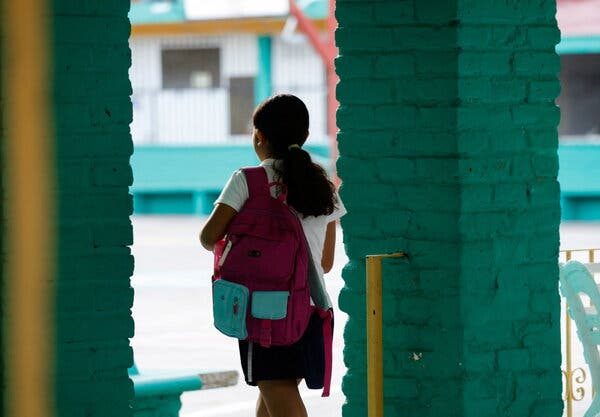
Mexico's ban on cellphones in primary and secondary schools took effect November 3. Students returned from the Day of the Dead break to classrooms and recess without personal screens, and teachers are enforcing the rule.

Education Secretary Mario Delgado said the policy depends on student awareness, not surveillance or sanctions. Some parents in violence-hit states worry they cannot reach their children during emergencies; the SEP says schools will handle emergencies through staff and families can leave devices at home. High schools set their own limits.

Why it matters

The ban tests whether removing phones for the school day improves attention, while parents weigh safety fears.

Questions about this story

Free account needed to ask — your question is kept and asked for you right after sign-up. Answers are public.

No questions yet — be the first to ask.

Key Indicators

81%
Teachers supporting the restriction
A survey of more than 565,000 teachers found 81% back the measure.
83%
Parents worried about device time
More than 83% of parents say they are concerned about their children's screen use.
40%
Students reporting distracted classmates
Four in 10 Mexican students say classmates are distracted by devices in most or all classes.
32
States backing the federal rules
All 32 state education authorities agreed to the restriction, the SEP said.
2.7h
Average daily on-school screen time
Students spend about 2.7 hours a day on screens at school, nearly half for leisure.
180
Days for states to align rules
State authorities have 180 days from November 3 to issue or adjust their regulations.

Voices

Curated perspectives — historical figures and your fellow readers.

Sign up to generate historical perspectives on this story.

People Involved

Organizations Involved

Timeline

September 2026 November 2026

6 events Latest: 7 days ago
Tap a bar to jump to that date
  1. First school day under cellphone ban

    Latest Implementation

    Students returned from the Day of the Dead break to phone-free classrooms and recess. Reports said many students approved while some parents worried about reaching children in emergencies.

  2. SEP says enforcement relies on awareness, not sanctions

    Policy

    Education Secretary Mario Delgado said schools would not deploy supervisors or coercive measures. The rules include a decalogue on technology and screen use.

  3. Restriction takes effect in classrooms and recess

    Implementation

    Cellphone and tablet use barred for the full school day in primary and secondary schools.

  4. Acuerdo 09/09/26 published in official gazette

    Publication

    Restriction formalized in Diario Oficial de la Federación; 30-day information period begins.

  5. SEP announces nationwide school phone restriction

    Announcement

    Secretariat unveiled rules barring phones and tablets during the primary and secondary school day.

  6. Conaedu unanimously approves phone restriction

    Policy

    National education council backed restricting cellphone use in basic education schools.

Scenarios

1

Mexico writes the phone restriction into federal law

Likely Resolves by Sep 1, 2027

Discussed by: Ricardo Monreal and the Morena bloc in the Chamber of Deputies

Morena lawmakers have pledged to convert the executive accord into a statute, arguing a decree can be reversed by a future administration. Monreal said the goal is a law with general application, abstraction, obligation, and even coerciveness. If the governing majority holds, the restriction gains permanence and standardized enforcement beyond the current administration.

2

Enforcement stays uneven across the 32 states

Possible Resolves by Jul 31, 2027

Discussed by: Education analysts and the Unión Nacional de Padres de Familia

The accord assigns supervision to state education secretariats, which have uneven capacity. The parents' union has already warned the measure is insufficient without addressing learning gaps and teacher authority. If some states apply the rules loosely and others strictly, the uniform national standard erodes into patchwork.

3

Upper secondary schools adopt weak self-imposed limits

Possible Resolves by Jun 1, 2027

Discussed by: SEP secretary Mario Delgado; Conaedu deliberations

The accord leaves upper secondary institutions to set their own rules for non-pedagogical device use, with options ranging from full-day storage to scheduled classroom use. Schools facing pressure from students and families may choose the lightest limits. Federal officials have signaled they will monitor the outcome and could tighten the rules if self-regulation falls short.

4

Violence-hit states carve out emergency phone exceptions

Possible Resolves by May 2, 2027

Discussed by: Parents in Sinaloa and other violence-hit states; AP and El País reporting

Parents in regions hit by violence say the ban leaves them unable to reach children during shootings or other emergencies. If states or schools create broad exceptions for emergency communication, the national rule could weaken where safety fears are highest.

Historical Context

3 moments from history that rhyme with this story — and how they unfolded.

July-September 2018

France bans smartphones in schools (2018)

France passed a law in July 2018 banning smartphones and tablets in primary and middle schools, effective that September. Exceptions covered students with disabilities and pedagogical use. The Macron government framed it as protecting children's health and attention.

Then

Enforcement fell to teachers and school staff, with parents and students adapting over the first year.

Now

France became a European reference point for school phone restrictions, cited in later debates across the continent.

Why this matters now

Mexico's rule closely mirrors the French approach but goes further by covering recess and relying on a federal accord rather than a dedicated statute, at least until Morena's planned law.

December 2024-January 2025

Brazil restricts cellphones in basic education (2025)

Brazil's Congress approved a law in late 2024 restricting cellphone use in basic education, sanctioned by President Luiz Inácio Lula da Silva in January 2025. The law limits phones in classrooms and recess, with exceptions for pedagogical use, accessibility, and health needs.

Then

The law took effect across public and private schools in 2025, making Brazil the largest country in the region with a national rule.

Now

Brazil's move became a template for Latin American peers debating similar restrictions.

Why this matters now

The parallel shows a regional trend: Mexico, along with Chile, now follows the Brazilian path while Argentina and Colombia still debate rules.

2015

New York City lifts its school cellphone ban (2015)

New York City public schools barred cellphones since 2006, with metal-detector checks that sometimes confiscated devices. Mayor Bill de Blasio ended the ban in 2015, letting each school decide its own policy.

Then

Many schools kept limits; others allowed phones in hallways and cafeterias.

Now

The reversal showed school phone policy can swing both ways, with some districts later re-tightening rules amid distraction concerns.

Why this matters now

It underlines that Mexico's restriction is not irreversible: if enforcement or academic results disappoint, a future administration could relax it, which is exactly why Morena wants it enshrined in law.

Sources

(15)