



Pull to refresh
Logo
FDA orders GLP-1 makers to warn of rare vision-loss condition

FDA orders GLP-1 makers to warn of rare vision-loss condition

Rule Changes

Labels for Ozempic, Wegovy, Mounjaro and Zepbound must now flag NAION, an optic-nerve disorder that can leave one eye permanently blind

Overview

Updated 11 hours ago

On November 9, the US Food and Drug Administration told every maker of a GLP-1 drug to add a warning about a rare eye condition to its label. The condition is nonarteritic anterior ischemic optic neuropathy, or NAION: a loss of blood flow to the optic nerve that can permanently blind one eye, usually without pain.

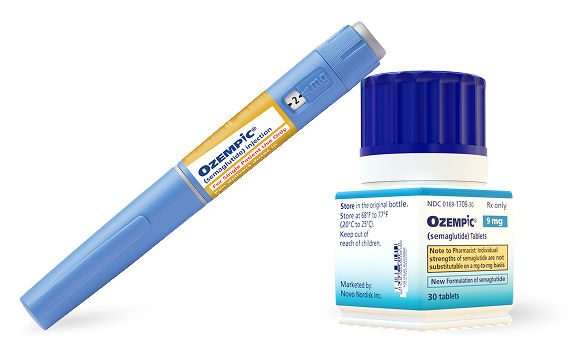
The order covers Ozempic, Wegovy, Mounjaro and Zepbound, four of the most-prescribed drugs in the United States. FDA's own pooled analysis of its trials found a small absolute increase in NAION cases among users, and the agency said it does not know why GLP-1 drugs might raise the risk.

Why it matters

Millions of people take these drugs. Their labels now say sudden, painless vision loss in one eye means calling a doctor.

Questions about this story

Free account needed to ask — your question is kept and asked for you right after sign-up. Answers are public.

No questions yet — be the first to ask.

Key Indicators

6.4
NAION cases per 100,000 person-years in GLP-1 users
FDA's meta-analysis of 126 trials found this rate among patients taking a GLP-1 drug.
3.8
NAION cases per 100,000 person-years in the comparison group
Patients given a placebo or a non-GLP-1 diabetes drug in the same trials.
134,253
Patients in the pooled trial analysis
78,217 took a GLP-1 drug; 56,036 took a comparator.
4×
Higher NAION diagnosis rate among semaglutide users in a 2024 study
A Harvard-affiliated research team compared about 17,000 patients; its authors called the result tentative.

Voices

Curated perspectives — historical figures and your fellow readers.

Sign up to generate historical perspectives on this story.

People Involved

Organizations Involved

Timeline

July 2024 November 2026

3 events Latest: Yesterday
  1. Novo Nordisk disputes causality; eye doctors urge calm

    Latest Statement

    Novo said the data do not establish cause and effect. The American Academy of Ophthalmology said any added risk appears small and told patients not to quit their medication unilaterally.

  2. FDA requires NAION warning on all GLP-1 labels

    Regulation

    The agency ordered every GLP-1 manufacturer to add the risk to the Warnings and Precautions section, citing a pooled analysis of 126 trials.

  3. Study links semaglutide to higher NAION rates

    Research

    A paper by Hathaway and colleagues reported that semaglutide users were about four times as likely to be diagnosed with NAION. Its authors called the result tentative.

Scenarios

1

Warning stays a label line as GLP-1 prescriptions keep growing

Likely Resolves by Nov 9, 2027

Discussed by: The American Academy of Ophthalmology, which said any added risk 'appears small,' and Novo Nordisk, which rejects a causal link

The label change takes effect, doctors mention it at annual visits, and nothing else follows. This is the path implied by FDA's own numbers: roughly 2.6 extra NAION cases per 100,000 person-years of exposure, against a condition the general over-50 population already develops at 2.3 to 10.2 cases per 100,000 a year. Under this scenario, the drugs' diabetes and obesity benefits keep outweighing a rare eye risk, and prescribing continues on its current trajectory.

2

FDA escalates to a boxed warning or restricted prescribing

Unlikely Resolves by Nov 9, 2028

Discussed by: No regulator has proposed this; it is the escalation path implied by the Vioxx and Avandia precedents

A larger, cleaner study or a wave of reported cases pushes the estimated risk upward, and FDA tightens access rather than merely warning. That could mean a boxed warning, a requirement that patients with prior NAION avoid the drugs, or a formal restriction on prescribing. FDA's current language already tells doctors to consider stopping the drug in anyone who develops NAION, which is a step short of restriction.

3

Patients sue Novo Nordisk and Eli Lilly over failure to warn

Possible Resolves by Nov 9, 2027

Discussed by: Not yet filed; product-liability specialists typically test such claims after a label change formalizes the risk

Plaintiffs who lost vision in one eye while taking a GLP-1 drug argue the manufacturers knew or should have known about NAION and did not warn early enough. A label change is often the starting gun for this kind of litigation, because it fixes a date after which the risk was officially acknowledged. Novo's insistence that the data show no cause and effect would be the central factual fight.

4

European and British regulators order matching warnings

Possible Resolves by Q3 2027

Discussed by: Not yet stated publicly; FDA orders on widely used drugs frequently prompt parallel reviews

The European Medicines Agency's safety committee and Britain's MHRA review the same trial and claims data and conclude that their labels should carry the same caution. Because the drugs are sold globally under different brand names, a matching European action would make the warning close to universal for the class.

Historical Context

3 moments from history that rhyme with this story — and how they unfolded.

September 2004

Vioxx withdrawal (2004)

Merck pulled its arthritis drug rofecoxib, sold as Vioxx, after a company trial found higher rates of heart attack and stroke in long-term users. Roughly 20 million Americans had taken it.

Then

The withdrawal removed a top-selling drug from the market overnight and triggered thousands of lawsuits, which Merck eventually settled for $4.85 billion in 2007.

Now

Regulators began demanding cardiovascular safety trials for new diabetes and arthritis drugs, and FDA became more willing to act on pooled analyses rather than waiting for a single definitive trial.

Why this matters now

Vioxx is the standard case of a post-market safety signal moving from study, to label, to market exit. The GLP-1 order has stopped at step two, and the question is whether it stays there.

May 2007 to September 2010

Avandia restrictions (2007)

A meta-analysis of existing trials reported that the diabetes drug rosiglitazone, sold as Avandia, raised heart-attack risk. FDA initially added a boxed warning, then in 2010 restricted it to patients whose blood sugar was not controlled on other medicines.

Then

Prescriptions collapsed in the United States and Europe, and GlaxoSmithKline faced litigation and a large financial settlement.

Now

A later re-analysis of the original trial data softened the finding, and FDA lifted the restriction in 2013. The episode left a lasting argument over how much weight a pooled analysis of imperfect trials should carry.

Why this matters now

The GLP-1 decision rests on the same kind of evidence FDA used against Avandia: a meta-analysis across many trials, with a small absolute difference. Avandia shows that such a finding can trigger severe restrictions and then be partly reversed.

October 2004

Antidepressant boxed warning (2004)

FDA ordered a boxed warning on antidepressants used by children and adolescents, citing pooled trial data showing a higher rate of suicidal thinking. The absolute increase was small and no completed suicides were recorded in those trials.

Then

Prescribing to young people fell sharply in the United States and elsewhere.

Now

Later research linked the drop in prescribing to an increase in untreated depression and, in some analyses, to more suicides, which led to a second warning telling doctors not to withhold treatment.

Why this matters now

It is the clearest example of a rare-event warning on a widely used drug class where the direction of net benefit was contested. The ophthalmology academy's advice here, don't stop the drug without talking to a doctor, is aimed at avoiding that outcome.

Sources

(10)