
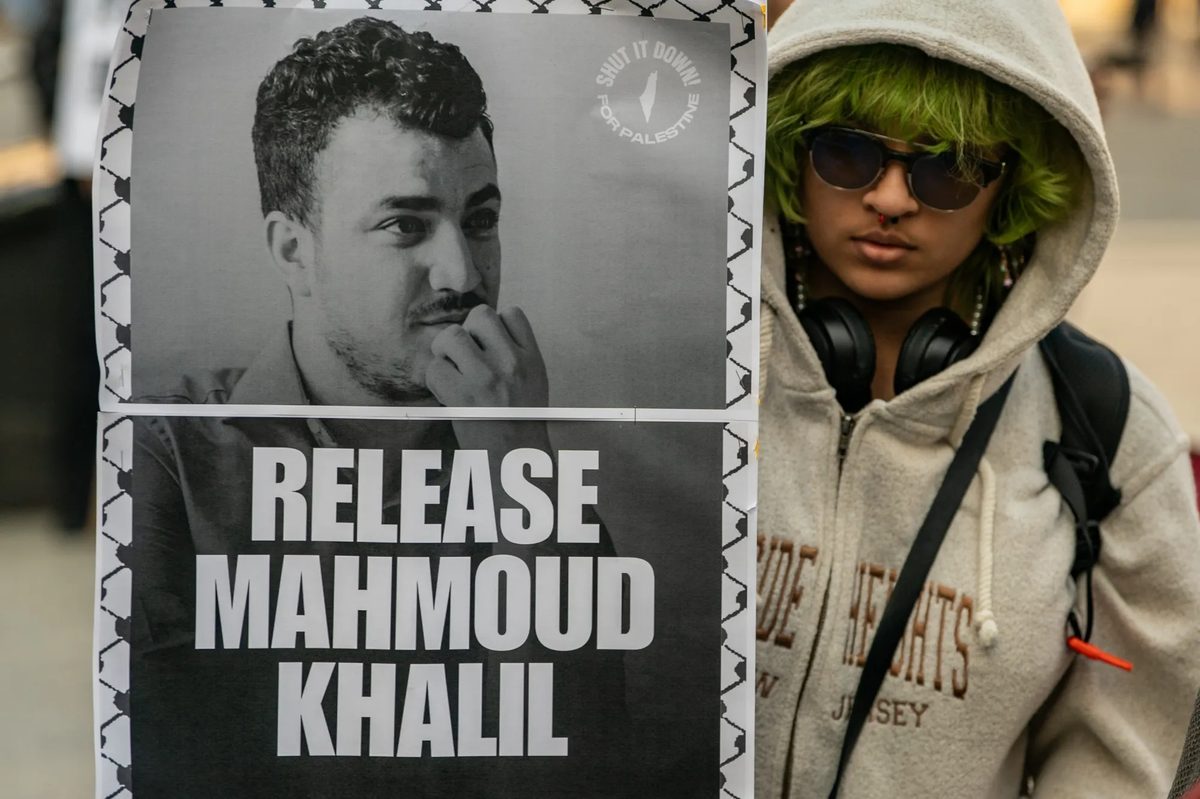
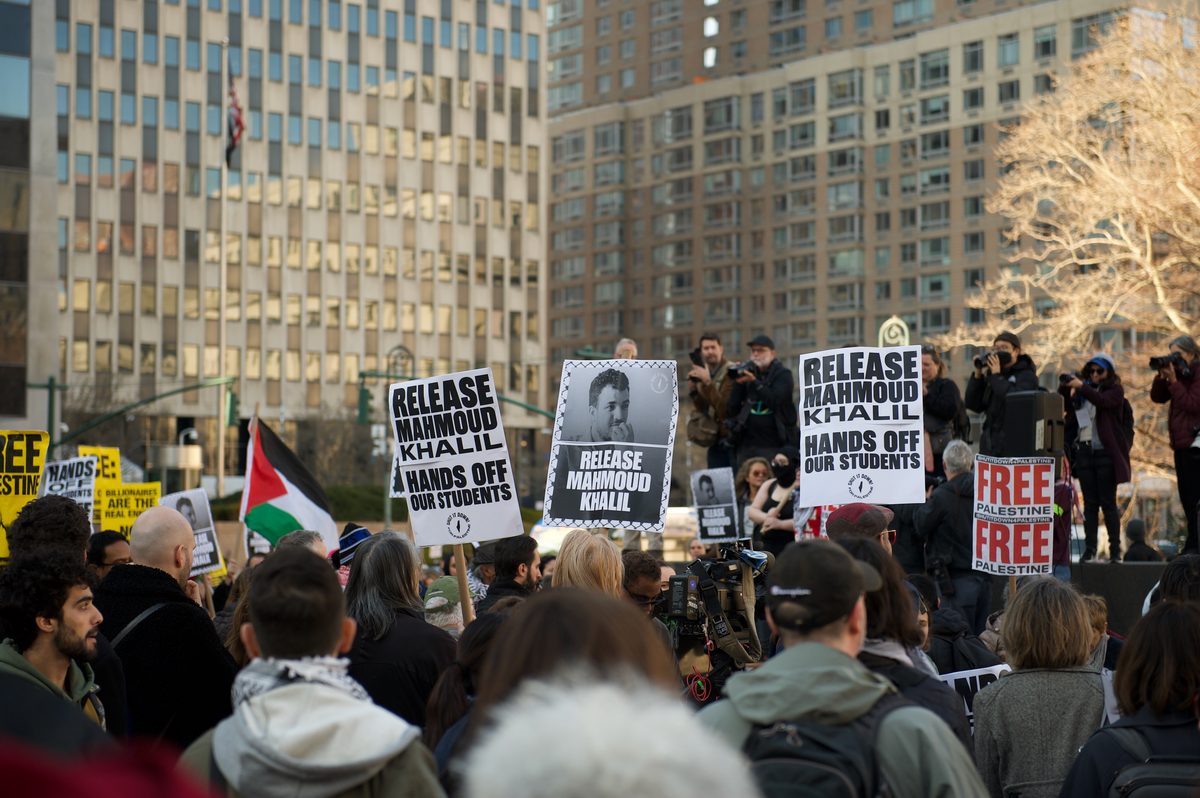
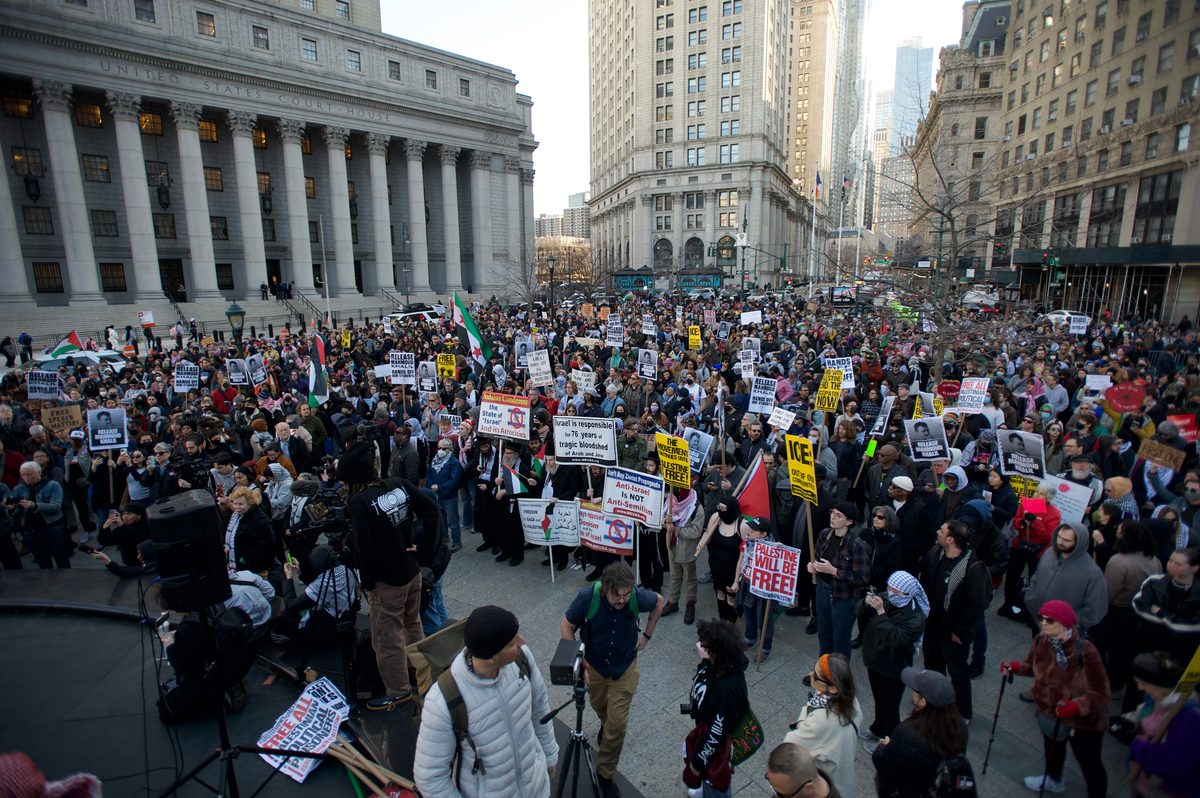
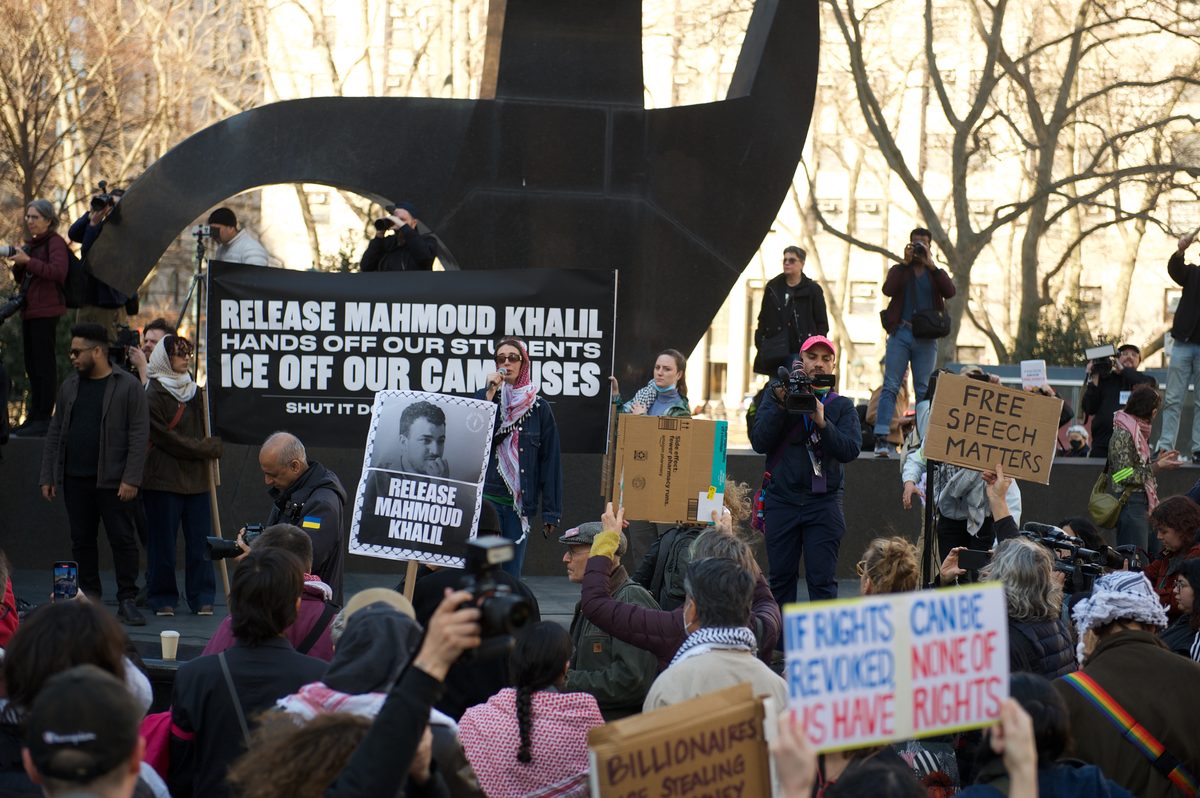
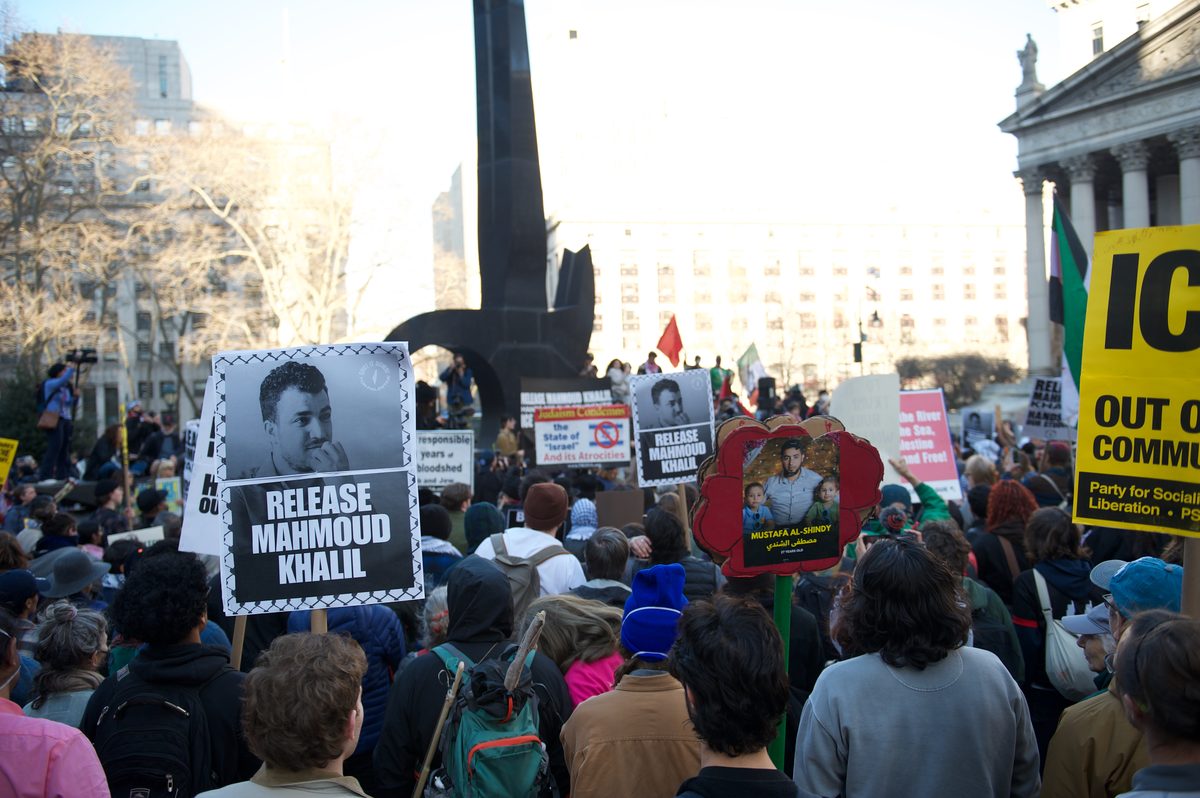
The Immigration and Nationality Act of 1952 gave the Secretary of State power to deport noncitizens whose presence threatens U.S. foreign policy. For seven decades, that authority gathered dust. Then, on March 8, 2025, ICE agents arrested Mahmoud Khalil—a Columbia graduate student and green card holder—from his university apartment, invoking the Cold War-era statute to target him for his role negotiating on behalf of pro-Palestinian protesters.
On January 15, 2026, the 3rd Circuit Court of Appeals ruled 2-1 that a lower court lacked jurisdiction to release Khalil, reversing a June 2025 decision that found his detention likely unconstitutional. The ruling won't take effect for 45 days, giving Khalil's legal team time to seek review by the full circuit. One week later, on January 22, DHS announced Khalil will be deported to Algeria—where he holds citizenship through a relative—rather than Syria. In the parallel AAUP v. Rubio case, U.S. District Judge William G. Young accused Secretary of State Marco Rubio and Homeland Security Secretary Kristi Noem of a 'breathtaking conspiracy' to violate students' First Amendment rights at a January 15 remedies hearing. Khalil, who missed his son's birth while detained for 104 days in Louisiana, now faces possible re-detention and deportation as parallel legal battles determine whether the government can deport legal residents for lawful political speech.
DHS Assistant Secretary Tricia McLaughlin states Khalil will be sent to Algeria, where he holds citizenship through a relative, rather than Syria. 'It looks like he'll go to Algeria. That's what the thought is right now,' McLaughlin said on NewsNation.
Khalil speaks out in first interview after ruling
Public Statement
In Democracy Now interview, Khalil calls 3rd Circuit ruling 'absolutely disappointing' and says Trump administration is trying to 'make an example out of me,' potentially separating him from his U.S. wife and son.
Appeals court reverses release order
Legal
3rd Circuit rules 2-1 that district court lacked jurisdiction, ordering dismissal of Khalil's habeas petition. Judge Freeman dissents.
Judge Young accuses cabinet secretaries of 'breathtaking conspiracy'
Legal
In AAUP v. Rubio remedies hearing, U.S. District Judge William G. Young (Reagan appointee) accuses Rubio and Noem of conspiring to violate First Amendment rights of noncitizen students and scholars. Ruling expected January 22.
Federal court rules speech-based deportations unconstitutional
Legal
In AAUP v. Rubio, Judge William Young rules noncitizens have full First Amendment rights and the administration's deportation campaign is unconstitutional.
Immigration judge orders deportation to Algeria or Syria
Legal
Judge Comans issues deportation order, also finding Khalil "willfully misrepresented" information on his green card application.
Khalil reunited with family at Newark Airport
Release
After 104 days in detention, Khalil arrives at Newark Airport. Rep. Alexandria Ocasio-Cortez joins supporters greeting him.
Khalil ordered released on bail
Legal
Judge Farbiarz orders Khalil's release, calling his detention "highly unusual" and characterizing it as punishment for speech.
Federal judge finds INA provision likely unconstitutional
Legal
Judge Farbiarz rules the Cold War-era statute authorizing deportation for foreign policy reasons is "presumptively unconstitutional" as applied.
Khalil's son born while he remains detained
Personal
Noor Abdalla gives birth to their son Deen. ICE denies Khalil's request for temporary release to attend.
Immigration judge rules Khalil deportable
Legal
Judge Jamee Comans in Louisiana rules Rubio's foreign policy determination is "facially reasonable," finding Khalil can be deported.
Rubio memo reveals basis for deportation
Evidence
Two-page memo from Secretary of State Rubio released, citing Khalil's "beliefs, statements or associations" while conceding his activities were "otherwise lawful."
Judge rejects government's venue challenge
Legal
Judge Farbiarz rules case can proceed in New Jersey, where Khalil was initially detained, rejecting government's push to move it to Louisiana.
Emergency habeas petition filed
Legal
ACLU and co-counsel file emergency motions in New Jersey federal court challenging Khalil's detention.
ICE arrests Mahmoud Khalil at Columbia apartment
Arrest
Plainclothes DHS agents detain Khalil without a warrant. His wife Noor Abdalla records the arrest. He is transported overnight to Louisiana.
Trump signs executive order targeting foreign student protesters
Policy
Executive order directs federal agencies to identify and deport noncitizen participants in pro-Palestinian protests, citing anti-semitism concerns.
Scenarios
1
Supreme Court Takes Case, Rules on First Amendment for Noncitizens
Discussed by: Constitutional law scholars at the Knight First Amendment Institute; ACLU legal analysts
Khalil's team appeals to the Supreme Court, which grants certiorari given the split between Judge Young's AAUP ruling and the 3rd Circuit's jurisdictional decision. The Court issues its first direct ruling on whether legal permanent residents can be deported solely for lawful political speech. A ruling against the government would invalidate the administration's campus deportation campaign.
With the habeas petition dismissed, ICE re-arrests Khalil. His deportation case proceeds through immigration court appeals, culminating in removal to Algeria (where he holds citizenship through a relative) or Syria (his birthplace). His attorneys argue deportation to either country would endanger his life given his prominence.
3
Case Stalls in Immigration Appeals, Khalil Remains in Limbo
Discussed by: Immigration lawyers familiar with the case; NPR legal correspondents
Khalil appeals the deportation order to the Board of Immigration Appeals, then potentially to the 5th Circuit. The process takes years. He remains free on bail but cannot work or travel freely, living in legal uncertainty while the constitutional questions remain unresolved.
4
New Administration Reverses Course
Discussed by: Political analysts; immigration reform advocates
A future administration declines to pursue deportation, exercising prosecutorial discretion. The underlying legal questions about the INA provision remain unresolved, leaving it available for future use against other activists.
Historical Context
The McCarran-Walter Act and McCarthy-Era Deportations (1952-1965)
1952-1965
What Happened
Congress passed the Immigration and Nationality Act of 1952 over President Truman's veto, giving the government broad power to deport noncitizens for communist affiliations or "subversive" beliefs. The law was used to exclude and deport thousands, including labor organizer Harry Bridges (whose deportation the Supreme Court reversed in 1945) and countless others deemed security threats for their political associations.
Outcome
Short Term
Immigration enforcement became a tool of Cold War politics, with the Attorney General gaining wide discretion to exclude or deport based on ideology.
Long Term
Congress amended the law in 1990 to protect "beliefs, statements, or associations" that are "lawful within the United States," raising the bar for foreign policy deportations. The provision went largely unused until 2025.
Why It's Relevant Today
The same statute written to deport communists is now being used against pro-Palestinian activists. The government argues the 1990 amendments don't prevent deportation; Khalil's lawyers argue they do.
Harisiades v. Shaughnessy (1952)
1952
What Happened
The Supreme Court upheld the deportation of three longtime legal residents—Peter Harisiades, Giuseppe Mascitti, and Sara Coleman—for past membership in the Communist Party, even though they had left the party years earlier. All had lived in the U.S. for decades; Harisiades had been in the country since 1916.
Outcome
Short Term
The Court ruled 6-2 that Congress's plenary power over immigration allowed deportation based on past political associations, regardless of current beliefs.
Long Term
Justice Douglas's dissent—arguing that legal residents "assimilated in our society" should have the same rights as citizens—became influential in later jurisprudence expanding noncitizen rights.
Why It's Relevant Today
Harisiades remains the most relevant Supreme Court precedent, though it addressed past Communist Party membership rather than ongoing lawful speech. The Court has never ruled directly on deportation for current, lawful political activity.
Reno v. American-Arab Anti-Discrimination Committee (1999)
1999
What Happened
The Supreme Court ruled 8-1 that noncitizens generally cannot challenge selective enforcement in deportation proceedings—even if they were targeted for their political beliefs. The case involved Palestinian activists accused of ties to a PLO faction who argued they were singled out for their speech.
Outcome
Short Term
The activists' selective enforcement claims were dismissed, though their underlying deportation cases were eventually dropped after 20 years of litigation.
Long Term
The ruling limited noncitizens' ability to challenge politically motivated deportations, though it left open whether "outrageous" targeting might still be reviewable.
Why It's Relevant Today
The government cites this precedent to argue courts shouldn't second-guess enforcement decisions. Khalil's lawyers argue the 1990 amendments and subsequent cases provide stronger speech protections than existed in 1999.