
Pull to refresh
Logo
Army Corps grants permit for Louisiana's new deepwater container port

Army Corps grants permit for Louisiana's new deepwater container port

Built World

The $2.6 billion terminal would be the nation's only new greenfield container port, built downriver of a bridge too low for today's biggest ships.

August 25th, 2026: USACE grants federal permit

Overview

Updated Aug 26

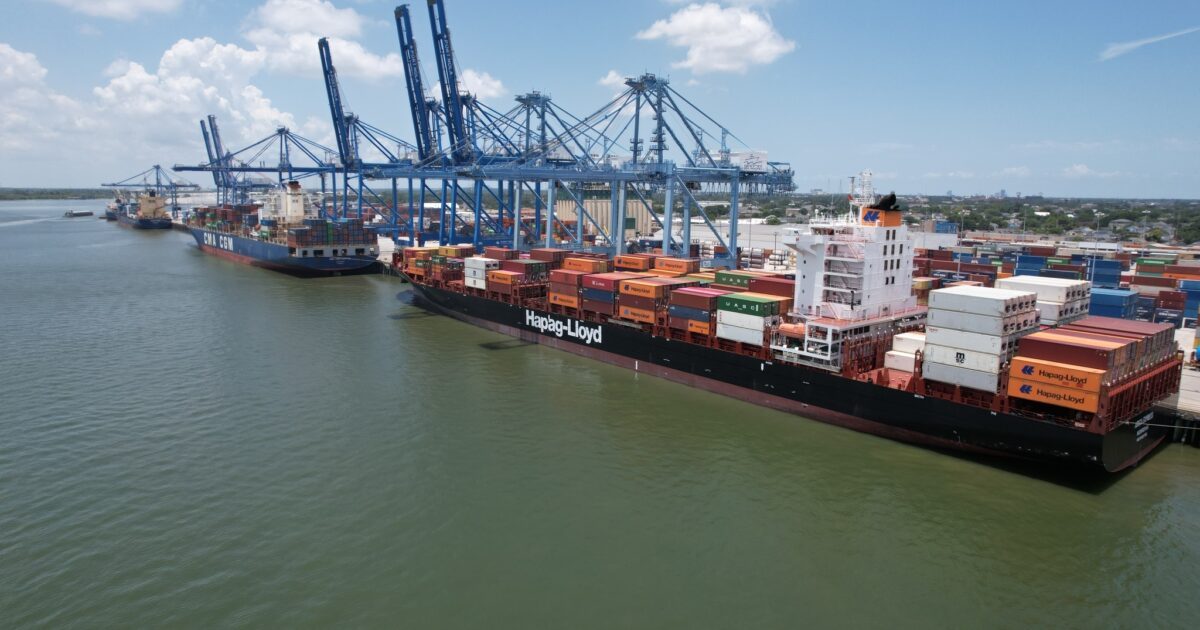
The biggest container ships in the world cannot reach the Port of New Orleans; the Crescent City Connection bridge is too low for vessels hauling 24,000 boxes. The answer is a brand-new port built 17 miles downriver where they can dock, and this week it cleared its biggest hurdle.

The U.S. Army Corps of Engineers granted the federal permit for the Louisiana International Terminal, ending more than four years of review. The $2.6 billion project is the nation's only greenfield container port under development. Roughly half its funding, a $1 billion access highway, and three local lawsuits still stand in the way.

Why it matters

If LIT opens, the largest container ships can serve Louisiana directly, rerouting Gulf Coast trade and supply chains that today move through other ports.

Questions about this story

Free account needed to ask — your question is kept and asked for you right after sign-up. Answers are public.

No questions yet — be the first to ask.

Key Indicators

$2.6B
Estimated construction cost
Latest estimate, about 45% above the original $1.8 billion price tag.
24,000
Containers per ultra-large vessel
Ships this large cannot pass under the Crescent City Connection bridge.
62,850
Container yard capacity
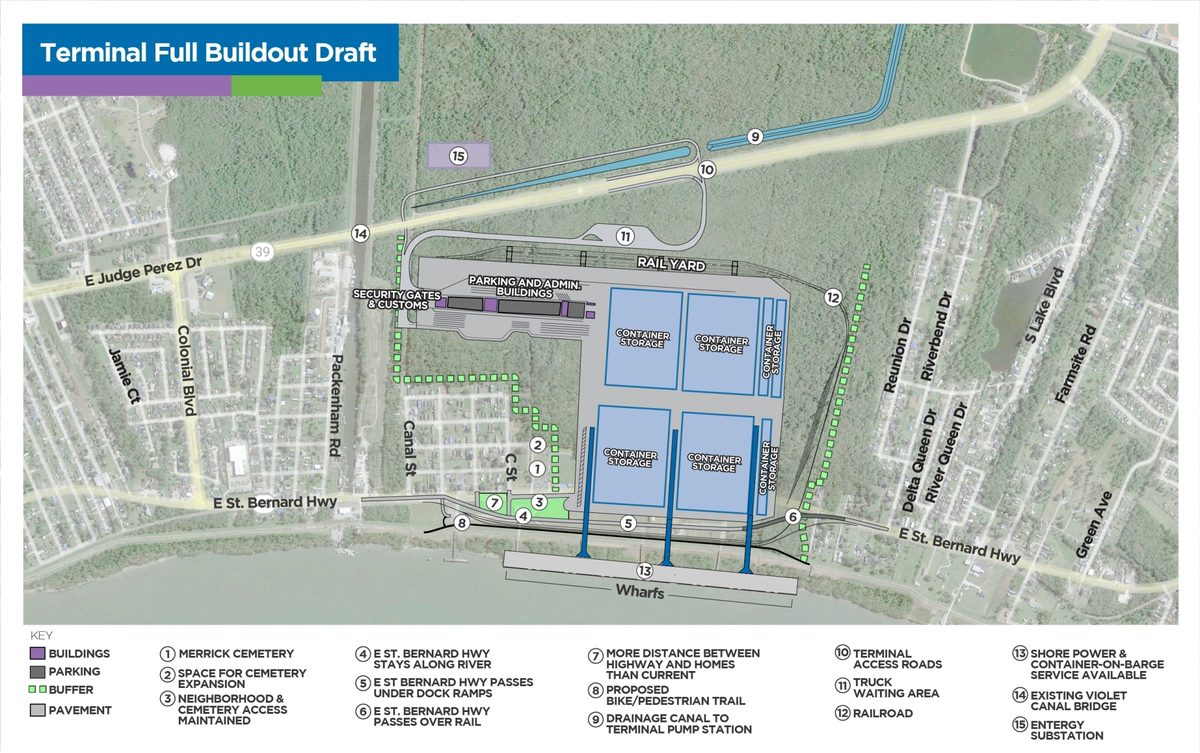
Boxes the terminal's 600-acre site can hold at once, with 3,600 feet of wharf.
342,000
American jobs supported by Port NOLA
Cargo activity already supports over 122,000 jobs in Louisiana alone.
$101B
Annual economic value supported
Port NOLA cargo activity's nationwide economic impact before LIT opens.

Voices

Curated perspectives — historical figures and your fellow readers.

Ever wondered what historical figures would say about today's headlines?

Sign up to generate historical perspectives on this story.

People Involved

Organizations Involved

Timeline

June 2022 December 2031

5 events Latest: August 25th, 2026 · 3 weeks ago
Tap a bar to jump to that date
  1. Target opening

    Upcoming Projection

    Five-year build could open the terminal's first berth by late 2031.

  2. Site work expected this fall

    Upcoming Construction

    Access roads, ground clearing, and soil preparation could begin at Violet.

  3. USACE grants federal permit

    Latest Regulatory

    Army Corps authorizes LIT construction, clearing the project's biggest regulatory hurdle.

  4. Funding package firming up

    Funding

    Project website lists $800M from private partners and more than $500M in public money.

  5. Permit application filed

    Regulatory

    Port NOLA files LIT construction permits with USACE; federal review begins.

Scenarios

1

LIT opens its first berth by late 2031

Possible Resolves by End of 2031

Discussed by: Port NOLA officials; nola.com reporting

Groundbreaking follows the permit, the five-year build holds, and the school relocation and highway corridor get worked out. The first commercial container vessel docks at Violet in late 2031, consistent with Port NOLA's stated five-year schedule.

2

Louisiana courts halt or stall the project

Possible Resolves by Q2 2028

Discussed by: St. Bernard Parish Council Chair Fred Everhardt; local opposition groups

Three suits are in state court: one over the elementary school site, one over environmental impact, and one over whether Port NOLA can build in another parish. A ruling against the port on any of them could delay or kill the terminal, though the federal permit and state backing give the port strong leverage.

3

Funding gap delays groundbreaking past 2027

Possible Resolves by End of 2027

Discussed by: nola.com financing analysis

The port is short at least half of the $2.6 billion cost. It plans to close the gap with bonds and federal loans, but if underwriting or rates fail, the start date slips. Preliminary site work could begin fall 2026 regardless, while major construction waits on the financing package.

Historical Context

2 moments from history that rhyme with this story — and how they unfolded.

June 2016

Panama Canal expansion (2016)

The canal opened a third set of locks, allowing neopanamax ships of roughly 14,000 containers to cross between the Pacific and Atlantic. That made very large vessels viable on U.S. Gulf and East Coast routes for the first time.

Then

East and Gulf Coast ports rushed to deepen channels and buy bigger cranes; Savannah, Charleston, and New York-New Jersey led the wave.

Now

Ship sizes kept growing past what many fixed bridges and channels could handle, forcing ports to choose between raising bridges or building downriver.

Why this matters now

The same escalation made the Crescent City Connection too low for modern ships, driving the decision to build LIT downriver at Violet rather than try to widen the existing harbor.

2017-2019

Bayonne Bridge raising (2019)

The Port Authority of New York and New Jersey lifted the Bayonne Bridge's roadway from 151 feet to 215 feet, at a cost near $1.7 billion, so post-Panamax container ships could reach the ports of Newark and Elizabeth. The bridge had capped the size of vessels the region's terminals could serve.

Then

New York-area terminals kept handling the largest ships transiting the expanded Panama Canal, protecting their share of East Coast cargo.

Now

The $1.7 billion job became the standard fix for low bridges at container ports, and a measure of how expensive that fix is.

Why this matters now

LIT faces the same height problem on the Mississippi, where the Crescent City Connection cannot be raised affordably. Building an entirely new port below the bridge is the alternative path.

Sources

(6)