


Pull to refresh
Logo
Mozilla ships Firefox fingerprinting defenses, publishes 25-million-user study

Mozilla ships Firefox fingerprinting defenses, publishes 25-million-user study

New Capabilities

Mozilla says unique fingerprints fell from 75% to 46% of Firefox users after protections shipped in Firefox 143.

Overview

Updated Yesterday

Before its recent changes, Mozilla says about 75% of Firefox users could be singled out by fingerprinting scripts. After protections shipped in Firefox 143, that share fell to 46%, according to a study of nearly 25 million users published November 10.

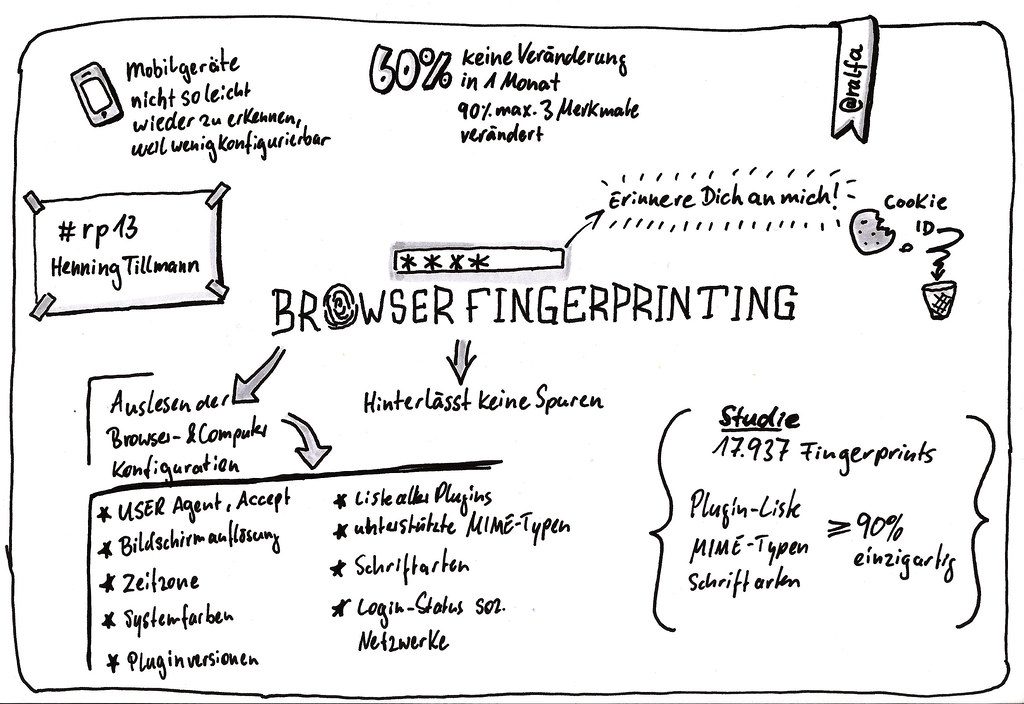
Fingerprinting identifies a browser by combining ordinary details: screen size, processor count, graphics hardware, fonts. Mozilla's approach makes a handful of high-impact signals less distinctive, so more users share the same profile. The company says the changes keep the information websites need to function.

Why it matters

Harder-to-fingerprint browsers make cookie-less tracking less reliable, and Mozilla published its methods so other browsers can copy them.

Questions about this story

Free account needed to ask — your question is kept and asked for you right after sign-up. Answers are public.

No questions yet — be the first to ask.

Key Indicators

46%
Share of Firefox users with unique fingerprints after protections
Down from about 75% before the changes shipped in Firefox 143, Mozilla reports.
25M
Firefox users in the study
Measurements came from nearly 25 million Firefox release users, with added privacy safeguards.
35.4%
Signifyd uniqueness after protections
The paper reports Signifyd's unique-user share fell from 60.9% to 35.4% across the protection phases.
10
Additional reduction targeted in Phase 4
Mozilla says ongoing work aims to cut uniqueness by about 10 more percentage points.

Voices

Curated perspectives — historical figures and your fellow readers.

Sign up to generate historical perspectives on this story.

Organizations Involved

Timeline

1 event Latest: Yesterday
  1. Mozilla publishes fingerprinting study and ships Firefox defenses

    Latest Research and product release

    A study of nearly 25 million Firefox users reports unique fingerprints fell from 75% to 46% after protections in Firefox 143.

Scenarios

1

Other major browsers adopt Firefox-style fingerprinting limits

Possible Resolves by Nov 10, 2027

Discussed by: Mozilla researchers, who write that the techniques are not Firefox-specific

Mozilla's paper says each protection targets a standard web API and could apply to Chrome, Safari, Edge, or Brave, though the benefit would need measuring in each. A rival shipping a comparable limit on a high-entropy signal would resolve this yes.

2

Fingerprinters adapt and Firefox uniqueness climbs back

Possible Resolves by Nov 10, 2027

Discussed by: Mozilla, which says trackers can adapt

Mozilla acknowledges its protections do not make fingerprinting impossible. If an independent measurement shows Firefox's unique-user share rising back above 60%, adaptation has outpaced the defenses.

3

Mozilla ships a further round of fingerprinting protections

Likely Resolves by Q2 2027

Discussed by: Mozilla, whose paper describes a Phase 4 targeting about 10 more percentage points

The paper says ongoing work aims to cut uniqueness by roughly 10 more percentage points. A new Firefox release that ships those changes would resolve this yes.

Historical Context

3 moments from history that rhyme with this story — and how they unfolded.

2010

EFF's Panopticlick study (2010)

The Electronic Frontier Foundation launched Panopticlick, a test that collected browser settings from visitors. It found that most browsers in its sample carried a combination of traits unique enough to identify them.

Then

Showed fingerprinting could work without cookies.

Now

Established the measurement method that later studies, including Mozilla's, scaled up.

Why this matters now

Mozilla's study is a 25-million-user version of the same question Panopticlick asked with a volunteer sample.

2017

Safari's Intelligent Tracking Prevention (2017)

Apple began blocking third-party cookies in Safari, limiting a common way advertisers followed users across sites.

Then

Advertisers and trackers shifted toward other signals.

Now

Fingerprinting became a larger concern for privacy engineers.

Why this matters now

Blocking one tracking method can push trackers to another, which is why Mozilla targets fingerprinting directly.

2008 onward

Tor Browser's anti-fingerprinting (2008 onward)

Tor Browser standardized window sizes and limited canvas readouts so its users looked alike to tracking scripts.

Then

Reduced uniqueness for a small, privacy-focused user base.

Now

Demonstrated that making users resemble one another can be a practical defense.

Why this matters now

Mozilla is applying the same make-users-look-alike strategy to a mainstream browser.

Sources

(6)