



Pull to refresh
Logo
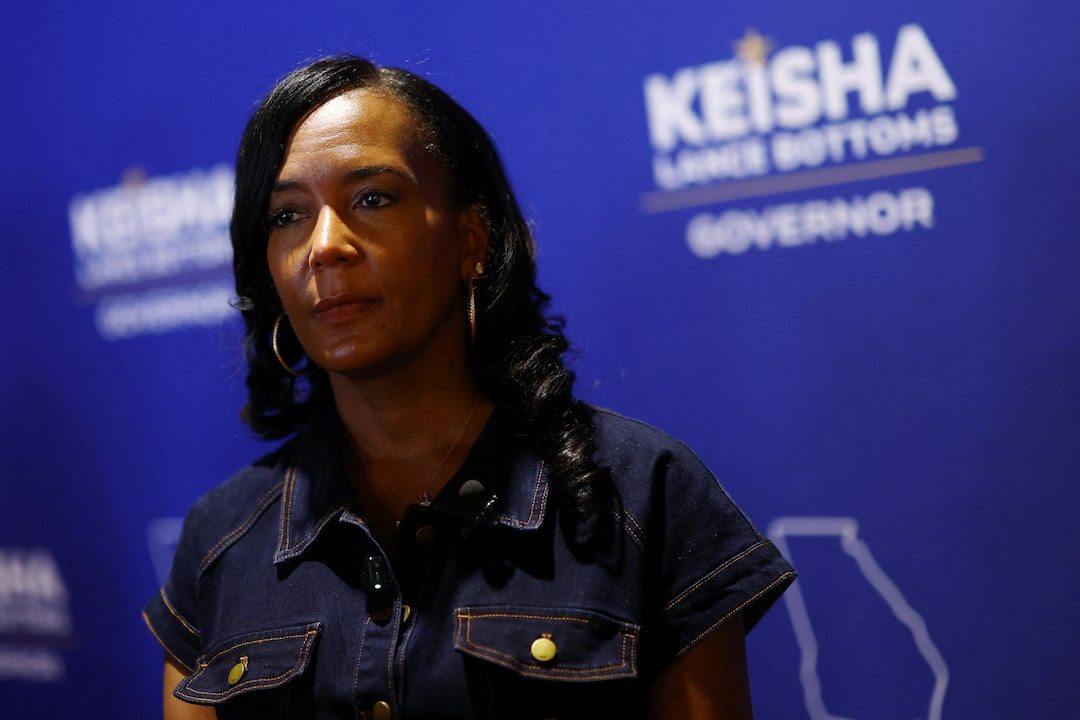
Keisha Lance Bottoms wins Georgia governor's race, a first for Black women in the US

Keisha Lance Bottoms wins Georgia governor's race, a first for Black women in the US

Rule Changes Interactive

The former Atlanta mayor beat Republican Rick Jackson with about 54% of the vote. She is the first Black woman elected governor of a US state and the first Democrat to win the office since 1998.

Overview

Updated 6 days ago

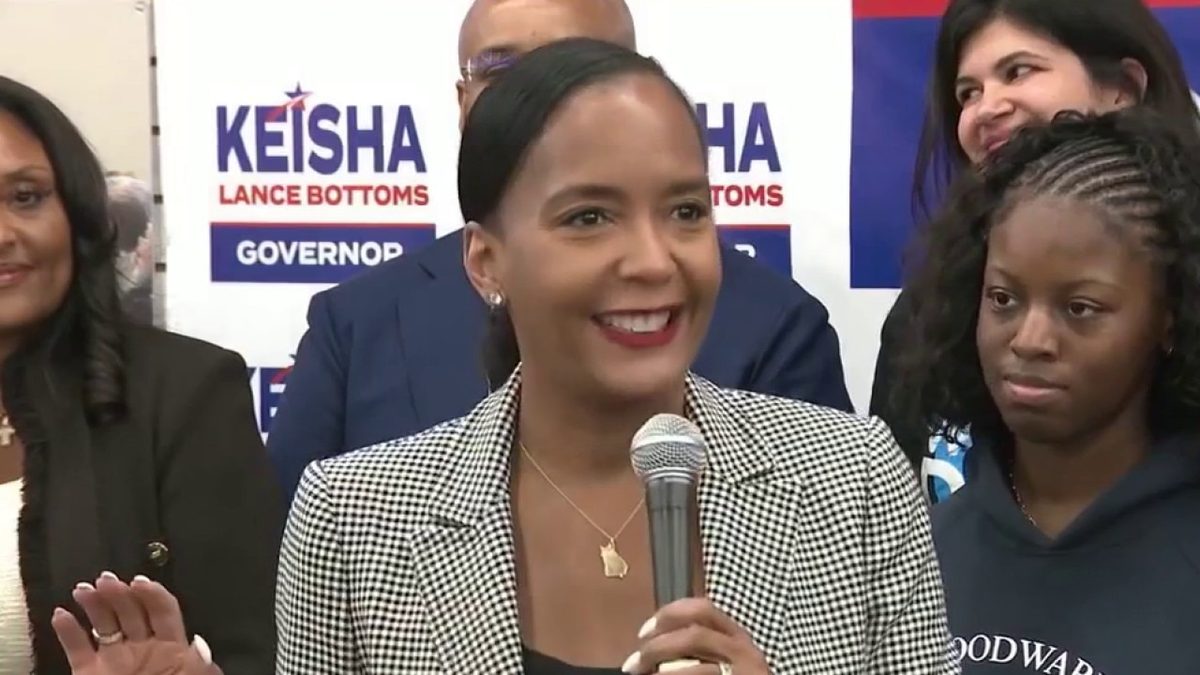
Keisha Lance Bottoms won Georgia's governor's race on Tuesday with about 54% of the vote, defeating Republican Rick Jackson and becoming the first Black woman elected governor of a US state. The former Atlanta mayor is also the first woman to hold Georgia's top office and the first Democrat to win it since 1998. At least eight women won statewide offices in Georgia, including governor, attorney general and secretary of state, Fox 5 Atlanta reported.

Jackson, a billionaire health care executive, put more than $100 million of his own fortune into the race. Bottoms' campaign had committed roughly $1 million to advertising as of October, according to Washington Post reporting citing AdImpact data. She campaigned on improving an uneven economy and opposing President Donald Trump's administration, and she tied Jackson to Trump.

Why it matters

Georgia is a swing state, and its governor will hold a veto over election rules, abortion access and Medicaid expansion through 2030.

Black Americans elected governor

It took 33 years to elect three Black governors. Tuesday elected four more.

Only Doug Wilder, Deval Patrick and Wes Moore had ever won. On Nov. 3, Keisha Lance Bottoms, Byron Donalds, David Crowley and Aaron Ford did.

Keisha Lance Bottoms, Georgia 2026
19892026

7

Black governors elected by 2026

  • 2026 Aaron Ford, Nevada, Byron Donalds, Florida, David Crowley, Wisconsin, Keisha Lance Bottoms, Georgia
  • 2022 Wes Moore, Maryland
  • 2006 Deval Patrick, Massachusetts
  • 1989 Doug Wilder, Virginia

As of 2026-11-04. Each person once, in the year first elected; Moore's Nov. 3 re-election is not a new row. Left out: Pinchback (LA, 1872) and Paterson (NY, 2008), who took office unelected. 2026 rows are uncertified election-night results. Sources: National Governors Association: Gov. L. Douglas Wilder, National Governors Association: Gov. Wes Moore, NBC News: Tuesday's elections bring historic first for Black governors.

Questions about this story

Free account needed to ask — your question is kept and asked for you right after sign-up. Answers are public.

No questions yet — be the first to ask.

Key Indicators

1st
First Black woman elected governor
Bottoms is the first Black woman elected governor of a US state, according to the Associated Press and Reuters.
$200M+
Jackson's campaign spending
More than $200 million of his own fortune, per the Associated Press. His campaign spent or reserved more than $200 million on ads, per Washington Post reporting citing AdImpact.
~$1M
Bottoms' advertising commitment
The Bottoms campaign's October advertising commitment, per AdImpact data cited by the Washington Post.
3
Black governors elected before 2026
Doug Wilder in Virginia, Deval Patrick in Massachusetts and Wes Moore in Maryland. None served at the same time.
8+
Women elected to Georgia statewide offices
At least eight women won statewide offices, including governor, attorney general and secretary of state, Fox 5 Atlanta reported.

Voices

Curated perspectives — historical figures and your fellow readers.

Sign up to generate historical perspectives on this story.

People Involved

Organizations Involved

Timeline

1998 November 2026

7 events Latest: November 3rd, 2026 · 1 week ago
Tap a bar to jump to that date
  1. Bottoms elected Georgia's first Black governor

    Latest Election

    She defeated billionaire Republican Rick Jackson with about 54% of the vote, becoming the first Black woman elected governor of a US state.

  2. Three Black governors elected in one night

    Election

    Bottoms in Georgia, Byron Donalds in Florida and Wes Moore's Maryland re-election mark the first overlap.

  3. Women win at least eight Georgia statewide offices

    Election

    Fox 5 Atlanta reported that at least eight women won statewide offices, including governor, attorney general and secretary of state.

  4. Stacey Plaskett elected governor of US Virgin Islands

    Election

    Plaskett became the first Black woman elected governor of a US jurisdiction on the same night, the Spokesman-Review reported.

  5. Abrams loses the rematch

    Election

    Kemp won a second term, setting up an open seat when term limits forced him out.

  6. Stacey Abrams loses to Brian Kemp

    Election

    Abrams became the first of three straight Black women nominated for governor by Georgia Democrats.

  7. Georgia last elects a Democratic governor

    Election

    No Democrat won a Georgia governor's race again until 2026, a gap of 28 years.

Scenarios

1

Bottoms is sworn in as Georgia's governor

Likely Resolves by Feb 1, 2027

Discussed by: The Associated Press and Washington Post, both of which called the race and described her as governor-elect

Georgia's results are certified and Bottoms takes the oath of office in January 2027, succeeding Brian Kemp. This is the default path unless a recount or legal challenge intervenes.

2

Jackson contests the result

Unlikely Resolves by End of 2026

Discussed by: No named source has reported that Jackson plans a challenge; this scenario tracks the standard post-election option available to a losing candidate

Jackson, who spent more than $200 million on advertising, asks for a recount or files a formal election contest. Georgia law sets thresholds and deadlines for both, so the window closes quickly after certification.

3

Bottoms' first legislative session ends without a signature win

Possible Resolves by Apr 30, 2027

Discussed by: The Washington Post, which described the win as ending a Republican trifecta in the state, leaving the legislature in the opposing party's hands

Bottoms governs with a legislature controlled by the other party. Her priorities stall in committee or fail on a floor vote, and the session ends in April 2027 with no Bottoms-backed bill passed by both chambers.

Historical Context

3 moments from history that rhyme with this story — and how they unfolded.

November 1989

Doug Wilder elected governor of Virginia (1989)

L. Douglas Wilder, a Democrat and the grandson of enslaved people, won the Virginia governor's race by a margin narrow enough to require a recount. He became the first Black American elected to a state governorship.

Then

Wilder took office in January 1990 and served one term, managing a state budget shortfall.

Now

Seventeen years passed before another Black candidate won a governor's race, and no two Black governors served at the same time until 2026.

Why this matters now

Wilder set the precedent Bottoms followed, and the 37-year gap between his win and hers shows how few Black governors the country has elected.

November 2006

Deval Patrick elected governor of Massachusetts (2006)

Deval Patrick, a Democrat and former civil rights attorney, won the Massachusetts governorship and took office in January 2007. He won re-election in 2010.

Then

He served two terms, the second during the 2008 financial crisis.

Now

He remained one of only three Black Americans ever elected governor until the 2026 midterms.

Why this matters now

Like Bottoms, Patrick won in a state where his party held an advantage, and like her he had to build a campaign without self-funding.

November 2018 and November 2022

Stacey Abrams' two Georgia runs (2018 and 2022)

Abrams lost to Brian Kemp twice, the second time by a wider margin. Her campaigns built the organizing networks Georgia Democrats used in later cycles, and her losses kept the seat in Republican hands for eight years.

Then

Kemp governed for two terms and left office under term limits.

Now

Georgia Democrats nominated a Black woman for governor three cycles running, finally converting in 2026.

Why this matters now

Bottoms won the seat Abrams twice lost, against an electorate shaped by the organizing work of those earlier campaigns.

Sources

(16)