




Pull to refresh
Logo
Congress moves to tariff the biggest buyers of Russian oil

Congress moves to tariff the biggest buyers of Russian oil

Rule Changes

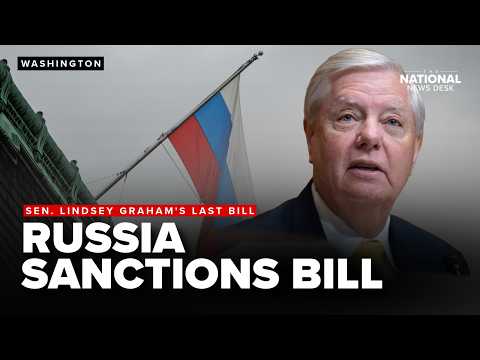
A sanctions bill named for the late Senator Lindsey Graham would let the president raise tariffs on China and India over their Russian energy purchases.

August 7th, 2026: Senate passes the bill, 86-11

Overview

Updated Aug 7

China and India have spent more than four years buying discounted Russian oil, helping keep money flowing to Moscow's war in Ukraine. On August 7, the U.S. Senate passed a bill to punish them for it. The vote was 86 to 11.

The measure lets the president slap tariffs of up to 100% on the top buyers of Russian oil and gas. It also adds sanctions on Vladimir Putin, senior Russian officials, banks, and the fleet of reflagged tankers Russia uses to dodge existing limits. It still needs the House, which returns in September.

Why it matters

If it becomes law, the president could hit the biggest buyers of Russian oil with tariffs up to 100%, raising the price of goods from China and India.

Questions about this story

Free account needed to ask — your question is kept and asked for you right after sign-up. Answers are public.

No questions yet — be the first to ask.

Key Indicators

86–11
Senate passage vote
Final Senate tally on August 7, 2026, well past the 60 votes needed to break a filibuster.
100%
Maximum tariff allowed
The bill lets the U.S. trade representative set a tariff anywhere from 0% to 100% on top Russian-energy buyers.
5
Top buyers exposed
Tariffs can target the five largest importers of Russian crude oil or natural gas by volume.
80+
Senate cosponsors
The earlier Graham-Blumenthal version drew more than 80 cosponsors, split evenly between the parties.

Voices

Curated perspectives — historical figures and your fellow readers.

Ever wondered what historical figures would say about today's headlines?

Sign up to generate historical perspectives on this story.

People Involved

Organizations Involved

Timeline

April 2025 August 2026

6 events Latest: August 7th, 2026 · 1 month ago
Tap a bar to jump to that date
  1. Senate passes the bill, 86-11

    Latest Vote

    The Senate gives final approval and sends the measure to the House, which returns from recess in September.

  2. Senate advances the bill on funeral day

    Vote

    Hours after Graham's funeral, the Senate votes 86-12 to move the bill forward. Rand Paul is the lone Republican opposed.

  3. Revised bill introduced and renamed for Graham

    Legislation

    Senators file the Lindsey O. Graham Sanctioning Russia and Iran Act, giving the president discretion to set tariffs from 0% to 100%.

  4. Lindsey Graham dies at 71

    Death

    Graham dies of an aortic dissection hours after returning from Kyiv, where he said a deal had been struck to advance the bill.

  5. House passes its own Ukraine and Russia measure

    Legislation

    The House approves Ukraine aid and Russia sanctions, defying Trump and Republican leaders and adding pressure on the Senate.

  6. Graham and Blumenthal introduce the sanctions bill

    Legislation

    The bipartisan pair unveils a bill calling for tariffs of at least 500% on countries buying Russian oil, gas, and uranium.

Scenarios

1

Trump signs the Graham act into law by year's end

Possible Resolves by End of 2026

Discussed by: NPR, CBS News, and Speaker Mike Johnson's own comments

The House takes up the Senate bill after returning in September and passes it unchanged. With Johnson supportive and Trump signaling agreement after the tariff-discretion deal, the president signs it. The law's teeth then depend on whether he actually uses the tariff power.

2

Law passes but the tariffs never land

Uncertain Resolves by Aug 7, 2027

Discussed by: Axios and analysts at CDM warning the bill could complicate Trump's talks with Putin

Even if the bill becomes law, the president holds full discretion over the rate and a waiver. He could keep tariffs at zero to preserve leverage in negotiations with Moscow, leaving China and India untouched. The measure would exist on paper without changing what buyers pay.

3

House rewrites the bill, forcing another Senate vote

Possible Resolves by End of 2026

Discussed by: The Hill and reporting on House-Senate differences over Ukraine measures

The House, which passed its own version in June, amends the Senate text rather than accepting it. Any changes would send the bill back to the Senate, delaying final passage and reopening fights over the tariff mechanism and Iran provisions.

4

Bill dies without becoming law

Unlikely Resolves by Jan 3, 2027

Discussed by: Coverage noting the House recess and past executive resistance to mandatory sanctions

The House never brings the bill to a final vote, or negotiations collapse over the tariff terms. The measure stalls and expires when the 119th Congress adjourns, forcing supporters to start over in the next Congress.

Historical Context

3 moments from history that rhyme with this story — and how they unfolded.

January 1975

Jackson-Vanik Amendment (1974)

Congress tied normal trade relations with the Soviet Union to its treatment of Jewish citizens seeking to emigrate. Lawmakers overrode the White House's preference for quiet diplomacy and wrote the condition into law.

Then

The Soviet Union canceled a trade deal in protest, straining relations.

Now

The provision stayed on the books for decades and became a model for Congress using trade as a lever over foreign conduct.

Why this matters now

It shows Congress reaching into trade policy to shape another country's behavior, the same instinct behind tariffs on Russian oil buyers.

December 2011

Menendez-Kirk Iran oil sanctions (2011-2012)

Congress attached sanctions to the annual defense bill that targeted foreign banks dealing with Iran's central bank over oil purchases. The aim was to force countries like China, India, and Japan to cut how much Iranian crude they bought.

Then

Major buyers reduced Iranian oil imports to keep access to the U.S. financial system.

Now

The pressure helped push Iran toward the 2015 nuclear talks and set the template for using secondary sanctions to change third countries' behavior.

Why this matters now

The Graham bill uses the same logic against Russia: punish the buyers, not just the seller. China and India are again the main targets.

July-August 2017

CAATSA Russia sanctions (2017)

Congress passed the Countering America's Adversaries Through Sanctions Act, which forced new sanctions on Russia over election interference and Ukraine. The Senate vote was 98-2, enough to override a veto. President Trump signed it while calling it flawed.

Then

Trump signed the bill but issued a statement objecting that it limited his diplomatic flexibility.

Now

His administration was later criticized for slow-walking parts of the law, showing how a president can drag his feet even on mandatory sanctions.

Why this matters now

The same tension is back: Congress wants tough penalties on Russia, while the White House wants control over how and when they are applied. This time senators wrote in that discretion up front.

Sources

(9)