

Pull to refresh
Logo
Gambia to pay Jammeh victims from sale of seized US mansion

Gambia to pay Jammeh victims from sale of seized US mansion

Money Moves

Payments to 1,009 identified victims began in January; $2.5M from a forfeited Maryland mansion is now in the reparations fund

Overview

Updated Oct 26

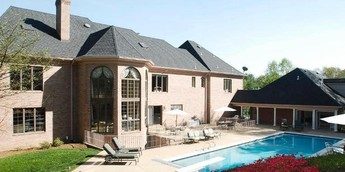
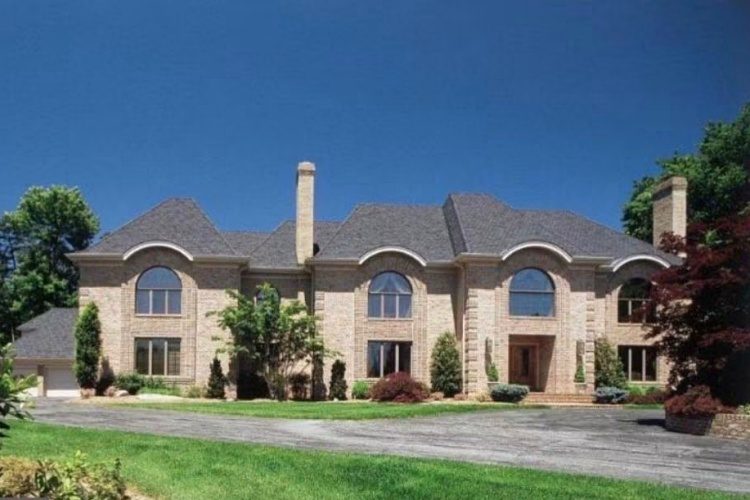
The Gambia's reparations commission has received $2,573,414.10 from the sale of former president Yahya Jammeh's mansion in Potomac, Maryland. The money sits in a Central Bank of The Gambia account reserved for reparations.

Direct payments to victims started in January 2026, and the Truth Commission formally identified 1,009 people entitled to them. The commission puts the cost of covering every recorded harm at $3.7 million to $4 million. It received $65,502 more than the $2,507,911.73 in net proceeds the US Department of Justice reported, and neither government has explained the gap.

Why it matters

Stolen assets can be clawed back from abroad and turned into reparations — a precedent for other countries seeking to recover corruption proceeds.

Questions about this story

Free account needed to ask — your question is kept and asked for you right after sign-up. Answers are public.

No questions yet — be the first to ask.

Key Indicators

$2.57M
Received from mansion sale
Reparations Commission received $2,573,414.10; DOJ reported net proceeds of $2,507,911.73.
1,009
Verified victims
People formally identified by the Truth, Reconciliation and Reparations Commission as entitled to reparations.
$300M+
Misappropriated public funds
A Gambian truth commission concluded Jammeh misappropriated more than $300 million.
281
Properties in The Gambia
Properties linked to Jammeh inside the country, per the truth commission.
D260M
Reparations balance
Balance owed to verified victims, per The Standard, which said the $2.5M would cover it. The commission puts the full cost of recorded harms at $3.7M–$4M.

Voices

Curated perspectives — historical figures and your fellow readers.

Sign up to generate historical perspectives on this story.

People Involved

Organizations Involved

Timeline

1994 October 2026

10 events Latest: October 21st, 2026 · 3 weeks ago
Tap a bar to jump to that date
  1. Reparations funds confirmed received

    Latest Statement

    The Reparations Commission confirms receipt of $2,573,414.10 from the mansion sale.

  2. US and Gambia sign asset transfer deal

    Agreement

    The two governments sign an agreement transferring the forfeited proceeds for reparations.

  3. Direct compensation payments begin

    Reparations

    The Reparations Commission starts paying financial compensation to victims formally identified by the Truth Commission.

  4. Justice ministry publishes seized-asset inventory

    Asset recovery

    The Justice Ministry lists assets confiscated from Jammeh worth more than 1.24 billion dalasis, about $17 million at the time, including financial assets, property, vehicles and livestock.

  5. Victims Reparations Act passed

    Legislation

    Gambia enacts the Victims Reparations Act, creating the Reparations Fund and Commission.

  6. Jammeh leaves office under pressure

    Political

    Jammeh steps down under pressure from West African neighbors and goes into exile.

  7. Jammeh loses presidential election

    Election

    Jammeh loses to Adama Barrow, first accepting defeat then rejecting the result.

  8. Jammeh seizes power by coup

    Coup

    Army lieutenant Yahya Jammeh takes power in The Gambia.

Scenarios

1

Reparations reach every verified victim

Likely Resolves by Q2 2027

Discussed by: The Standard, a Gambian daily urging the commission to pay on a first-come, first-served basis

The commission pays the full outstanding balance to verified victims using the $2.5 million as the funding pool. The Standard says the sum is enough to cover the roughly 260 million dalasis still owed and has pushed for payment by first-come, first-served instead of the slow year-of-offense sequencing used so far. Full payment would complete the compensation phase of the transitional justice process.

2

Disbursement stalls as victims wait longer

Possible Resolves by End of 2027

Discussed by: Concerns raised in The Standard about government bureaucracy and prior delays

The commission pays out only a fraction of the fund over the next year, repeating a pattern in which over a billion dalasis from domestic sales of Jammeh's assets were spent without reaching victims. The Standard has described years of delay as causing immense disappointment among the victim population. Some victims have already died waiting, which would keep pressure on the government to accelerate payment.

3

Compensation levels revised upward

Possible Resolves by End of 2027

Discussed by: The Standard, which has urged an upward revision of the Truth Commission compensation model

With the $2.5 million in hand and possible future recoveries, the government raises the per-victim compensation amounts recommended by the Truth, Reconciliation and Reparations Commission. The Standard has argued that paying millions to lawyers, judges and other experts should not come before victim compensation. Any revision would be announced by the commission or Barrow's government after reviewing official audit recommendations.

4

Commission publishes a full accounting of the mansion proceeds

Possible Resolves by Q1 2027

Discussed by: Na Wetin Dey Happen, a Gambian news site

The commission publishes a ledger showing principal, interest, escrow adjustments and costs that explain why it received $2,573,414.10 while the Justice Department reported $2,507,911.73 in net proceeds. The same publication would set out eligibility rules, a claim-review process, an appeal mechanism and payment schedules, which Na Wetin Dey Happen argued are needed before survivors can tell money received from money paid out.

Historical Context

2 moments from history that rhyme with this story — and how they unfolded.

1993–2010

Abacha loot recovery (1993–2010)

Nigerian military ruler Sani Abacha plundered an estimated $3-5 billion during his five years in power. After his death in 1998, Swiss authorities froze hundreds of millions of dollars, and successive Nigerian governments spent more than a decade negotiating the return of funds held in Switzerland, Liechtenstein, the UK and the US.

Then

Switzerland returned hundreds of millions of dollars in installments through the 2000s.

Now

The Abacha case became the standard reference for how states cooperate to return a dead dictator's stolen assets.

Why this matters now

The Jammeh case follows the same playbook: a former ruler's overseas property is forfeited and the proceeds returned to the home state for public use.

1986–2003

Marcos wealth recovery (1986–2003)

Ferdinand Marcos fled the Philippines in 1986 with assets stashed in Swiss banks. Switzerland froze his accounts, and the Philippine government created the Presidential Commission on Good Government to recover ill-gotten wealth. Repatriating the funds involved court battles in multiple jurisdictions over more than a decade.

Then

Swiss-held Marcos assets were repatriated in stages through the 1990s and 2000s.

Now

The case showed how slow asset repatriation can be, with victims waiting years or decades for funds.

Why this matters now

It underscores the timing risk in the Gambia case: getting the money back is one step, moving it to victims is another.

Sources

(12)