



Pull to refresh
Logo
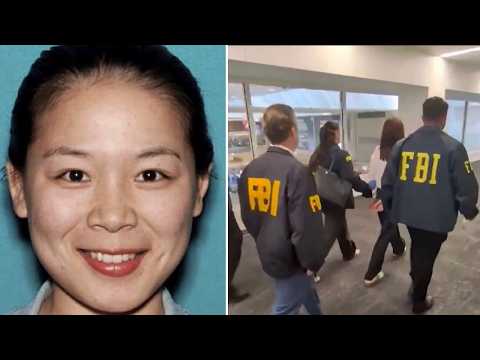
FBI arrests California woman accused of spying on Taiwan president's son

FBI arrests California woman accused of spying on Taiwan president's son

Force in Play

Zhang pleads not guilty to spying for China on Taiwan president's son; trial set for November 30

Overview

Updated Oct 26

Wanying Zhang pleaded not guilty in Los Angeles federal court on October 23 to charges that she surveilled the Seattle-area family of Taiwan President William Lai's son for China. The judge set a pretrial hearing for November 12 and a four-day trial starting November 30 at the federal courthouse in Santa Ana.

Zhang, 34, has been held since her arrest at Los Angeles International Airport on October 4; a magistrate judge ruled her a flight risk, citing money in Chinese bank accounts and her attempt to board a flight to Shanghai. Prosecutors said in a recent court filing that she was having an affair with Fatai Miao, the construction entrepreneur who went with her on the September 2025 surveillance trip and later flew to China. Miao has not been charged, and his son told CBS News he does not believe his father worked for the Chinese government.

Why it matters

China allegedly tracked a Taiwanese official's relatives on US soil, showing Beijing will surveil rivals' families abroad to gain leverage.

Questions about this story

Free account needed to ask — your question is kept and asked for you right after sign-up. Answers are public.

No questions yet — be the first to ask.

Key Indicators

15 years
Maximum prison sentence
Prosecutors say the conspiracy and foreign-agent charges carry up to 15 years in prison.
Nov. 30
Trial start date
Trial is scheduled to begin November 30 in Santa Ana and is expected to last about four days.
2
Criminal counts
Conspiracy and acting as an unregistered agent of China.
1
Accomplice not charged
Fatai Miao, identified in court papers as 'Individual 1,' flew to China on a one-way ticket and has not been charged.

Voices

Curated perspectives — historical figures and your fellow readers.

Sign up to generate historical perspectives on this story.

People Involved

Organizations Involved

Timeline

June 2025 October 2026

11 events Latest: October 23rd, 2026 · 3 weeks ago Showing 8 of 11
Tap a bar to jump to that date
  1. Arrest at Los Angeles airport

    Arrest

    FBI agents arrest Zhang at LAX before her flight to China; complaint was filed October 3.

  2. Alleged accomplice flies to China

    Travel

    Prosecutors said at the October 7 hearing that 'Individual 1' — later identified as construction entrepreneur Fatai Miao — flew to China on a one-way ticket about two weeks earlier.

  3. Surveillance of president's son

    Surveillance

    Zhang flies to Seattle, photographs the target's home, and messages a PRC official: 'I am videorecording.'

  4. Pair heads toward Washington

    Travel

    Zhang and an accomplice fly from Orange County, California to Las Vegas.

  5. Alleged mission assigned in Beijing

    Intelligence Activity

    Zhang travels from California to China, where PRC officials task her with surveillance in the US.

Scenarios

1

Zhang pleads guilty and cooperates with prosecutors

Likely Resolves by Q2 2027

Discussed by: Federal prosecutors; plea likely given recorded messages, photographs, and flight records

The evidence against Zhang is substantial: text messages quoting her mid-surveillance, a neighbor's security camera footage, and flight and car rental records. Facing a 10-year maximum, she could accept a plea deal in exchange for cooperation, naming the accomplice the FBI calls 'Individual 1' and detailing her handler's identity. A guilty plea would resolve the case without a trial.

2

Zhang convicted at trial and sentenced to prison

Possible Resolves by End of 2027

Discussed by: US prosecutors, who have built a documentary case

If Zhang contests the charges, prosecutors would present her own messages and boarding pass photo, the security footage, and testimony from the alleged handler's communications. A conviction would carry up to 10 years. The trial would likely turn on whether the government proves she acted under PRC direction and control.

3

Zhang released in a US-China prisoner swap

Unlikely Resolves by End of 2027

Discussed by: Observers noting Washington and Beijing's history of prisoner exchanges

US-China relations have featured negotiated releases of nationals held on espionage and related charges. If Beijing presses for Zhang's return as part of a broader deal, Washington could trade her. Such exchanges typically require a high-level agreement and would end her prosecution in exchange for Americans held in China.

4

Miao charged or granted immunity after possible return to the US

Unlikely

Discussed by: Federal prosecutors, who have not accused Miao of wrongdoing

Miao, now in China, is a person of interest in the FBI investigation. If he returns to the US, prosecutors could charge him as a co-conspirator or offer him a deal in exchange for testimony against Zhang, depending on what the search of his home and records show.

Historical Context

2 moments from history that rhyme with this story — and how they unfolded.

May 2020

Alexander Yuk Ching Ma (2020)

New York Police Department detectives arrested Ma at his Queens home. Federal prosecutors said he ran an illegal overseas police service station for China's Ministry of Public Security from an office in Manhattan's Chinatown, policing Chinese nationals in the US outside Beijing's jurisdiction.

Then

Ma was charged with acting as an agent of a foreign government; the arrest revealed Chinese policing operating inside American cities.

Now

The case fueled scrutiny of China's transnational policing, which Beijing denied running abroad.

Why this matters now

Both cases show Beijing's security apparatus reaching into US cities to monitor people it considers threats—there, Chinese citizens, here, a foreign leader's family.

July 2020

Yanqing Ye and Qing Qin (2020)

US prosecutors charged Ye, an employee of China's mission to the United Nations, and Qin, an accountant, with running surveillance on expatriate Chinese in the US from a monitoring station in Queens. The pair tracked Chinese nationals who had criticized Beijing.

Then

The indictment detailed the pair trailing dissidents and reporting their movements to Chinese authorities.

Now

The case exemplified China's transnational repression, a practice the Zhang case extends to the family of a democratically elected leader.

Why this matters now

Both cases involve China tracking people in the US tied to its perceived adversaries; Zhang's target is a rival government's family rather than dissidents.

Sources

(18)