


Pull to refresh
Logo
Fossil shows an amphibian that lived fully in the Triassic sea

Fossil shows an amphibian that lived fully in the Triassic sea

New Capabilities

Gerrothorax maritimus, an armored temnospondyl from Late Triassic China, drank seawater and filtered the salt; no living amphibian does.

Overview

Updated Nov 2

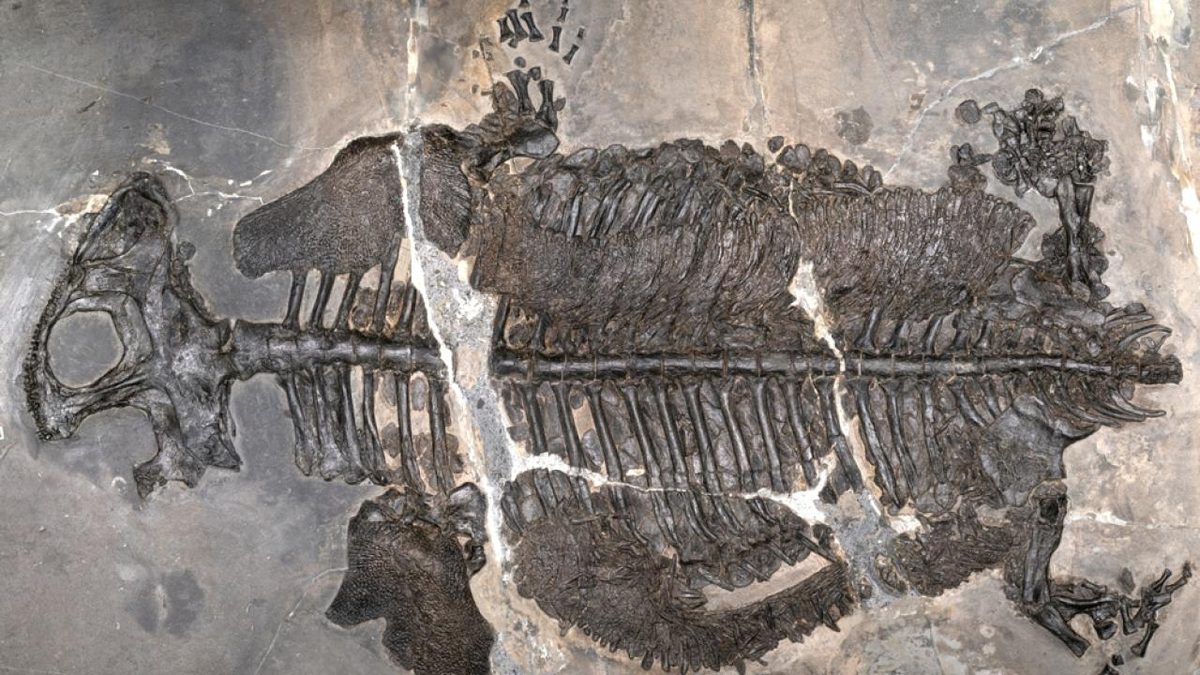
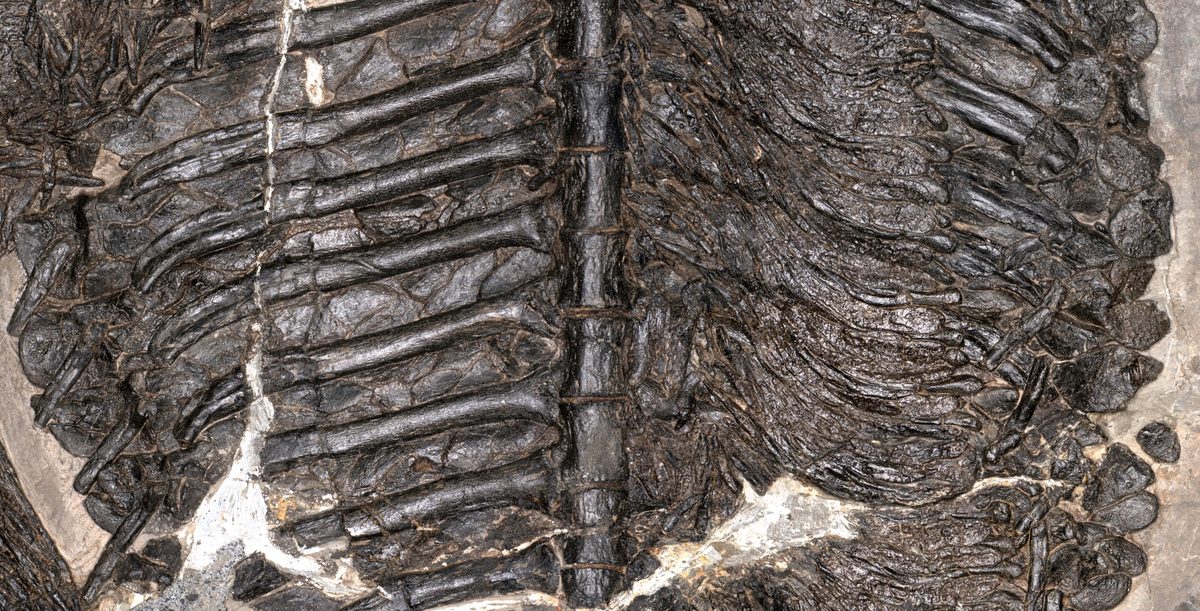
A paper published October 26 in Nature Ecology & Evolution describes a 237-million-year-old armored amphibian from Guizhou, China. Its authors say the animal grew up drinking seawater, something no living amphibian does.

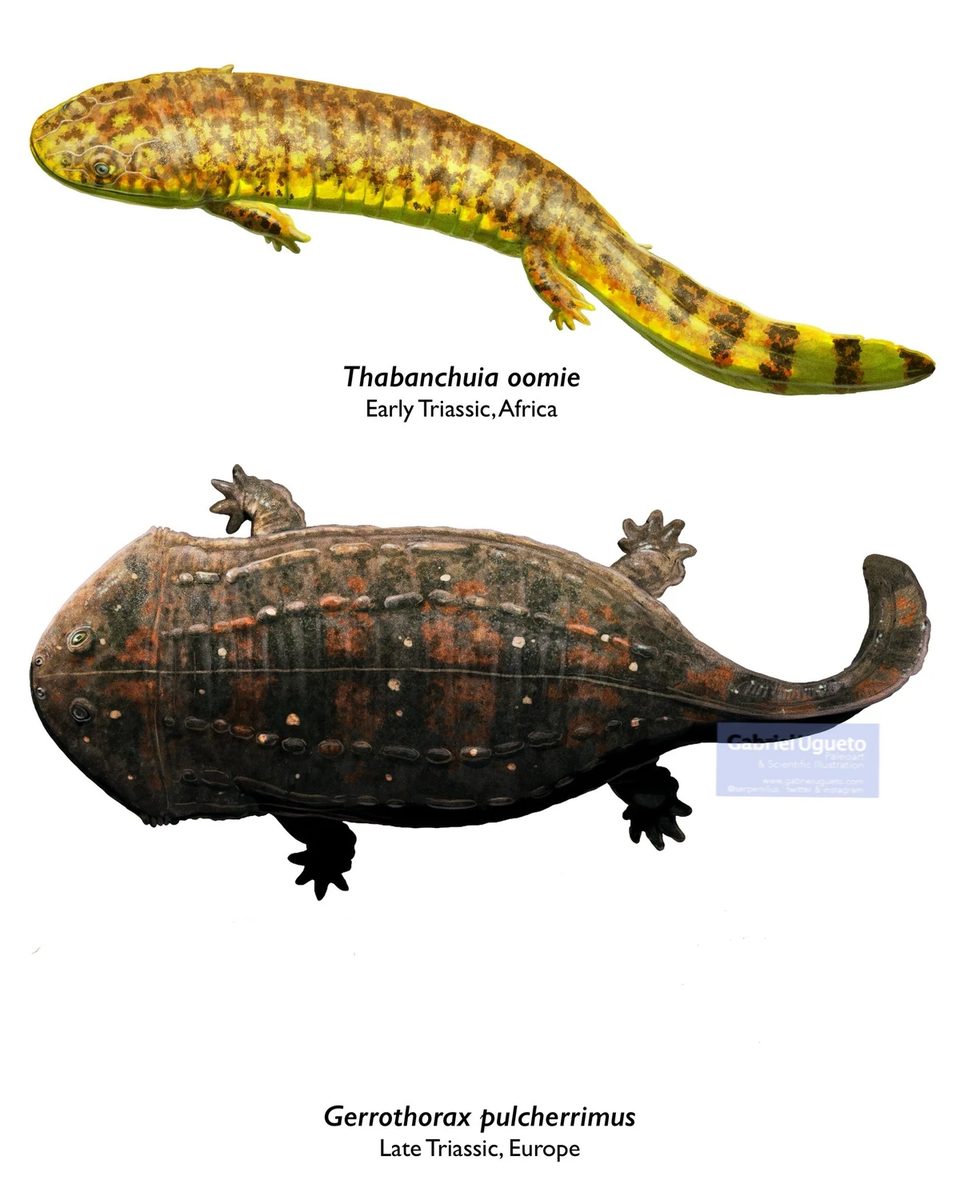
The larger skeleton is 737 millimeters long, and both specimens came from marine sediments at least 30 kilometers from the nearest possible island. The animal had a flat, disc-shaped body, a wide mouth and bony armor, and the researchers describe it as a bottom-dwelling suction feeder that ambushed prey. It was found near fossils of Guizhouichthyosaurus, a marine reptile about 7 meters long.

Why it matters

A fully marine amphibian would mean salt tolerance in early land vertebrates was far wider than any living species shows.

Questions about this story

Free account needed to ask — your question is kept and asked for you right after sign-up. Answers are public.

No questions yet — be the first to ask.

Key Indicators

74 cm
Length of the larger skeleton
The larger skeleton is 737 millimeters long, or about 74 centimeters.
8,000+
Living amphibian species, none fully marine
Every modern amphibian needs freshwater breaks; none is exclusively marine.
237
Age of the fossils, in millions of years
The specimens date to the Late Triassic, when the Guizhou site was a salty sea.
30 km
Distance from nearest possible island
The fossil site was at least 30 kilometers from a possible island, suggesting the animals lived in open sea.

Voices

Curated perspectives — historical figures and your fellow readers.

Sign up to generate historical perspectives on this story.

People Involved

Organizations Involved

Timeline

1 event Latest: October 26th, 2026 · 2 weeks ago
  1. Study describes armored amphibian from the Triassic sea

    Latest Publication

    Researchers publish strontium isotope evidence that Gerrothorax maritimus, an armored temnospondyl from Guizhou, China, grew up drinking seawater about 237 million years ago.

Scenarios

1

Gerrothorax maritimus formally joins the fossil record

Likely Resolves by End of 2028

Discussed by: Paleontologists quoted by Nature, including Steve Brusatte

The species name is provisional. A formal taxonomic description—naming the species in a peer-reviewed paleontology journal—would cement it. Given the quality of the two skeletons, this is the most likely near-term outcome.

2

Rival researchers challenge the marine reading

Possible Resolves by Q2 2029

Discussed by: Nature's reporting; Brusatte's conditional endorsement

Critics may argue the strontium ratios reflect chemical alteration after burial, or that the site was brackish rather than fully marine. Such a challenge would hinge on alternative taphonomic or isotopic interpretations of the two specimens.

3

More fully marine amphibians turn up elsewhere

Possible Resolves by Jan 1, 2030

Discussed by: The study's authors, who note salt tolerance existed among early Triassic temnospondyls

Prompted by the Guizhou find, teams may re-examine Late Triassic marine sites in Europe, North America and elsewhere for other armored temnospondyls, extending the pattern beyond a single locality.

Historical Context

2 moments from history that rhyme with this story — and how they unfolded.

~249 million years ago

Svalbard oceanic tetrapod ecosystem (~249 Ma)

A condensed bone bed on Spitsbergen preserved a wide marine community—apex-predator ichthyosaurs, euryhaline temnospondyls, coelacanths, lungfish and sharks—just a few million years after the end-Permian extinction.

Then

Showed marine vertebrates recovered and diversified far faster than a slow, stepwise model of recovery allowed.

Now

Established that temnospondyl amphibians could tolerate salt water and live in oceanic settings early in the Triassic.

Why this matters now

Confirms amphibians entered marine environments early in the Triassic; the Guizhou find extends the pattern to a fully marine, armored species much later in the period.

November 2014

Cartorhynchus lenticarpus (2014)

Researchers in Anhui Province, China, reported a 0.5-meter amphibious ichthyosaur with seal-like flippers and heavy ribs, built both to crawl on land and swim in rough sea water, living about 248 million years ago.

Then

Filled an evolutionary gap between land reptiles and fully aquatic ichthyosaurs.

Now

Showed vertebrates re-entered the sea within roughly 4 million years of the end-Permian extinction.

Why this matters now

Like the Guizhou amphibian, it came from South China and reframed how and when land vertebrates recolonized the oceans after the worst mass extinction in Earth's history.

Sources

(11)