


Pull to refresh
Logo
Liechtenstein ends male-only royal succession

Liechtenstein ends male-only royal succession

Rule Changes

The Alpine principality shifts to absolute primogeniture, joining most of Europe in letting a firstborn daughter inherit the throne.

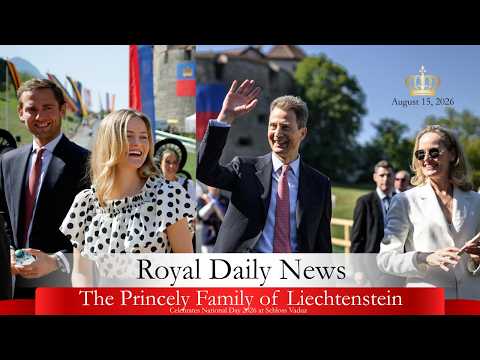
August 15th, 2026: Liechtenstein ends male-only succession

Overview

Updated Aug 16

Since Liechtenstein became a principality in 1719, only a man could inherit its throne. On August 15, 2026, the ruling family voted to end that.

The principality is switching to absolute primogeniture. The firstborn child inherits regardless of sex, which puts Liechtenstein alongside Sweden, the United Kingdom and most of Europe's monarchies and leaves Spain and Monaco among the last still favoring sons.

Why it matters

Liechtenstein was one of Europe's last thrones closed to women. Now a firstborn daughter in the ruling line can inherit it.

Questions about this story

Free account needed to ask — your question is kept and asked for you right after sign-up. Answers are public.

No questions yet — be the first to ask.

Key Indicators

8
European monarchies with gender-equal succession
Liechtenstein joins Sweden, the Netherlands, Norway, Belgium, Denmark, Luxembourg and the UK.
0
Changes to the current line of succession
The reform applies only to future descendants, so today's heirs are unaffected.
2/3
Family supermajority required
Two-thirds of eligible voting family members had to approve the change to the House Law.
~40,000
Liechtenstein's population
One of Europe's smallest and wealthiest states, wedged between Switzerland and Austria.

Voices

Curated perspectives — historical figures and your fellow readers.

Ever wondered what historical figures would say about today's headlines?

Sign up to generate historical perspectives on this story.

People Involved

Organizations Involved

Timeline

January 1980 August 2026

5 events Latest: August 15th, 2026 · 4 weeks ago
Tap a bar to jump to that date
  1. Liechtenstein ends male-only succession

    Latest Statement

    In his National Day speech, Alois announces the switch to absolute primogeniture, approved by the family's two-thirds vote and applying to future descendants.

  2. UK succession reform takes effect

    Precedent

    The Succession to the Crown Act ends male preference for those born after October 2011 across 16 Commonwealth realms.

  3. Alois becomes regent

    Governance

    Hans-Adam II hands daily governing duties to his eldest son, Alois, while staying head of state.

  4. Referendum expands the prince's powers

    Governance

    Liechtenstein voters grant Hans-Adam II veto and dismissal powers. The Venice Commission questions the move's compatibility with democratic standards.

  5. Sweden becomes first country with absolute primogeniture

    Precedent

    Sweden's new law makes the eldest child heir regardless of sex, moving Crown Princess Victoria ahead of her younger brother.

Scenarios

1

Liechtenstein codifies the reform without reversal

Likely Resolves by Aug 15, 2027

Discussed by: Princely House statements; royal-watch outlets including Unofficial Royalty

The approved change is written into the amended House Law and stands unchallenged. Because the family already met the two-thirds threshold and no public vote is required, this is the path of least resistance. The rule then waits for a firstborn daughter in the covered line to matter in practice.

2

Another European monarchy drops male preference

Unlikely Resolves by End of 2028

Discussed by: Constitutional-law commentators; Spanish and Monegasque press

Spain and Monaco still favor sons. Spain's shift would need a full constitutional amendment to Article 57, a heavy process requiring dissolution of parliament and a referendum. Monaco could act through its own house rules. Either move would extend the trend Liechtenstein just joined.

3

Japan opens its throne to female succession

Unlikely Resolves by End of 2030

Discussed by: Japanese government succession panels; Reuters and NHK coverage

Japan keeps a male-only Imperial line and has debated reform for two decades without changing it. A shrinking pool of eligible male heirs keeps the question alive. A shift would put the world's oldest hereditary monarchy on the same path, but political resistance has repeatedly stalled it.

Historical Context

3 moments from history that rhyme with this story — and how they unfolded.

January 1980

Sweden adopts absolute primogeniture (1980)

Sweden became the first country to make the eldest child heir regardless of sex. The change was backdated, moving two-year-old Victoria ahead of her newborn brother, Carl Philip. King Carl XVI Gustaf objected to stripping the title from his son.

Then

Victoria became crown princess and heir apparent, displacing her brother.

Now

Sweden set the template that most European monarchies would follow over the next four decades.

Why this matters now

Sweden shows the friction of applying reform retroactively. Liechtenstein avoided that fight by limiting its change to future descendants only.

2005 – 2006

Japan's stalled succession debate (2005–2006)

A Japanese government panel recommended allowing female succession as the Imperial line ran short of male heirs. The plan was shelved after Prince Hisahito was born in 2006, restoring a male heir.

Then

The proposal was dropped and male-only succession stayed in place.

Now

Japan still bars women from the throne, and the heir shortage remains unresolved.

Why this matters now

Japan is the counterexample: a monarchy that studied the same reform and declined it. It marks how far Liechtenstein's move puts the male-only holdouts in the minority.

October 2011 – March 2015

UK Succession to the Crown Act (2013)

At a 2011 Commonwealth summit in Perth, 16 realms agreed to end male preference. The resulting act covered anyone born after October 28, 2011, and took effect in 2015. Princess Charlotte kept her place ahead of her younger brother Louis.

Then

Male preference ended across all 16 realms sharing the monarch.

Now

It showed reform could be coordinated across many states at once.

Why this matters now

The UK reformed through parliaments across many countries. Liechtenstein did it through one family's private House Law, a far simpler mechanism.

Sources

(6)