



Pull to refresh
Logo
Coordinated bombings target Jewish sites across Belgium and the Netherlands

Coordinated bombings target Jewish sites across Belgium and the Netherlands

Force in Play

A previously unknown group with apparent Iran-linked branding claims responsibility as attacks spread across the Benelux in a single week

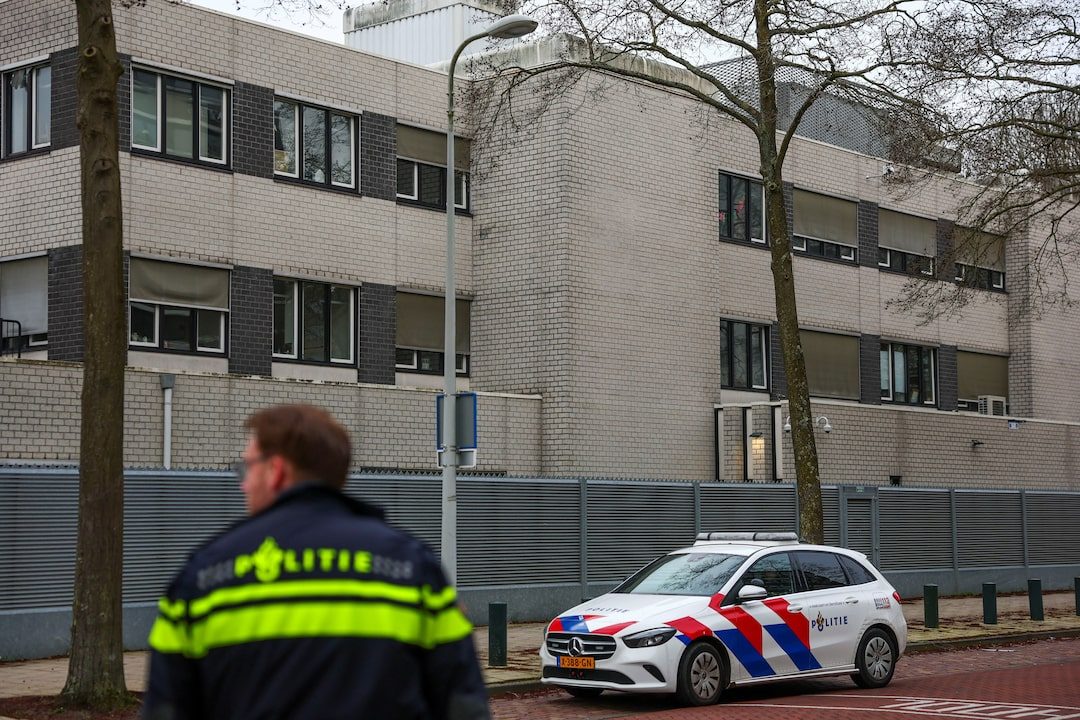
March 14th, 2026: Explosion at Amsterdam Jewish school

Overview

Updated May 30

Four attacks in six days: synagogue explosion in Liege (March 9), a strike in Greece, an arson bombing at Rotterdam's synagogue (March 13), and an overnight blast at Amsterdam's only Orthodox Jewish school (March 14). No one has been killed, but the tempo is accelerating—the last two came less than 24 hours apart.

A previously unknown group called Ashab Al Yamim—an Arabic Quranic phrase meaning 'Companions of the Right'—claimed responsibility for at least three of the attacks. The group had no online presence before the bombings began, but its attack footage spread rapidly across Telegram channels linked to Hezbollah and Iran's Islamic Revolutionary Guard Corps (IRGC). Its logo mirrors the iconography of Iranian-backed militias; the attacks coincide with the third week of the United States-Israel military campaign against Iran.

Questions about this story

Free account needed to ask — your question is kept and asked for you right after sign-up. Answers are public.

No questions yet — be the first to ask.

Key Indicators

4
Attacks on Jewish sites in 6 days
Liege, Greece, Rotterdam, and Amsterdam targeted between March 9 and March 14
0
Fatalities
All four attacks caused property damage but no deaths or serious injuries
4
Suspects arrested in Rotterdam
Males aged 17 to 19 from Tilburg, caught near another synagogue after the Rotterdam attack
3
Countries targeted
Belgium, Greece, and the Netherlands hit within a single week

Voices

Curated perspectives — historical figures and your fellow readers.

Ever wondered what historical figures would say about today's headlines?

Sign up to generate historical perspectives on this story.

People Involved

Organizations Involved

Timeline

February 2026 March 2026

7 events Latest: March 14th, 2026 · 6 months ago
Tap a bar to jump to that date
  1. Explosion at Amsterdam Jewish school

    Latest Attack

    An explosive device detonated overnight against the outer wall of the Cheider, the only Orthodox Jewish school in the Netherlands, in Amsterdam's Buitenveldert neighborhood. Security cameras captured two suspects arriving by moped. Mayor Halsema called it a 'targeted attack against the Jewish community.' Prime Minister Jetten pledged immediate consultations with Jewish leaders.

  2. Rotterdam synagogue hit by arson bomb

    Attack

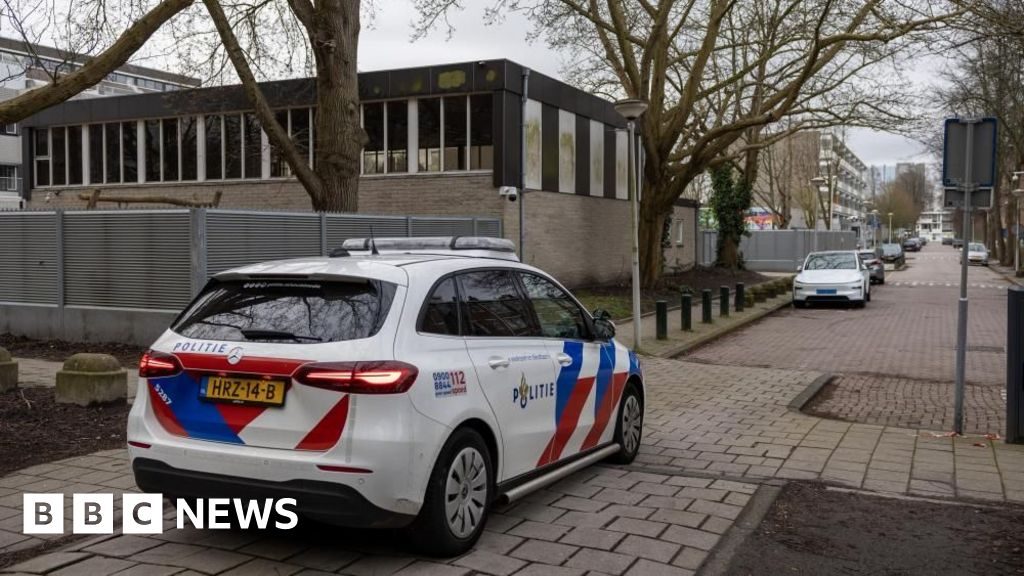
    An explosive device detonated at a Rotterdam synagogue around 3:40 a.m., damaging the entrance and starting a fire that extinguished itself. Four suspects aged 17 to 19 from Tilburg were arrested near another synagogue shortly afterward. Ashab Al Yamim claimed responsibility.

  3. Attack on Jewish target in Greece

    Attack

    Ashab Al Yamim claimed responsibility for an attack on a Jewish site in Greece. Details of the incident remain limited, but attack footage circulated on Shiite axis Telegram channels.

  4. Bomb damages Liege synagogue

    Attack

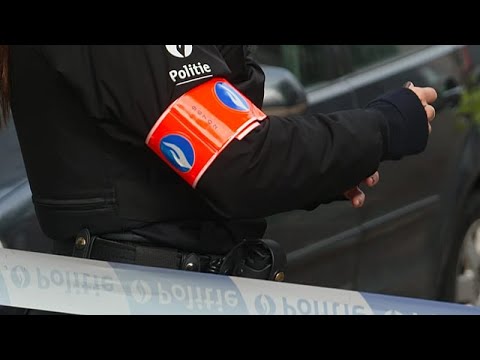
    An explosive device detonated before dawn outside a historic synagogue in Liege, Belgium, destroying its facade and shattering windows. Built in 1899, the synagogue also serves as a museum for the city's Jewish history. Ashab Al Yamim later claimed responsibility.

  5. Explosion at US Embassy in Oslo

    Attack

    A backpack bomb detonated at the public entrance of the US Embassy in Oslo, Norway, causing minor damage and no injuries. Three Norwegian brothers of Iraqi origin were later arrested on terrorism charges.

  6. United States and Israel begin strikes on Iran

    Context

    A joint US-Israeli military campaign against Iran begins, targeting nuclear and ballistic missile facilities. The conflict rapidly escalates, with Iranian retaliatory strikes against US bases across the Gulf.

Scenarios

1

European intelligence services dismantle Ashab Al Yamim network, link it to Iran

Possible

Discussed by: Foundation for Defense of Democracies (FDD) analysts; French intelligence assessments of Iran's European operations

If the arrested Rotterdam suspects and other leads trace back to a coordinated network with operational ties to Iran's IRGC or its proxies, European governments would face pressure to designate Ashab Al Yamim as a terrorist organization and confront Tehran diplomatically. French intelligence has documented Iran's post-2015 practice of outsourcing European operations to criminal networks, which would complicate attribution. A confirmed Iran link would significantly escalate tensions between the European Union and Iran beyond the current military conflict.

2

Attacks prove loosely inspired rather than centrally directed, pattern continues

Likely

Discussed by: Europol terrorism analysts; counterterrorism researchers studying decentralized mobilization

The Ashab Al Yamim branding may function as a banner for dispersed, self-mobilized actors rather than a command structure. The Rotterdam suspects were teenagers from Tilburg with no known prior terrorism connections. If the attackers are copycats inspired by the group's Telegram-distributed propaganda rather than operatives in a hierarchy, each arrest would fail to prevent the next attack. This pattern—a claimed brand, distributed inspiration, local execution—echoes how the Islamic State's European attacks operated between 2015 and 2017.

3

A bombing kills or injures people, forcing a step-change in European security posture

Possible

Discussed by: European Jewish Congress security assessments; Dutch national counterterrorism coordinator

All four attacks so far have occurred at night against unoccupied buildings, producing property damage but zero casualties. If an attack hits during operating hours—at a school during classes or a synagogue during services—the political and security consequences would be transformative. Governments would likely deploy military personnel to guard Jewish institutions, as France did after the 2015 Paris attacks. The Cheider school's existing fortifications (steel fence, bollards, airlock entrance) suggest the community has long anticipated this threat.

4

Ceasefire or de-escalation in Iran conflict reduces tempo of European attacks

Uncertain

Discussed by: EU foreign policy analysts; Anti-Defamation League researchers tracking correlation between Middle East conflict and diaspora targeting

Antisemitic incidents in Europe have tracked closely with Middle East escalations since October 2023. If the US-Israel campaign against Iran winds down or reaches a ceasefire, the mobilizing narrative behind these attacks could lose urgency. However, the infrastructure for targeting Jewish sites—the Telegram distribution channels, the operational knowledge of overnight bombings—would persist. Historical patterns suggest incident rates decline but do not return to pre-escalation baselines.

Historical Context

3 moments from history that rhyme with this story — and how they unfolded.

October 1980

1980 Paris Synagogue Bombing

On October 3, 1980, a bomb exploded outside the rue Copernic synagogue in Paris during Shabbat services. Approximately 320 worshippers were inside. Four people were killed and 46 wounded. The attack was carried out by a Palestinian militant group and marked the deadliest antisemitic attack in France since World War II.

Then

Over 200,000 people marched in Paris in protest. French authorities faced intense criticism for inadequate security at Jewish sites.

Now

France established permanent security at major synagogues and Jewish institutions, a practice that continues today. The attack accelerated French counterterrorism reforms and shaped decades of security policy around Jewish community protection.

Why this matters now

The 1980 bombing demonstrated how a Middle Eastern conflict—the Israeli-Palestinian dispute—could produce targeting of Jewish communities in Europe. Like the current attacks, it involved a previously obscure group, nighttime targeting of synagogues, and forced a lasting expansion of protective security. The key lesson: once a wave of targeting begins, security measures tend to become permanent.

January 2015 – August 2017

Islamic State's 2015-2017 European attack wave

Between 2015 and 2017, a combination of centrally directed and locally inspired attackers struck targets across France, Belgium, Germany, Spain, and the United Kingdom. The Islamic State's media apparatus provided branding, theological justification, and tactical guidance through encrypted channels, while many actual attackers were local residents with criminal backgrounds rather than trained operatives.

Then

European intelligence agencies launched unprecedented cross-border cooperation. France, Belgium, and Germany deployed military personnel to public spaces. The Bataclan, Brussels, and Berlin attacks killed over 200 people combined.

Now

The European Union established the Counter Terrorism Centre within Europol and expanded intelligence sharing. The wave demonstrated that distributed, brand-driven mobilization was harder to disrupt than hierarchical networks.

Why this matters now

The Ashab Al Yamim pattern—a media brand with no prior presence, rapid Telegram distribution, local attackers with no intelligence footprint—closely mirrors the Islamic State's European model. The critical question is whether European security services have retained the institutional capacity built after 2015-2017 or whether a decade of relative calm has eroded it.

November 2024

November 2024 Amsterdam attacks on Israeli football fans

On November 7, 2024, fans of Israeli football club Maccabi Tel Aviv were attacked by groups of young men after a match against Ajax in Amsterdam. At least five people were hospitalized, and dozens of suspects were arrested. The attacks triggered an international diplomatic crisis, with Israel dispatching planes to evacuate citizens and leaders across Europe condemning the violence.

Then

Amsterdam's Jewish community reported heightened fear and a sense that police could not protect them. Mayor Halsema faced scrutiny over whether authorities had adequately prepared for foreseeable tensions.

Now

The incident established that Amsterdam's Jewish quarter—Buitenveldert, where the Cheider school is located—was a known vulnerability. Security was reinforced, but the March 2026 school bombing demonstrated the limits of that reinforcement.

Why this matters now

The November 2024 attacks and the March 2026 bombings bracket a period of escalating threat to Amsterdam's Jewish community. The same neighborhood, the same mayor, and the same core tension—Middle Eastern conflict producing violence against European Jews—connect both events. The school bombing suggests the threat has evolved from mob violence to planned explosive attacks.

Sources

(16)