Anchor

DP World installs new harbor cranes in $800M modernization of Syria's Tartus port
Built WorldFirst payoff of a 30-year, $800 million concession to rebuild Syria's Mediterranean port of Tartus after civil war
Yesterday: Installation milestone reportedNew here? Follow stories to track developments over time. Create a free account to get updates when stories you care about change.
Overview
Updated 16 hours agoThree mobile harbor cranes now work Syria's Mediterranean port of Tartus. They are the first visible payoff of Dubai-based DP World's $800 million plan to rebuild a port wrecked by 13 years of civil war.
The cranes can raise cargo capacity by about 40%, and commercial control of the port has passed from Russian to Gulf hands. An independent maritime monitoring group, IMWO, says the harder work (dredging, berth depths, quay repairs) has not been publicly verified. The real test is whether cargo shows up.
Why it matters
DP World's $800 million rebuild will decide whether Tartus becomes Syria's trade lifeline and regional transit hub, or a costly bet that found no cargo.
Questions about this story
Free account needed to ask — your question is kept and asked for you right after sign-up. Answers are public.
No questions yet — be the first to ask.
Key Indicators
$800M
Investment planned under 30-year Tartus concession
Total committed by DP World over the life of the build-operate-transfer deal.
40%
Expected increase in port cargo-handling capacity
DP World's estimate once the three mobile harbor cranes are fully operational.
3
Mobile harbor cranes delivered and installed
Each crane can handle about 2 million tonnes of cargo per year.
Related Media
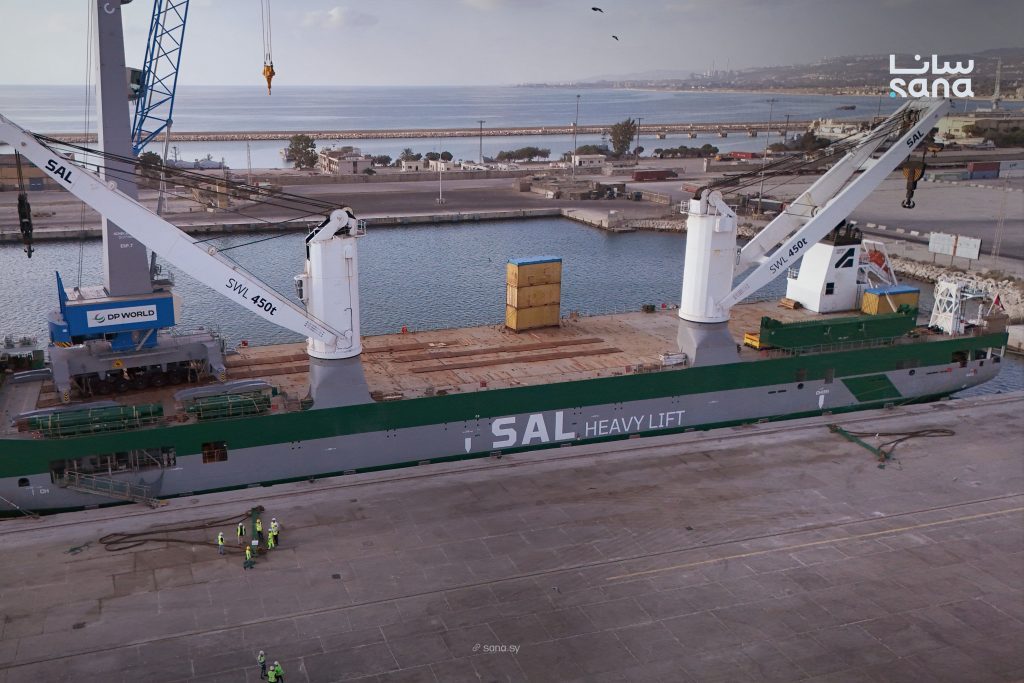
DP World Adds Two 125-Ton Cranes at Syria's Tartus Port | SPToday
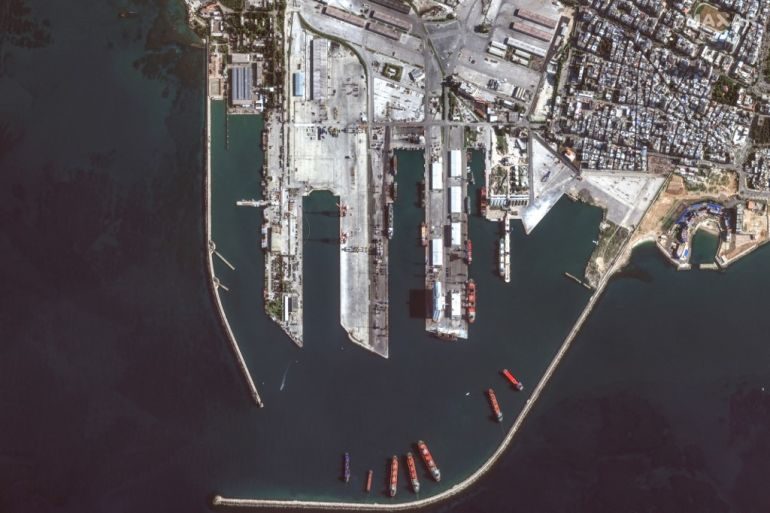
Syria signs $800m Tartous port deal with UAE firm DP World
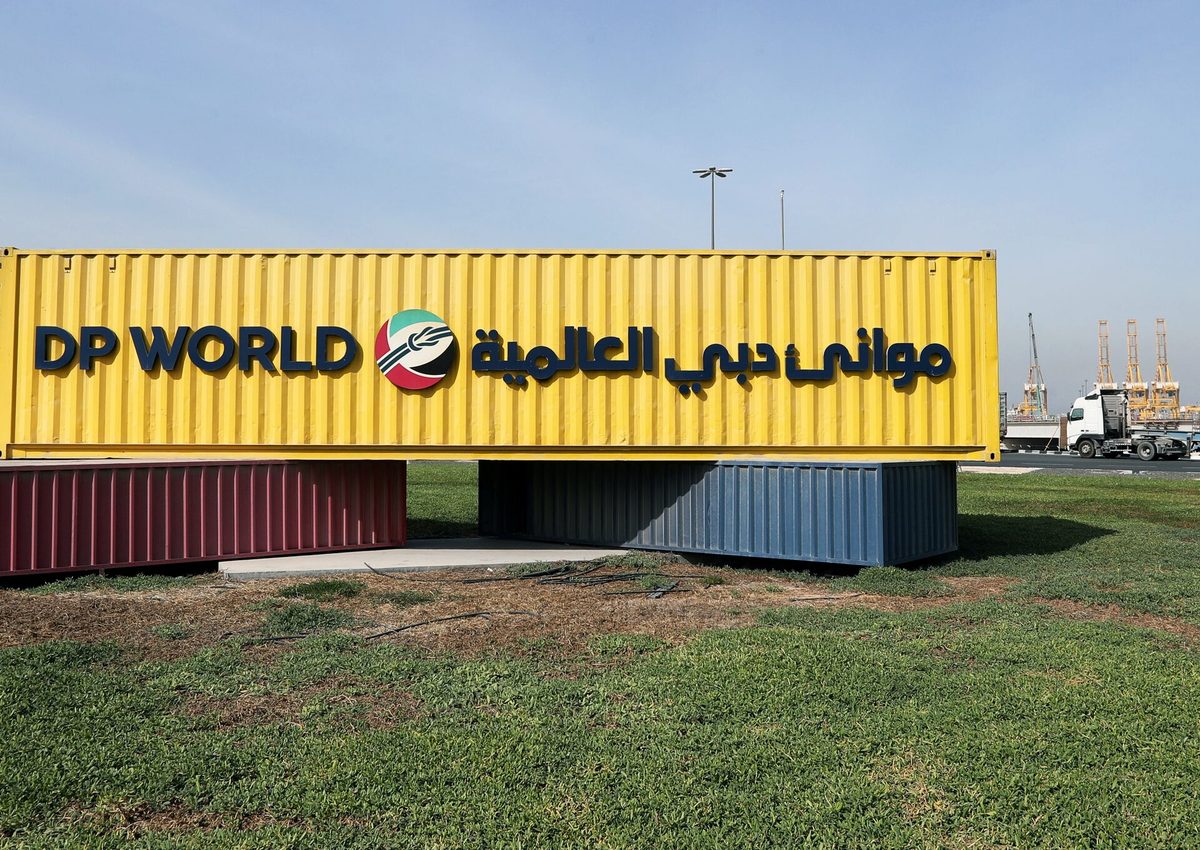
Syria signs $800 million agreement with DP World to bolster ports infrastructure | Reuters
29.2K views
2:17
Syria says it reached deal with Moscow on future of Russian ...
Al Jazeera English
Images from Openverse under Creative Commons licenses. Videos from YouTube.
Voices
Curated perspectives — historical figures and your fellow readers.
Play
Exploring all sides of a story is often best achieved with Play.
Most of these play right now — no account needed. Sign up to save scores, keep a streak, and unlock Debate and Predict.
Log in
Sign Up
Higher or Lower
A number from this story, against one from elsewhere in the news — guess which is bigger, then keep the chain going. 5 rounds, 3 strikes; a miss costs a strike and resets your streak.
Example
Anchor
EU tariff revenue
$52B
Big for this kind of number
Mystery
Pentagon AI contract
?
Round 1
Streak: 0
Mystery
?
Keyboard: ↓/L lower · ↑/H higher
0 pts
Best streak: 0 · Rounds: 0
0 points — sign up to put that on the leaderboard.
Now try on this story
Timeline
DP World installs new harbor cranes in $800M modernization of Syria's Tartus port
Order five events from this story, oldest at top. Each in the right slot scores 1 — neighbours within one slot count too. Your previous result — green ✓ for exact slots, yellow ~ for off by one. Cards now in true chronological order.
Loading puzzle…
Tap 💡 Free hint to lock the oldest into slot 1 — that leaves just four to order. Type pills are clues.
0/5
Exact slot
0/5
Within 1
Sign up to save your score and track a streak across stories.
Now try on this story
Connections
Sixteen names from the news. Find the four hidden groups of four. Four mistakes max.
Loading today's puzzle…
0/4 groups
Mistakes
Sign up to keep a daily streak — a new puzzle lands every day.
Now try on this story
Exit debate?
Your progress in this debate will be lost.
How it works
- 1 Two AI personas square off on this story.
- 2 You predict who'll win each round — correct picks earn XP.
- 3 One crossfire question is yours to fire. Pick it carefully.
Couldn't generate a topic
Select Your Champions
Choose one persona for each side of the debate
DEBATE TOPIC
Choose personas with different perspectives for a more dynamic debate.
SIDE A (PRO)
Select debater for this side:
No debate personas available right now.
SIDE B (CON)
Select debater for this side:
No debate personas available right now.
VS
Get ready to make your prediction...
Round of
Claim
Evidence
Stakes
Crossfire Answer
Closing Statement
Claim
Evidence
Stakes
Crossfire Answer
Closing Statement
Your Crossfire Question
Generating arguments...
Who's Got This Round?
Make your prediction before the referee scores
The referee scores both sides on
Correct predictions earn +20 XP
· Press 1 or 2 to pick
Evidence
40%
Logic
30%
Detail
20%
Style
10%
Round Results
Your Pick
Not this time
(%)
Overall Score
/10
Your Pick
Not this time
(%)
Overall Score
/10
Set the Crossfire
Pick the question both personas must answer in the final round
Crafting crossfire questions...
Choosing a question earns +10 XP crossfire bonus
🏆
Total XP Earned
Cred Change
Predictions
Debate Oracle! You called every round!
Sharp Instincts! You know your debaters!
The Coin Flip Strategist! Perfectly balanced!
The Contrarian! Bold predictions!
Inverse Genius! Try betting the opposite next time!
XP Breakdown
Base completion
+20 XP
Rounds played ( rounds x 5 XP)
+ XP
Correct predictions ( correct x 20 XP)
+ XP
Crossfire bonus
+10 XP
Accuracy
%
Prediction History
Round
You picked:
✓
✗
Now try on this story
Keep debating to level up your credibility and unlock achievements
People Involved
Organizations Involved
DP World
Global port operator
Concession holder operating Tartus port
Dubai-based port operator running the $800 million Tartus modernization under a 30-year concession.
Syrian General Authority for Land and Sea Ports
Syrian government agency
Prior operator, handed port to DP World
The state agency that ran Tartus until November 2025 and transferred operations to DP World.
Stroytransgaz
Russian construction company
Lost Tartus commercial contract in January 2025
Russian firm that held a 49-year commercial deal at Tartus, cancelled by Syria's new authorities.
Russian Navy
Military force
Retains restricted naval section at Tartus
Russia keeps a restricted naval section in the port, separate from DP World's commercial operations.
Timeline
January 2019 September 2026
8 events
Latest: Yesterday
Tap a bar to jump to that date
-
Installation milestone reported
Latest MilestoneEngineering News-Record reports the cranes are being installed, marking progress under the $800 million program.
-
DP World completes delivery of three cranes
EquipmentAll three mobile harbor cranes delivered, expected to raise cargo capacity about 40%.
-
First mobile harbor crane arrives at Tartus
EquipmentThe first of three mobile harbor cranes arrives, each capable of handling about 2 million tonnes of cargo a year.
-
DP World takes over Tartus operations
OperationsFormal handover from Syria's port authority; DP World begins assessing infrastructure and plans dredging.
-
Syria awards Tartus to DP World
ContractDP World signs a 30-year build-operate-transfer concession on July 13, 2025, committing $800 million to rebuild the port.
-
Syria cancels Stroytransgaz Tartus contract
ContractSyria's new authorities scrap the Russian firm's 49-year deal, citing failure to meet its terms.
-
Assad falls, Syria's civil war ends
ConflictAfter a war that began in March 2011, the Assad government collapses and a new administration takes over Syria.
-
Stroytransgaz wins 49-year Tartus commercial contract
ContractRussian firm Stroytransgaz takes a 49-year deal to manage Tartus commercial operations, deepening Moscow's grip on the port.
Scenarios
1
DP World meets its 2027-28 equipment and dredging schedule
Likely
Resolves by End of 2028
Discussed by: DP World's own announcements, Engineering News-Record
DP World delivers the nine additional light-duty mobile harbor cranes through 2027 and early 2028, the new quay crane in 2028, and completes quay wall refurbishment by the end of 2027 as scheduled. The port deepens with dredging and grows into its expanded capacity.
2
Sanctions or renewed conflict slows the rebuild
Possible
Resolves by End of 2027
Discussed by: Radio Free Syria, reporting on sanctions lifting and security
The lifting of most international sanctions is what enabled DP World's investment. If sanctions return, or if security in the region deteriorates, equipment deliveries, dredging and quay work could stall and the $800 million program could stretch far beyond its schedule.
3
Port rebuilt but underused as Syria's economy lags
Possible
Resolves by End of 2028
Discussed by: Assessments of Syria's slow economic recovery
New cranes and deeper berths only matter if cargo shows up. If Syria's broader reconstruction stalls and imports and transit trade stay weak, Tartus could sit with equipment running well below capacity, making the $800 million hard to justify commercially.
4
Dredging falls behind the equipment schedule
Possible
Resolves by End of 2027
Discussed by: IMWO, an independent maritime monitoring group
DP World has delivered the cranes and a harbor tug. But an IMWO brief says no evidence of dredging, berth depths or quay readiness has been published. If dredging lags the equipment schedule, the new cranes lift no more cargo than before, because larger vessels still cannot reach the berths.
Historical Context
3 moments from history that rhyme with this story — and how they unfolded.
1971 - present
Russia's Tartus naval base (1971-present)
The Soviet Union secured a naval maintenance facility at Tartus in 1971, which Russia kept as its only Mediterranean resupply point. In 2019, Russia's Stroytransgaz added a 49-year commercial contract to run the port's money-making side.
Then
Syria's new authorities cancelled the commercial contract in January 2025 and gave the port to DP World.
Now
Russia keeps a restricted naval section, but its commercial grip on the port is gone.
Why this matters now
The DP World concession is a direct reversal of Russian commercial control at the port Moscow once used as its Mediterranean anchor.
2003 - 2015
Iraq's Umm Qasr after 2003
After the 2003 invasion, Iraq's main port, Umm Qasr, was a priority for reconstruction so aid and imports could flow. Initial repairs restored basic operations, but full modernization dragged on for years amid security problems and funding gaps.
Then
The port resumed working quickly but remained a bottleneck for Iraqi imports.
Now
It took over a decade and repeated investment rounds to meaningfully expand capacity.
Why this matters now
Tartus faces the same basic challenge: new cranes help, but rebuilding a working port system takes years of dredging, equipment, and steady demand.
May 2009 - February 2018
Djibouti's Doraleh terminal (2009-2018)
DP World built and ran a container terminal in Djibouti under a long-term concession. In 2018, Djibouti seized the facility, arguing the contract was unfair, and forced DP World out.
Then
DP World was locked out and took the dispute to international arbitration.
Now
The seizure became a reference point for political risk in port concessions across Africa and the Middle East.
Why this matters now
The same operator now holds a 30-year Tartus concession in a country emerging from civil war. The Djibouti case shows how fast a sovereign can pull a port back.
Sources
(9)Related Stories
Syria and Russia agree to convert Tartus and Hmeimim bases to joint control
Force in Play
Updated Aug 10
DP World switches on Latin America's first shore power system at Port of Callao
Built World
Updated Aug 26
Construction begins on Bangladesh's first foreign-built container terminal
Built World
Updated Aug 31
Damascus retakes Syria's oil and water
Force in Play
Updated May 22
Army Corps grants permit for Louisiana's new deepwater container port
Built World
Updated Aug 26
Navy awards major contract to modernize Portsmouth Naval Shipyard infrastructure
Built World
Updated 3 days ago