
Pull to refresh
Logo
Detroit permits $6.5M office build-out on two Michigan Central Station floors

Detroit permits $6.5M office build-out on two Michigan Central Station floors

Built World Detroit, MI local

Ford's restored Detroit landmark secures $6.5M permit for 11th and 12th floor offices in Corktown

Overview

Updated Sep 29

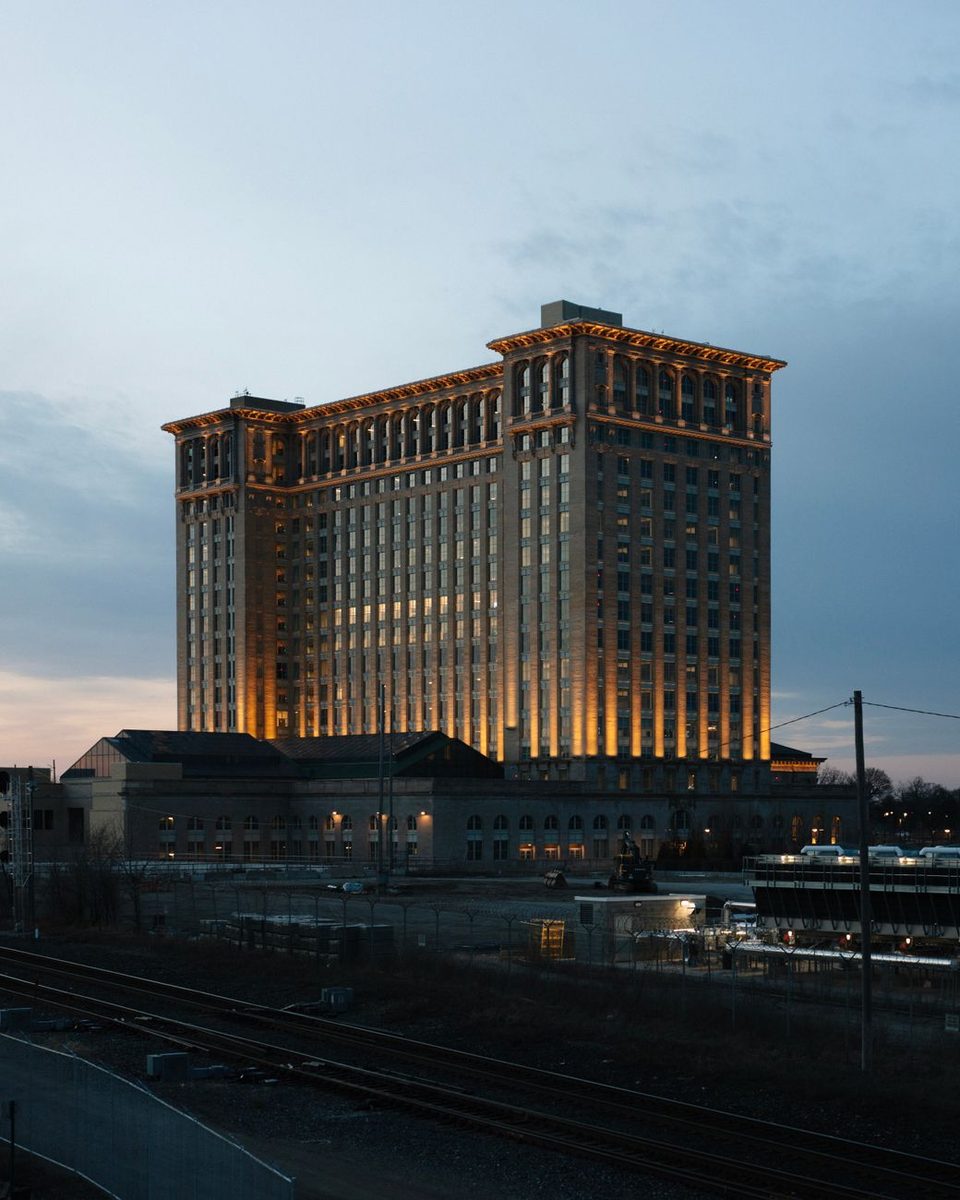
The City of Detroit issued a $6.5 million permit on Sept. 28 to turn the 11th and 12th floors of Michigan Central Station into offices. The 18-story Beaux-Arts tower, once the tallest rail station in the world, stood empty for 30 years after the last train left in 1988, until Ford Motor Co. bought it in 2018.

The permit describes an interior tenant office build-out. Ford reopened the restored station in June 2024 as the center of its Michigan Central campus. The permit authorizes construction but does not say when work starts or finishes, or who the tenant is.

Why it matters

Two more floors of the restored landmark are being fitted out as offices.

Last Monday's email for Detroit, MI

Sent Nov 9. It carried:

Get next Monday's: one short email a week. Free. Unsubscribe in one click.

Questions about this story

Free account needed to ask — your question is kept and asked for you right after sign-up. Answers are public.

No questions yet — be the first to ask.

Key Indicators

$6.5M
Estimated build-out cost
Contractor's estimated cost for the 11th and 12th floor office build-out.
34
Years the station stood vacant
Michigan Central Station sat empty before Ford's restoration.
2
Floors converted to office
The permit covers the 11th and 12th floor tenant build-out.

Voices

Curated perspectives — historical figures and your fellow readers.

Sign up to generate historical perspectives on this story.

People Involved

Organizations Involved

Timeline

December 1913 September 2026

4 events Latest: September 28th, 2026 · 1 month ago
Tap a bar to jump to that date
  1. Detroit issues $6.5M office build-out permit

    Latest Permit

    BSEED issues permit BLD2026-01287 for interior tenant office build-out of the 11th and 12th floors at 2001 15th St.

  2. Restored station reopens with concert

    Reopening

    Ford celebrates the restoration with a 20,000-person concert featuring Diana Ross, Jack White, Big Sean, and Eminem.

  3. Ford acquires the abandoned station

    Acquisition

    Ford Motor Co. buys the long-vacant Michigan Central Station, 30 years after the last train left.

  4. Michigan Central Station opens

    Opening

    The 18-story Beaux-Arts depot, tallest rail station in the world, begins service in Corktown after a fire forces early use.

Scenarios

1

Ford signs anchor office tenant for Michigan Central tower

Possible Resolves by Sep 28, 2027

Discussed by: Crain's Detroit Business, Detroit Free Press

Construction on the 11th and 12th floors proceeds, and Michigan Central announces a named company as its first office tenant in the station tower. The deal would signal real demand for space in the restored landmark and anchor the campus with regular business activity.

2

Station office floors open with no anchor tenant

Possible Resolves by Sep 28, 2027

Discussed by: Real estate analysts covering Detroit's office market

The build-out finishes and the city issues a certificate of occupancy for the 11th and 12th floors, but no major tenant is announced. The floors sit partially empty as Michigan Central markets the space to smaller firms and startups.

3

Build-out stalls, floors stay unfinished

Unlikely Resolves by Sep 28, 2027

Discussed by: Construction industry observers

Work fails to start or stops midway, with no certificate of occupancy a year after the permit. This would suggest leasing challenges or funding delays behind Ford's plans for the tower.

Historical Context

3 moments from history that rhyme with this story — and how they unfolded.

1978-2010s

St. Louis Union Station redevelopment (1980s onwards)

St. Louis Union Station, once one of America's busiest rail terminals, saw its last Amtrak train in 1978. The grand station sat largely vacant until it was redeveloped into a hotel and entertainment complex in the 1980s, then renovated again in the 2010s.

Then

The station reopened in 1985 as a hotel with shopping and entertainment, drawing visitors.

Now

It became a model for repurposing grand rail stations into non-transportation uses, though it never regained its rail function.

Why this matters now

Like Michigan Central, a monumental station found new life after decades of vacancy, but it succeeded as a destination rather than as office space. The comparison underscores the challenge of filling restored landmarks with working tenants.

1970s-1998

Grand Central Terminal restoration (1990s)

Grand Central Terminal in New York, designed in part by the same architects who worked on Michigan Central (Warren & Wetmore and Reed & Stem), had deteriorated badly by the mid-20th century. After a long preservation battle, it was restored and reopened in 1998 as a functioning station and retail destination.

Then

The restored terminal reopened to public acclaim and heavy daily foot traffic.

Now

Grand Central became a model for public-private landmark restoration and remains a working transit hub.

Why this matters now

The same architectural lineage connects the two stations. Grand Central shows a restored station can thrive, but it kept rail service. Michigan Central has no such anchor, making office tenants more critical to its future.

2015-2023

Detroit's Book Tower restoration (2023)

Detroit's historic Book Tower, once a grand office and hotel building, was restored by Bedrock, Dan Gilbert's real estate firm, and reopened in 2023 after a renovation reported at more than $300 million. It brought office and hotel space back to a building that had deteriorated for decades.

Then

Book Tower reopened with office, hotel, and retail tenants, a symbol of downtown Detroit's revival.

Now

It demonstrated demand for premium Class A space in Detroit, setting a precedent for historic building conversions.

Why this matters now

Book Tower shows Detroit can fill restored historic towers with tenants, but it sits downtown near established businesses. Michigan Central's Corktown location is further from the core, making its office leasing a taller test.

Sources

(5)