

Pull to refresh
Logo
Congress averts government shutdown with stopgap funding through December

Congress averts government shutdown with stopgap funding through December

Rule Changes Boston, MA local

President Trump signs stopgap funding bill, deferring the spending fight to a post-midterm lame-duck session

September 2nd, 2026: Trump signs stopgap funding bill into law

Overview

Updated Sep 4

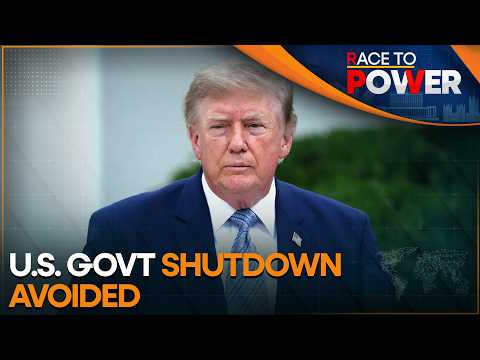
President Trump signed the stopgap spending bill on September 2, funding the government through December 11. The House had passed it 370-48 the day before; the Senate had approved it in August.

The law, the Continuing Appropriations and Extensions Act, 2027, defers a fight that has already produced three shutdowns totaling 161 days in the current Congress. Full-year appropriations for fiscal 2027 are unfinished, so the real battle shifts to the post-midterm lame-duck session in December.

Why it matters

By December 11, a lame-duck Congress reshaped by the midterms must finish the budget or trigger another shutdown.

Questions about this story

Free account needed to ask — your question is kept and asked for you right after sign-up. Answers are public.

No questions yet — be the first to ask.

Key Indicators

370
House votes for the stopgap bill
Bipartisan vote; 48 members opposed, including 19 Republicans and 29 Democrats. Trump signed the bill September 2.
161
Days of shutdown in the current Congress
Three funding lapses, including a 43-day and a 76-day shutdown.
3 of 12
FY2027 appropriations bills passed by the House
The Senate has passed none, so full-year spending remains unresolved.
Dec 11, 2026
Stopgap funding expiration
The continuing resolution funds the government through this date.

Voices

Curated perspectives — historical figures and your fellow readers.

Ever wondered what historical figures would say about today's headlines?

Sign up to generate historical perspectives on this story.

People Involved

Organizations Involved

Timeline

August 2026 December 2026

6 events Latest: September 2nd, 2026 · 1 week ago
Tap a bar to jump to that date
  1. Stopgap funding expires

    Upcoming Deadline

    The stopgap lapses; Congress must act or the government shuts down.

  2. Midterm elections

    Upcoming Election

    Voters decide which party controls the House and Senate.

  3. Current funding would have expired

    Upcoming Deadline

    Funding would have lapsed at the end of the fiscal year without the stopgap.

  4. Trump signs stopgap funding bill into law

    Latest Executive

    President Trump signed H.R. 6500, the Continuing Appropriations and Extensions Act, 2027, keeping the government funded through December 11.

  5. House averts shutdown with funding through December

    Legislative

    House passed the Senate's continuing resolution 370-48; Trump signed it into law September 2.

  6. Senate passes stopgap spending bill

    Legislative

    Senate passed the continuing resolution 90-6 with added spending restrictions.

Scenarios

1

Congress passes another stopgap, pushing the budget fight into 2027

Likely Resolves by Dec 11, 2026

Discussed by: The Hill, which called another CR likely "especially if Democrats retake one or both chambers"; Roll Call reported the same dynamic.

The lame-duck Congress fails to finish the twelve appropriations bills and instead passes another continuing resolution, extending current spending into 2027. This is the path of least resistance. The parties have not agreed on a top-line number, and the Senate has passed none of its twelve bills. Democrats would have little reason to help Republicans finish a full-year budget if they expect to control the next Congress.

2

Lame-duck Congress completes FY2027 appropriations

Unlikely Resolves by End of 2026

Discussed by: House Appropriations Chairman Tom Cole, who told Government Executive the CR gives Congress time to "move forward with further appropriations measures in November and December."

After the midterms, the lame-duck Congress agrees on full-year spending, either as twelve separate bills or one omnibus. This requires bridging a wide partisan gap. Republicans want to lock in current spending. Democrats, especially if they gain seats, want to cut defense, expand domestic programs, and curb executive control over grants. Neither chamber has shown it can clear that bar so far.

3

Government shuts down as the stopgap expires

Possible Resolves by Dec 12, 2026

Discussed by: The current Congress's own record: three shutdowns totaling 161 days, reported by Reuters.

Lame-duck negotiations collapse and the continuing resolution expires without a replacement, triggering a funding lapse. This Congress has already shut the government three times, over health insurance subsidies and immigration enforcement. The December fight covers the same issues, plus the Office of Management and Budget grant rule and Border Patrol funding.

Historical Context

3 moments from history that rhyme with this story — and how they unfolded.

November 1995 – January 1996

1995-96 government shutdowns

Republicans under House Speaker Newt Gingrich shut the government twice in a budget standoff with President Bill Clinton. The closures, five days in November 1995 and 21 days into January 1996, turned on Medicare and the path to a balanced budget.

Then

Clinton refused to accept the Republican budget, and the shutdowns ended with temporary funding and no deal.

Now

Public opinion blamed the Republicans; Clinton won re-election in 1996 and the GOP lost House seats. The episode became the standard warning against shutdowns near elections.

Why this matters now

Both parties in 2026 cited the same political risk in rushing to keep the government open through the November midterms.

October 2013

2013 federal government shutdown

House conservatives refused to fund the government unless the Affordable Care Act was defunded, closing it for 16 days and furloughing roughly 800,000 federal workers.

Then

The shutdown ended with a clean continuing resolution; the defunding effort won no policy concessions.

Now

The episode reinforced that shutdowns rarely force policy change. The 2025-26 standoffs repeated the pattern: Democrats won no concrete concessions despite months-long closures over health subsidies and immigration enforcement.

Why this matters now

It helps explain why the 2026 stopgap resolved little: both parties used funding lapses as leverage, and both accepted temporary funding in the end.

December 2018 – January 2019

2018-19 government shutdown

President Trump shut the government for 35 days, then the longest in U.S. history, demanding $5.7 billion for a border wall. Roughly 800,000 federal employees missed paychecks.

Then

Trump signed a stopgap without wall funding, ending the shutdown in January 2019.

Now

The record lasted until the current Congress's 43-day shutdown in late 2025. Immigration enforcement, the same flashpoint, drove the 76-day Department of Homeland Security shutdown that ended in April 2026.

Why this matters now

It shows how immigration enforcement has repeatedly pushed the funding process to the brink under Trump.

Sources

(13)