
Pull to refresh
Logo
Daily Brief
Following
Why Ranks Sign Up
Commercial rideshare reshapes access to orbit

Commercial rideshare reshapes access to orbit

Built World

SpaceX's shared launches are turning space access into a scheduled, pay-by-the-kilogram service

May 3rd, 2026: CAS500-2 rideshare launches with 45 satellites

Overview

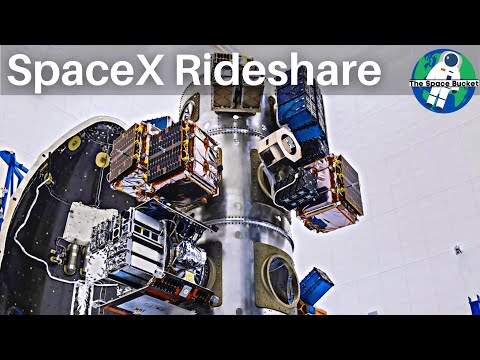
For most of the space age, putting a satellite into orbit meant booking an entire rocket—an option available only to governments and the largest companies. SpaceX's rideshare program inverted that model: pay by the kilogram, share the ride, and launch on a schedule set by the operator, not the customer.

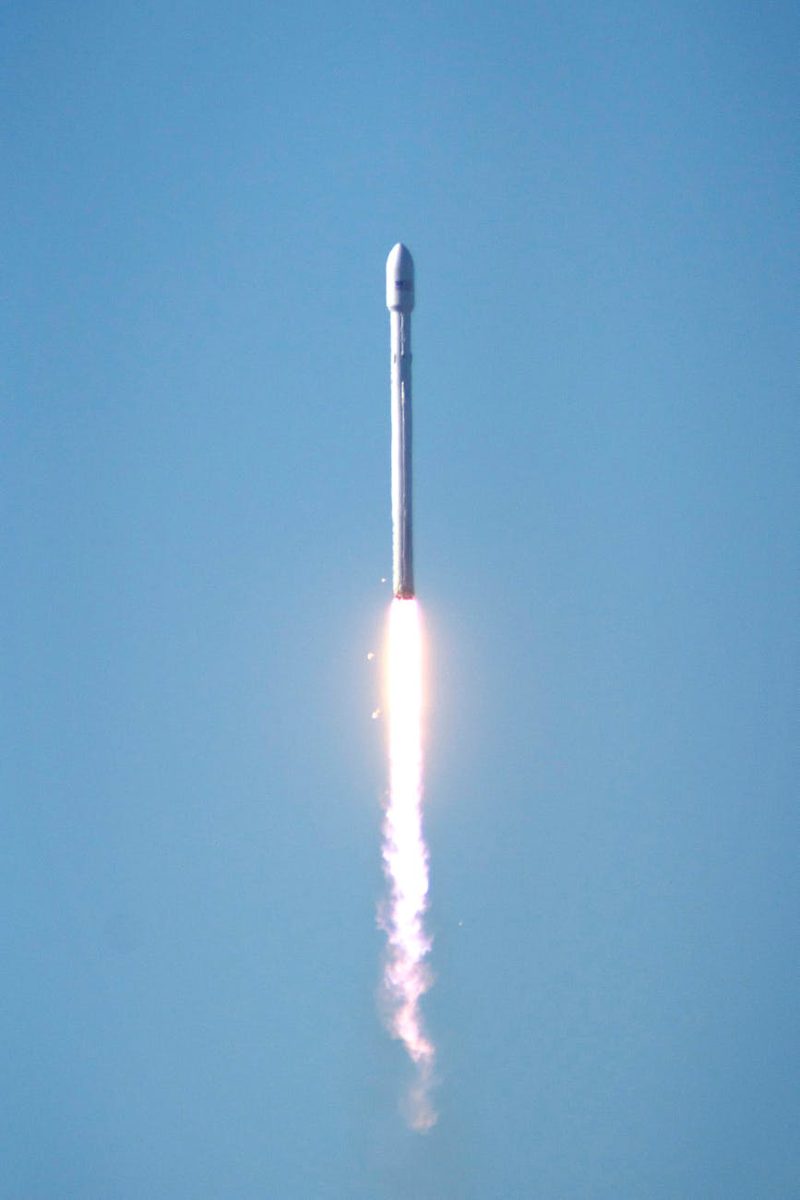
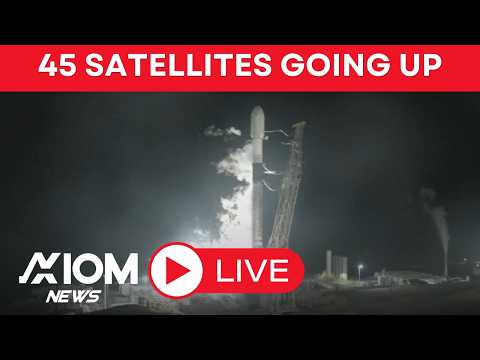
The May 3 mission from Vandenberg Space Force Base shows what that shift looks like in practice. A single Falcon 9 carried a Korean Earth-observation satellite, a US military space-tracking vehicle, and an Indian dual-sensor imager—45 spacecraft in all—on a first-stage booster making its 33rd flight. The economics that once limited orbital access to a handful of national programs now support startups across dozens of countries.

Why it matters

Cheap, frequent rides to orbit mean more eyes, sensors, and capability above—from disaster response to military reconnaissance—available to more actors than ever before.

Play on this story Voices Debate Predict

Key Indicators

45
Satellites on one launch
A single Falcon 9 deployed payloads from government, military, and commercial customers across multiple countries.
33
Flights of booster B1071
Reuse of the same first stage is what makes per-kilogram rideshare pricing economically viable.
0.5 m
CAS500-2 ground resolution
Korea's primary payload can resolve objects half a meter across from low Earth orbit.
2:59 a.m. ET
Launch time
Overnight launch from Vandenberg with booster recovery back at the California base.

Interactive

Exploring all sides of a story is often best achieved with Play.

Ever wondered what historical figures would say about today's headlines?

Sign up to generate historical perspectives on this story.

People Involved

Organizations Involved

Timeline

  1. CAS500-2 rideshare launches with 45 satellites

    Launch

    Falcon 9 lifts off from Vandenberg with Korea's CAS500-2 as primary payload, plus US military and Indian commercial spacecraft. Booster B1071 lands successfully on its 33rd flight.

  2. Bandwagon-1 opens mid-inclination service

    Program expansion

    SpaceX launches its first Bandwagon mission, extending rideshare to orbits favored by Earth-observation customers.

  3. Transporter-1 sets rideshare record

    Launch

    SpaceX's first dedicated rideshare mission deploys 143 satellites in a single launch, the largest payload count to date.

  4. First Falcon 9 booster landing

    Milestone

    SpaceX successfully lands a Falcon 9 first stage at Cape Canaveral, opening the path to reusability that underpins rideshare economics.

Scenarios

Predict which scenario wins. Contrarian picks score more — points lock in when the scenario resolves.

Log in to predict. Track your picks, climb the leaderboard. Log in Sign Up
1

SpaceX holds rideshare dominance through the decade

Falcon 9's cost-per-kilogram, launch cadence, and mature insurance ecosystem extend SpaceX's lead. Competitors launch but cannot match scheduling reliability or price. Foreign governments and startups continue defaulting to Falcon 9 rideshares even when domestic launchers are available, as KARI and GalaxEye did on this mission.

Discussed by: Industry analysts at Quilty Space, Bryce Tech, and Payload Research
Consensus
2

New entrants capture mid-tier rideshare market

Rocket Lab's Neutron, Stoke Space's Nova, and Blue Origin's New Glenn enter regular service and offer differentiated rideshare options—dedicated orbits, faster turnaround, or alternative inclinations. SpaceX retains the largest share but loses pricing power on specific routes as a true multi-vendor market emerges.

Discussed by: Rocket Lab, Stoke Space, and Relativity executives in industry trade press
Consensus
3

Orbital congestion forces stricter traffic management

Each rideshare adds dozens of objects to crowded low Earth orbit. Regulators tighten rules on deorbit timelines, maneuverability requirements, and coordination between operators. Costs rise modestly for rideshare customers, and some payloads are denied launch licenses. The buildout continues but on a steeper compliance curve.

Discussed by: FAA, FCC, and the Office of Space Commerce; ESA and academic researchers
Consensus

Historical Context

The shipping container revolution (1956)

April 1956

What Happened

Trucking executive Malcom McLean loaded 58 standardized metal containers onto the converted tanker Ideal X for a voyage from Newark to Houston. Cargo that had cost $5.86 per ton to load by hand cost about 16 cents using containers.

Outcome

Short Term

Within a decade, container terminals replaced break-bulk piers in major US ports, displacing tens of thousands of longshoremen.

Long Term

Standardized containers cut shipping costs by more than 90 percent in real terms, enabling globalized supply chains, just-in-time manufacturing, and the rise of export-led economies in Asia.

Why It's Relevant Today

Rideshare slots are the orbital equivalent of shipping containers: a standardized interface that collapses per-unit costs and changes who can participate in the market. The downstream effects on what gets built and who builds it are still unfolding.

US airline deregulation (1978)

October 1978

What Happened

President Jimmy Carter signed the Airline Deregulation Act, ending federal control over routes and fares. The Civil Aeronautics Board, which had set ticket prices since 1938, was phased out.

Outcome

Short Term

New low-cost carriers entered the market, fares fell sharply on competitive routes, and several legacy airlines went bankrupt or merged.

Long Term

Air travel shifted from a premium service to mass-market transportation, with passenger volumes growing roughly fivefold over the following decades.

Why It's Relevant Today

Like deregulated air travel, rideshare turns access to orbit from a bespoke product into a scheduled service with published prices. Both transitions expand the pool of customers while squeezing legacy providers built around the older economics.

Iridium constellation deployment (1997-1998)

May 1997 - May 1998

What Happened

Motorola spin-off Iridium launched 66 satellites in 18 months across multiple rockets to build the first global satellite phone network. Total program cost exceeded $5 billion.

Outcome

Short Term

Iridium filed for bankruptcy in 1999, nine months after commercial service began, unable to compete with rapidly expanding terrestrial cellular networks.

Long Term

The constellation was acquired for $25 million and survived; its architecture inspired later LEO constellations and demonstrated both the promise and the financial risks of large satellite networks.

Why It's Relevant Today

Iridium showed that large constellations were technically feasible but financially brutal when launch costs were high. The rideshare-driven cost reductions on display in this mission are what make today's much larger constellations economically plausible.

Sources

(3)