


Pull to refresh
Logo
Colorado replaces its flat income tax with a six-bracket system

Colorado replaces its flat income tax with a six-bracket system

Rule Changes

Voters approved Amendment 87, cutting rates for most filers and raising the top rate to 8.4%. A constitutional scholar says it is open to a single-subject challenge.

Overview

Updated 6 hours ago

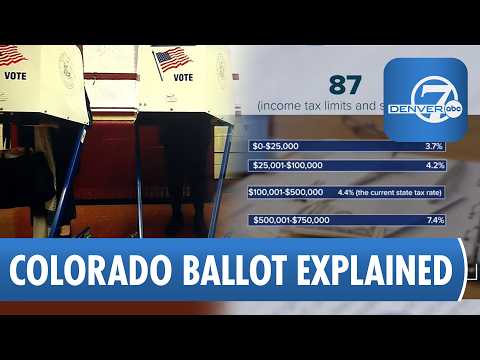
Amendment 87 leads 51.64% to 48.36% in Colorado's unofficial count, with 1,357,905 votes for and 1,271,712 against. The measure replaces the state's 4.4% flat income tax with six brackets that reach 8.4% on income above $1 million, starting with tax year 2027.

Rob Natelson, a senior fellow in constitutional jurisprudence at the Independence Institute, said on Nov. 10 that the measure combined a constitutional amendment with a detailed statute and is open to a single-subject challenge. No lawsuit had been reported. The new revenue, estimated at $2 billion to $2.7 billion a year for schools, health care and childcare, is expected to cover most of a projected $1.6 billion budget gap.

Why it matters

Colorado is betting $2 billion a year that it can raise taxes on top earners without losing them.

Questions about this story

Free account needed to ask — your question is kept and asked for you right after sign-up. Answers are public.

No questions yet — be the first to ask.

Key Indicators

8.4%
Top marginal income tax rate
Applies only to income above $1 million, up from a flat 4.4%.
4.4%
Previous flat rate
The single rate every Colorado filer paid before Amendment 87.
51.64%
Yes vote share
Unofficial tally as of Nov. 10: 1,357,905 yes to 1,271,712 no, a margin of 86,193.
97%
Taxpayers projected to pay less
Based on Colorado Department of Revenue income data cited by supporters.
$500K
Income where taxes rise overall
Households and businesses making more than about $500,000 pay more overall; those below pay the same or less.
$2B–$2.7B
Projected annual revenue
Estimates range from about $2 billion to $2.7 billion a year; legislative analysts use $2 billion for 2027-28.
$376K
Added tax for a $10 million filer
Annual increase estimated by The Colorado Sun; a $550,000 household pays about $1,175 more.
86,193
Unofficial vote margin
Yes leads no by 86,193 votes in the Nov. 10 count.

Voices

Curated perspectives — historical figures and your fellow readers.

Sign up to generate historical perspectives on this story.

People Involved

Organizations Involved

Timeline

1986 January 2027

10 events Latest: Yesterday
Tap a bar to jump to that date
  1. New brackets apply to tax years starting this date

    Upcoming Policy

    The six rates apply to federal taxable income for years beginning on or after Jan. 1, 2027.

  2. Unofficial count puts Amendment 87 at 51.64%

    Latest Election

    The Secretary of State's count showed 1,357,905 votes for and 1,271,712 against, a margin of 86,193. Results remain unofficial until certification.

  3. Business panel weighs Amendment 87 fallout

    Economy

    At a Common Sense Institute breakfast, CSU System treasurer Henry Sobanet said Colorado's competitiveness is at risk. The group estimates the tax could lower state personal income by $200 million.

  4. AP calls Amendment 87 for supporters

    Election

    Measure leads 51.4% to 48.6% with 95% of precincts reporting; six new brackets replace the flat rate.

  5. Race too close to call

    Election

    With counting under way, the graduated tax measure is narrowly trailing in early returns.

  6. Coloradans vote on Amendment 87

    Election

    The graduated tax measure and a separate education spending measure, Proposition NN, are on the ballot.

  7. Initiative #193 filed to replace the flat rate

    Campaign

    Proposed measure would swap the uniform rate for a graduated structure and dedicate the revenue.

  8. Referendum C sets the previous mark for new revenue

    Policy

    The last time Colorado approved a comparably large infusion of tax dollars for public services.

  9. Colorado moves to a single income tax rate

    Policy

    A constitutional provision requires every taxpayer to pay the same rate, ending the state's graduated system.

Scenarios

1

Revenue lands near the $2 billion projection

Likely Resolves by End of 2027

Discussed by: Legislative analysts and the Protect Colorado's Future Coalition

High-earning filers stay put, the top bracket delivers, and the 2027-28 budget closes its $1.6 billion gap with roughly $400 million left for schools, Medicaid and childcare. The trigger is a revenue forecast close to the analysts' estimate. The risk is that the estimate rests on behavior that has not been observed yet at these rates.

2

High earners leave and collections fall short

Possible Resolves by Q2 2028

Discussed by: Colorado Chamber of Commerce and economist Enrico Moretti, commenting on California

Affluent households relocate to lower-tax states or restructure income as pass-through profits or capital gains. The top bracket then raises less than projected, and the programs the measure promised get less than advertised. The evidence would appear in state income tax statistics showing fewer filers above $500,000.

3

The money goes to closing deficits, not expanding programs

Likely Resolves by Q2 2027

Discussed by: The Colorado Sun and the governor's budget office

Because Medicaid costs have grown 13.6% a year since 2023, the new revenue is absorbed by the existing shortfall. Schools and childcare see little expansion beyond avoiding cuts. The Long Bill signed in 2027 is the test: it would show the $2 billion covering the projected deficit with no new program spending.

4

A single-subject lawsuit delays or overturns Amendment 87

Possible Resolves by End of 2027

Discussed by: Rob Natelson of the Independence Institute

Natelson says the measure combined a constitutional amendment with a detailed statute and is open to a single-subject challenge. A court would need to find the measure violated Colorado's rule that ballot initiatives address one subject. No lawsuit had been filed as of Nov. 10.

Historical Context

3 moments from history that rhyme with this story — and how they unfolded.

1986-2026

Colorado's flat tax (1986-2026)

Colorado replaced its graduated income tax with a single rate in the 1980s, and a constitutional provision required every taxpayer to pay the same percentage. The rate sat at 4.4% before Amendment 87.

Then

The flat rate became part of the state's pitch to affluent newcomers and businesses.

Now

It held for four decades, until 51.4% of voters approved six brackets and removed the uniform-rate requirement.

Why this matters now

Amendment 87 is the first structural rewrite of Colorado's income tax since the flat rate took hold.

November 2005

Referendum C (2005)

Colorado voters allowed the state to keep revenue that the Taxpayer's Bill of Rights would otherwise have refunded, easing years of budget cuts.

Then

The state regained room to fund services without a broad tax increase.

Now

It stood as the largest infusion of new tax dollars for public services in Colorado until this election, according to The Colorado Sun.

Why this matters now

It shows how Colorado has previously loosened TABOR's limits when budgets tightened, and how rarely voters agree to do it.

November 2022

Massachusetts millionaire's tax (2022)

Massachusetts voters approved a 4% surtax on income above $1 million, over business opposition and a legal challenge that failed.

Then

The surtax took effect for the 2023 tax year and funded education and transportation.

Now

It collected more than official estimates in its first year, undercutting predictions of an exodus of top earners.

Why this matters now

The closest recent test of Colorado's central bet: that a state can raise taxes on top earners and still collect the money.

Sources

(16)