

Pull to refresh
Logo
The infrastructure gap: China builds, America debates

The infrastructure gap: China builds, America debates

Built World

China front-loads $42B for 2026 while U.S. infrastructure law stalls at midpoint

January 5th, 2026: China Front-Loads $42B Infrastructure Investment

Overview

Updated May 19

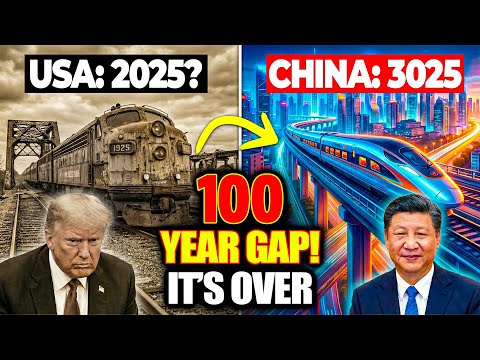
China just front-loaded $42 billion in infrastructure spending for early 2026—281 projects approved before the calendar even flipped. The U.S. Infrastructure Investment and Jobs Act, passed with $1.2 trillion in 2021, has spent just 21% of its funds as of December 2024.

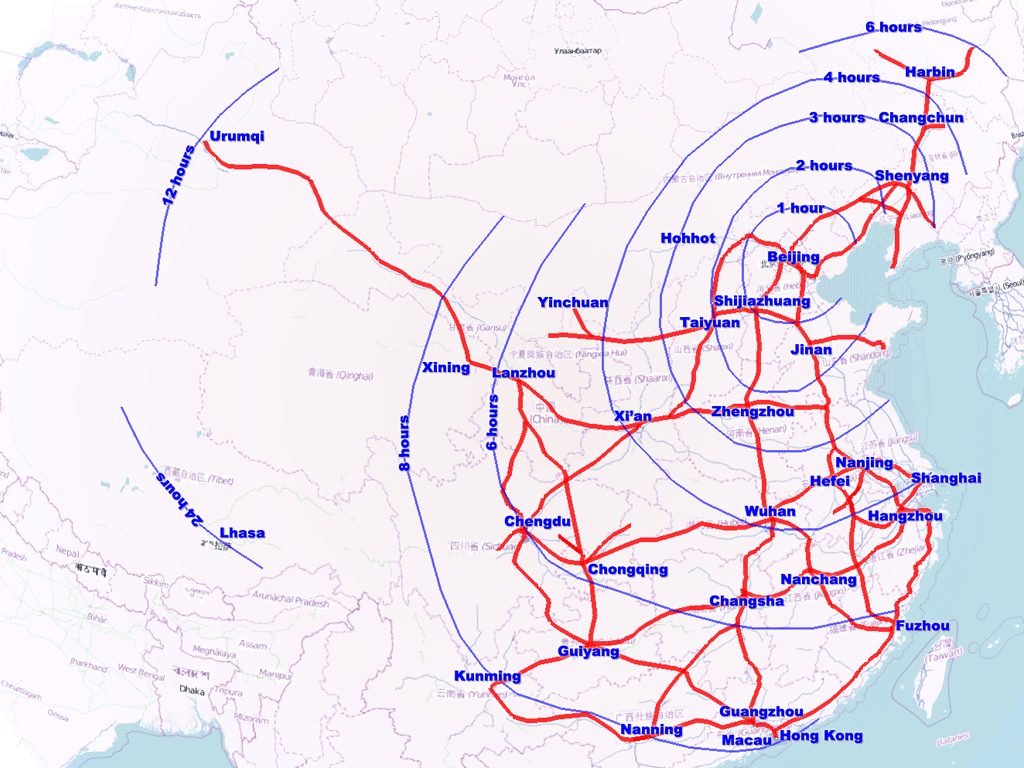
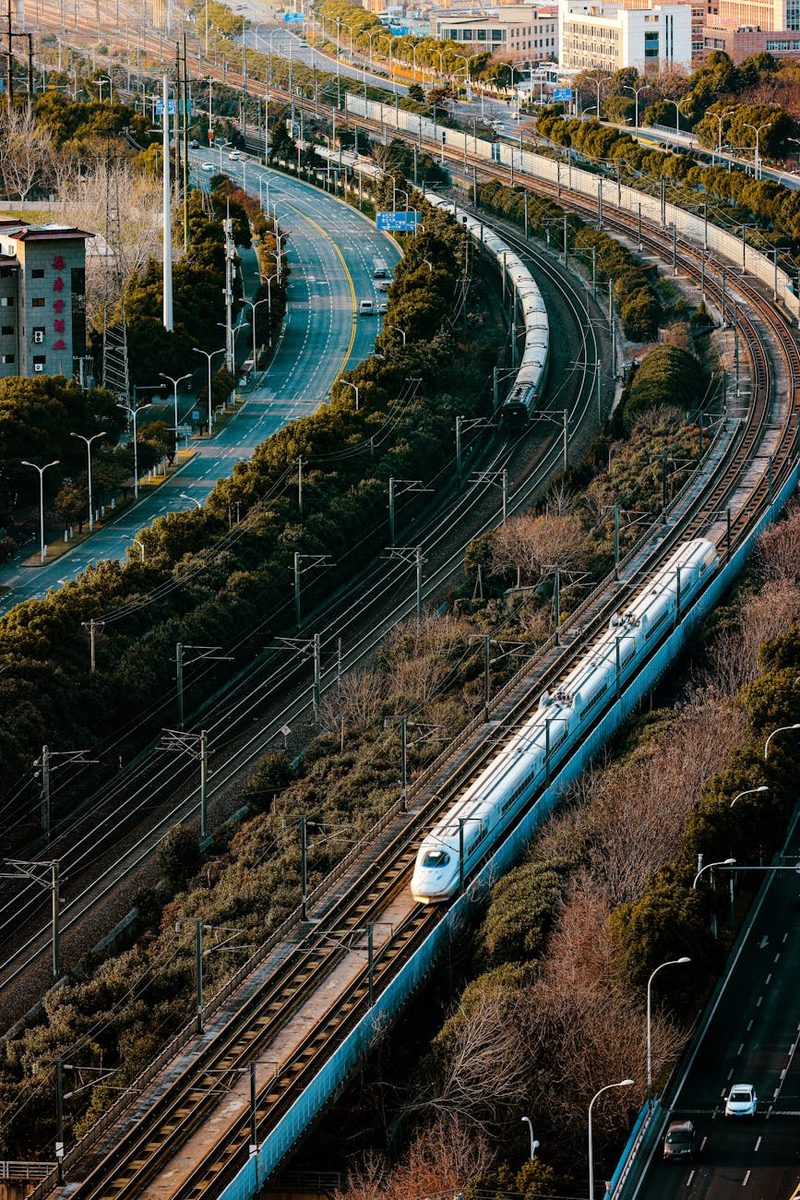
New airports, cross-sea ferries, reservoirs, and power grids are breaking ground in China. Meanwhile, the IIJA law expires September 2026, and Trump's May 2025 budget proposes canceling $15.2 billion in unobligated IIJA funding for renewable energy and clean tech. China builds 50,000 kilometers of high-speed rail in 17 years; America debates one line in California.

The gap is speed, execution, and political will. China completes high-speed rail at $17-21 million per kilometer while California pays $56 million, and China installs 260 gigawatts of renewable energy yearly while the U.S. has 178 gigawatts of solar capacity. China approves a project Friday, breaks ground Monday; America's environmental reviews take two to four years, then litigation adds more—all while the Trump administration proposes slashing the infrastructure investments that remain.

Questions about this story

Free account needed to ask — your question is kept and asked for you right after sign-up. Answers are public.

No questions yet — be the first to ask.

Key Indicators

$42B
China's front-loaded 2026 infrastructure investment
295 billion yuan approved before January, jumpstarting 281 major projects
21%
U.S. infrastructure funds actually spent
Only $119.4B of $580.6B outlaid from IIJA by December 2024
$15.2B
IIJA funding Trump proposes to cancel
May 2025 budget targets unobligated renewable energy and clean tech funds
50,000 km
China's high-speed rail network
Built in 17 years. U.S. has essentially zero HSR miles operational.
260 GW
China's renewable additions in 2024
190 GW solar + 60 GW wind in one year. Entire U.S. solar capacity: 178 GW.
Sept 2026
IIJA funding expiration date
Five-year authorization ends; Congress must pass new surface transportation bill

Voices

Curated perspectives — historical figures and your fellow readers.

Ever wondered what historical figures would say about today's headlines?

Sign up to generate historical perspectives on this story.

People Involved

Organizations Involved

Timeline

September 2013 January 2026

12 events Latest: January 5th, 2026 · 8 months ago Showing 8 of 12
Tap a bar to jump to that date
  1. China Front-Loads $42B Infrastructure Investment

    Latest Implementation

    Projects begin rolling out: Guangzhou airport, cross-sea ferries, reservoirs, power infrastructure.

  2. China Releases Early 2026 Infrastructure Investment Plan

    Announcement

    NDRC approves 295 billion yuan for 281 major projects plus 673 green initiatives.

  3. Guangzhou New Airport Construction Begins

    Implementation

    Preliminary construction starts on Pearl River Delta Hub Airport after State Council approval. Designed for 30M passengers by 2035, opening targeted for 2028.

  4. China Adopts 15th Five-Year Plan

    Policy

    Plan for 2026-2030 prioritizes modernized infrastructure system and industrial upgrading.

  5. Trump Proposes $15.2B in IIJA Funding Cuts

    Policy

    FY 2026 budget proposal calls for canceling $15.2B in unobligated IIJA funds for renewable energy, carbon capture, EVs, and batteries. Also slashes DOE budget by $19.3B overall.

  6. Trump Pauses IIJA Funding via Executive Order

    Policy

    New president freezes portions of infrastructure spending, particularly EV charging projects.

  7. China Completes Most 14th Five-Year Plan Infrastructure Goals

    Milestone

    Six of 17 major transport targets completed ahead of schedule. Railway mileage reaches 162,000 km.

  8. U.S. Infrastructure Law: Only 21% of Funds Spent

    Status Update

    GAO reports $119.4B outlaid of $580.6B available—47% obligated but slow disbursement continues.

  9. IIJA Midpoint: $454B Allocated to 56,000 Projects

    Milestone

    Biden administration announces halfway progress but only 38% of total funds allocated.

  10. Biden Signs Infrastructure Investment and Jobs Act

    Legislation

    U.S. passes $1.2 trillion infrastructure law, largest investment in decades.

  11. China's 14th Five-Year Plan Approved

    Policy

    Plan sets aggressive infrastructure targets for 2021-2025, including HSR and renewable expansion.

  12. Xi Launches Belt and Road Initiative

    Policy

    China announces BRI during Xi's Kazakhstan visit, launching history's second-largest infrastructure program.

Scenarios

1

China Dominates Infrastructure, U.S. Loses Competitive Edge

Likely

Discussed by: World Bank analysis, MIT Technology Review, Council on Foreign Relations

China continues building at current pace while U.S. permitting delays and political gridlock persist. By 2030, China operates 75,000 km of high-speed rail while California's line remains incomplete. Chinese construction companies secure global contracts based on speed and cost advantages. U.S. cities fall further behind in transit, renewable energy infrastructure, and grid modernization. The gap becomes self-reinforcing: Chinese firms gain expertise through constant building while American capacity atrophies from disuse. Developing nations choose Chinese infrastructure partners over American alternatives that take twice as long and cost more.

2

U.S. Permitting Reform Unlocks Faster Construction

Possible

Discussed by: Bipartisan Policy Center, House Transportation Committee analyses

Bipartisan permitting reform passes in 2026-2027, streamlining NEPA reviews and reducing litigation delays. Environmental reviews compressed from 2-4 years to 12-18 months. State and local governments adopt parallel reforms. Construction costs drop as projects move faster, reducing inflation impact. IIJA's remaining funds deploy more efficiently. High-speed rail breaks ground in multiple corridors. The U.S. doesn't catch China but narrows the gap, demonstrating democratic systems can build at competitive speeds when political will exists. Reforms could accelerate renewable energy deployment and transmission infrastructure.

3

China's Debt Crisis Slows Infrastructure Boom

Possible

Discussed by: Bloomberg Economics, Rhodium Group, South China Morning Post

China's high-speed rail system carries $839 billion in debt as of 2023. Local government financing vehicles buckle under infrastructure obligations. A financial crisis forces Beijing to slash infrastructure spending in 2027-2028. Projects halt mid-construction. The quality-versus-quantity debate intensifies as rushed projects require expensive repairs. China's infrastructure advantage proves unsustainable without financial restructuring. This creates an opening for U.S. infrastructure if American can capitalize—but only if permitting and political challenges are resolved. Without reforms, both powers could stall, leaving the infrastructure race without a winner.

4

Divergent Models: China Physical, U.S. Digital

Possible

Discussed by: McKinsey Global Institute, Brookings Institution

The competition evolves into different domains. China continues dominating physical infrastructure—rails, roads, ports, power grids. The U.S. refocuses on digital infrastructure, AI computing clusters, advanced semiconductor fabs, satellite networks, and cybersecurity systems. Neither side "wins" because they're building different futures. China moves goods and people faster; America processes information and innovates faster. The question becomes which infrastructure matters more in a 21st-century economy. Developing nations face a choice: partner with China for physical connectivity or America for digital integration.

5

IIJA Expires Without Replacement, Infrastructure Funding Collapses

Possible

Discussed by: Bond Buyer analysis, transportation industry groups, Brookings Institution

Congress fails to pass new surface transportation bill before September 2026 IIJA expiration. Trump administration successfully cancels $15.2 billion in unobligated clean energy funds. The remaining $294 billion in competitive grants gets frozen or redirected. State and local governments halt projects mid-construction as federal funding disappears. U.S. infrastructure investment drops to pre-2021 levels while China continues its 15th Five-Year Plan buildout. The gap becomes irreversible—China completes its 2026-2030 infrastructure targets while America's brief infrastructure renaissance ends after just five years.

Historical Context

3 moments from history that rhyme with this story — and how they unfolded.

1956-1992

U.S. Interstate Highway System (1956-1992)

President Eisenhower launched America's largest infrastructure program, building 80,000 kilometers of highways over 35 years at a cost of $144 billion ($558 billion inflation-adjusted). Inspired by Germany's autobahn, the Interstate connected the nation, enabled suburban growth, and projected American power. The first half was completed in 14 years; the second half took 20 years as political will faded and costs escalated.

Then

Transformed American mobility, commerce, and development patterns within a generation.

Now

Created car-dependent culture, enabled economic expansion, but also hollowed urban cores and increased oil dependence.

Why this matters now

China's infrastructure push mirrors America's Interstate era—but compressed into 15 years instead of 35, and running parallel with high-speed rail and renewable energy. The U.S. did this once. Can it still?

1959-1964

Japan's Bullet Train Launch (1964)

Japan inaugurated the Tōkaidō Shinkansen in 1964, the world's first high-speed rail line, connecting Tokyo and Osaka. Built in five years for the Olympics, it symbolized Japan's postwar recovery and technological prowess. The bullet train became a national icon and export product, demonstrating rail could compete with air travel.

Then

Transformed Japanese transportation, proved high-speed rail viability, boosted national pride.

Now

Japan built 3,000 km of Shinkansen over 60 years. China built 50,000 km in 17 years—16x Japan's network.

Why this matters now

China took Japan's model and scaled it astronomically. The U.S. watched Japan succeed in the 1960s, then China in the 2000s, and still hasn't built a single high-speed rail line.

1950s-1980s

Soviet Union Infrastructure Competition (1950s-1980s)

During the Cold War, the U.S. and Soviet Union competed on infrastructure as a demonstration of systemic superiority. The Soviets built massive projects quickly—metros, dams, industrial complexes—but quality and maintenance suffered. American projects took longer with more bureaucracy but lasted. The Soviets excelled at showcase projects; Americans built enduring systems. The USSR's infrastructure investment couldn't prevent economic stagnation.

Then

Both superpowers modernized rapidly, with USSR initially appearing competitive or ahead.

Now

Soviet infrastructure aged poorly; deferred maintenance and economic inefficiency contributed to collapse by 1991.

Why this matters now

Echoes today's China-U.S. competition. Speed and scale impress, but sustainability and financial viability matter long-term. China's $839B rail debt raises Soviet-style questions.

Sources

(34)