
Pull to refresh
Logo
China starts $1.62B expansion of world's largest green hydrogen-ammonia project

China starts $1.62B expansion of world's largest green hydrogen-ammonia project

Built World

Phase 2 doubles renewable capacity to 1,600 MW, adds 90,000 tons of green hydrogen a year and lifts combined green ammonia output to 600,000 metric tons.

Overview

Updated Oct 22

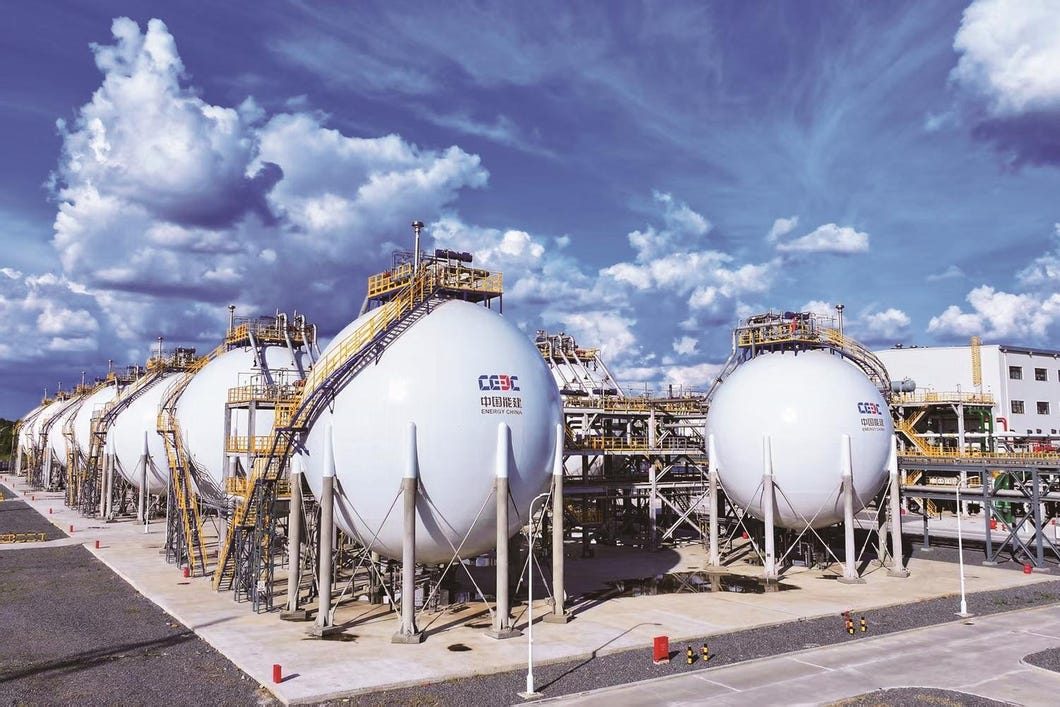
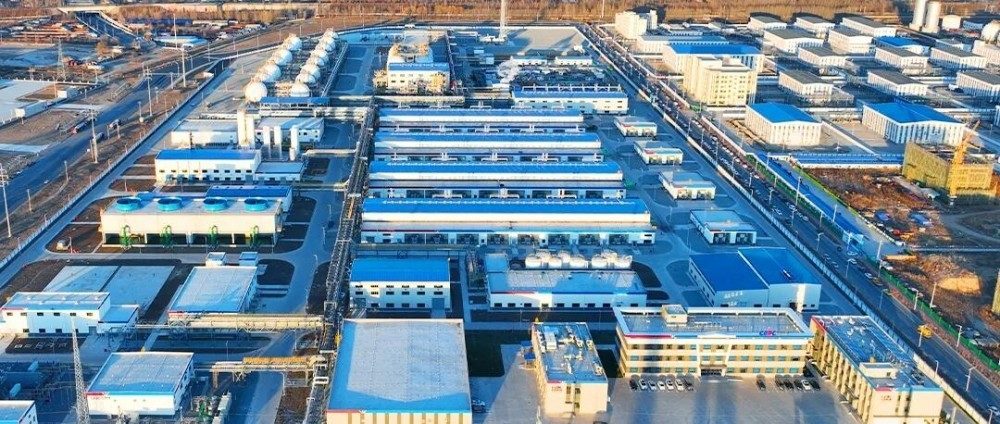
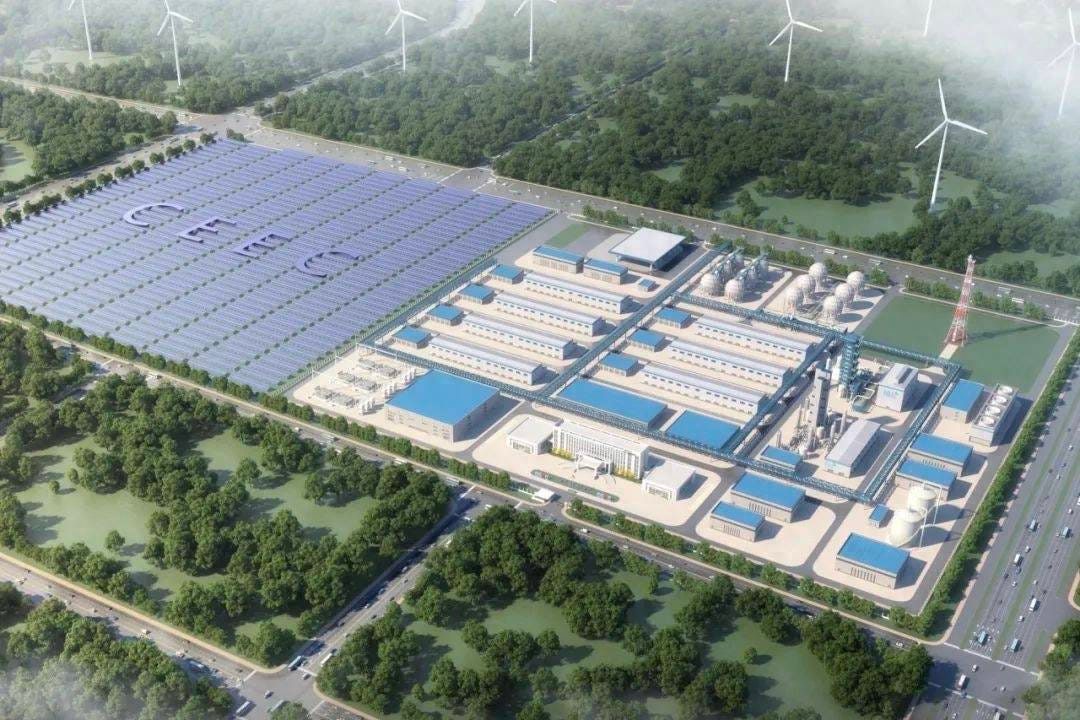
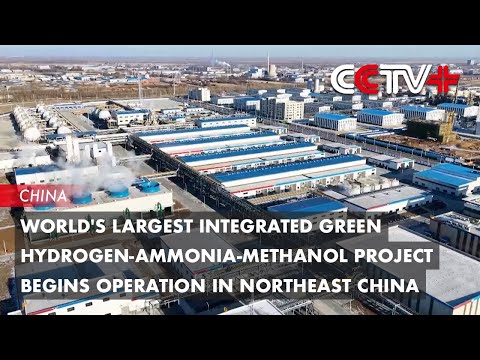
China Energy Engineering Group began building the second phase of its Songyuan green hydrogen and ammonia complex on October 20. The 10.83 billion yuan ($1.62 billion) expansion doubles wind and solar capacity to 1,600 megawatts, adds two ammonia plants and takes combined green ammonia capacity to 600,000 metric tons a year.

Phase 1 has run since December 2025. On October 13, 1,000 metric tons of its ammonia was transferred ship-to-ship at anchor off Zhoushan, and on October 18 the plant produced 600 metric tons in a single day, a record for the site.

Why it matters

If green ammonia reaches cost parity, shipping and heavy industry get a zero-carbon fuel that stores like today's fossil fuels.

Questions about this story

Free account needed to ask — your question is kept and asked for you right after sign-up. Answers are public.

No questions yet — be the first to ask.

Key Indicators

$1.62B
Phase 2 investment
Total investment in the second phase, reported as 10.83 billion yuan.
600,000
Combined annual green ammonia capacity
Phase 1 and Phase 2 together are designed to produce 600,000 metric tons of green ammonia a year.
1,600 MW
Renewable energy capacity after Phase 2
Wind and solar capacity doubles from 800 MW in Phase 1, run on a self-use, surplus-to-grid basis.
90,000
Phase 2 annual green hydrogen capacity
Phase 2 adds 126,000 normal cubic meters per hour of electrolysis, roughly double Phase 1's hydrogen output.
10%
Target unit cost cut vs Phase 1
CEEC expects Phase 2 to lower green ammonia production costs by more than 10% through design and domestic equipment upgrades.
400,000
Phase 2 green ammonia capacity
Phase 2 alone is designed to produce 400,000 metric tons of green ammonia a year from two 200,000-ton synthesis trains.

Voices

Curated perspectives — historical figures and your fellow readers.

Sign up to generate historical perspectives on this story.

People Involved

Organizations Involved

Timeline

December 2025 October 2026

6 events Latest: October 20th, 2026 · 3 weeks ago
Tap a bar to jump to that date
  1. CEEC breaks ground on $1.62B Phase 2

    Latest Construction

    Jilin Governor Hu Yuting announces the start of construction in Songyuan. The 10.83 billion yuan phase doubles renewable capacity to 1,600 MW, adds two 200,000-ton ammonia trains and 126,000 cubic meters per hour of electrolysis, and raises combined green ammonia capacity to 600,000 metric tons a year.

  2. Phase 1 sets single-day green ammonia record

    Operation

    The plant produced 600 metric tons of green ammonia in one day, with the synthesis unit running at 106% of its hourly design load. The gain came from retuning hydrogen and ammonia operating conditions, not new equipment.

  3. First commercial ship-to-ship green ammonia bunkering

    Operation

    1,000 metric tons of Songyuan ammonia, shipped south by tank car and then by the bunkering vessel Shenghang Yongle, was transferred to CMB.TECH's ammonia-powered Mineral Europa at anchor off Zhoushan.

  4. Phase 2 wins South Korean clean hydrogen certification

    Certification

    Phase 2 output has been certified under South Korea's clean hydrogen scheme and meets the EU's ISCC EU sustainability standard, according to a Shanghai Metals Market industry review.

  5. Phase 1 reaches operational milestone

    Milestone

    Phase 1 begins operations, producing green hydrogen and ammonia from wind and solar power.

  6. Project receives ISCC EU certification

    Certification

    The project earns ISCC EU certification, supporting its position in international renewable fuel markets.

Scenarios

1

Phase 2 completes, green ammonia hits 600,000-ton target

Likely Resolves by End of 2029

Discussed by: CEEC and Chinese state media

Construction proceeds over the next two to three years. Phase 2's two 200,000-ton ammonia synthesis units come online, bringing combined capacity to 600,000 metric tons. CEEC reports the targeted 10% cost reduction, making green ammonia more competitive with fossil-fuel ammonia in shipping fuel markets.

2

Green ammonia cost reduction falls short of target

Possible Resolves by End of 2029

Discussed by: Industry analysts tracking green hydrogen economics

Phase 2 completes but the 10% cost reduction target is missed. Renewable electricity prices, electrolyzer performance, or financing costs undercut the economics. Green ammonia remains more expensive than fossil-fuel ammonia, limiting adoption to subsidized or mandated uses.

3

CMB.Tech expands offtake to Phase 2

Possible Resolves by End of 2028

Discussed by: Hydrogen Insight, shipping industry press

Belgian shipping company CMB.Tech, which already has an offtake deal for Phase 1 green ammonia, signs a second agreement covering Phase 2 output. This signals commercial demand for green ammonia as marine fuel and validates the project's export potential.

Historical Context

3 moments from history that rhyme with this story — and how they unfolded.

1909-1913

Haber-Bosch process (1909-1913)

Fritz Haber synthesized ammonia from nitrogen and hydrogen in 1909. Carl Bosch scaled the process for BASF, and the first industrial plant opened at Oppau, Germany in 1913, enabling synthetic fertilizer production.

Then

Ammonia production shifted from laboratory batches to industrial scale, transforming agriculture.

Now

Synthetic ammonia became the backbone of modern fertilizer, supporting global food production for over a century.

Why this matters now

The same chemical process now needs renewable electricity instead of fossil fuels. Songyuan is the first attempt to do this at industrial scale.

2000s-2010s

China's solar PV scale-up (2000s-2010s)

Chinese manufacturers scaled solar panel production through the 2000s and 2010s, driving module prices down dramatically over a decade.

Then

Solar became one of the cheapest electricity sources in many markets.

Now

China became the dominant global solar manufacturer, and solar costs fell enough to compete with fossil fuels without subsidies.

Why this matters now

Songyuan applies the same playbook: build at scale, cut costs, dominate the market. The question is whether green hydrogen follows solar's cost curve.

1950s-1980s

Sasol coal-to-liquids (1950s-1980s)

South Africa's Sasol built the world's first commercial coal-to-liquids plants starting in the 1950s, producing synthetic fuel at scale to reduce dependence on imported oil.

Then

Sasol became a major producer of synthetic fuels, though the process remained more expensive than conventional refining.

Now

Sasol's experience showed synthetic fuels can work at scale but often need state support to compete.

Why this matters now

Like Sasol, Songyuan produces synthetic fuel at industrial scale. Its economics will determine whether green ammonia achieves genuine cost competitiveness or needs ongoing support.

Sources

(15)