

Pull to refresh
Logo
Daily Brief
Following
Why Sign Up
China's airborne wind energy breakthrough

China's airborne wind energy breakthrough

New Capabilities
By Newzino Staff |

From Qian Xuesen's 1957 vision to the world's first megawatt-scale flying turbines

January 1st, 2026: S2000 Achieves First Grid Connection

Overview

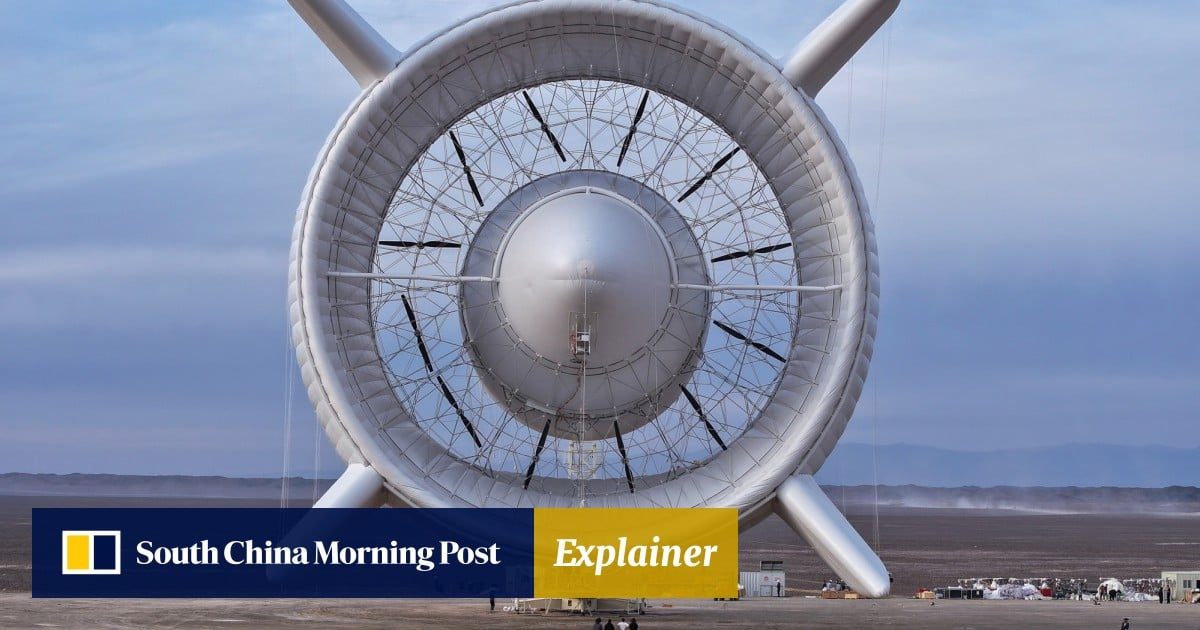
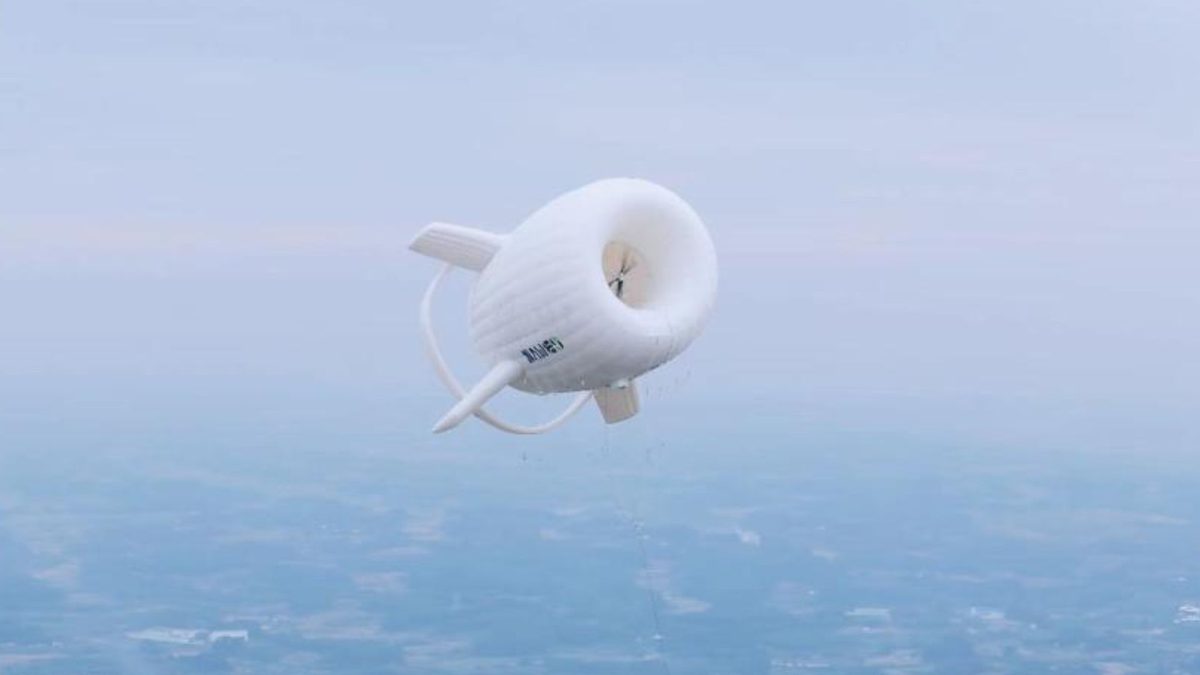
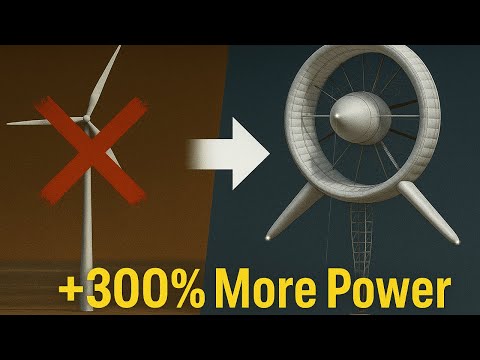
In 1957, Chinese aerospace pioneer Qian Xuesen proposed capturing wind energy by wrapping turbines in circular housings at high altitudes. Nearly seven decades later, a Beijing startup has turned that vision into reality. Between September 19 and 21, 2025, China successfully flew the S1500—a helium-filled turbine the size of a basketball court—at 1,500 meters altitude in Xinjiang's desert, generating one megawatt of power. No other country has come close to this scale.

Key Indicators

1 MW
Power Generated
First megawatt-scale airborne wind turbine successfully tested
1,500m
Operating Altitude
Seven times higher than the tallest conventional wind turbines reach
40%
Material Reduction
Less material needed compared to tower-based turbines—no steel towers or deep foundations
$70M
Contracts Secured
SAWES has already secured contracts and begun batch production

Interactive

Exploring all sides of a story is often best achieved with Play.

Ever wondered what historical figures would say about today's headlines?

Sign up to generate historical perspectives on this story.

Sign Up

Debate Arena

Two rounds, two personas, one winner. You set the crossfire.

People Involved

Organizations Involved

Timeline

  1. S2000 Achieves First Grid Connection

    Breakthrough

    The S2000 rises to 2,000 meters over Yibin, Sichuan Province, and successfully feeds 385 kilowatt-hours of electricity into the local power grid—the first grid connection for any airborne wind turbine worldwide.

  2. S1500 Generates 1 Megawatt—A World First

    Breakthrough

    Between September 19-21, the S1500—60 meters long, 40 meters wide and tall—generates one megawatt of power during desert tests in Xinjiang. It becomes the world's first megawatt-scale airborne wind turbine.

  3. S1000 Doubles Altitude and Output

    Milestone

    SAWES's S1000 reaches 1,000 meters altitude, doubling output to 100 kilowatts—demonstrating consistent scaling of the technology.

  4. S500 Prototype Reaches 500 Meters

    Milestone

    SAWES's helium-filled S500 blimp ascends to 500 meters above ground in Hubei Province, generating power at a rate exceeding 50 kilowatts.

  5. Alphabet Shuts Down Makani

    Industry

    Alphabet discontinues Makani after 13 years and a failed offshore test in Norway. The company releases its patents and research as open source, ending the most prominent Western airborne wind effort.

  6. SAWES Energy Technology Founded

    Corporate

    Dun Tianrui and Weng Hanke formally establish SAWES Energy Technology in Beijing after Weng's atmospheric research revealed the potential of upper-atmosphere wind capture.

  7. SAWES Begins Research

    Development

    SAWES begins research on airborne generators based on Qian Xuesen's 1957 concepts, starting with a team of seven people experimenting with helium-filled platforms.

  8. Google Acquires Makani

    Industry

    Google acquires Makani Technologies, making it an X moonshot project and signaling major tech industry interest in airborne wind energy.

  9. Makani Technologies Founded in California

    Industry

    Makani Technologies launches in Alameda, California, to develop crosswind kite power systems—marking the modern era of airborne wind energy development.

  10. Qian Xuesen Proposes High-Altitude Wind Concept

    Conceptual

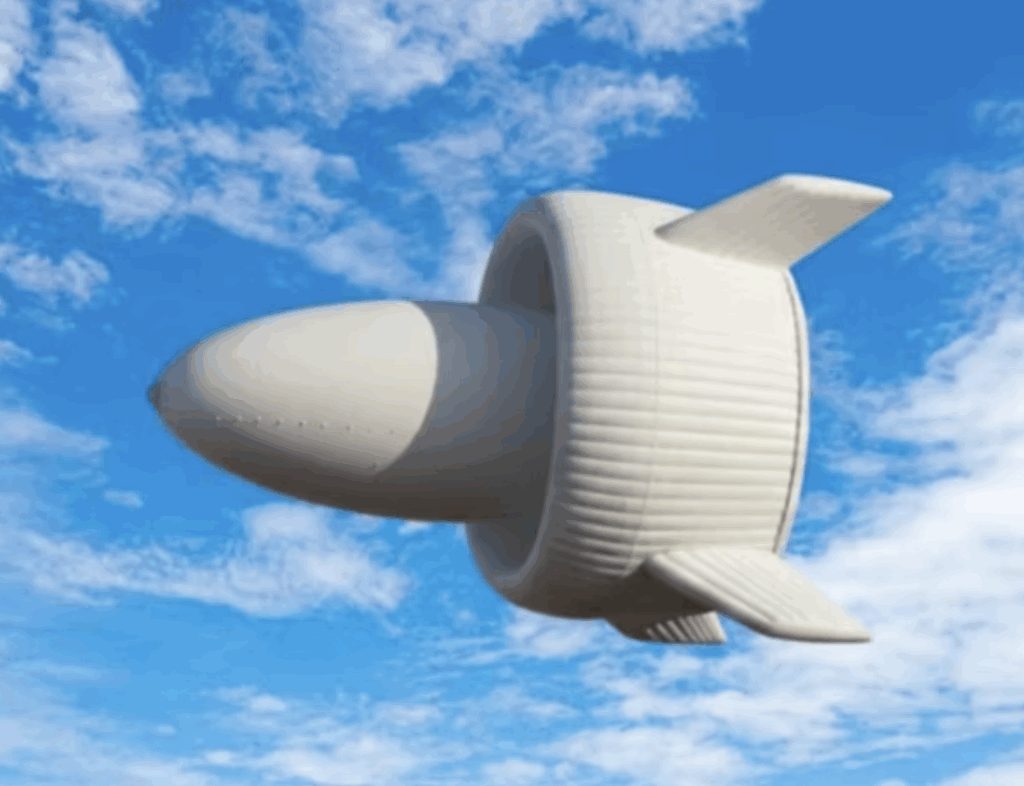
    Chinese aerospace engineer Qian Xuesen proposes wrapping turbines in circular housings to capture high-altitude wind energy—the foundational concept SAWES would later commercialize.

Scenarios

1

Airborne Wind Goes Mainstream in China by 2030

Discussed by: SAWES company statements, Xinhua news coverage, industry analysts at Global Energy Monitor

SAWES achieves mass production in 2026 as planned, demonstrating 25-year operational reliability. The technology proves especially valuable in Xinjiang's desert energy mega-projects and remote border regions. By 2030, airborne wind contributes a measurable fraction of China's 1,600+ gigawatt renewable capacity, with fleets operating at progressively higher altitudes. Other countries license or adapt the technology.

2

Reliability Problems Stall Commercial Deployment

Discussed by: U.S. Department of Energy airborne wind assessment, Near Zero energy analysis nonprofit, Yale Environment 360

Despite successful tests, SAWES systems prove unable to operate continuously for months or years without significant maintenance—the same reliability challenge that has plagued all prior airborne wind ventures. Helium leakage, tether wear, and extreme weather events cause frequent groundings. The technology remains limited to niche applications like disaster response and remote outposts rather than grid-scale power generation.

3

Western Companies Catch Up with Chinese Lead

Discussed by: Airborne Wind Europe association, Physics World, industry analysts

SAWES's open-source competitor Makani, combined with China's demonstrated success, spurs renewed Western investment in airborne wind. Companies like Kitepower (Netherlands), SkySails (Germany), and new U.S. entrants leverage Makani's released patents and develop competing megawatt-scale systems. Regulatory frameworks in Europe and the U.S. evolve to accommodate airborne systems, creating a competitive global market by the early 2030s.

4

China Achieves 10,000-Meter Jet Stream Capture

Discussed by: SAWES CEO Dun Tianrui public statements, atmospheric energy researchers

SAWES achieves its stated goal of operating at 10,000 meters, where wind flows 200 times stronger than at ground level. This enables electricity costs below $0.01 per kilowatt-hour—cheaper than any existing power source. The breakthrough fundamentally disrupts global energy markets, though regulatory and aviation safety challenges limit deployment locations.

Historical Context

Makani Technologies Collapse (2020)

February 2020

What Happened

After 13 years of development and acquisition by Google in 2013, Alphabet shut down Makani Technologies, the most prominent Western effort to commercialize airborne wind energy. The company had developed a 600-kilowatt crosswind kite system but failed during a 2019 test flight off Norway's coast, with the generator crashing into the sea. Alphabet cited a 'longer and riskier' path to commercialization than anticipated.

Outcome

Short Term

Makani released its entire patent portfolio and 13 years of technical data as open source, allowing competitors to build on its research.

Long Term

The collapse created widespread skepticism about airborne wind energy's commercial viability, leaving the field without a major Western champion. SAWES has explicitly positioned its success as vindication of the technology Makani couldn't commercialize.

Why It's Relevant Today

SAWES's achievement directly addresses the failure that ended Makani: generating megawatt-scale power that Makani never reached. China's state-backed approach—university partnerships, sustained funding—offers a different development model than Silicon Valley's moonshot style.

China's Solar Panel Industry Dominance (2010s-2020s)

2010-2025

What Happened

Through sustained state investment, manufacturing scale, and aggressive cost reduction, China came to dominate global solar panel production. By 2023, China manufactured over 80% of the world's solar panels. Western competitors like Germany's SolarWorld and multiple U.S. manufacturers went bankrupt or exited the market.

Outcome

Short Term

Solar panel prices dropped by over 90%, accelerating global solar adoption far beyond forecasts.

Long Term

The West became dependent on Chinese solar supply chains, triggering trade disputes and prompting efforts to rebuild domestic manufacturing. China gained significant leverage in the global clean energy transition.

Why It's Relevant Today

If SAWES succeeds in commercializing airborne wind at scale, it could follow a similar pattern: Chinese dominance in an emerging clean energy technology, with Western competitors struggling to catch up despite early research leads.

Early U.S. Airborne Wind Energy Research (1970s-1980s)

1970-1990

What Happened

The first major wave of airborne wind energy research emerged in the United States during the 1970s energy crisis. Miles Loyd published foundational work on crosswind kite power in 1980, calculating the theoretical energy potential of tethered wings flying perpendicular to the wind. Several research programs explored high-altitude wind capture.

Outcome

Short Term

Falling oil prices in the mid-1980s eliminated funding, and no significant installations resulted from the research.

Long Term

Loyd's theoretical work became the foundation for all modern airborne wind systems, including Makani's crosswind kites and SAWES's ducted turbines.

Why It's Relevant Today

Airborne wind energy has seen multiple boom-bust cycles tied to energy prices and funding cycles. SAWES's progress comes amid sustained Chinese clean energy investment regardless of short-term economics—a structural advantage over funding-dependent Western research.

Sources

(10)